



Zámek Nadějkov Chateau
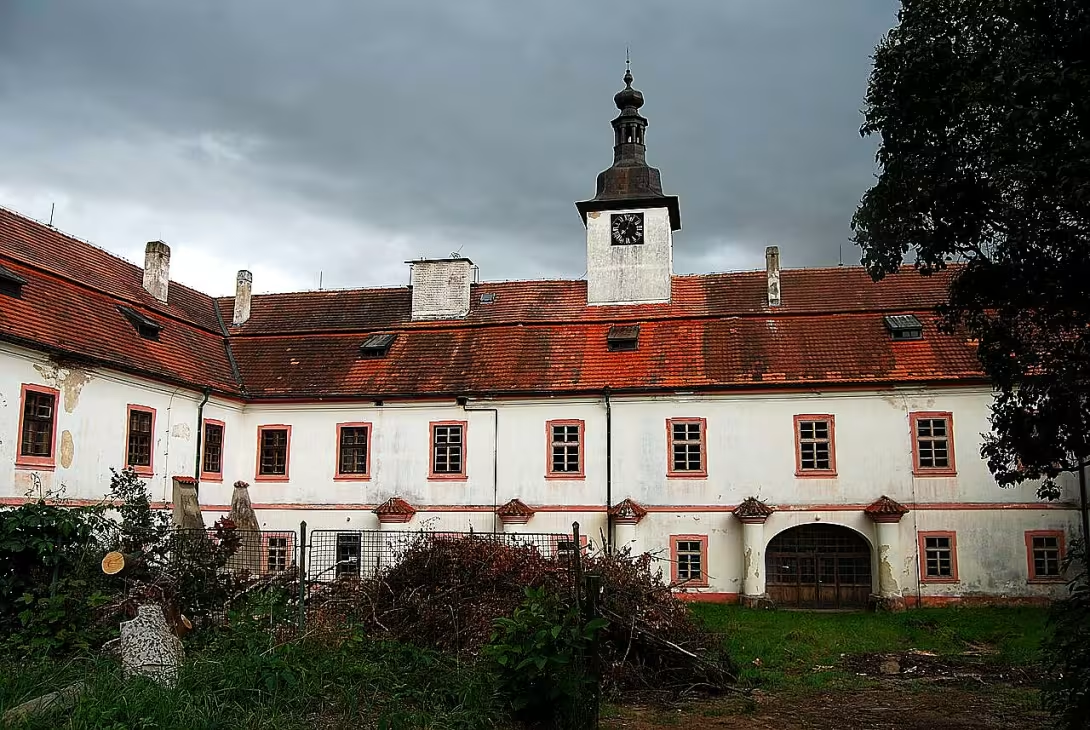
Castle Nadějkov stands as a testament to architectural evolution from medieval fortifications to Baroque elegance in Nadějkov, near Tabor in Jihočeský kraj. Originally built on a 14th-century water fortress site, this Baroque structure was completed by 1781. Its significance lies not only in its architectural transformation but also in its historical role as an inspiration for literary works and varied use over centuries.
The origins of Castle Nadějkov trace back to the medieval era when a water fortress first appeared on this site, mentioned in records from 1373 under Ahnik z Nadějkova. Ownership passed through various noble families, each leaving their mark on its development. In the early 16th century, the Páni Doudlebský z Doudleb acquired the estate. Later, Bedřich z Doudleb initiated a significant transformation between 1570 and 1584, converting it into a Renaissance-style edifice, marking the beginning of its architectural evolution.
The most notable transformation occurred in the early 18th century when Antonín Ferdinand Feuerstein completed the Baroque redesign in 1781. The building's current appearance reflects this era, characterized by a flat façade with distinctive window arrangements and a small tower with a spire on the main wing's roof. A fire in 1756 necessitated further modifications under hraběnka Kokořovská, who also revitalized the deteriorating castle park.
Ownership of Castle Nadějkov has seen numerous changes over the centuries. After Feuerstein, Jan Tuscani acquired it in 1803, followed by Vratislavové z Mitrovic, who made interior renovations in 1863. Post-World War II, the castle served as a school before being restituted to Ing. Milan Seger and later his son Rony Seger in 1993. In 2008, it was sold to Galileo Veritas.
Throughout its history, Castle Nadějkov has been more than just an architectural marvel; it inspired the castle in Alois Jirásek's novel "F. L. Věk." Its varied uses reflect changing societal needs, from a noble residence to a school.
Today, Castle Nadějkov is near the church of Nejsvětější Trojice, with a castle park featuring Mlýnský rybník on its southwest side. Despite some periods of neglect, it remains an important cultural and historical site worth visiting for those interested in Bohemian history and architecture.
Castle Nadějkov offers visitors a unique glimpse into the past, showcasing architectural transitions from medieval to Baroque styles. Its rich history and connection to literature make it a compelling destination for anyone exploring the Czech Republic's heritage.
Then and now
Drag the slider to compare how the landmark may have looked when it was built with the view today.
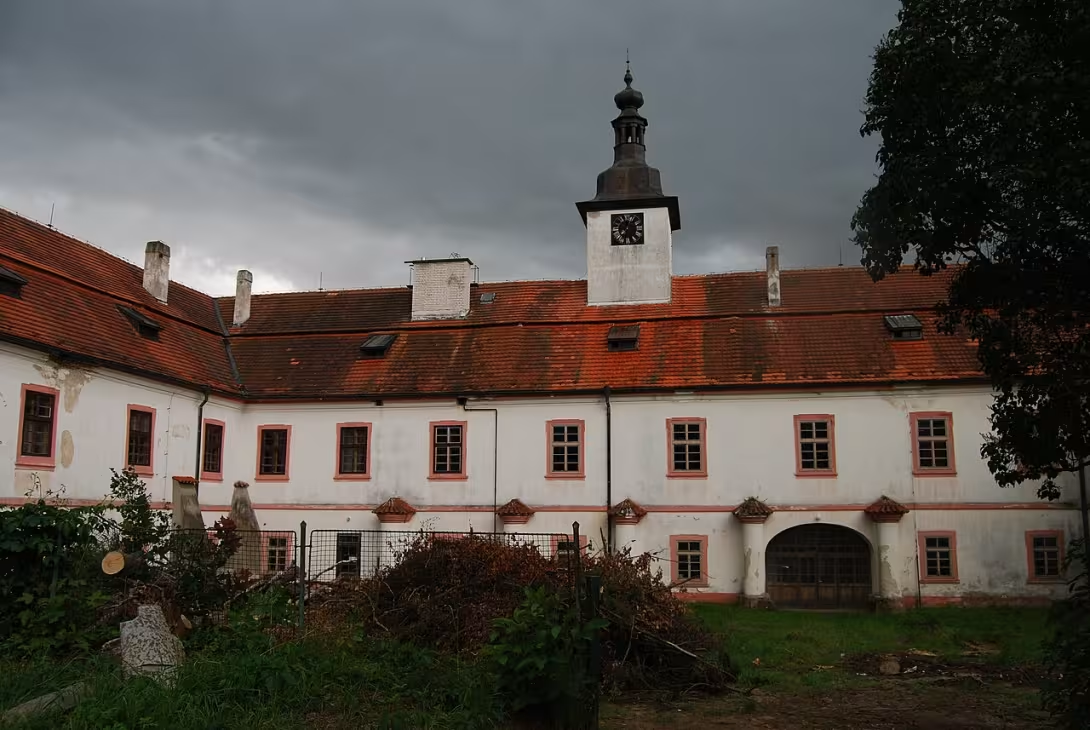

The historical appearance on the left is an AI-generated visualisation and serves as inspiration only.
Historical milestones
- 1373
- First mention of the water fortress.
- 1570-1584
- Reconstruction into Renaissance style under Bedřich z Doudleb.
- 1781
- Baroque transformation completed by Antonín Ferdinand Feuerstein.
Architectural development
Zámek Nadějkov evolved from a medieval water fortress into a Renaissance structure between 1570 and 1584. It was later transformed into its current Baroque form, primarily during the early 18th century under Antonín Ferdinand Feuerstein in 1781. The building underwent further modifications after a fire in 1756.
Historical events
The original water fortress was first mentioned in 1373.
Reconstruction into a Renaissance style occurred between 1570 and 1584 under Bedřich z Doudleb.
Baroque transformation completed by Antonín Ferdinand Feuerstein in 1781.
Owners
Ahnik z Nadějkova (1373)
Páni Doudlebský z Doudleb (early 16th century)
Bedřich z Doudleb (1542-1596)
Oldřich z Doudleb (1596-1668)
Václav Norbert Kinský (1727 onwards)
Antonín Ferdinand Feuerstein (1781)
Jan Tuscani (1803)
Vratislavové z Mitrovic (1863 onwards)
Ing. Milan Seger and Rony Seger (1993-2008)
Galileo Veritas (since 2008)
Points of interest
- The castle's transformation into a Renaissance-style edifice in the late 16th century was initiated by Bedřich z Doudleb, who played a crucial role in its architectural evolution before it became Baroque. - A fire in 1756 led to significant modifications under hraběnka Kokořovská, not only altering the castle's structure but also revitalizing its deteriorating park, showcasing resilience and adaptation through adversity.
- The castle served as a source of inspiration for Alois Jirásek’s novel "F. L. Věk," where it inspired the fictional setting, linking Nadějkov to Czech literary heritage beyond its architectural significance.
- After World War II, Castle Nadějkov transitioned from noble residence to educational use by functioning as a school, reflecting broader societal changes and adaptive reuse of historical sites in post-war Europe.
- In 2008, ownership was transferred to Galileo Veritas, marking another chapter in the castle’s history with potential implications for its preservation and future role within the community.
Guide
This guide is narrated by a synthetic voice generated by artificial intelligence.
Show guide text
This text was created by artificial intelligence and has not been editorially reviewed. It may contain inaccuracies.
Nadějkov Castle stands directly in the village of Nadějkov in the Tábor district, on Prokopa Chocholouška Square near the Church of the Holy Trinity. It is a baroque building whose current appearance dates from 1781.
A water fortress stood on the site of the castle in the 14th century. It is first mentioned in 1373 in connection with the estate owner Ahník z Nadějkova. Parts of the fortress have survived to this day, including a section of the bastion near the castle and also vaults in the basement. At the beginning of the 16th century, Nadějkov was acquired by the lords of Doudlebští z Doudleb. When their property was divided among brothers in 1542, the village and its belongings fell to Bedřich z Doudleb. He had the fortress rebuilt in the Renaissance style between 1570 and 1584, and in 1576 he purchased Branišovice, Hněvanice, Záluží and Zhoř from the Švamberks. After his death in 1596, his son Oldřich inherited Nadějkov and the family held the estate until 1668. After that, the owners changed frequently. The fortress is last mentioned in 1703, when it was recorded as having 19 rooms with outbuildings.
The flat façade, windows arranged in pairs, portals, ornamental cornices above the doors and windows, and the two-colour red and white treatment of the elevation reveal an early baroque reconstruction from the first quarter of the 18th century. It probably took place under Václav Norbert Kinský, since after 1727 the owners changed rapidly. After a fire in 1756, the building underwent necessary modifications under Countess Kokořovská. At the same time, she restored the neglected castle park, which contained unusual and exotic trees, shrubs and flowers. Antonín Ferdinand Feuerstein gave the castle its final baroque form in 1781. In 1803, the castle was purchased by Prague burgher Jan Tuscani. From him it was acquired by the Vratislavové z Mitrovic, who in 1863 renovated the interiors.
Nadějkov Castle served as the model for the castle of Mladějov in Alois Jirásek's novel F. L. Věk.
After 1945, the castle was confiscated and served as a school. In 1993, it was returned in restitution to engineer Milan Seger, who lived in Israel, or rather to his son Rony Seger. He sold it in 2008 to the company Galileo Veritas. At the beginning of 2012, the façade was neglected and the garden was abandoned.
The castle building is three-storeys and elongated, with short side wings and a mansard roof. In the middle of the roof of the main wing stands a prismatic tower with a clock and a bulbous cupola. On the southwest side extends the castle park with the Mill Pond.
Tips for visitors
The best time to visit Zámek Nadějkov is during the late spring or early autumn months, from May to September. During these times, the castle park is lush with greenery and flowers, providing a picturesque setting for your visit. Additionally, the weather is generally mild, making it ideal for exploring both indoors and outdoors. Avoid visiting in winter as some areas might be less accessible due to weather conditions.
It's advisable to check current schedules and routes in advance for smooth travel planning.
When visiting Zámek Nadějkov, it’s recommended to bring comfortable walking shoes as you’ll likely spend time exploring the castle grounds and park. A light jacket might be useful if the weather is cool or unpredictable. Don’t forget your camera to capture the stunning architecture of the baroque building and the serene beauty of Mlýnský rybník. Additionally, carrying a water bottle will help you stay hydrated during your visit.
For photography enthusiasts, some of the best spots at Zámek Nadějkov include the main facade of the castle, which is particularly striking in the soft light of early morning or late afternoon. The southwest side near Mlýnský rybník offers a tranquil setting for capturing reflections and natural beauty. Inside, the baroque interiors provide excellent opportunities for detailed shots. Be mindful of lighting conditions to enhance your photographs.
Nearby attractions within 30 minutes include the Church of Nejsvětější Trojice, which is worth visiting for its historical significance and architectural charm. These sites provide additional context to the history of Zámek Nadějkov and are perfect extensions to your visit.
For families with children, Zámek Nadějkov can be an enjoyable outing. The castle park is spacious enough for kids to run around and explore nature. While there may not be specific attractions designed solely for children within the castle itself, the open areas and historical structures provide a stimulating environment. Consider bringing snacks or a picnic lunch to make your visit more comfortable.
Frequently asked questions
Can the monument be visited?
Some buildings of this kind are open for guided tours, others serve another purpose or are privately owned. We have not verified whether and when this monument is open – please ask the operator.
What are the opening hours and admission?
We have not verified the opening hours or admission. Current information is published by the operator.
Where is the monument?
Location: Pivovarská 1, Nadějkov, Jihočeský kraj. The map on this page shows the exact spot.
Why is the monument protected?
It is listed in the Central List of Cultural Monuments of the Czech Republic as a cultural monument (register no. 35378/3-2651).
Businesses nearby
Do you run a restaurant, accommodation, shop, museum, rental, wellness or other visitor service near this monument? Show yourself directly to the people heading to it — this is how they will see you in the app and on the web:
Nearby
Zámek Nadějkov is located near the church of Nejsvětější Trojice and features a castle park with Mlýnský rybník on its southwest side. The surrounding area includes historical structures like the preserved bastion from the original fortress.
Accommodation nearby
Themed route
Tematická výletní trasa Zámek Nadějkov
1. Zámek Nadějkov (Castle) Začni svůj výlet u samotného zámku, který je centrem této trasy. Tento historický majestátní zámek nabízí návštěvníkům pohled na jeho architektonické krásy a bohatou historii. Zámek je známý svými elegantními interiéry a vynikajícím umístěním, což ho činí ideálním místem pro pochopení regionální kultury a dějin.
2. Kostel Nejsvětější Trojice (Church) Přibližně 5 minut chůze od zámku se nachází kostel Nejsvětější Trojice, který je vynikajícím příkladem sakrální architektury. Tento kostel stojí za návštěvu díky své historické a estetické hodnotě, nabízející klidnou atmosféru pro meditaci nebo jednoduše pro užívání jeho architektonických detailů.
3. Zámekový park (Castle Park) Podél zámku se rozprostírá pěkný zámekový park, který nabízí krásné procházky a klidnou příležitost k relaxaci v přírodě. Park je ideálním místem pro pochopení historického prostředí a ústupištěm pro lidi hledající mír.
4. Mlýnský rybník (Mill Pond) Na jihozápadní straně zámku se nachází Mlýnský rybník, který je součástí parkové oblasti. Tento rybník stojí za návštěvu pro svou přirozenou krásu a klidnou atmosféru, nabízející pohledy na zámek a okolní krajinu.
5. Původní bastion (Original Bastion) Konečným bodem trasy je původní bastion, který představuje historickou obrannou strukturu z doby vzniku zámku. Tento bastion stojí za návštěvu díky svému historickému významu a poskytuje vhled do minulosti regionu.
Tato trasa nabízí komplexní pohled na kulturní a historickou bohatost oblasti Zámek Nadějkov, s důrazem na hlavní památky v jejím okolí.
Seasonal recommendations
Spring: The arrival of spring at Zámek Nadějkov is marked by the awakening of nature, with blooming flowers and lush greenery surrounding the castle grounds, creating a picturesque setting that enhances its historical charm. This season offers a gentle atmosphere, perfect for leisurely strolls through the gardens as they come to life. Visitors should consider bringing comfortable walking shoes to fully enjoy the scenic routes. While the weather can be unpredictable with occasional rain showers, it's advisable to dress in layers and bring an umbrella or raincoat. Spring sees moderate visitor numbers, making it a pleasant time for those who prefer quieter exploration.
Summer: Summer at Zámek Nadějkov is characterized by long daylight hours and warm temperatures, ideal for experiencing the castle’s outdoor attractions. The lush gardens are particularly vibrant during this season, with well-tended flower beds and green spaces providing a stunning backdrop to historical tours. Given the peak tourist season, it's recommended to arrive early in the day to avoid larger crowds. Sun protection is essential; visitors should wear sunscreen, sunglasses, and light clothing suitable for warm weather.
Autumn: Autumn transforms Zámek Nadějkov into a tapestry of rich colors as the foliage changes from green to shades of orange, red, and gold. This season offers a unique charm with cooler temperatures and fewer visitors compared to summer, allowing for a more intimate experience of the castle’s historic architecture against the backdrop of vibrant nature. The air is crisp, making it an ideal time for photography enthusiasts to capture stunning autumnal scenes. Visitors should dress in warm layers to stay comfortable during their visit, as evenings can be chilly.
Winter: Winter at Zámek Nadějkov presents a serene and enchanting atmosphere with snow-covered landscapes that add a magical touch to the castle’s historic beauty. The shorter days mean earlier opening times, so planning ahead is crucial for those who wish to make the most of their visit. While some outdoor areas may be less accessible due to weather conditions, the castle itself remains open, offering cozy indoor exploration opportunities. Visitors should dress warmly in layers and wear sturdy footwear suitable for potentially icy paths. This season offers a peaceful retreat from the busier times of year, perfect for those who enjoy quiet reflection amidst historic splendor.
Visualizations and artistic views


The visualisations are generated by artificial intelligence and serve as inspiration.
Photos from the area
Real photos taken near the monument


Zdroj a licence jsou uvedeny u každého snímku.
Tips from visitors
No tips yet. Be the first!
Log in and add your tip.
Sources and literature
Photos: Richenza / CC BY-SA 3.0 — Wikimedia Commons. The author and licence also appear when you hover over the image.
Faktickým podkladem tohoto textu byl článek na Wikipedii, jehož autory jsou přispěvatelé Wikipedie. Článek je dostupný pod licencí CC BY-SA 4.0.
Location on the map



Příběhy a pověsti
Legendy, pověsti a příběhy spjaté s touto památkou
Fotografie návštěvníků
Zatím žádné fotografie. Buďte první, kdo přidá fotografii z návštěvy!
Log in a přidejte svou fotografii nebo hodnoťte.
Za ověřenou návštěvu v aplikaci získáte víc bodů — poznáme podle GPS, že jste na místě.
Reviews and comments