



Zámek Nalžovice Chateau
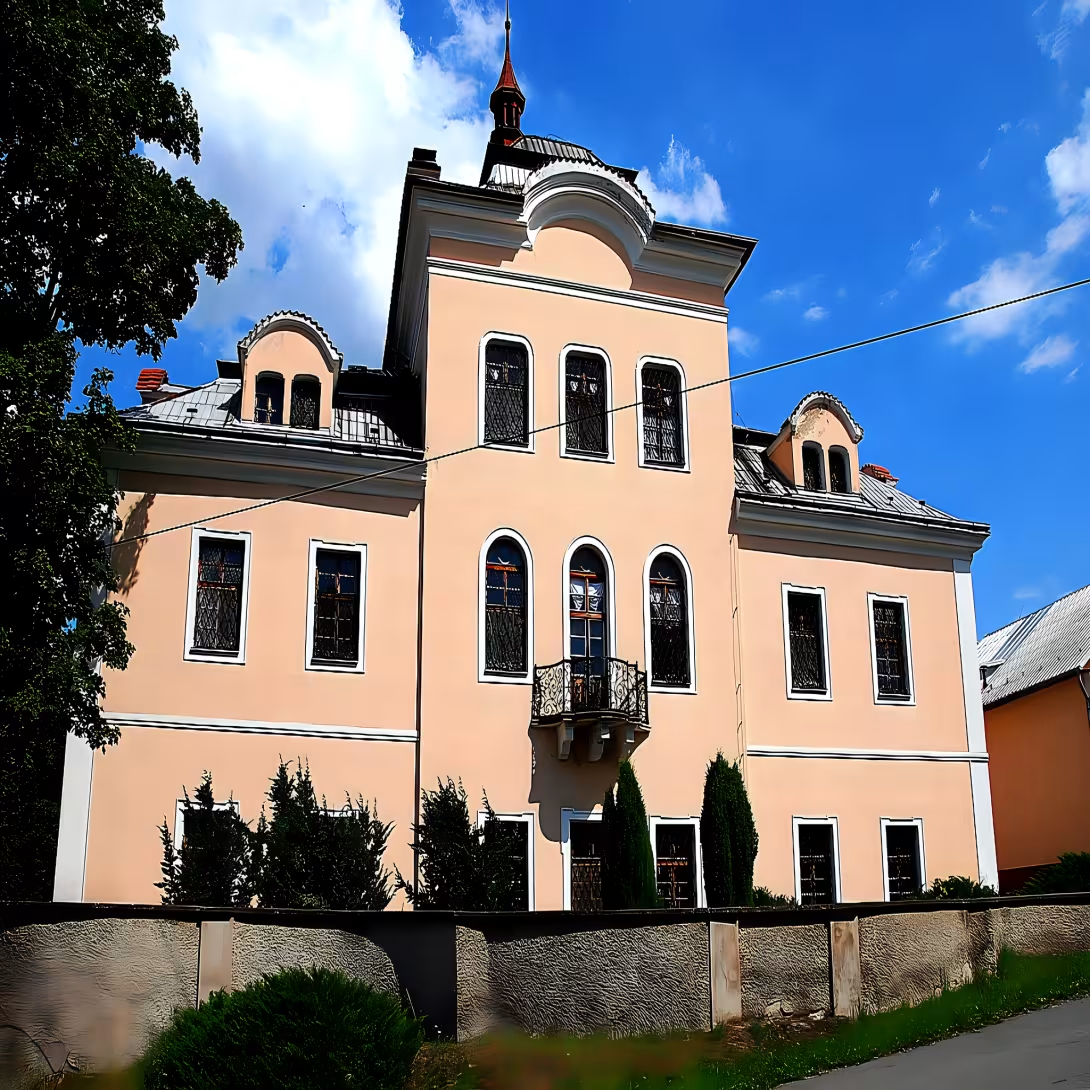
Zámek Nalžovice is located in the centre of the village Nalžovice in the district of Příbram in Sedlčansko in the Central Bohemian Region. It is a Baroque building from the 17th century, which was later rebuilt in the 19th century. The castle is registered in the Central List of Real-Estate Cultural Monuments and represents an important part of the local heritage.
Originally there was a medieval fortress that belonged to local flags. The construction of the Baroque castle began in the second half of the 17th century when Kryštof Koppl z Adlesbergu started it. The construction was subsequently completed by a renowned Prague doctor and scientist Mikuláš Franchimont z Frankenfeldu, who also owned a castle in nearby Kňovice. In the years 1690 to 1694 Franchimont had built the chapel of Our Lady of Pain in the castle park, which was realized by his son Antonín Alexander Franchimont.
The next stage of the development of the castle was 1741 when Jan Václav Alsterl from Astfeld won it. In 1750 to 1760 he continued to modify the construction. At the end of the 18th century, the castle became the property of the Hruškovsky family from Hruškov and several other owners gradually took over.
The Second World War brought fundamental changes to the castle. When the locals were expelled and the entire area turned into an SS military training facility, the castle was confiscated by the last owner of Franz Schwarzenberg. It became the seat of a military staff designed to vacate the country. It was particularly tragically served as the seat of the Supreme Court for SS officers from all over Europe. The SS officers who were given the death penalty by shooting were executed at the castle park wall.
After 1945, the castle became the property of the Ministry of Justice. Since 1952, the District National Committee has established a retirement home here. After the fall of communism in 1989, the castle was returned as a restitution to the last owners of the Schwarzenberg family, but it still serves as a home for people with disabilities.
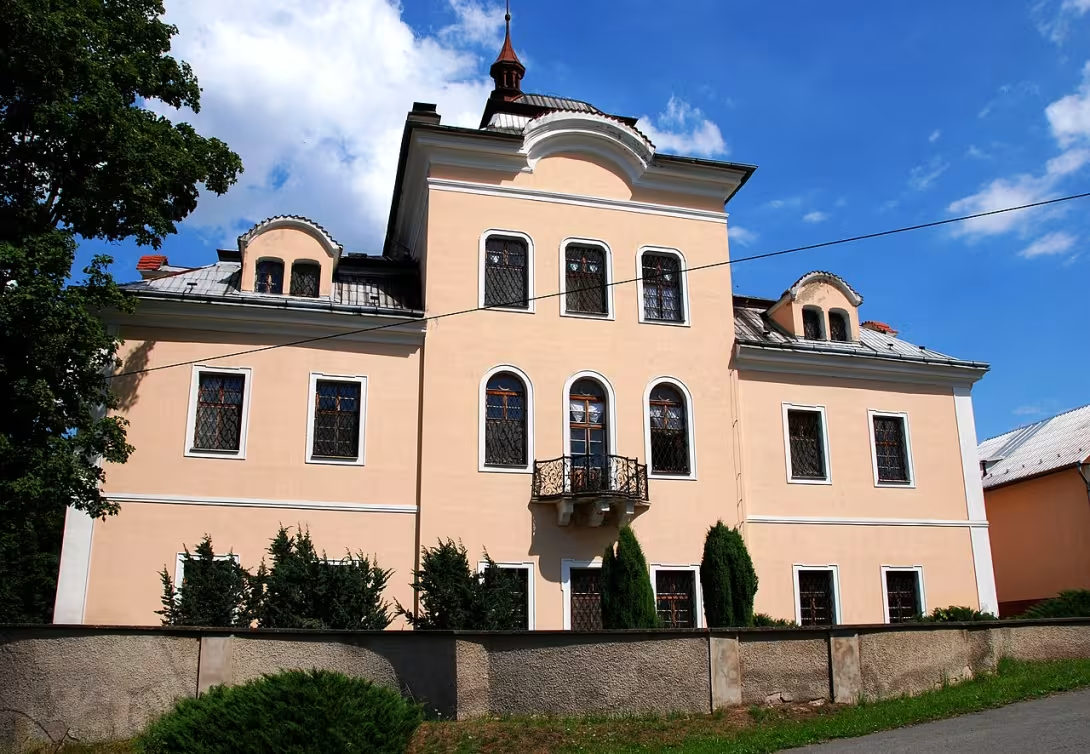
Architecturally, it is an extensive complex containing several buildings and parking areas. The actual castle is designed as a block construction of a rectangular plan. The centre of the building has two floors with a Mansard roof and a small turret, while the sides are single storey. The main facade of the castle, facing southwest, has seven window axes, side facades are six-axis. Part of the complex is a large economic courtyard with nine objects, two of which have very old historical cores.
In the English park northeast of the castle stands the chapel of the Virgin Mary Bolestý, originally a Baroque building. The chapel burned down in 1823 and was rebuilt in 1855 to 1859. In its interior there are paintings from the time of the second rococo and above the main altar is a polychrome statue of Pieta from the second half of the 17th century. The chapel is adjacent to the men's tomb and the whole area is defined by a wall.
Today the castle is not open to the public. After the restitution return to Schwarzenberg in 1989, home for disabled people continues to work here.
Then and now
Drag the slider to compare how the landmark may have looked when it was built with the view today.
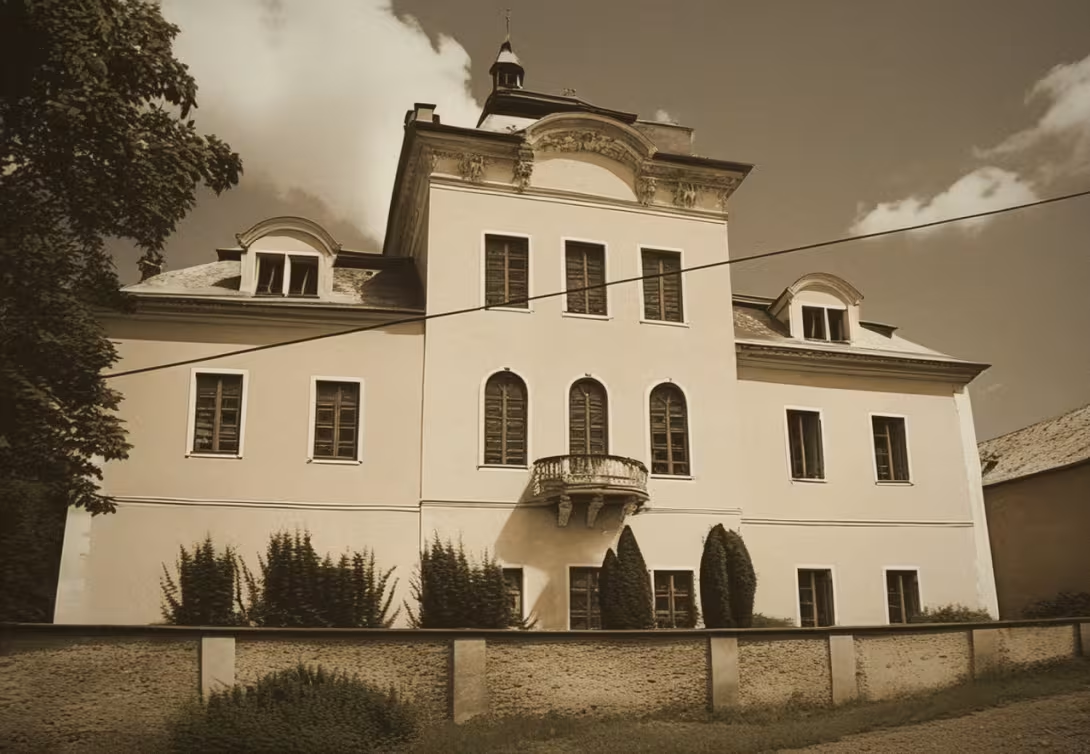
The historical appearance on the left is an AI-generated visualisation and serves as inspiration only.
Historical milestones
- 1690-1694
- The position of the chapel of the Virgin Mary the Painful.
- 1945
- The chateau became the seat of the Supreme Court for SS members from all over Europe.
Architectural development
The original Baroque castle was gradually expanded and modified in the 18th and 19th centuries. The architectural configuration includes a block construction with a two-storey central part, a mansard roof and a turret.
Historical events
- 1690-1694
- 1945
Owners
- 17th Century
- Kryštof Koppl z Adlesbergu
- 1690-1694
- Mikuláš Franchimont z Frankenfeldu
- 1741
- Jan Václav Alsterl of Astfeld
- 18th Century
- Hruškovský z Hruškov
- 1945-1952
- Ministry of Justice Czechoslovakia
- po 1989
- Schwarzenberg House
Points of interest
- Zámek Nalžovice is a Baroque building from the 17th century, which was later rebuilt in the 19th century. - Originally, a medieval fortress belonging to local flags stood at the castle. - The chapel of Our Lady of Pain was built in the castle park by Nicholas Franchimont and his son Antonín Alexander Franchimont between 1690 and 1694. - After World War II, the castle served as the seat of the Supreme Court for SS officers, where they were executed by death. - The castle is designed as a block construction of a rectangular plan with two floors and a small tower.
Guide
This guide is narrated by a synthetic voice generated by artificial intelligence.
Show guide text
This text was created by artificial intelligence and has not been editorially reviewed. It may contain inaccuracies.
Nalžovice Castle is located in the Sedlčansko region, in the center of the municipality of the same name in the Příbram district. Originally a Baroque building, it was rebuilt in the 19th century and is among cultural monuments.
A medieval fortified manor of local nobility originally stood on this site. The Baroque castle was begun in the second half of the 17th century by Kryštof Koppl z Adlesbergu. It was completed by Prague physician and scholar Mikuláš Franchimont z Frankenfeldu, who also owned the castle in nearby Kňovice. His son Antonín Alexander Franchimont had a chapel of Our Lady of Sorrows built in the castle park between 1690 and 1694. In 1741, Jan Václav Alsterl z Astfeldu acquired Nalžovice and further modified the castle between 1750 and 1760. At the end of the 18th century it passed to the Hruškovské z Hruškova family, and other owners succeeded them thereafter.
During the Nazi occupation, the inhabitants of Sedlčansko were expelled and the region became a training ground for SS troops. On the castle, confiscated from František Schwarzenberg, a military headquarters was established, which directed the evacuation of the territory. The highest court for SS members from all over Europe also met here. Those condemned to death by shooting were executed at the wall of the castle park.
After 1945 the castle belonged to the Ministry of Justice, and from 1952 the district national committee established a home for pensioners there. After 1989 it was returned in restitution to the last owners from the Schwarzenberg family. It continues to serve as a home for people with disabilities.
The extensive complex occupies the entire southwestern part of the municipality. It includes the castle building with auxiliary structures, an economic courtyard and a park with a chapel, a baronial tomb and a boundary wall. The courtyard consists of nine buildings, and one of the houses and a former granary have very old cores. To the northeast, the park is lined by highway number 119 between Dobříší and Sedlčany.
The castle is a block building of rectangular floor plan. The two-story central section is covered by a mansard roof with a small tower, the side sections are single-story. The main façade facing southwest has seven window axes, the side façades have six each.
The Chapel of Our Lady of Sorrows stands in an English park to the northeast of the castle and belongs to the Roman Catholic parish of Sedlčany. It burned down in 1823 and was rebuilt between 1855 and 1859. Inside are paintings from the period of so-called second Rococo. Above the main altar was placed a polychrome statue of Pietà from the second half of the 17th century.
Tips for visitors
The best time to visit Castle Nalžovice is in the spring or autumn season when vegetation in Sedlčansko is in full beauty and the atmosphere of the castle is calm. This time of year offers ideal lighting conditions for photography, especially in sun days with long shadows.
What to take with you: It is recommended to bring protective clothes and shoes suitable for walking on the lawn, especially in mountain terrain. Fill your inventory with drinking water and sunglasses if you plan to spend the whole day in the country.
Photography: The best places for photography include the castle garden and its surrounding terrace. The sunny morning or evening offers ideal lighting conditions that highlight architectural details and the natural beauty of the surroundings.
What to visit in the area: Last but not least it is possible to visit the local museum or explore the historical centre of Nalžovice, located near the castle. These places offer a further view of the region's cultural heritage.
Tips for families with children: The castle and its surroundings offer space for short walks and games outside. Children can enjoy exploring garden parks and perhaps look at some interactive elements in the surroundings.
Frequently asked questions
Can the monument be visited?
Some buildings of this kind are open for guided tours, others serve another purpose or are privately owned. We have not verified whether and when this monument is open – please ask the operator.
What are the opening hours and admission?
We have not verified the opening hours or admission. Current information is published by the operator.
Where is the monument?
Location: Nalžovice, Středočeský kraj. The map on this page shows the exact spot.
Why is the monument protected?
It is listed in the Central List of Cultural Monuments of the Czech Republic as a cultural monument (register no. 35629/2-2470).
For kids
Imagine going back to a time when the land was full of witches and secrets. Zámek Nalžovice was young and full of life back then. Who lived here? Those were people who liked nature and animals. They were hunting masters who caught moose and bears in the surrounding woods.
It was like a game where they played heroes. The castle was their mansion, where they would gather to talk about their adventures. What happened here? It was weddings and dances where people would come from all over the country to celebrate love and well-being.
Businesses nearby
Do you run a restaurant, accommodation, shop, museum, rental, wellness or other visitor service near this monument? Show yourself directly to the people heading to it — this is how they will see you in the app and on the web:
Nearby
Ambient landscape, other sights
Accommodation nearby
Themed route
Route: Circle of the castle Nalžovice
1. Naljovic ponds - nature reserves where you can stop for a walk and bird watching. 2. Naljovický forest - forest complex with variety of flowered and walking possibilities. 3. Church of St. Jacob the Greater - romantic church from the 14th century with remarkable interior.
Seasonal recommendations
Spring: Spring is the time when the Nalžovice lock comes to life. The woods around the castle are green and flowering, so it is an ideal opportunity to walk around the park and around the castle. We recommend visiting the castle on the eve of opening to avoid large crowds.
Summer: The Nalžovice Castle is full of life in summer. The woods are full of greenery and visitors can enjoy quiet walks around the park. We recommend to come before a larger crowd arrives so that they can see all the castle premises without undue waiting.
Autumn: In autumn the Nalžovice Castle is surrounded by beautiful autumn leaves. The woods are darkened and create a pleasant atmosphere. We recommend visiting the castle on the eve of opening to avoid large crowds.
Winter: In winter the castle Nalžovice is quiet and quiet. The woods are covered in snow and create a beautiful white landscape. We recommend visiting the castle on the eve of opening to avoid large crowds. Don't forget to wear warm clothes because temperatures can be low.
Visualizations and artistic views


The visualisations are generated by artificial intelligence and serve as inspiration.
Photos from the area
Real photos taken near the monument


Zdroj a licence jsou uvedeny u každého snímku.
Atmosphere of the place
This atmospheric visualisation of the place and period was generated by artificial intelligence. It is not real footage of the location.
Tips from visitors
No tips yet. Be the first!
Log in and add your tip.
Sources and literature
Photos: Pastorius / CC BY-SA 3.0, rozlišení zvýšeno umělou inteligencí — Wikimedia Commons. The author and licence also appear when you hover over the image.
Faktickým podkladem tohoto textu byl článek na Wikipedii, jehož autory jsou přispěvatelé Wikipedie. Článek je dostupný pod licencí CC BY-SA 4.0.
Location on the map




Příběhy a pověsti
Legendy, pověsti a příběhy spjaté s touto památkou
Fotografie návštěvníků
Zatím žádné fotografie. Buďte první, kdo přidá fotografii z návštěvy!
Log in a přidejte svou fotografii nebo hodnoťte.
Za ověřenou návštěvu v aplikaci získáte víc bodů — poznáme podle GPS, že jste na místě.
Reviews and comments