



železniční trať Most – Moldava v Krušných horách Water structure
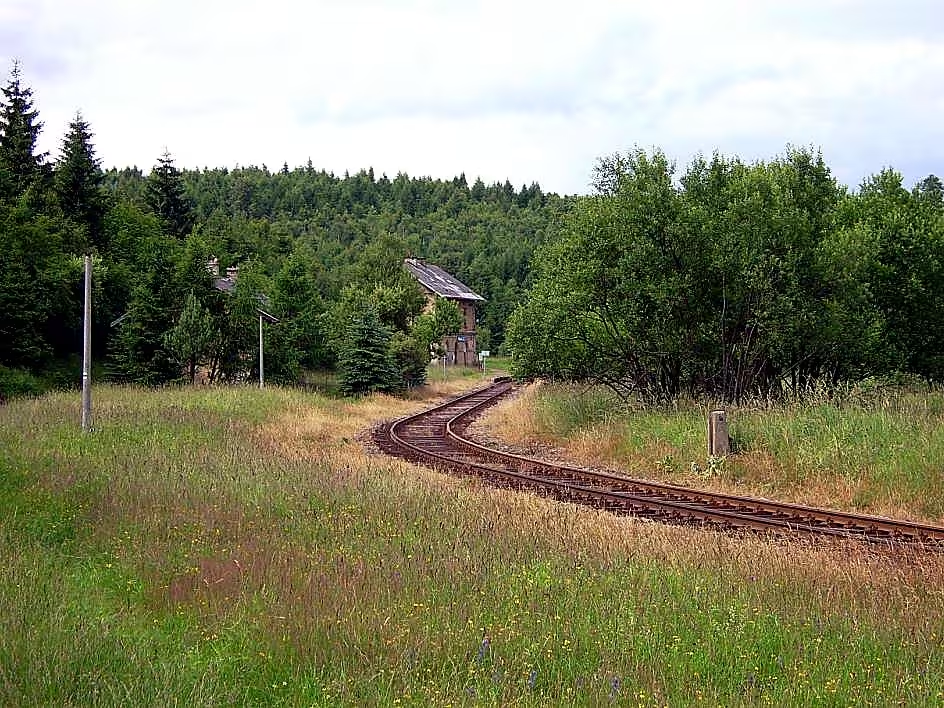
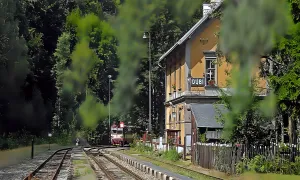
Moldova's track, also known as Teplický Semmering, connects the Bridge with Moldova in the Erzgebirge Mountains. It was built in the second half of the 19th century to export coal to Saxony and contributed to the industrial development of the region. In the interwar period it also became a tourist attraction.
The line was built by the Prague-ghost track to connect the Mostecká coal pelvis with Saxony. The first section of the Most-Grave opened on 15 May 1877 and the section of the Grave - Moldova in the Erzgebirge followed on 6 December 1884. Cross-border traffic to Freiberg began on 18 May 1885, which was crucial for carbon exports and regional industrial growth.
Architecturally it is known by a single-track railroad 26,6 kilometres long. The Louka section near Litvinov - Moldova has been registered as a cultural monument since 1998 due to historical and technical characteristics.
The track went through several stages of administration, especially during the First World War, when the Czech and Saxon parts were united. After 1945, cross-border traffic was lost, which led to a reduction in the importance of the mountain section. In the 1960s and 1970s, some parts of the line were transferred because of coal mining.
Negotiations on the possibility of reconnecting with Freiberg have been ongoing since 2008, but political decisions have been lacking. In March 2017, the landslide in Mikulov caused the closure of the transport line, which was reconstructed until October 2018.
Today the line is managed by the Railway Infrastructure Administration and there are passenger trains Railway Capital and express trains GW Train Regio. The track attracts tourists with its historical significance and beautiful landscape views.
Moldova's track is an important cultural monument that reflects the region's industrial heritage. Its history and architectural solutions make it an interesting destination for tourists and historians. The visit offers an opportunity to explore the rich history of the Erzgebirge Mountains and to understand the importance of the railway for regional development.
Historical milestones
- 1998
- The Louka section near Litvinov - Moldova was registered as a cultural monument.
- 2017
- The landslide in Mikulov led to the closure of the transport line.
- 2018
- The reconstruction of the Mikulov- Moldova section has been completed.
Historical events
- 1877
- Opening of the Most-Grave section.
- 1884
- Completion of the section Grave - Moldova in the Erzgebirge Mountains.
- 1945
- The occupation of the Red Army line and the closure of cross-border traffic.
Points of interest
- The track known as Teplický Semmering connects the Bridge to Moldova in the Erzgebirge. - It was built to export coal to Saxony and contributed to the industrial development of the region. - The Louka section near Litvinov - Moldova is registered as a cultural monument since 1998 thanks to historical and technical properties. - The track went through the stages of administration, especially during the First World War, when the Czech and Saxon parts were united. - The landslide in Mikulov caused the closure of the transport line in 2017, which was reconstructed until October 2018.
Guide
Show guide text
This text was created by artificial intelligence and has not been editorially reviewed. It may contain inaccuracies.
Welcome to a place where the relentless power of the human spirit meets the untamed beauty and rugged nature of mountain nature. You are standing in the Dubí area, in the very heart of the beautiful and mysterious Ernest Mountains. Before you go any further, stop for a moment and look around you. Feel this space with all your senses. Do you see the steep slopes above you and the deep valleys through which the road is rolling? It is here, in this mountain environment, that a story is taking place that is deeply linked to the industrial history of our entire region. This railway line that you are now observing is not just an ordinary transport section for transporting people or goods. It is a monumental technical work that has had to overcome huge natural obstacles to bring together human destinies, economic power and cities. Can you feel the strange atmosphere? It's air full of history, technical progress and constant, age struggle between man and mountain matter.
Let us now move further into the past together so that we really understand why this place has gained such a significant weight and why it is so important to us today. To understand the essence of everything you see, we must return to the second half of the nineteenth century. That was the era when the world around us was changing because of steam, iron and especially coal. This track, which connects the Bridge with Moldova, was not built for tourist entertainment, as we may see today. Its creation had a very clear, practical and uncompromising goal. The whole region was in full bloom at the time because of intense mining. The main task of this railway was to ensure safe, fast and especially constant transport of black gold, i.e. coal, to neighbouring Saxony. Imagine the tremendous effort and logistical challenge that people were facing back then. Thousands of tons of coal had to travel every day through these steep mountains to power machines abroad and keep fires in factories and households. This line was a real artery to industrial development. Without it, economic growth in this area would not be so fast and so effective. But with time, her character began to change. In the period between the two world wars the track became a popular place for people who were looking for an escape from the urban rush and for peace in nature. The pure industrial pillar became a journey for travelers and lovers of mountain beauty who wanted to experience adventure in these heights.
Now pay attention to what is right in front of you. Although it is not a building with high towers or decorated facades, its true beauty is hidden in technical precision and in how it was able to align itself with extremely demanding terrain. This track is known in professional circles as Teplický Semmering. That name is not random at all. It reminds you of other famous mountain tracks and immediately tells you what you can expect in this environment. It is a track with a great elevation that flows through mountains and requires incredible technical skill at every metre of its lead. Feel the railroad trying to use every piece of space nature has allowed. Focus on the technical details you can see here. It is a real water work and technical art in one, because every detail had to take into account the work with water and the stability of slopes. Every stone detail, every leveling of terrain, and every way the track was put into a rock or slope, tells the story of human ingenuity. Although these details may be inconspicuous to the eye of the layman, for anyone who understands construction, they are evidence of incredible work. Take a look at the surrounding environment and see how human work strives in harmony, albeit with great effort, to align with the face of the mountain.
Although we will not find in our records the names of particular architects or famous personalities who direct this line, we must imagine them in our minds. Imagine the thousands of workers who laid every track here in difficult and dangerous conditions, in rain, in snow and in cold. Imagine the engineers who had to perform complex calculations to make each slope and every arc safe for heavy freight trains carrying coal. We don't know their faces, but their legacy is still alive and tangible here. It is a legacy of people who believed in the power of technology and in building connections between people, cities and states. This track was for them and for the people around it an eye to the wider world, a path that brought movement, life and new possibilities for the whole region.
It may seem to you that this railroad is indestructible, but nature always demands its price. I want to tell you one interesting, albeit slightly dramatic, event that took place in the recent past. In the year two thousand and seventeen something very unexpected and disturbing happened in the Mikulov region. There were landslides which were so strong that they had to lead to a complete closure of the line for all transport. This whole section, which was so historically important, suddenly quieted. People were worried that this historic journey would ever be reopened and that nature would never take possession of it. Fortunately, however, human will and technical knowledge have proved stronger than unstable soil. During the year two thousand and eighteen, the reconstruction of the section between Miklov and Moldova was completed and the track came back to life. This event reminds us of how fragile our technology can be in confrontation with the country's unsurpassed forces. And remember, since the year 2000, thanks to its exceptional historical and technical characteristics, this section, specifically between Louka and Litvinov and Moldova, has been registered as a cultural monument. This means that its value is not only in its current functionality, but in what it represents for our common heritage and our history.
Now that you've learned more about this special place and its difficult journey through time, I suggest you continue your journey. Go through the surrounding countryside, feel the silence of the mountains and the sound that still resonates. Each meter of this track has its own story, waiting for you to discover it yourself. Thank you for spending this moment with us and for taking an interest in the history of this place. We wish you a wonderful journey and many other experiences in the next survey of our historical shredders. Goodbye.
Tips for visitors
The best time to visit the railway line Most - Moldova in the Erzgebirge Mountains is the early spring or late autumn. In these months the landscapes are particularly charming, and vegetation offers beautiful colors without overloading tourists. This time of the year also provides ideal conditions for photography when light is softer and shadows less.
It is possible to use both a passenger car and public transport for transport to the place. When planning the journey, it is advisable to check the current connection in the traffic search engine in order to find the most efficient route.
When visiting the track, bring protective clothes and shoes suitable for walking on mountain terrain as the room is in the mountain area. Fill your tray with drinks and light meals, especially if you are planning long walks or photography.
For families with children the track is an interesting opportunity to learn about the history of railways and technical innovations of the 19th century. Children can be fascinated by the architecture of the water works and the fun details of the track. In addition, the surrounding nature offers possibilities for various outdoor activities, making the visit attractive even for younger ones.
The surrounding area offers interesting places such as the historic railway bridge and natural parks. These locations are ideal for walks, football games or just relaxing in nature. Exploring these places gives a comprehensive impression of the region and allows you to enjoy the beauty of the Erzgebirge Mountains.
Frequently asked questions
Can the monument be visited?
This is a structure in a public space that can usually be seen from outside free of charge. We have not verified that this particular one is freely accessible.
Where is the monument?
Location: Dubí. The map on this page shows the exact spot.
Why is the monument protected?
It is listed in the Central List of Cultural Monuments of the Czech Republic as a cultural monument (register no. 1000163251).
Businesses nearby
Do you run a restaurant, accommodation, shop, museum, rental, wellness or other visitor service near this monument? Show yourself directly to the people heading to it — this is how they will see you in the app and on the web:
Events nearby



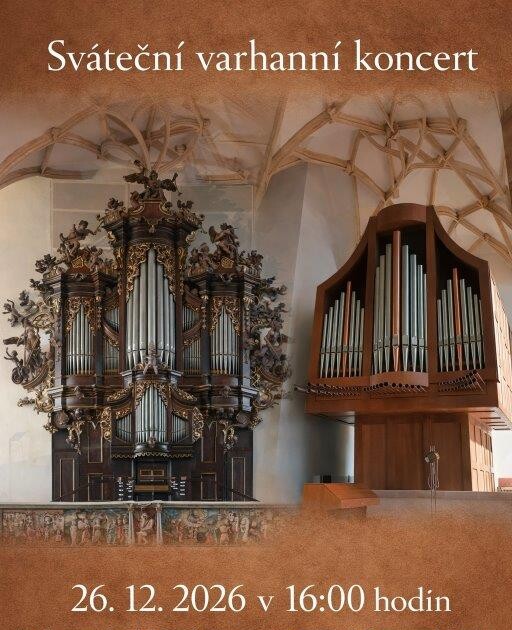
Zdroj akcí: otevřená data měst a obcí ČR (Národní katalog otevřených dat) a kalendář akcí Národního památkového ústavu.
Nearby
🏰 Historic sites (99)
- Veteráni Litvínov 1.6 km web
- John Halstead Banks 1.9 km
- Francisco Ferrer 1.9 km
- Obětem koncentračních táborů 1.9 km
- Podkrušnohorské technické muzeum 4.2 km web
- Pohřebiště u dolu Bílina 4.7 km
- Obětem katastrofy na dole Nelson 4.9 km
- Rýzmburk 5.0 km
- Památník na katastrovu dolu 5.4 km
- Václav Bradáč 7.8 km
- Původní umístění Děkanského kostela 7.9 km
- Zámek Duchcov 8.1 km nám. Republiky 202/9 +420 417 835 301 web
- Hněvín 8.1 km Hradní 577/2
- Muzeum města Duchcova 8.2 km Masarykova 71/7
- Morový sloup Nejsvětější trojice 8.2 km
- Socha Karla Havlíčka Borovského 8.2 km
- Pomník obětem 1. světové války 8.4 km
- Oblastní muzeum a galerie 8.5 km Čsl. armády 1360/35 web
- Na Památku vojenským obětem komunistického bezpráví 8.5 km
- Památník Rudé Armády 8.8 km
🍽️ Restaurants and dining (230)
- Stop Cafe 1.0 km
- bowling-litvínov 1.3 km Vinohradská 875 +420 775 040 406 web
- Nudle 1.4 km
- Elixír 1.5 km
- U radnice 1.5 km
- U Mlsnýho kocoura 1.5 km
- The North 1.6 km
- Čína 1.6 km
- U Hrušků 1.6 km
- Loutkárna 1.7 km Gorkého 1599
- Music bar půda 1.7 km
- Srdcovka Osada 1.7 km Podkrušnohorská 1711
- Stop Cafe 1.8 km
- Barborka 1.9 km
- U partika 2.0 km
- U Bílého sloupu 2.1 km Chudeřínská 370
- La ponto 2.1 km
- Rudý dům 2.3 km Chudeřínská 94 web
- Restaurace Loučky 2.5 km
- Apollo 2.5 km
🏨 Accommodation (73)
- The North 1.6 km
- Hotel Loučky 2.5 km Máchova 1727
- Lázně Meziboří 3.9 km
- Autocamp Osek 4.9 km +420-603 523 489 web
- Chata Emeran II 6.0 km
- Hotel Emeran 6.1 km +420 727 803 833 web
- Penzion Stará škola 6.5 km web
- Hotel Nádraží 6.6 km Černická 25/20 +420 602 673 279 web
- Penzion Studánka 6.9 km Klíny 42 +420 732 399 255 web
- Kemp - tábořiště Matylda 7.6 km +420 725 958 011 web
- Selský dvůr, s.r.o. 7.6 km Bílinská 16
- ubytování a jídelna DTS Vrbenský 8.0 km
- Hotel Casanova 8.6 km web
- U Hořáků 8.6 km 417875197
- Motel Sport 8.7 km
- Domino 9.2 km tř. Budovatelů 2831/54
- Rezidence Bělehradská 9.6 km Bělehradská 531/36
- EuroCamp 10.1 km
- Cascade 10.1 km Radniční 3
- trampska osada "Husovka" 10.2 km
🚲 Rentals and sport (41)
- Lukostřelecký klub Litvínov 1.3 km web
- Sportisimo 1.9 km
- Plavecký bazén 2.0 km
- 3D bludiště v korunách stromů 4.9 km
- Koupaliště Osek 5.0 km
- Multifunkční sportovní hala 6.0 km
- Půjčovna lyží a snowboardů 6.0 km
- Přírodní Koupaliště 7.5 km
- Autodrom Most 8.6 km
- Carbonia Racing Arena 8.7 km Hřbitovní web
- Tenisové kurty 8.8 km
- Zimni stadion Most 9.0 km
- Sportovní hala 9.4 km
- Mětská policie Most 9.5 km
- 3D bludiště 10.3 km web
- Tenisové kurty Bílina 10.8 km Kyselská 410 775 547 956 web
- Atletický stadion Bílina 10.8 km
- Fotbalový stadion Bílina 10.9 km
- Aquadrom Most 10.9 km Topolová 801 +420 476 127 842 web
- Černá hala Bílina 11.2 km Studentská 584/7
🥾 Hiking and nature (194)
- Voigtovy sady 1.4 km
- Zámecký park 1.6 km
- Pramen 2.0 km
- Vývěr důlní vody 3.2 km
- Salesiova výšina 3.9 km
- Lounická kopec 4.1 km
- Špičák 4.3 km
- Lounický vrch 4.9 km
- Holubí vrch 5.2 km
- Janův vršek 5.5 km
- Vlči Hora 6.1 km
- Snezna Vezicka 6.1 km
- Varhany 6.1 km
- Ledova Stenka 6.1 km
- Ve Strzi 6.1 km
- PP Kopistská výsypka 6.2 km web
- Loučná 6.3 km
- Studenec 6.3 km
- Medvědí zuby 6.4 km
- Stropník 6.4 km
Accommodation nearby
Trips and activities nearby
Guided tours, tickets and activities nearby from GetYourGuide
Affiliate link: if you buy from the partner, we may receive a commission. The price for you does not change.
Search tours and activities →Themed route
Thematic cruise route: Railway line Bridge - Moldova in the Erzgebirge Mountains
1. Railway line Bridge - Moldova (water work) - Type: historical railway - Why is it worth a visit: This track is one of the oldest in the Czech Republic and represents the technical success of the 19th century, when it was built over the Krusty Mountains. It is an ideal place for those who like the history of railways and the architecture of water works.
2. Gunfire Dubí - Type: military monument - Why is it worth a visit: This historic shooting range was part of the defense system during World War II. Today it is open to the public and offers an interesting view of the history of the region.
3. Bridge at Dubí - Type: bridge - Why is it worth a visit: This bridge crosses the White River and is an important element of local infrastructure. Its history and architecture are interesting for those interested in construction and transport connections in the Erzgebirge Mountains.
4. Municipality of Dubí - Type: city - Why is it worth visiting: The town offers a view of life in the region with its historic buildings and picturesque natural landscape. It is an ideal place to relax after exploring technical monuments.
5. Railway station Dubí - Type: railway station - Why is it worth a visit: The station is part of the history of the Railway Bridge - Moldova. It is a place where you can experience the movement on the old tracks and see how they are used today for hiking trips.
This route offers a combination of technical monuments and historical sites that allow a deeper understanding of the region of the Erzgebirge Mountains.
Seasonal recommendations
Spring: During the spring season železniční trať Most – Moldava v Krušných horách is lit with warm rays of the sun, which project into green flowers of trees and shrubs. The atmosphere is full of life with the wreckage of birds, creating pleasant sounds in the landscape. At this time, clothing may be light, but it is recommended to wear a cool jacket for sudden climate change. The best time to visit is at noon, when the sun illuminates the entire panoramic view.
Summer: Summer brings long days full of light and heat, allowing you to explore the track in peace. Nature is at the peak of its beauty with thick leaves of trees and flowering bushes that make a beautiful background. This season it is recommended to wear light clothes and protective sunglasses. The best time to visit is in the early afternoon when the temperature is not too high.
Autumn: In autumn the track turns into a gold and red pearl when tree leaves fall. The atmosphere is calm and quiet, offering ideal circumstances for relaxing and enjoying the beauty of changing seasons. It is recommended to wear warmer clothes with a mild cladding cape, as nights may be cold. The best time to walk is at noon, when the sun still illuminates the landscape.
Winter: Winter brings the track to a quiet and quiet atmosphere with snow cover. Light is weaker and longer nights, which creates magical light effects, especially in the evening. It is recommended to wear warm clothes with moisture protection such as fur coats and snow shoes. The best time to visit is at noon, when the sunlight lights up the snow landscape.
Visualizations and artistic views

The visualisations are generated by artificial intelligence and serve as inspiration.
Photos from the area
Real photos taken near the monument


Zdroj a licence jsou uvedeny u každého snímku.
Tips from visitors
No tips yet. Be the first!
Log in and add your tip.
Sources and literature
Photos: Original uploader was Miloš Miličevič at cs.wikipedia / Public domain — Wikimedia Commons. The author and licence also appear when you hover over the image.
Faktickým podkladem tohoto textu byl článek na Wikipedii, jehož autory jsou přispěvatelé Wikipedie. Článek je dostupný pod licencí CC BY-SA 4.0.
Location on the map
Příběhy a pověsti
Legendy, pověsti a příběhy spjaté s touto památkou

Fotografie návštěvníků
Zatím žádné fotografie. Buďte první, kdo přidá fotografii z návštěvy!
Log in a přidejte svou fotografii nebo hodnoťte.
Za ověřenou návštěvu v aplikaci získáte víc bodů — poznáme podle GPS, že jste na místě.
Reviews and comments