



kostel Neposkvrněného početí Panny Marie (Dubí) Church
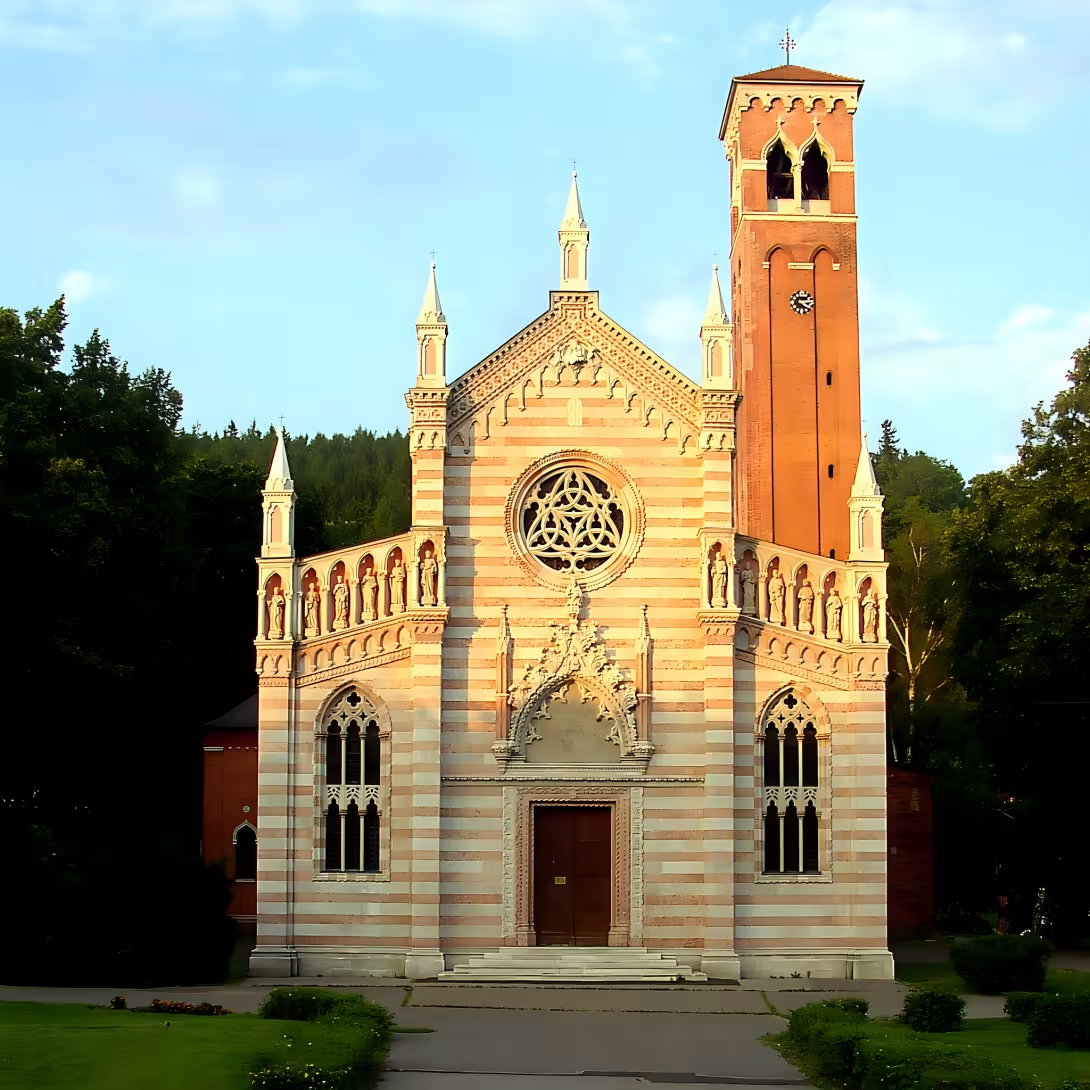
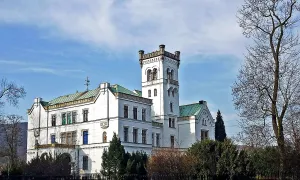
The Church of the Immaculate Conception of the Virgin Mary in Dubí is a remarkable sacred building that stands as a testament to architectural innovation and cultural heritage. Located at the upper part of the town near the road to Cínovec, this church was designed by Pietro Bigaglia, an architect from the Academy of Fine Arts in Venice. Constructed between 1896 and 1906 using red and white marble imported from Italy, it is celebrated as an exotic example of Italian Gothic architecture within the Czech Republic. The church serves both religious and cultural purposes and is protected as a cultural monument.
The construction was funded by public collections supplemented by Maria Carlosem Clary-Aldringen and his family. This initiative reflects the late 19th and early 20th centuries' interest in historical styles and international influences, during which Bohemia was part of the Austro-Hungarian Empire. The church's design draws inspiration from Venice’s Madonna dell’Orto, showcasing a unique blend of local and Venetian architectural elements.
Architecturally, the Church is a three-nave basilica with a high spire on the presbytery's side wall. Its construction features brick structures adorned with marble details in red and white. The façade consists of strips of these marbles, creating a striking visual contrast. A centrally located portal features a statue of Madonna within the church’s axis. Flanking this central section are buttresses with statues of saints in niches, adding to its grandeur.
The interior includes a coffered ceiling in the main nave, while the presbytery boasts a ribbed vault with star-shaped termination. The furnishings are of Neo-Gothic style from around 1900, featuring a main altar with a four-tiered retable made of white marble. This retable includes reliefs depicting Madonna and a Crucifixion scene, surrounded by statues of apostles and other saints.
The church also houses a family crypt for members of the Clary-Aldringen family. In the 1950s, archaeological research revealed Romanesque foundations beneath the church's courtyard, adding another layer to its historical significance.
Today, the Church remains an important cultural and religious site in Dubí. Its unique architectural style and historical context make it a valuable monument worth visiting. The church not only serves as a place of worship but also stands as a symbol of the rich cultural exchanges that have shaped the region's history. Visitors are invited to explore this northernmost example of Venetian architecture, where they can appreciate its beauty and significance in the Czech Republic's architectural landscape.
Then and now
Drag the slider to compare how the landmark may have looked when it was built with the view today.
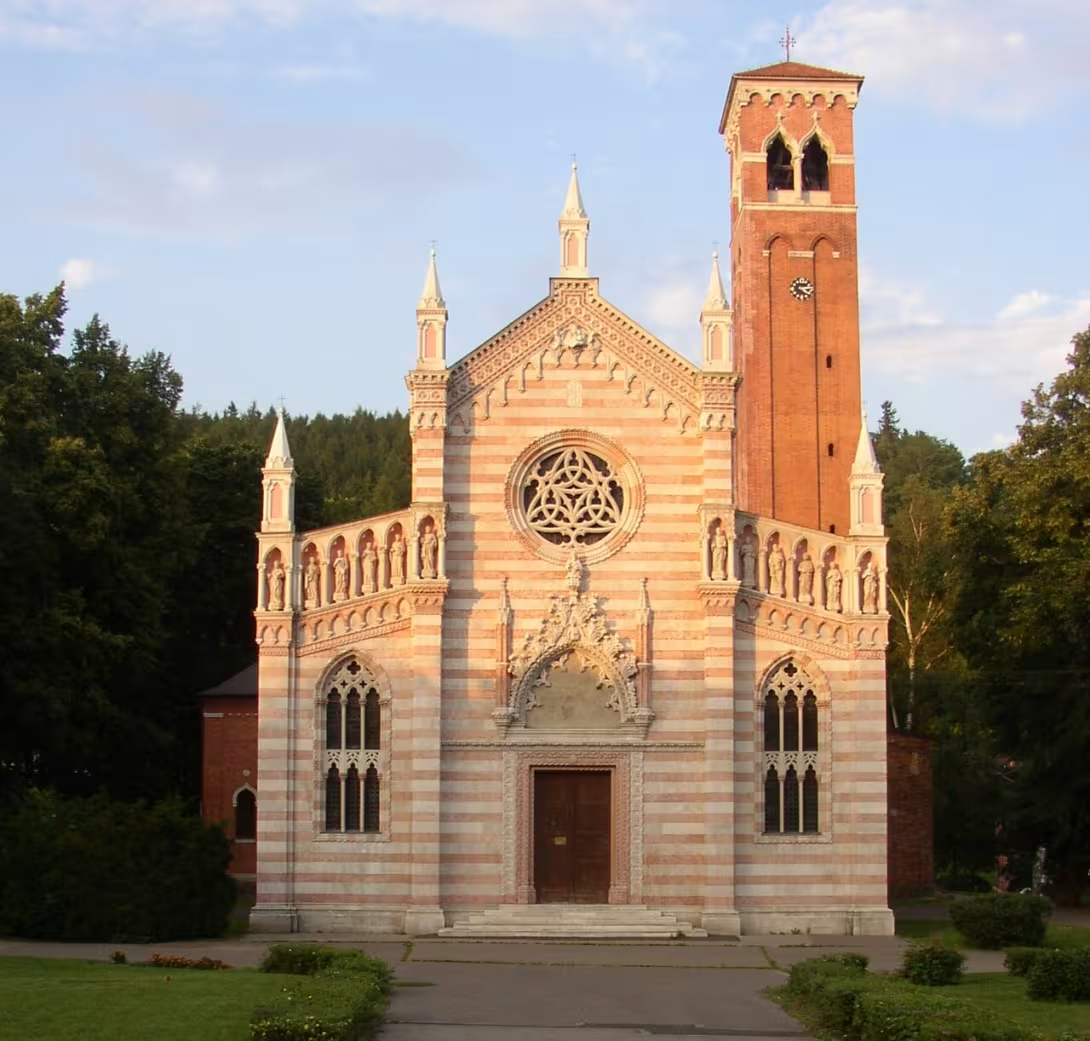

The historical appearance on the left is an AI-generated visualisation and serves as inspiration only.
Historical milestones
- 1896
- Začátek stavby kostela Neposkvrněného početí Panny Marie v Dubí.
- 1906
- Dokončení a otevření kostela Neposkvrnělého početí Panny Marie.
- 1950s
- Archeologické vykopávky odhalily románské základy pod nádvořím kostela.
Architectural development
The church was built using red and white marble imported from Italy. Its design follows a late Gothic style typical of Venice, featuring a three-nave basilica with a high spire on the presbytery's side wall. The interior includes a ribbed vault in the main nave and a star-shaped vault in the presbytery.
Historical events
The construction was funded by public collections supplemented by Maria Carlosem Clary-Aldringen and his family, completed in 1906.
In the 1950s, archaeological research revealed Romanesque foundations beneath the church's courtyard.
Points of interest
- The Church of the Immaculate Conception of the Virgin Mary in Dubí was designed by Pietro Bigaglia, who studied at the prestigious Academy of Fine Arts in Venice, highlighting a direct link between Venetian and Czech architectural traditions.
- Despite its Italian Gothic style, the church's construction utilized locally sourced materials such as brick for structural elements, with red and white marble imported from Italy to create distinctive decorative details.
- The church features a family crypt dedicated to the Clary-Aldringen family, who were instrumental in funding its construction, reflecting their significant influence and patronage during that era.
- Archaeological excavations in the 1950s uncovered Romanesque foundations beneath the church's courtyard, revealing layers of historical development and architectural evolution at the site over centuries.
- The main altar’s retable includes intricate reliefs depicting Madonna and a Crucifixion scene, surrounded by statues of apostles and other saints, showcasing the Neo-Gothic style prevalent around 1900.
Guide
This guide is narrated by a synthetic voice generated by artificial intelligence.
Show guide text
This text was created by artificial intelligence and has not been editorially reviewed. It may contain inaccuracies.
The Church of the Immaculate Conception of the Virgin Mary in Dubí near Teplice is a piece of Venice in the foothills of the Krušné Mountains. It was designed by Pietro Bigaglia, a professor at the Academy of Fine Arts in Venice, and he took the Venetian church Madonna dell'Orto as his model. It stands in the upper part of the municipality by the road to Cínovec and is protected as a cultural monument of the Czech Republic.
The building was created from funds raised by public collection, which were supplemented by Maria Carlos Clary-Aldringen and his family. Members of the Clary-Aldringen family also rest here in their family tomb. The execution was entrusted to Teplice entrepreneur Heinrich Siegmund, with Teplice architect Max von Loos and stonemason Josef Seiche working on the interiors. The cornerstone began to be laid on June 28, 1897 and the church was consecrated on October 21, 1906. Building materials were transported from Italy. To this day it serves religious, cultural and social purposes and is the northernmost building of Venetian architecture.
In the surrounding area it appeared as an exotic example of Italian Gothic. Its creators, however, had no idea that beneath the courtyard of the nearby Teplice castle lay the foundations of a similar three-aisled basilica. It was Romanesque and was built by Queen Judita, mother of Přemysl Otakar I. Archaeologists discovered it only in the 1950s.
The church is a three-aisled basilica with a higher central nave and a tall prismatic tower on the side wall of the presbytery. It is brick with marble details. The façade is made up of stripes of red and white marble. In the middle is a portal with a statue of the Madonna, and on either side are buttresses with statues of saints in niches. Above the pointed windows runs a string course of arches and above that the so-called dwarf gallery, again with statues of saints. The triangular gable ends with an ornamental turret.
Inside, the main nave has a flat coffered ceiling, the presbytery is covered with cross ribbed vaulting. The Neo-Gothic furnishings date from around 1900. The main altar of white marble has four storeys of reliefs, with a throned Madonna in the centre and above it a group depicting the Crucifixion. The pulpit is also marble, resting on six twisted columns.
Originally there were also genuinely Gothic altarpieces with seven painted saints. The painting from 1370 to 1390 is attributed to the Venetian master Jacobello di Bonomo. Today they are displayed in the Diocesan Museum in Litoměřice.
In the south tower hangs a bell from 1925 by Rudolf Perner. One floor below lies a small cast-iron bell from 1919 with an illegible inscription.
Frequently asked questions
Can the monument be visited?
Religious buildings are usually open mainly during services; at other times a visit is normally arranged with the parish or the operator. We have not verified specific times.
Where is the monument?
Location: Ruská, Dubí, Ústecký kraj. The map on this page shows the exact spot.
Why is the monument protected?
It is listed in the Central List of Cultural Monuments of the Czech Republic as a cultural monument (register no. 43071/5-2579).
Businesses nearby
Do you run a restaurant, accommodation, shop, museum, rental, wellness or other visitor service near this monument? Show yourself directly to the people heading to it — this is how they will see you in the app and on the web:
Nearby
The church is located at the top part of Dubí near the road to Cínovec. It stands amidst a landscape that includes natural features and other historical sites within a 5 km radius.
Accommodation nearby
Trips and activities nearby
Guided tours, tickets and activities nearby from GetYourGuide
Affiliate link: if you buy from the partner, we may receive a commission. The price for you does not change.
Search tours and activities →Themed route
Tematická výletní trasa: Kostel Neposkvrněného početí Panny Marie (Dubí)
1. Kostel Neposkvrněného početí Panny Marie (Dubí) - Hlavní cíl
Typ: Náboženský památník
Proč stojí za návštěvu: Tento barokní kostel, postavený v 18. století, je největší a nejlépe zachovanou sakrální budovou v obci Dubí. Jeho bohatě zdobená interiér a historická architektura nabízejí pohled na minulost této oblasti.
2. Nádvoří kostela
Typ: Historické nádvoří
Proč stojí za návštěvu: Nádvoří před kostelem je ideálním místem pro relaxaci a prohlédnutí sebou. Zde si můžete užít klidné chvilky, zatímco si všimnete detailních architektonických prvků kostela.
3. Věž kostela
Typ: Historická věž
Proč stojí za návštěvu: Výstup na věž nabízí jedinečnou perspektivu na obec Dubí a okolní krajinu. Je to nejen krásné místo pro fotografování, ale také příležitost si užít pohledy z vyšší výšky.
4. Kaple Panny Marie
Typ: Kaplička
Proč stojí za návštěvu: Tato malá kaple, nacházející se blízko kostela, je místo klidu a modlitby. Její jednoduchost kontrastuje s barokním slohem hlavního kostela a nabízí jiný pohled na duchovní život v obci.
5. Park u kostela
Typ: Místní park
Proč stojí za návštěvu: Park okolo kostela je ideálním místem pro krátkou procházku a odpočinek při výletu. Jeho zelené prostory jsou dokonalé pro relaxaci a užívání si klidného prostředí.
Tato trasa nabízí komplexní pohled na historický a kulturní život obce Dubí, zaměřený zejména kolem jejího nejvýraznějšího památky - kostela Neposkvrněného početí Panny Marie.
Seasonal recommendations
Spring: Visiting the Church of the Immaculate Conception of the Virgin Mary in Dubí during spring offers a serene experience as nature awakens around you. The surrounding landscape is adorned with blooming flowers and lush greenery, creating a picturesque backdrop for this historic site. With milder temperatures, it's an ideal time to explore the church without the crowds typical in peak tourist seasons. To make the most of your visit, wear comfortable walking shoes and light layers as the weather can be unpredictable. Arriving early allows you to enjoy the tranquility before any visitors arrive.
Summer: Summer brings vibrant life to Dubí, with warm sunshine illuminating the Church of the Immaculate Conception of the Virgin Mary in a golden glow that enhances its architectural beauty. This is the peak tourist season, so expect larger crowds and longer wait times for entry. To avoid the midday heat, plan your visit early in the morning or later in the afternoon. Dress in light, breathable clothing and don't forget to bring sunscreen and sunglasses. The surrounding natural scenery is lush and inviting, perfect for a leisurely stroll after exploring the church.
Autumn: Autumn offers a magical atmosphere at the Church of the Immaculate Conception of the Virgin Mary, as the foliage around Dubí turns into shades of red, orange, and gold. This season provides a quieter visit compared to summer, with fewer tourists and a more intimate experience. The cooler temperatures are perfect for wearing layers, allowing you to adjust comfortably throughout your exploration. Consider visiting during a weekday to enjoy even less crowded surroundings, making it easier to appreciate the church's intricate details against the autumnal backdrop.
Winter: Winter transforms Dubí into a tranquil wonderland, with snow often blanketing the area around the Church of the Immaculate Conception of the Virgin Mary. The stark beauty of the church is highlighted by the crisp winter air and potential icicles adorning its structure, creating a unique and serene atmosphere. Be sure to dress warmly in layers, wear waterproof boots for any icy paths, and carry gloves and a hat. As daylight hours are shorter, plan your visit during midday when natural light best illuminates the church's features. Keep in mind that opening times may be reduced, so check ahead before you go.
Visualizations and artistic views


The visualisations are generated by artificial intelligence and serve as inspiration.
Photos from the area
Real photos taken near the monument

Zdroj a licence jsou uvedeny u každého snímku.
Tips from visitors
No tips yet. Be the first!
Log in and add your tip.
Sources and literature
Photos: User:Miaow Miaow / Public domain, rozlišení zvýšeno umělou inteligencí — Wikimedia Commons. The author and licence also appear when you hover over the image.
Faktickým podkladem tohoto textu byl článek na Wikipedii, jehož autory jsou přispěvatelé Wikipedie. Článek je dostupný pod licencí CC BY-SA 4.0.
Location on the map



Příběhy a pověsti
Legendy, pověsti a příběhy spjaté s touto památkou
Fotografie návštěvníků
Zatím žádné fotografie. Buďte první, kdo přidá fotografii z návštěvy!
Log in a přidejte svou fotografii nebo hodnoťte.
Za ověřenou návštěvu v aplikaci získáte víc bodů — poznáme podle GPS, že jste na místě.
Reviews and comments