



židovský hřbitov v Jihlavě Jewish cemetery
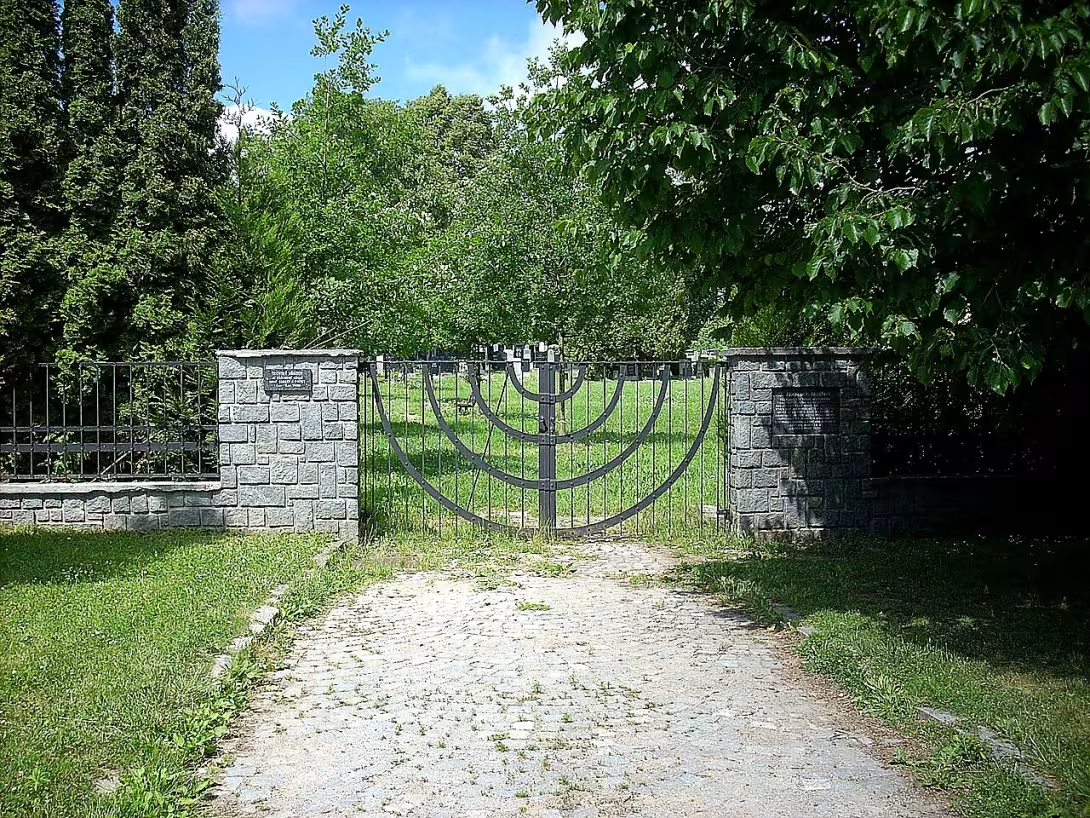
Jewish cemetery in Jihlava is one of the last actively used Jewish cemeteries in the Czech Republic. It lies in a quiet part west of the historic city centre and serves as the last resting place of the Jewish community of Jihlava.
It was founded in 1868-1869 on the property for 7000 gold. Its importance lies in the preservation of tradition, architectural value and symbolic connection with personalities as the family of music composer Gustav Mahler.
The cemetery was established when Jihlava grew and urbanized. The Jewish community, which had lived in the city for centuries, needed a new place to be buried because of the lack of space in historical parts. The land was purchased in the western suburb, in the U training grounds, and since then it has served as a quiet resting place.
The cemetery is marked by a regular arrangement of tombstones, which are set perpendicular to the axis of the area with inscriptions to the entrance - different detail from traditional Jewish rites. In 1903- 1904 a ceremonial hall was built at the entrance in the New Romanesque style. This building was supplemented by two wings of the cemetery wall, which closed the entire area from the east side. The hall was consecrated in December 1904 by the Southern Rabbi.
In 1939, the cemetery suffered severe damage. The Nazis burned down the ceremonial hall and most of the tombstones were buried in the riots associated with the destruction of the Southern Synagogue.
The possession of the cemetery has always been held by the Federation of Jewish Communes in the Czech Republic, which keeps it today. In the 1960s there was a modification and shortening of the premises, in which a smaller ceremonial hall was built. In the 1990s the cemetery was supplemented with a metal entrance gate with Jewish symbolism and commemorative plates. The most significant event in the modern history of the cemetery was the discovery of the monument to the victims of the Holocaust in 1997.
Today, the cemetery is maintained by Matana a.s. and its area is 8879 square meters. There are 1171 tombstones and 1379 buried. The fact that parents and siblings of the famous composer Gustav Mahler are buried in the cemetery is one of the attractions.
The cemetery is one of the few places in the Czech Republic where there are still new funerals. Its quiet location and architectural details make it interesting for tourists and historians. The visit offers the opportunity to become acquainted with the traditions of Jewish burial rites and personalities who found the last rest here. Its importance lies in preserving memory and commemorating the tragic events of the past.
Then and now
Drag the slider to compare how the landmark may have looked when it was built with the view today.
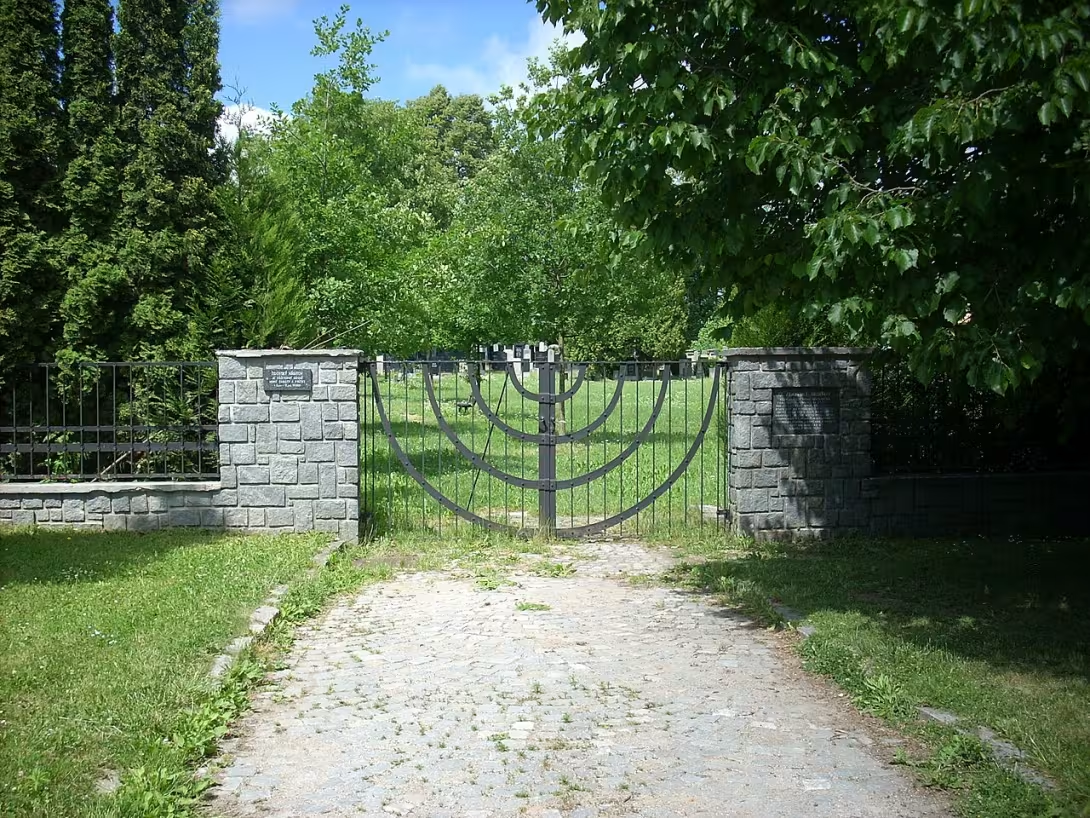
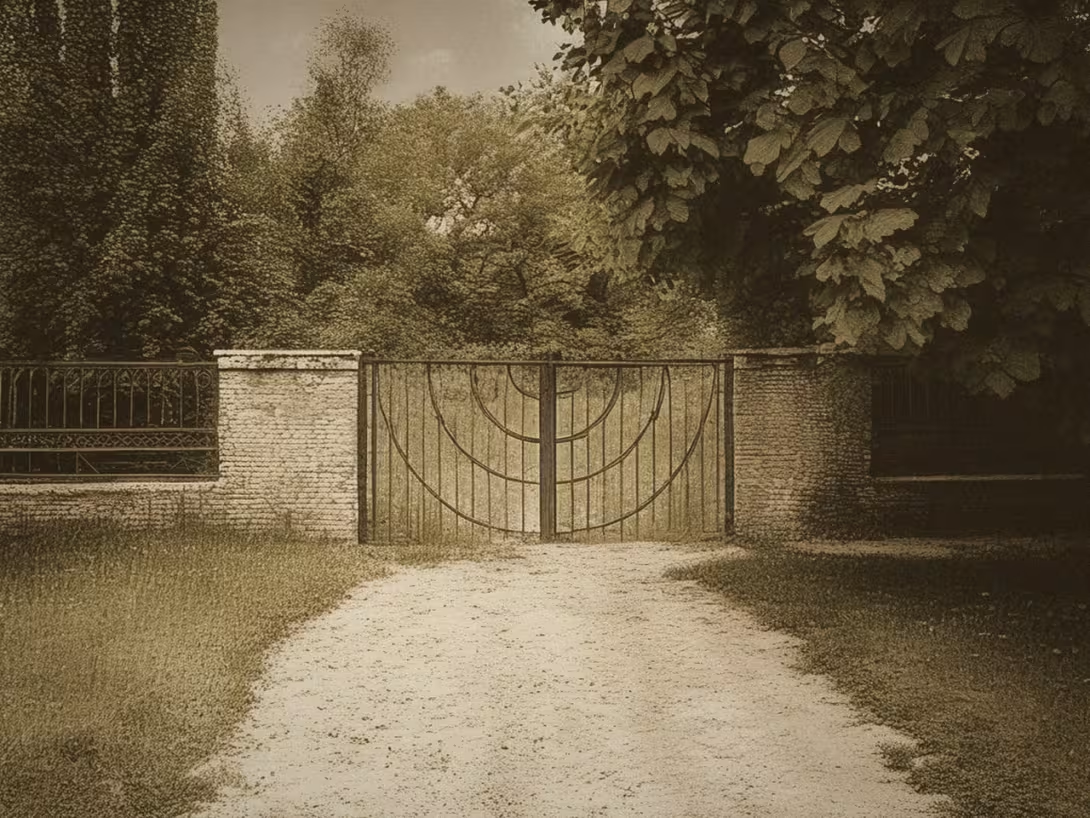
The historical appearance on the left is an AI-generated visualisation and serves as inspiration only.
Historical milestones
- 1868-1869
- Establishment of a cemetery in the western suburb of Jihlava.
- 1903- 1904
- The position of the ceremonial hall in the New Romanesque style and the completion of the cemetery wall.
- 1939
- The destruction of the ceremonial hall and the destruction of the Nazi tombstones.
- 1997
- Exposing the monument to the Holocaust victims.
Architectural development
The cemetery was based on flat land with regular tombstone arrangement. In the years 1903- 1904, a ceremonial hall was built at the entrance in the New Romanesque style according to the design of Wilhelm Stiassný, supplemented by two wings of the cemetery wall. In the 1970s, the complex was shortened and a new, smaller ceremonial hall was built. In the 1990s, the cemetery was supplemented with a metal gate and commemorative records.
Historical events
The foundation of the cemetery in 1868-1869 on the land for 7000 gold.
The destruction of the ceremonial hall and the destruction of the Nazi tombstones in 1939.
Status of the monument to Holocaust victims in 1997.
Shortening and modification of the cemetery in 1968-1969.
Owners
Federation of Jewish Communes in the Czech Republic (since founding)
Points of interest
- It is one of the last actively used Jewish cemeteries in the Czech Republic.
- It was founded in 1868-1869 in the western suburb of Jihlava for 7000 gold.
- In the cemetery are buried parents and siblings of music composer Gustav Mahler.
In 1939, the cemetery suffered damage when the Nazis burned down the ceremonial hall and overturned the tombstones.
- In the 1990s it was supplemented by a metal gateway with Jewish symbolism and commemorative plates.
Guide
Show guide text
This text was created by artificial intelligence and has not been editorially reviewed. It may contain inaccuracies.
Welcome to the Jewish cemetery in Jihlava
You're standing in front of a place that connects the past to today. In front of you is a quiet and respectable location where the last resting places of the Jewish community have been located since 1868. Note how harmonically history intersects here with modern maintenance - old tombstones take turns with new elements that keep the cemetery alive today. In a moment, we will look together at what makes this place so special.
The cemetery was founded between 1868 and 1869 in the western suburb of Jihlava, still outside the city's borders. It was a period when the Jewish community tried to find a place for its deceased, which would be sufficiently distant from the older cemetery in the city centre. The whole event was worth 7,000 gold pieces - a considerable sum for the time being. This created one of the last actively used Jewish cemeteries in the Czech Republic, which still serves its purpose.
Now pay attention to what you see before you. There's a metal gate in front of you protecting the cemetery area. Behind it is a well arranged area with tombstones which are established in regular rows. Notice how certain symmetry and order were preserved here, which was typical of Jewish cemeteries at the time. Some tombstones are over a hundred years old, others are newer - each one tells its story.
Let's move a little closer to history. Between 1903 and 1904 a ceremonial hall was built in the New Romanesque style. It was a beautiful building that served as a place for funeral ceremonies and prayers. Unfortunately, the Nazis destroyed it in 1939. A number of tombstones were damaged, which is a tragic proof of what happened here during World War II. Today the ceremonial hall no longer exists, but its monument is preserved here in the form of a monument which was revealed in 1997. It resembles the Holocaust victims and all the names that were lost.
Now look around you. Notice how some respect for the past has been preserved here. Each tombstone is carefully maintained, despite all the difficulties experienced by the cemetery. This is proof that these places are still alive and that their meaning is not forgotten.
Although this cemetery is known primarily as the last resting place, it also hides interesting personalities. Among the rest are parents and siblings of the famous composer Gustav Mahler. His family were an important part of the Jewish community in Jihlava and therefore their presence in this cemetery is very important. Although Mahler himself died in another city, his roots are firmly anchored here.
One of the most interesting things about this place is that it is one of the last actively used Jewish cemeteries in the Czech Republic. This means that there are still funerals and that there is a tradition that goes back to the 19th century. Note how old and new elements intersect here - how tradition is maintained here, but at the same time it adapts to modern times.
Before we say goodbye, there's one more thing you should know. This cemetery is not only a place of last rest, but also a place where memory and history are preserved. Every tombstone, every row, every detail here has its meaning and tells its story. Therefore, it is important that you observe this space and respect its importance.
If you want to get to know this place in more detail, you can look at the individual tombstones and try to discover the stories of those who lie here. Some of them have been here for over a hundred years, others are newer. Each of them is important, and it is worth looking carefully at.
Before you leave, stay for a while and inhale the atmosphere of this place. Notice the calm that exists here and respect its meaning. This cemetery is not only a place of last rest, but also a place where memory and history are preserved. Thank you for stopping by, and we wish your stay to be full of respect and reflection.
Tips for visitors
The best time to visit is early morning or late afternoon. In these hours, the cemetery is quiet and you can see the tombstones without interference. The warm summer days are ideal, but in winter the visit is also interesting due to its calm and mysterious character. In summer, avoid the noon hours, when the cemetery may be hot and the presence of visitors may be higher.
A quiet environment allows you to focus on the history and architecture of tombstones without interference.
Places are usually available, but in the summer months it may be necessary to count on a higher frequency of visitors. Transport is also possible by means of public transport - stops are nearby, precise connections can be found in the transport search engine.
Take with you comfortable shoes and suitable clothes because the cemetery is in the field with inequalities. If you want to photograph, I suggest you take the lens with a smaller focus so you can capture the detail of the tombstones. Bring warm clothes in winter and sun protection in summer.
Comfort and weather protection are key.
Photography is permitted, but avoid interference by other visitors. The best places for photos are older tombstones with rich ornamentation, which are illuminated by natural light from east or west. In these times, the shadows are soft, and the color of the tombstones is better revealed.
Natural light from morning or afternoon hours is ideal.
There are several interesting places around the cemetery that are worth visiting. In 1.5 km is the historical center Jihlava with its picturesque streets and monuments. Within 10 kilometres there is a natural park Zděřská mountains, where you can see beautiful natural scenery. There is also a new hospital nearby that can be useful in planning a visit.
The historical centre and nature park are suitable for further tours.
For families with children, a visit to the cemetery is interesting due to its historic atmosphere. You can look at the old tombstones and explain their importance to the children. There is a new hospital that can be interesting for children due to its modern appearance. Children can also enjoy a walk in the nature park Žďárská výšky, where it is possible to discover nature.
History and nature offer interesting activities for children.
Frequently asked questions
Can the monument be visited?
Cemeteries and graves are usually accessible; please respect the dignity of the place. We have not verified the opening hours of this cemetery.
Where is the monument?
Location: Jihlava, Kraj Vysočina. The map on this page shows the exact spot.
Why is the monument protected?
It is listed in the Central List of Cultural Monuments of the Czech Republic as a cultural monument (register no. 1000120365).
Businesses nearby
Do you run a restaurant, accommodation, shop, museum, rental, wellness or other visitor service near this monument? Show yourself directly to the people heading to it — this is how they will see you in the app and on the web:
Nearby
Komunální hřbitov při Žižkově ulici (přímé sousedství).
Nová nemocnice Jihlava (v blízkosti).
Přírodní park Žďárské vrchy (do 10 km).
Jihlavské centrum a historické jádro města (1,5 km od hřbitova).
Accommodation nearby
Trips and activities nearby
Guided tours, tickets and activities nearby from GetYourGuide
Affiliate link: if you buy from the partner, we may receive a commission. The price for you does not change.
Search tours and activities →Themed route
Thematic trip: Jewish cemetery in Jihlava and surroundings
1. Jewish cemetery in Jihlava Type: historical cemetery (16th-19th century) Why? A unique proof of the Jewish history of the city with over 150 tombstones that capture the life and traditions of the then community. A quiet place with rich symbolism, ideal for a thought-out walk.
2. Communal cemetery at Žižkov Street Type: historical cemetery (19th century) Why? Neighbouring cemetery with period tombstones and architecture, which complements the Jewish cemetery. The atmosphere here reflects the general funeral habits of the time and offers contrast to the Jewish style.
3. New Hospital Jihlava Type: modern medical facility (1990- 2000) Why? The transition from historical to contemporary Jihlava. The facade and design of the building represent technological progress. Suitable for a short stop while walking to the centre.
4. Jihlava Center and Historical Core Type: City Heritage Core (13th - 19th century) Why? The dominance is the Town Hall with the Gothic Tower and the House of St. Nicholas, which symbolizes the medieval power of the city. Alleys with wooden houses and the Square of Peace offer a lively atmosphere and refreshment.
Logic: The route begins at the main destination, gradually connects the neighbouring cemetery, modern contrast and culminates in the historic heart of the city. Everything is in sight, up to 1.5 km from the Jewish cemetery.
Seasonal recommendations
Spring The Jihlava Jewish cemetery in spring offers a unique combination of calm and awakening nature. The sun's rays light up between the old tombstones, while spring flowers flourish around and tree leaves begin to grow. The atmosphere is light, almost meditative, with a fine noise of water from a nearby stream that complements the sounds of birds. In this period the cemetery is surrounded by greenery, which brightens the dark stone surfaces. It is convenient to visit early morning or afternoon when there are fewer tourists and the sun lights up pleasantly without blinding. Put on light, but headgear, because the sun can be stronger than it looks. Remember the comfortable shoes - the path between the tombstones can be uneven.
Summer In the summer months the cemetery will turn into a place where the historic atmosphere meets the living nature. The hot sun creates long shadows that highlight the detail of stone tombstones, while the warm air is filled with the scent of grass and plants. In the main summer season, more visitors come here, so it's good to come before the crowds gather. Light, airy clothes and a hat or sunglasses are recommended because the sun can be intense. Water in the nearby stream offers an opportunity for a short rest, but be careful - stones can be slippery. The best time to visit is in the morning or late afternoon when the heat is less uncomfortable.
Autumn Autumn visit brings a magical atmosphere to the cemetery. Leaves on trees turn into golden and red shades, reflected in tombstone stones and create contrast with dark shadows. The cold air and the gentle wind give the place a calm, almore mysterious mood. In this period the cemetery is less visited, which allows for a deeper tour without rush. Wear warmer layers, because it can be cold in the morning and evening, and don't forget the umbrella - autumn sky is often cloudy. The best time to visit is in the afternoon when the sun shines lighter and the light creates beautiful glare on the tombstones.
Winter The winter period in the cemetery is the quietest, but also the coldest. The snow sheets on the tombstones and trees create a peaceful, almost fairy tale scenery. The freezing air and the silver shine of snow give the place a special beauty. In winter, the cemetery is often less visited, which allows for a peaceful visit. Wear warm but comfortable clothes because temperatures can be low, and remember gloves - stone surfaces can be cold. The best time to visit is in the afternoon when the light is sufficient and you can enjoy a quiet atmosphere without rush. Be careful of the ice - the path between the tombstones can be slippery.
Visualizations and artistic views


The visualisations are generated by artificial intelligence and serve as inspiration.
Photos from the area
Real photos taken near the monument

Zdroj a licence jsou uvedeny u každého snímku.
Tips from visitors
No tips yet. Be the first!
Log in and add your tip.
Sources and literature
Photos: Schuminka janička / CC BY 3.0 — Wikimedia Commons. The author and licence also appear when you hover over the image.
Faktickým podkladem tohoto textu byl článek na Wikipedii, jehož autory jsou přispěvatelé Wikipedie. Článek je dostupný pod licencí CC BY-SA 4.0.
Location on the map


Příběhy a pověsti
Legendy, pověsti a příběhy spjaté s touto památkou
Fotografie návštěvníků
Zatím žádné fotografie. Buďte první, kdo přidá fotografii z návštěvy!
Log in a přidejte svou fotografii nebo hodnoťte.
Za ověřenou návštěvu v aplikaci získáte víc bodů — poznáme podle GPS, že jste na místě.
Reviews and comments