






Žižkova socha na Vítkově Socha
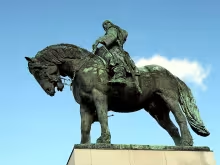
The Jan Žižka statue on Vítkov Hill is a prominent equestrian sculpture located in Prague's 3rd district, unveiled in July 1950. Created by Bohumil Kafka, it commemorates the Hussite leader Jan Žižka, known for his military prowess during the Hussite Wars. This modern-style statue stands as part of the National Monument on Vítkov Hill, symbolizing national pride and historical remembrance.
The idea to erect a monument for Jan Žižka originated in the 1860s with political motivations to honor his legacy. Despite several fundraising efforts and competitions throughout the late 19th and early 20th centuries, the statue was not realized until after World War I due to financial and logistical challenges. In 1913, a design competition was held, but none of the submissions were selected for realization because of insufficient funds.
The creation process involved multiple design competitions from the late 19th century to the early 20th century. Initially proposed in the 1860s, it faced delays due to financial and logistical challenges. The final design by Bohumil Kafka was chosen after several unsuccessful attempts, reflecting a modernist approach suitable for the era.
During the early 20th century, when the statue was finally realized, Czechoslovakia had recently gained independence following World War I. This period was marked by nationalistic fervor and efforts to solidify Czech identity through cultural and historical symbols like the Jan Žižka monument. The National Monument on Vítkov Hill, where the statue is located, offers panoramic views of Prague and includes a museum and other historical sites related to Czech history.
The equestrian statue was unveiled in 1950, marking its completion after years of planning and design challenges. It stands as a testament to Jan Žižka's enduring legacy and Bohumil Kafka's artistic vision.
Today, the Jan Žižka statue on Vítkov Hill remains an important cultural landmark. Visitors can explore the surrounding National Monument complex, which provides insights into Czech history and offers stunning views of Prague. The site is accessible to the public, making it a worthwhile destination for those interested in history, art, or simply enjoying a scenic spot with historical significance.
The Jan Žižka statue on Vítkov Hill stands as a powerful symbol of Czech heritage and resilience. Its presence invites visitors to reflect on the nation's past while appreciating its artistic achievements. Whether drawn by history or the beauty of Prague, this monument is a must-see destination.
Historical milestones
- 1860
- Návrh postavit památník Janu Žižkovi.
- 1913
- Konkurz na návrhy pro sochu, žádný vybraný.
- 1931
- Začátek vytváření sochy Bohumilem Kafkou.
- 1950
- Odkrytí sochy Janu Žižkovi na Vítkově.
Architectural development
The creation of the Jan Žižka statue involved multiple design competitions from the late 19th century to the early 20th century. Initially proposed in the 1860s, it faced financial and logistical challenges that delayed its construction. The final design by Bohumil Kafka was selected after several unsuccessful attempts, reflecting a modernist approach suitable for the era.
Historical events
The idea to erect a monument for Jan Žižka on Vítkov Hill originated in the 1860s, aiming to politically distinguish the area and honor Žižka's legacy.
Despite several fundraising efforts and competitions throughout the late 19th and early 20th centuries, the statue was not realized until after World War I.
Points of interest
- The idea to erect a monument for Jan Žižka originated in the 1860s with political motivations to honor his legacy during a time of growing Czech nationalism.
- Despite several fundraising efforts and competitions throughout the late 19th and early 20th centuries, the statue was not realized until after World War I due to financial and logistical challenges, highlighting the difficulties faced by cultural projects in turbulent times.
Guide
Show guide text
This text was created by artificial intelligence and has not been editorially reviewed. It may contain inaccuracies.
Welcome to Vítkov Hill in Prague 3, where you stand before the commanding presence of the Jan Žižka statue, an iconic equestrian sculpture that captures the spirit and history of this remarkable Czech leader. As you gaze upon it, feel the weight of history and the pride it embodies for the nation.
The idea to honor Jan Žižka with a monument dates back to the 1860s, reflecting a period when Czech nationalism was on the rise. The statue's creation took several decades, beginning in earnest in 1931 when Bohumil Kafka started crafting this tribute. Despite earlier efforts and competitions throughout the late 19th and early 20th centuries failing to materialize into a physical form, it wasn't until July 1950 that the monument was finally unveiled.
Look closely at the statue's modern style—a testament to Kafka's artistic vision—capturing Žižka astride his horse with an air of determination. This sculpture is not just a piece of art; it's part of the larger National Monument on Vítkov Hill, symbolizing national pride and historical remembrance.
Jan Žižka himself was a legendary Hussite leader renowned for his military prowess during the Hussite Wars. His innovative tactics and leadership left an indelible mark on Czech history. The statue commemorates not just a man but a legacy of resilience and strategic brilliance that continues to inspire.
Here's something intriguing: the initial motivation behind erecting this monument was deeply political, aiming to celebrate Žižka’s contributions during a time when national identity was being fervently redefined in the Czech lands. This context adds an additional layer of meaning to your visit today.
As you stand here on Vítkov Hill, take a moment to absorb not only the statue's grandeur but also its historical significance. Let it transport you back through centuries to a time when Žižka’s leadership shaped the course of history in this region.
We invite you to continue exploring the surroundings and delve deeper into the rich tapestry of stories that Vítkov Hill has to offer. Thank you for joining us on this journey through time, and we hope it leaves you with a lasting impression of Jan Žižka's enduring legacy.
Tips for visitors
The best time to visit the Jan Žižka statue on Vítkov is during late spring or early autumn, when the weather is mild and pleasant. These seasons offer comfortable temperatures for walking around the area and enjoying the panoramic views of Prague from the hilltop. Additionally, visiting outside peak tourist season can result in fewer crowds, allowing you to appreciate the historical significance of the monument more intimately.
Transportation to Vítkov Hill is convenient by both public transport and car. You can take a bus or tram with routes that go near the area; for specific line numbers, it's best to check a local transportation app or website. If driving, there are parking options nearby, but availability may vary depending on the time of day and season. Always verify current transport connections and parking details before your visit.
When visiting Vítkov Hill, consider bringing comfortable walking shoes as you'll likely want to explore the surrounding area, including the museum and other historical sites. A camera is recommended for capturing the stunning views of Prague from the hilltop. Additionally, carrying a light jacket or sweater can be useful since temperatures at higher elevations might feel cooler than in the city.
For photography enthusiasts, the best spots around the Jan Žižka statue are those that capture the monument against the backdrop of Prague's skyline. Early morning or late afternoon provides soft lighting conditions ideal for photographs. The hilltop offers a panoramic view, making it an excellent location for wide-angle shots. Remember to check the light conditions and plan your visit accordingly for optimal photography.
Nearby attractions within 30 minutes include other historical sites related to Czech history, such as the National Monument on Vítkov Hill itself, which houses a museum dedicated to Jan Žižka and Czech military history. These sites offer additional context about the monument and are worth exploring if you're interested in learning more about the region's past.
Businesses nearby
Nearby
The National Monument on Vítkov Hill, where the statue is located, offers panoramic views of Prague. The area includes a museum and other historical sites related to Czech history.
Accommodation nearby
Trips and activities nearby
Guided tours, tickets and activities nearby from GetYourGuide
Affiliate link: if you buy from the partner, we may receive a commission. The price for you does not change.
Search tours and activities →Themed route
Tematická výletní trasa na Vítkově
1. Žižkova socha - *Typ:* Památka/Socha - *Proč stojí za návštěvu:* Žižkova socha je ikonická památka v Praze, která oslavuje Jan Žižku z Trocnova, jednoho z nejvýznamnějších vojevůdců českých dějin. Socha byla postavena k počestnému uctění jeho vedení a strategického genia během husitských válek.
2. Národní památník na Vítkově - *Typ:* Historický areál/Památník - *Proč stojí za návštěvu:* Tento historický areál je nejen domovem Žižkovy sochy, ale také nabízí vynikající panoramatické pohledy na Prahu. Je to místo plné symbolů českého odboje a národní identity.
3. Muzeum Národního památníku na Vítkově - *Typ:* Muzeum - *Proč stojí za návštěvu:* Muzeum poskytuje hluboké vhledy do historie husitských válek a života Jana Žižky. Exponáty zahrnují artefakty, dokumenty a interaktivní výstavy, které přinášejí českou historii k životu.
4. Vítkovské návrší - *Typ:* Historické místo/Prostor pro pohled - *Proč stojí za návštěvu:* Návrší nabízí jedinečný výhled na Prahu, který je ideální pro fotografie a relaxaci. Je to také místo s bohatou historií, kde se konaly důležité události českých dějin.
5. Historické cesty a chodníky - *Typ:* Procházka/Chodník - *Proč stojí za návštěvu:* Procházka po historických cestách a chodnících na Vítkově nabízí možnost prozkoumat místo v klidu a si užít jeho přirozené krásy. Tyto cesty jsou ideální pro ty, kteří hledají pohodlný způsob, jak se ponořit do atmosféry historického areálu.
Tato trasa nabízí kombinaci historie a přírody, což umožňuje návštěvníkům ocenit významnou památku i její okolní prostředí.
Seasonal recommendations
Spring: Visiting Žižkova socha on Vítkov during spring offers a refreshing experience as the park begins to bloom with vibrant colors and new life. The soft, natural light of the season enhances the details of the statue, casting gentle shadows that highlight its intricate features. Spring's mild temperatures make it an ideal time for a leisurely stroll through the surrounding greenery. Visitors should wear comfortable layers to accommodate fluctuating weather conditions typical of this transitional period. Arriving early can help avoid larger crowds as more people are drawn outdoors by the pleasant atmosphere.
Summer: Summer at Žižkova socha is characterized by long daylight hours and warm temperatures, creating an inviting setting for visitors. The lush greenery around the statue provides a picturesque backdrop, while the bright sunlight accentuates the soviet-era monument's grandeur. This season often attracts more tourists, especially during peak holiday periods, so planning your visit early in the day can help avoid crowds. Light and breathable clothing is recommended to stay comfortable under the sun, along with sunscreen and a hat for protection.
Autumn: Autumn brings a unique charm to Žižkova socha on Vítkov, as the park transforms into a tapestry of reds, oranges, and yellows. The cooler temperatures make it an ideal time to explore without the summer heat, while the softer light enhances the statue's historic features with warm hues. This season may see fewer visitors than summer, offering a more tranquil experience. Layered clothing is advisable due to the variable weather, and carrying a jacket can be useful as evenings cool down.
Winter: Winter at Žižkova socha offers a serene and magical atmosphere, with snow-covered landscapes providing a stark yet beautiful contrast to the monument's stoic presence. The shorter days mean that visits should be planned for daylight hours when the statue is well-lit by the low sun, creating dramatic shadows. Winter visitors should dress warmly in insulated layers and wear waterproof footwear due to potential snow or ice. Despite the cold, this season offers a peaceful opportunity to appreciate the monument with fewer crowds and a unique winter ambiance.
Visualizations and artistic views


Vizualizace jsou generovány umělou inteligencí a slouží jako inspirace.


Tips from visitors
No tips yet. Be the first!
Log in and add your tip.
Sources and literature
Fotografie: Petr Kadlec / CC BY-SA 3.0 cz — Wikimedia Commons. Autor a licence se zobrazí i po najetí na snímek.
Faktickým podkladem tohoto textu byl článek na Wikipedii, jehož autory jsou přispěvatelé Wikipedie. Článek je dostupný pod licencí CC BY-SA 4.0.
Location on the map


Příběhy a pověsti
Legendy, pověsti a příběhy spjaté s touto památkou
Za ověřenou návštěvu v aplikaci získáte víc bodů — poznáme podle GPS, že jste na místě.
Reviews and comments