



Žižkův dub Monument
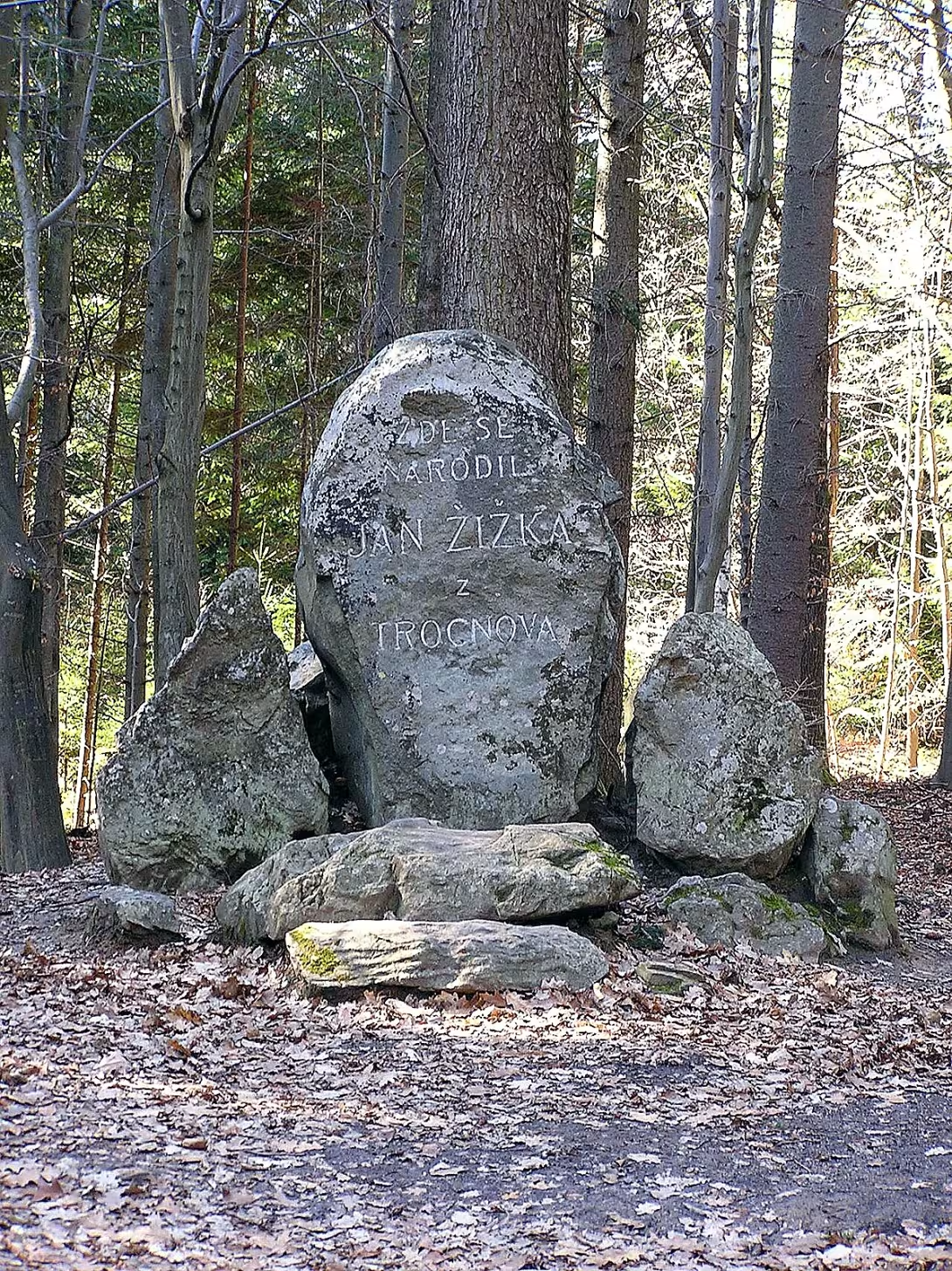
Žižkův dub is located in Trocnov village within Borovany District, Southern Bohemia. It commemorates Jan Žižka's birthplace, a notable figure from the late 14th century. The site features a stone monument erected in 1908 to honor where it is believed that Jan Žižka was born around 1360 under an ancient oak tree. This monument stands as a testament to local lore and historical memory, attracting visitors interested in Czech history and heritage.
The origin of Žižkův dub is rooted in the legend of Jan Žiška's birth during a stormy night. According to tradition, his mother gave birth under a large oak tree, later known as Žižkův dub or Jan Žiška's birth oak. This tree was reputedly over 550 years old when it was destroyed in 1700 on church orders. The historical context reflects Bohemia's position within the Holy Roman Empire and socio-political changes leading up to the Hussite Wars, a period marked by religious upheaval and feudal conflicts.
The site has seen several architectural transformations. Initially, it was home to an oak tree central to local folklore. In 1682, a chapel dedicated to John the Baptist was constructed near the site by the abbot of Borovany monastery. However, this did not alter the popular belief associated with the oak tree, which led to its destruction in 1700 when church authorities ordered it felled and burned. The remnants were reportedly dispersed among locals as talismans. By 1867, the original chapel was demolished, making way for a stone monument erected in 1908 by Adolf Josef ze Schwarzenbergu, following appeals from Czech historians. This monument features a plaque stating "Zde se narodil Jan Žižka z Trocnova" and is said to incorporate part of the threshold from the original Trocnov estate.
Throughout its history, Žižkův dub has experienced various changes in ownership and administration, reflecting broader historical shifts. The site transitioned from a natural landmark with spiritual significance to a formalized monument under local religious authorities' influence and later Czech historians who sought to preserve its legacy. These transitions highlight the enduring cultural importance attributed to Jan Žiška's birthplace.
Key events include the construction and subsequent demolition of both the oak tree and chapel, as well as the erection of the stone monument in 1908. The legend of Jan Žiška's birth under the oak during a storm has been a focal point for local tradition and historical interest. Additionally, the site gained attention through its feature in the television program "Paměť stromů," further cementing its place in cultural memory.
Today, Žižkův dub stands as an accessible monument near Trocnov village, approximately 200 meters south-southeast from a larger Žiška memorial. Visitors can explore this site to connect with the historical narrative of Jan Žiška and appreciate its significance in Czech history. The natural landscapes surrounding the area offer a serene backdrop for reflection on the past.
Žižkův dub is more than just a monument; it is a symbol of cultural heritage and historical memory, inviting visitors to explore the legacy of one of Bohemia's most renowned figures. Its preservation allows us to appreciate the rich tapestry of history that continues to shape our understanding of the past.
Then and now
Drag the slider to compare how the landmark may have looked when it was built with the view today.
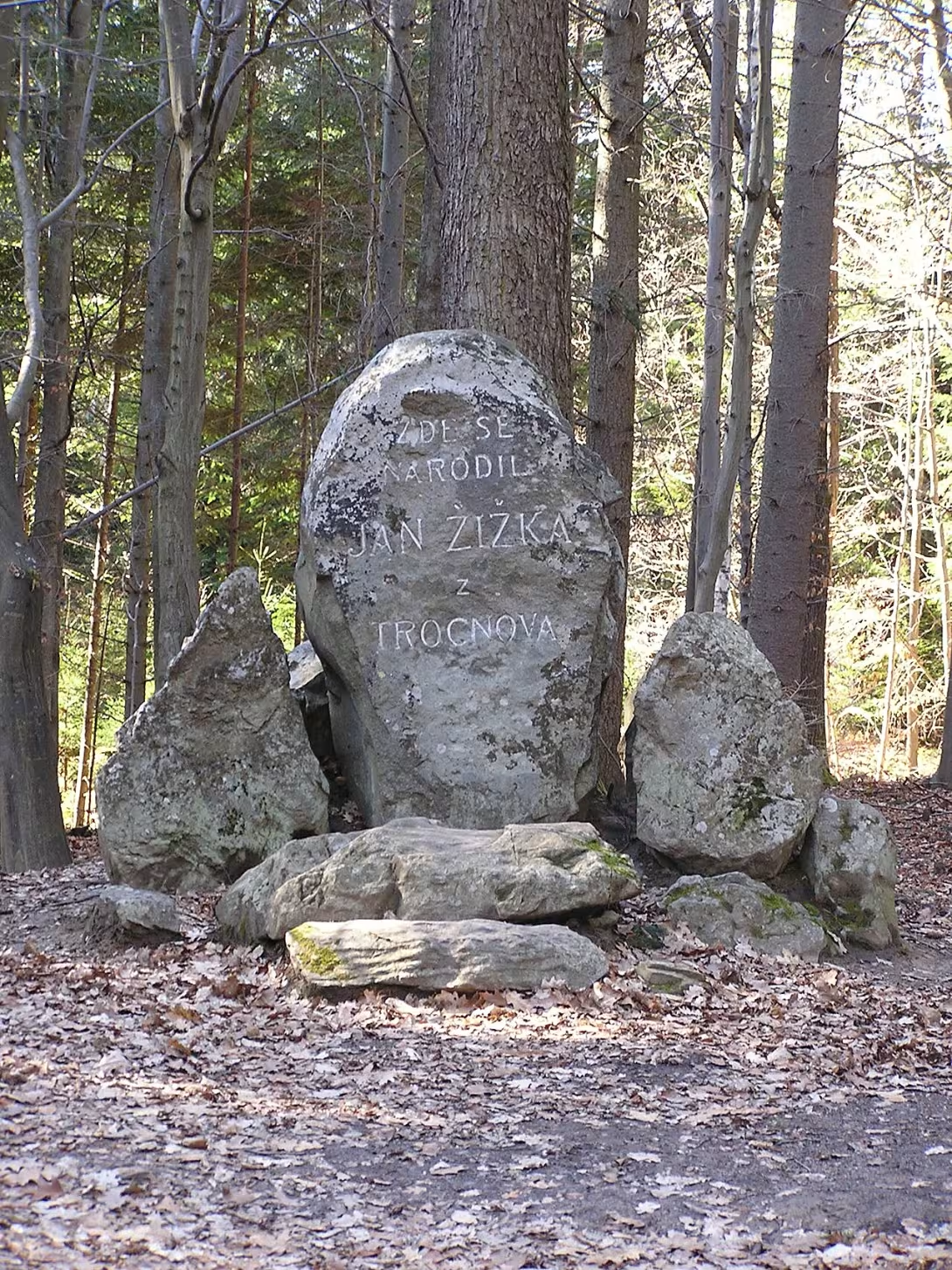

The historical appearance on the left is an AI-generated visualisation and serves as inspiration only.
Historical milestones
- 1360
- Jan Žižka is believed to have been born under the oak.
- 1682
- A chapel dedicated to John the Baptist was constructed near the site.
- 1700
- The church ordered the felling and burning of the oak.
- 1867
- The original chapel was demolished.
- 1908
- A stone monument commemorating Jan Žižka's birthplace was erected.
Architectural development
The site saw the construction of a chapel in 1682, which was later replaced by a stone monument in 1908. The original oak tree, central to local lore, was destroyed in 1700.
Historical events
Around 1360: Jan Žižka is believed to have been born under this oak tree during a storm.
1682: A chapel dedicated to John the Baptist was constructed near the site by the abbot of Borovany monastery.
1700: The church ordered the felling and burning of the oak, which was then dismantled by locals who kept pieces as talismans.
1867: The original chapel was demolished.
1908: A stone monument was erected to commemorate Jan Žižka's birthplace.
Points of interest
– The oak tree known as Žižkův dub was reputedly over 550 years old when it was destroyed in 1700 on church orders. This suggests that the legendary birth of Jan Žiška might have taken place under an ancient and significant natural landmark.
– After the original oak tree's destruction, its remnants were reportedly dispersed among locals as talismans. This act reflects a deep cultural reverence for the tree, believed to hold protective powers or spiritual significance.
– The site saw multiple architectural changes over time, including the construction of a chapel in 1682 and its demolition by 1867. These transformations highlight the evolving religious and historical narratives surrounding Jan Žiška's birthplace.
– In 1908, a stone monument was erected by Adolf Josef ze Schwarzenbergu following appeals from Czech historians. Part of this monument reportedly incorporates material from the original Trocnov estate, symbolizing continuity with the past.
– The legend of Jan Žiška’s birth under the oak during a stormy night has been a focal point for local tradition and historical interest, emphasizing the blend of folklore and history that characterizes Czech cultural memory.
Guide
This guide is narrated by a synthetic voice generated by artificial intelligence.
Show guide text
This text was created by artificial intelligence and has not been editorially reviewed. It may contain inaccuracies.
Welcome to a site steeped in history and legend—the place where the great Jan Žižka is believed to have been born. You stand before a stone monument that marks the birthplace of one of Czech history's most renowned military leaders, nestled in the picturesque village of Trocnov.
Imagine standing here over 500 years ago, beneath the sprawling branches of what was once known as Žižkův dub, or Jan Žižka’s oak. This majestic tree, with its hollow trunk and ancient presence, has been a silent witness to centuries of history. Although it no longer stands today—having been felled and burned on church orders in 1700—the spirit of the place remains alive.
The story begins around 1360 when Jan Žižka is believed to have entered this world under the oak's protective canopy. This tree, reputedly over 550 years old at its destruction, was more than just a plant; it represented a living connection to the past and a symbol of strength and resilience.
As you take in your surroundings, notice the stone monument that now stands here. Erected in 1908 by Adolf Josef ze Schwarzenbergu, this structure serves as a tribute not only to Jan Žižka but also to the enduring legacy of his birthplace. While the oak itself has long since vanished, replaced by fire and time, its memory is immortalized in stone.
Let's delve into the history that surrounds you. In 1682, a chapel dedicated to John the Baptist was constructed near this site, adding another layer to the area’s historical tapestry. However, this original chapel met with demolition in 1867, leaving only echoes of its existence behind. The decision to destroy Žižkův dub just two decades earlier adds a poignant note to the narrative—a reminder of how history is often shaped by both reverence and conflict.
Jan Žižka himself remains an enigmatic figure whose life story resonates through time. Known for his leadership during the Hussite Wars, he was a man who defied convention and led with unyielding determination. Here in Trocnov, where legend suggests he first drew breath, we are reminded of the profound impact one individual can have on history.
An intriguing mystery lingers around Žižkův dub: its remnants were preserved even after its destruction, a testament to the reverence it once commanded. This oak was not just any tree; it was a symbol deeply intertwined with Jan Žižka’s legacy—a physical link to his origins and enduring influence.
As you continue your journey, take a moment to reflect on this place where history feels almost tangible. The air carries whispers of past lives and events that have shaped the world we know today. Whether you’re drawn by curiosity about Jan Žižka or simply captivated by the stories etched into the landscape, there is much more to explore in Trocnov.
We invite you to delve deeper into this fascinating history, perhaps wandering through the village streets or visiting nearby landmarks that continue to tell tales of a time long past. Thank you for joining us on this journey through history and legend. May your exploration be as enriching as it is enlightening.
Tips for visitors
The best time to visit Žižkův dub is during the spring or early autumn when the weather is mild, and the natural surroundings are particularly beautiful. During these seasons, you can enjoy the lush greenery and vibrant colors of Southern Bohemia's landscapes without the crowds that might appear in peak summer months. Additionally, visiting outside the high tourist season allows for a more serene experience at this historical site.
If you prefer public transportation, there are options available that can bring you close to the location; however, it's recommended to check current routes and schedules in advance using a reliable travel search tool. This ensures a smooth journey without any last-minute surprises.
When visiting Žižkův dub, consider bringing comfortable walking shoes as you'll likely walk through natural landscapes. A hat, sunscreen, and water are also advisable due to the outdoor setting and exposure to sunlight. For those interested in learning more about Jan Žižka's history, a guidebook or smartphone app could enhance your visit.
For photography enthusiasts, early morning is an ideal time to capture the monument with soft lighting that highlights its features against the natural backdrop. The area around Trocnov offers several picturesque spots where you can take photos of the landscape and the memorial itself. Be mindful of the light conditions throughout the day for the best results.
Within a 30-minute drive from Žižkův dub, visitors can explore other historical sites such as the large Žižka memorial located approximately 200 meters north-northwest of the oak tree. This area provides additional context and insight into Jan Žižka's life and legacy, making it a worthwhile extension to your visit.
Frequently asked questions
Can the monument be visited?
This is a structure in a public space that can usually be seen from outside free of charge. We have not verified that this particular one is freely accessible.
Where is the monument?
Location: Trocnov, Jihočeský kraj. The map on this page shows the exact spot.
Why is the monument protected?
It is listed in the Central List of Cultural Monuments of the Czech Republic as a national cultural monument. It is protected as part of a larger listed ensemble.
Businesses nearby
Do you run a restaurant, accommodation, shop, museum, rental, wellness or other visitor service near this monument? Show yourself directly to the people heading to it — this is how they will see you in the app and on the web:
Nearby
The monument is located near Trocnov village, approximately 200 meters south-southeast from a large Žižka memorial. The area features natural landscapes typical of Southern Bohemia.
Accommodation nearby
Trips and activities nearby
Guided tours, tickets and activities nearby from GetYourGuide
Affiliate link: if you buy from the partner, we may receive a commission. The price for you does not change.
Search tours and activities →Themed route
Thematic Walking Tour: Žižkův dub and Surroundings
1. Žižkův Dub (Monument)
Type: Historical Monument
Why Visit: Begin your journey at the iconic Žižkův dub, a monument dedicated to Jan Žižka, one of the most revered military leaders in Czech history. This site offers a glimpse into the rich historical tapestry of Southern Bohemia and serves as an excellent starting point for exploring the area's cultural heritage.
2. Trocnov Village
Type: Historical Settlement
Why Visit: After visiting Žižkův dub, take a short walk to explore Trocnov village itself. This charming settlement is steeped in history and offers picturesque views of traditional Czech architecture nestled within the natural landscapes typical of Southern Bohemia. The village provides context to the historical significance of the surrounding area.
3. Žižka Memorial
Type: Historical Site
Why Visit: Located approximately 200 meters south-southeast from Žižkův dub, this large memorial honors Jan Žižka's legacy and achievements. It is an essential stop for history enthusiasts looking to deepen their understanding of Žižka’s impact on the region.
4. Natural Landscapes
Type: Scenic Area
Why Visit: Conclude your tour by immersing yourself in the natural beauty surrounding these historical sites. The area features rolling hills and lush greenery typical of Southern Bohemia, providing a serene backdrop for reflection on the history you've just explored.
This thematic walking tour offers a blend of history and nature, allowing visitors to appreciate both the cultural significance and scenic charm of the Trocnov area.
Seasonal recommendations
Spring: Visiting Žižkův dub during spring offers a unique experience as the surrounding landscape bursts into life with vibrant greenery and blooming flowers, creating an enchanting atmosphere perfect for photography enthusiasts. The gentle warmth of the sun and occasional showers bring out the lushness of the area, making it ideal for nature walks around Trocnov. Visitors should be prepared for cooler mornings and evenings by wearing layers that can easily be adjusted as temperatures rise throughout the day. This season tends to attract fewer crowds compared to summer, allowing for a more tranquil visit.
Summer: The summer months at Žižkův dub are characterized by long, sunny days filled with warmth, making it an ideal time for outdoor activities and exploring the historical site in full daylight. However, this is also when visitor numbers peak, so arriving early in the morning can help avoid the larger crowds that gather later in the day. Light, breathable clothing is recommended to stay comfortable during your visit, along with sun protection like hats or sunglasses. The natural beauty of the area is at its most vibrant, offering a picturesque backdrop for any exploration.
Autumn: Autumn brings a spectacular display of colors to Žižkův dub, as the foliage turns into shades of orange, red, and gold, creating a stunning visual feast that enhances the historical significance of the site. The cooler temperatures make it an excellent time for leisurely walks without the discomfort of summer heat. Visitors should dress in layers to accommodate the fluctuating weather conditions typical of this season.
Winter: Winter transforms Žižkův dub into a serene and mystical place, with snow often covering the landscape and offering a quiet beauty that contrasts sharply with its summer vibrancy. The shorter days mean visitors should plan their visit during daylight hours, while also dressing warmly to enjoy the site comfortably amidst the cold. Snow can add an extra layer of tranquility but may also affect accessibility; therefore, checking road conditions ahead of time is wise. Winter's unique atmosphere provides a peaceful backdrop for reflection and appreciation of Žižkův dub's historical significance.
Visualizations and artistic views


The visualisations are generated by artificial intelligence and serve as inspiration.
Photos from the area
Real photos taken near the monument


Zdroj a licence jsou uvedeny u každého snímku.
Tips from visitors
No tips yet. Be the first!
Log in and add your tip.
Sources and literature
Photos: JAn Dudík / Public domain — Wikimedia Commons. The author and licence also appear when you hover over the image.
Faktickým podkladem tohoto textu byl článek na Wikipedii, jehož autory jsou přispěvatelé Wikipedie. Článek je dostupný pod licencí CC BY-SA 4.0.
Location on the map




Příběhy a pověsti
Legendy, pověsti a příběhy spjaté s touto památkou

Fotografie návštěvníků
Zatím žádné fotografie. Buďte první, kdo přidá fotografii z návštěvy!
Log in a přidejte svou fotografii nebo hodnoťte.
Za ověřenou návštěvu v aplikaci získáte víc bodů — poznáme podle GPS, že jste na místě.
Reviews and comments