



Zubštejn Castle ruin
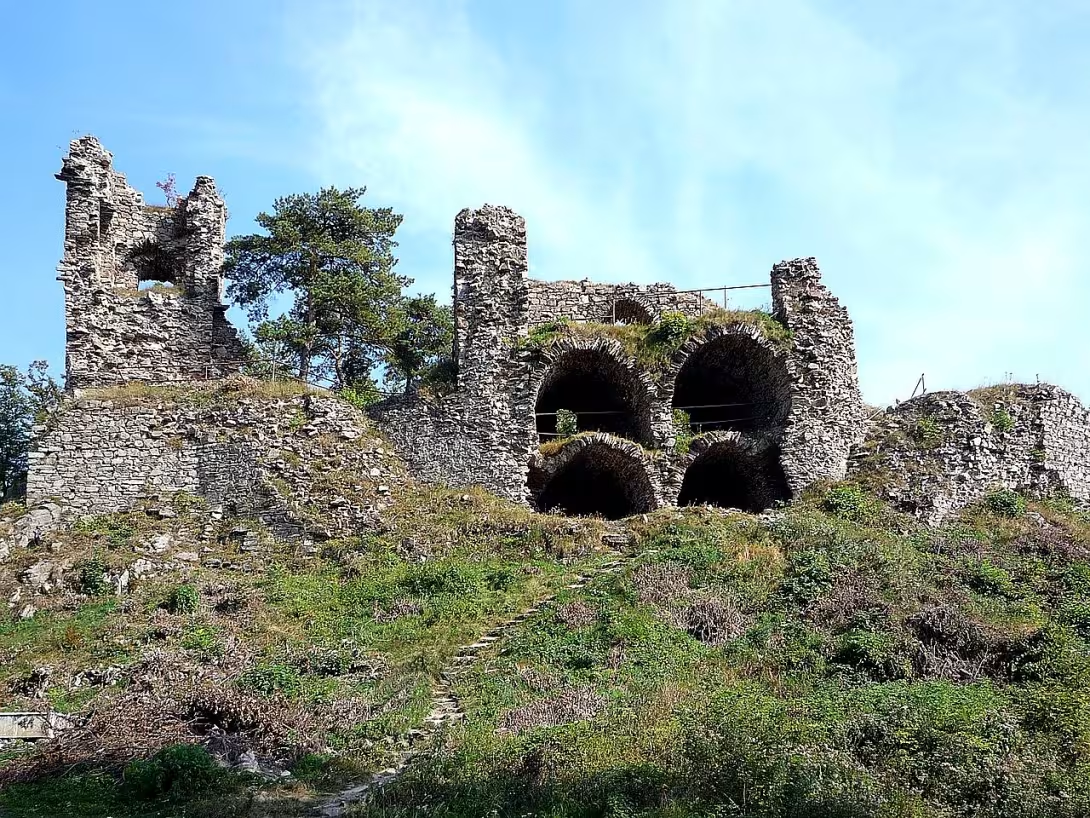
The Zubštejn is a vast ruin of the castle, which stands on a ridge hill at an altitude of 682 meters above the village of Pivonice in Žďárska. This object belongs to the most powerful castle complexes in Moravia. Its history dates back to the 14th century and is today protected as a cultural monument.
The exact time of establishment is not known since the first written mention dates back to 1344. A long-term theory about the creation in the first half of the 13th century, based on a forged charter from 1214, was disproved. Current knowledge of the development of architecture and the absence of artifacts from the 13th century allow the establishment of a seat to date to the 1st third of the 14th century. The position on the dominant hill overlooking the red area suggests a close relationship to silver mining; the castle could serve as its administrative center.
The construction form underwent major modifications during the 14th and 15th centuries. The biggest expansion occurred in the 15th century, when fortification for artillery defence was improved. It's evidenced by a torso of massive walls and a deep moat. The layout is unusual and fully adapted to the terrain. Until today, parts of the entrance tower, the vaults of the central palace and the tanker have been preserved in the foothold.
The first written owner was in 1344 Atluš z Kamene from the House of Lords of Pernštejn. In the middle of the 14th century the castle was owned by more people, such as Blud from Kralic or Jimram z Jakubova. In 1358 it was purchased by Margrave Jan Jindřich and the residence became a land of geography. In 1377, Margrave Yošt awarded it to Jan from Křižanov, but in 1390 it was taken from him again. During the Hussite wars, the object was probably damaged because in 1437 it was listed as a castle. In 1432, Albrecht of Austria took it away from the Pernstejns and handed it over to Jan of Lomnice, but already in 1440 it returned to the hands of the original owners. William of Pernštejn had the fort fortified and armed properly. However, after 1522 the maintenance ceased and in 1547 the site is mentioned as a deserted castle.
There's a legend attached to the castle about the Zanau Coal that was to build the building, and his son, the Ring, who was to create Pernštejn. The name Zubštejn refers to the coat of arms of the tooth heads of the genus Pernštejn, while the original name Lapis or Stone was based on the German term for stone. In close proximity to the ruins there is a monument from 1955 which contains dirt from important places such as Vitkov, Lidice and Banská Bystrica.
The ruin is currently freely accessible and offers views of the surrounding landscape of Svratecká Hornatina. Thanks to the 2010 project, an access bridge is built between the bridge and the castle core and a railing is installed. Visitors can use the fireplace or space in the main palace rooms for overnight stay.
Zubštejn is an important piece of medieval architecture, which, despite its wasteland, speaks of the strategic importance of the then Moravian border. Visiting this vast complex offers a unique opportunity to know the history of ore management and the development of fortification in the natural environment.
Then and now
Drag the slider to compare how the landmark may have looked when it was built with the view today.
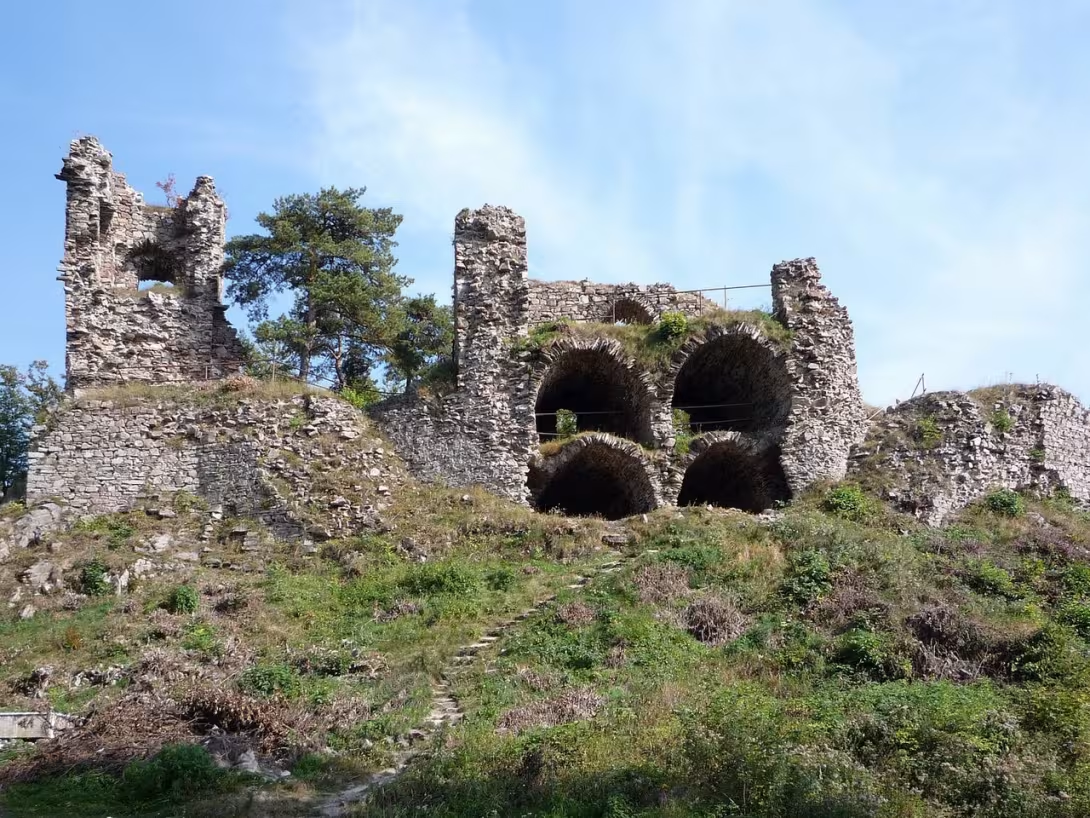

The historical appearance on the left is an AI-generated visualisation and serves as inspiration only.
Historical milestones
- 1344
- The first written mention of the castle and its owner, Atlash of the Stone.
- 1358
- Margrave Jan Jindřich bought the entire castle from Jimram of Pernštejn.
- 1377
- Markraba Yošt awarded the castle to Jan of Křižanov.
- 1432
- The castle was taken from the Pernštejn by decision of Albrecht of Austria.
Architectural development
The castle was built from the 1st period of the 14th century and in the following two centuries it underwent significant modifications. The castle's layout is unusual and adapted to the top of the hill. So far, there has not been a comprehensive archaeological survey that would more accurately date the individual construction phases.
Historical events
1344: First written mention of the castle. 1358: The purchase of the castle by Margrave Jan Henry. 1432: The castle was taken from the Pernstejns, and handed over to John of Lomnice.
Owners
The lords of Pernstejn, the Moravian Margrave, Jan z Křižanova, Jan Meziříčský z Lomnice.
Points of interest
- Zubštejn is one of the most powerful castle complexes in Moravia and is located on the hill at an altitude of six hundred eighty-two metres. - The location of the castle on the dominant hill overlooking the red area suggests that it could serve as an administrative center for silver mining. In the 15th century, the fortifications were perfected for artillery defense, as evidenced by a torso of massive walls and a deep moat. - The name Zubštejn refers to the coat of arms of the tooth head of the genus Pernštejn, while the original name was based on the expression for stone. - In close proximity to the ruins stands a memorial from the year one thousand nine hundred fifty-five, which contains dirt from important places such as Vitkov, Lidice and Banská Bystrica.
Guide
Show guide text
This text was created by artificial intelligence and has not been editorially reviewed. It may contain inaccuracies.
Welcome to a place full of secrets and history - here you are facing the vast ruin of Zubštejna, which shuts down over the village Pivonice as a sanctuary of the past. Underneath your feet, there are hilly-proof tracks, and if you look up, you'll see the ruins of the castle that once ruled over this territory. Here you can only see the remnants of walls and walls, but every stone talks about rich history.
Zubštejn was built in the first half of the 14th century as a centre for mining silver in this area. We have the first written mention of the castle from 1344 when it was named Atluš z Kamene as its owner. This castle was not only a defence service, but also an administrative centre for mining precious minerals in the surroundings.
When you look at the ruins, look at the vast area with the walls and the moat. Although not all the details of architecture are preserved, you can see how these structures were designed for defence and administration. The wallows that go around the hill, and the remnants of the walls tell us today about the power of this castle complex.
For years Zubštejn has been part of various ownership changes. In 1358, it was bought by Margrave Jan Jindřich, and later in 1377, it was awarded by Jan from Křižanov. It is interesting that in 1432 the castle was taken from the Pernstejns by order of Albrecht of Austria.
Zubštejna is an interesting location - it is located on a hill with an altitude of 682 metres, which enabled it to control the entire area. This dominant position not only provided security but also served as an administrative centre for silver mining.
We will now invite you to explore this fascinating place again. The walk around the castle ruins allows you to feel the atmosphere of the past, whether you look at the remains of the walls or see the area around the hill. Zubštejn is indeed one of the most powerful castle complexes in Moravia and offers many stories that wait to be discovered.
Thank you for your visit Zubštejna. We hope that this guide inspired you and encouraged you to explore this historic place again. When we meet again in another interesting place!
Tips for visitors
The best time to visit is spring or autumn, when the trees on the hill are not so dense and allow a better view of the surrounding countryside. Avoid days after heavy rains, when the access roads to the hill can be very slippery and muddy.
Leave the car in the village Pivonice, from where it leads to the castle marked tourist route. The location is available on foot, you can reach the village by public transport according to the current timetable, which you can check in the search engine.
Take your fixed shoes to the field, plenty of water and snacks, because there are no food stands on the ruins.
In the vicinity you can visit the nearby castle Pysolic or walk along the Svratka River in the picturesque area of Svratecka. The whole area offers beautiful natural scenery suitable for hiking.
For families with children, climbing to Zubštejn is an adventure, but due to the nature of the ruins, children must be constantly guarded at the exposed edges of the walls. The journey is suitable for older children, rather leave the strollers in the car.
Frequently asked questions
Can the monument be visited?
This is a ruin. Such sites are often freely accessible, but some can only be visited with a guide or are closed for safety reasons. We have not verified the current situation – take care and respect any restrictions.
Where is the monument?
Location: Pivonice, Kraj Vysočina. The map on this page shows the exact spot.
Why is the monument protected?
It is listed in the Central List of Cultural Monuments of the Czech Republic as a cultural monument (register no. 1000149838).
Businesses nearby
Do you run a restaurant, accommodation, shop, museum, rental, wellness or other visitor service near this monument? Show yourself directly to the people heading to it — this is how they will see you in the app and on the web:
Nearby
Obec Pivonice, hrad Pyšolec, řeka Svratka, oblast Svratecka.
Accommodation nearby
Themed route
Thematic cruise route from the village Pivonice to ruins Zubštejna
1. Municipality of Pivonice (Beginning of the route) - Type: Municipal residence - Why is it worth a visit: We start our journey in the picturesque village Pivonice where you can enjoy a quiet moment and prepare for the next part of the route. The village is an ideal place for a short stop with the possibility of buying food or drinking.
2. Castle Pyjolec - Type: Castle - Why is it worth a visit: The following is the castle Pyjolec, a historic castle with a rich past. His looks and architectural elements will carry you back to ancient times. It is suitable for short walks around its territory.
3. The River Svratka - Type: River - Why is it worth a visit: On the way to the ruins of Zubštejna we will look at the River Svratku, which continuously surrounds the landscape. It is an ideal place to relax and use the natural environment.
4.Zubštejn (ruin) - Type: Ruins - Why is it worth visiting: The main destination of the route is the ruins of Zubštejna, which represents a historical monument with a rich past background. It is an ideal place to photograph and use a quiet moment in an impressive environment.
5. Svrateck Region - Type: Landscape - Why is it worth a visit: After visiting the ruins you can immerse yourself in the beautiful landscape of the area of Svratecký. It is an ideal place for long walks and the use of a natural environment that offers beautiful views.
This route offers you a mixture of historical monuments and natural views, making it ideal for a day trip.
Seasonal recommendations
Spring: In spring the visit to Zubštejna and Pivonic is an opportunity to explore the revived nature around these historical ruins. The sun illuminates the stones in a softer light, giving the ruins a romantic and mild impression. Vegetation begins to bloom, providing a lively color and a pleasant atmosphere for a walk. Visitors should consider visiting in the early spring season when there are fewer people than in the summer season. It is advisable to wear clothes at variable temperature and carry shoes to move on uneven terrain.
Summer: Summer is the perfect time to visit Zubštejna, when nature is full of blood and the sun illuminates ruins long until evening. The atmosphere is alive, but the days can be very hot, so a visit is recommended early in the morning or later in the afternoon to avoid the hottest hours. In addition, it is advisable to come up with enough water and sun protection cream. Clothes should be light and light, which will help keep body temperature at safe levels.
Autumn: In autumn Zubštejn and Pivonice receive unique attraction thanks to the golden forest carpet. The sun lights up ruins in softer light, adding a romantic touch, while cooler air offers comfortable conditions for a long walk. Visitors should be prepared for rapid weather changes and wear layered clothes that are easily customizable. This period also has the advantage of smaller crowds compared to the summer period.
Winter: Winter visit Zubštejna and Pivonic offers a view of snow-covered ruins, creating a magical and mysterious impression. Sunshine days provide beautiful lighting, but temperatures are cold, so visitors should be well dressed with warm clothes and protective feet. Visitors should be careful about sticky conditions and wear suitable shoes for snow terrain.
Visualizations and artistic views


The visualisations are generated by artificial intelligence and serve as inspiration.
Photos from the area
Real photos taken near the monument


Zdroj a licence jsou uvedeny u každého snímku.
Tips from visitors
No tips yet. Be the first!
Log in and add your tip.
Sources and literature
Photos: Le.sou / CC BY-SA 3.0 — Wikimedia Commons. The author and licence also appear when you hover over the image.
Faktickým podkladem tohoto textu byl článek na Wikipedii, jehož autory jsou přispěvatelé Wikipedie. Článek je dostupný pod licencí CC BY-SA 4.0.
Location on the map



Příběhy a pověsti
Legendy, pověsti a příběhy spjaté s touto památkou

Fotografie návštěvníků
Zatím žádné fotografie. Buďte první, kdo přidá fotografii z návštěvy!
Log in a přidejte svou fotografii nebo hodnoťte.
Za ověřenou návštěvu v aplikaci získáte víc bodů — poznáme podle GPS, že jste na místě.
Reviews and comments