






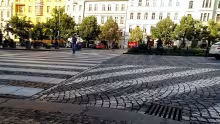
Aehrenthal Palace, once situated at the intersection of Wenceslas Square and Štěpánská Street in Prague's Nové Město district, was a Renaissance-style palace with a history marked by ownership changes and architectural transformations. Although not particularly significant architecturally or historically, it played a role in the urban development of its area. The site is now occupied by modern structures like Lucerna Palace and Rokoko Palace.
The origins of Aehrenthal Palace trace back to the early 17th century when it was constructed as a Renaissance building. Initially owned by Regina z Aventina and Jan starší Ledčanský z Popic a na Třebotově, the palace faced confiscation due to their involvement in the Bohemian Revolt. This period of religious and political upheaval set the stage for its early history.
Architecturally, the palace began as a Renaissance structure. Under Jan Lexa's ownership from 1773 until the late 18th century, it underwent significant renovations reflecting Enlightenment influences. The most notable architectural transformation occurred between 1847 and 1849 when architect Bernhard Grueber conducted a historicizing renovation, merging two smaller buildings into one cohesive structure.
Ownership of Aehrenthal Palace changed hands several times throughout its history. After the confiscation from Regina z Aventina and Jan Ledčanský, it was acquired by Jan Lexa in 1773. His tenure saw substantial renovations that modernized the building. Later, in 1914, the Pozemková banka purchased the property, leading to its demolition to make way for new developments.
Key events at Aehrenthal Palace include its confiscation during the Bohemian Revolt and subsequent ownership by Jan Lexa, who initiated significant renovations. The historicizing renovation by Bernhard Grueber in the mid-19th century was a pivotal moment that reshaped the building's structure. Ultimately, the palace's demolition in 1914 marked the end of its existence as a standalone entity.
Today, the site where Aehrenthal Palace once stood is now part of Prague's vibrant urban landscape. The area features modern structures like Lucerna Palace and Rokoko Palace, both incorporating commercial spaces such as shopping arcades and entertainment venues. While the original palace no longer exists, its historical footprint contributes to the rich tapestry of Prague's architectural evolution.
Visiting this site offers a glimpse into the dynamic history of Prague's urban development. The transformation from a Renaissance palace to modern commercial buildings reflects broader trends in architecture and city planning. For those interested in exploring the layers of history that have shaped Prague, the former location of Aehrenthal Palace provides an intriguing narrative of change and continuity.
Historical milestones
- early 17th century
- Original construction of the Renaissance building.
- 1773-1799
- Ownership and renovations under Jan Lexa.
- 1847–1849
- Bernhard Grueber's historicizing renovation.
Architectural development
The Aehrenthalský palác began as a Renaissance building in the early 17th century. Under Jan Lexa's ownership in the late 18th century, it underwent significant renovations. The most notable architectural change occurred between 1847 and 1849 when Bernhard Grueber conducted a historicizing renovation, merging two smaller buildings into one.
Historical events
- early 17th century
- Original construction and ownership by Regina z Aventina and Jan Ledčanský.
- 1773-1799
- Ownership transferred to Jan Lexa, followed by significant renovations.
- 1847–1849
- Bernhard Grueber's historicizing renovation and structural unification of adjacent buildings.
- 1914
- Demolition ordered by Pozemková banka, leading to the construction of new structures on the site.
Points of interest
- The Aehrenthal Palace's history is intertwined with the Bohemian Revolt, a significant event that led to its confiscation due to the owners' involvement in religious and political conflicts of the time.
- Despite its relatively modest architectural significance, the palace underwent a notable historicizing renovation by architect Bernhard Grueber between 1847 and 1849, reflecting broader trends in mid-19th century architecture.
Guide
Show guide text
Welcome to the Aehrenthalský palác, a historical gem nestled at the corner of Václavské náměstí and Štěpánská Street in Prague's vibrant Nové Město district. As you stand here, imagine yourself stepping back into the early 17th century when this Renaissance-style palace first rose from its foundations. Though not renowned for architectural grandeur or historical significance on a larger scale, its story is rich with intrigue and transformation.
The origins of Aehrenthalský palác are deeply rooted in the turbulent times of Bohemia's past. Initially constructed during the early 1600s, this building served as more than just a residence; it was a silent witness to the shifting tides of history. The original owners, Regina z Aventina and Jan Ledčanský, found themselves entangled in the Bohemian Revolt—a significant uprising against Habsburg authority that had profound religious and political ramifications. Their involvement led to the confiscation of their property, marking a pivotal moment in the palace's storied past.
As you gaze upon its façade today, take a moment to appreciate the architectural journey it has undergone. While the Renaissance roots are not overtly pronounced, the building underwent significant changes over time. In particular, between 1847 and 1849, architect Bernhard Grueber bestowed upon the palace an historicizing renovation that infused new life into its structure. Though subtle in detail, these modifications reflect a broader narrative of adaptation and resilience.
The stories woven through Aehrenthalský palác are as captivating as they are complex. Regina z Aventina and Jan starší Ledčanský z Popic a na Třebotově were more than just names; they were figures caught in the crossfire of their era's religious and political upheavals. Their legacy, intertwined with this building, invites us to ponder the personal costs of broader historical conflicts.
One intriguing aspect that may captivate your curiosity is how this palace survived through various ownerships and renovations. From 1773 to 1799, Jan Lexa took stewardship, ensuring its preservation during a period marked by significant cultural shifts in Europe.
As you prepare to continue exploring the wonders of Prague, take with you the stories and transformations of Aehrenthalský palác—a testament to endurance amidst change. We invite you to delve deeper into this city's rich tapestry, where every corner holds a narrative waiting to be discovered. Thank you for visiting; may your journey through history continue to inspire and enlighten.
Tips for visitors
While Aehrenthalský palác itself is no longer standing, visiting the site offers a unique opportunity to explore one of Prague's most vibrant areas. The best time to visit would be during late spring or early autumn when the weather is pleasant for walking around Václavské náměstí and its surroundings. During these months, you can enjoy outdoor cafes and events without the summer crowds or winter chill.
Transportation to this area is convenient via public transport, with several metro stations nearby providing easy access. If driving, there are parking facilities in the vicinity of Václavské náměstí, though spaces can be limited during peak hours. It's advisable to check for available parking options ahead of your visit or consider using public transportation.
When planning your visit, it’s a good idea to bring comfortable walking shoes as you'll likely explore the area on foot. A camera is also recommended to capture the architectural beauty and vibrant atmosphere of nearby landmarks like Lucerna Palace and Rokoko Palace. Early morning light provides excellent conditions for photography, offering soft shadows and warm tones.
For those interested in what’s nearby, within a 30-minute walk or short public transport ride, you can explore other historical sites and cultural attractions around Nové Město. The area is rich with history and offers various experiences from art galleries to shopping districts. Families with children will find the lively environment of Václavské náměstí engaging, with opportunities for dining and entertainment.
Families visiting this site might enjoy a leisurely stroll through the nearby streets, where you can discover charming cafes and shops perfect for a family outing. The area is also suitable for children to explore safely under supervision, making it an enjoyable experience for all ages.
Businesses nearby
Nearby
Located at a prominent intersection in Prague, the former site of Aehrenthalský palác is surrounded by significant urban landmarks such as Václavské náměstí. The area features modern structures like Lucerna Palace and Rokoko Palace.
Accommodation nearby
Trips and activities nearby
Guided tours, tickets and activities nearby from GetYourGuide
Search tours and activities →Themed route
Thematic Walking Tour: Aehrenthalský Palác and Its Urban Surroundings
1. Aehrenthalský Palác Site - Type: Historical Site - Why Visit: Although the original Aehrenthalský palác no longer stands, its site at a significant intersection in Prague offers a glimpse into the city's architectural evolution. This location serves as a historical marker where you can imagine the grandeur of the past and appreciate how urban development has transformed this area.
2. Václavské náměstí - Type: Urban Square - Why Visit: Just a short walk from the former site of Aehrenthalský palác, Václavské náměstí is one of Prague's most iconic squares. Known for its vibrant atmosphere and historical significance, it hosts numerous cultural events and offers stunning views of surrounding landmarks like the National Museum.
3. Lucerna Palace - Type: Modern Architectural Landmark - Why Visit: Located nearby, Lucerna Palace is a striking example of modern architecture with its unique glass dome. It's an ideal spot for those interested in contemporary design and offers panoramic views of Prague from its observation deck.
4. Rokoko Palace - Type: Architectural Landmark - Why Visit: A short distance away, Rokoko Palace is renowned for its Rococo-style architecture. Its distinctive façade and historical significance make it a must-see for anyone interested in the artistic movements that have shaped Prague's architectural landscape.
This tour offers a blend of history and modernity, showcasing how Prague seamlessly integrates its rich past with contemporary design within a short walking distance.
Seasonal recommendations
Spring: Visiting the site of Aehrenthalský palác during spring offers a unique experience as nature reawakens around the historic grounds. The soft, pastel hues of blooming flowers and fresh greenery create an enchanting atmosphere that contrasts beautifully with the absence of the palace itself. This is also a time when daylight hours are lengthening, providing ample opportunity to explore the area in natural light. Visitors should be prepared for occasional showers typical of spring weather, so carrying a lightweight rain jacket or umbrella would be wise. Although crowds may not yet be at their peak, arriving early can help avoid any lingering morning dew on pathways.
Summer: Summer is an ideal time to visit the site of Aehrenthalský palác due to its long daylight hours and warm weather, which are perfect for leisurely exploration. The lush greenery around the area is in full bloom, providing a picturesque backdrop that enhances the historical ambiance. However, this season also brings larger crowds, especially during peak tourist months, so arriving early in the day can help avoid the busiest times. Light, breathable clothing and comfortable walking shoes are recommended to navigate the site comfortably, along with staying hydrated by bringing water.
Autumn: Autumn at the Aehrenthalský palác site is characterized by a stunning display of fall foliage, offering vibrant colors that transform the landscape into a painterly scene. The cooler temperatures make it an ideal time for walking and appreciating the changing leaves without the discomfort of summer heat. As daylight hours shorten, planning your visit to take advantage of morning light can enhance your experience. This season typically sees fewer tourists than summer, providing a more tranquil atmosphere. Layered clothing is advisable due to fluctuating temperatures throughout the day.
Winter: Winter brings a serene and quiet atmosphere to the site of Aehrenthalský palác, with snow often blanketing the area in a soft, white layer that adds a magical quality to the historic surroundings. The shorter days mean less time for exploration, so planning ahead is crucial, especially since some facilities might have reduced hours during this season. Wearing warm, insulated clothing and sturdy boots is essential to stay comfortable while exploring. While the site may be quieter due to fewer visitors, it's a perfect opportunity to enjoy the peacefulness of the winter landscape.
Visualizations and artistic views

Vizualizace jsou generovány umělou inteligencí a slouží jako inspirace.


Tips from visitors
No tips yet. Be the first!
Log in and add your tip.
Location on the map


Příběhy a pověsti
Legendy, pověsti a příběhy spjaté s touto památkou
Reviews and comments