






Ústřední vojenská nemocnice Educational institution
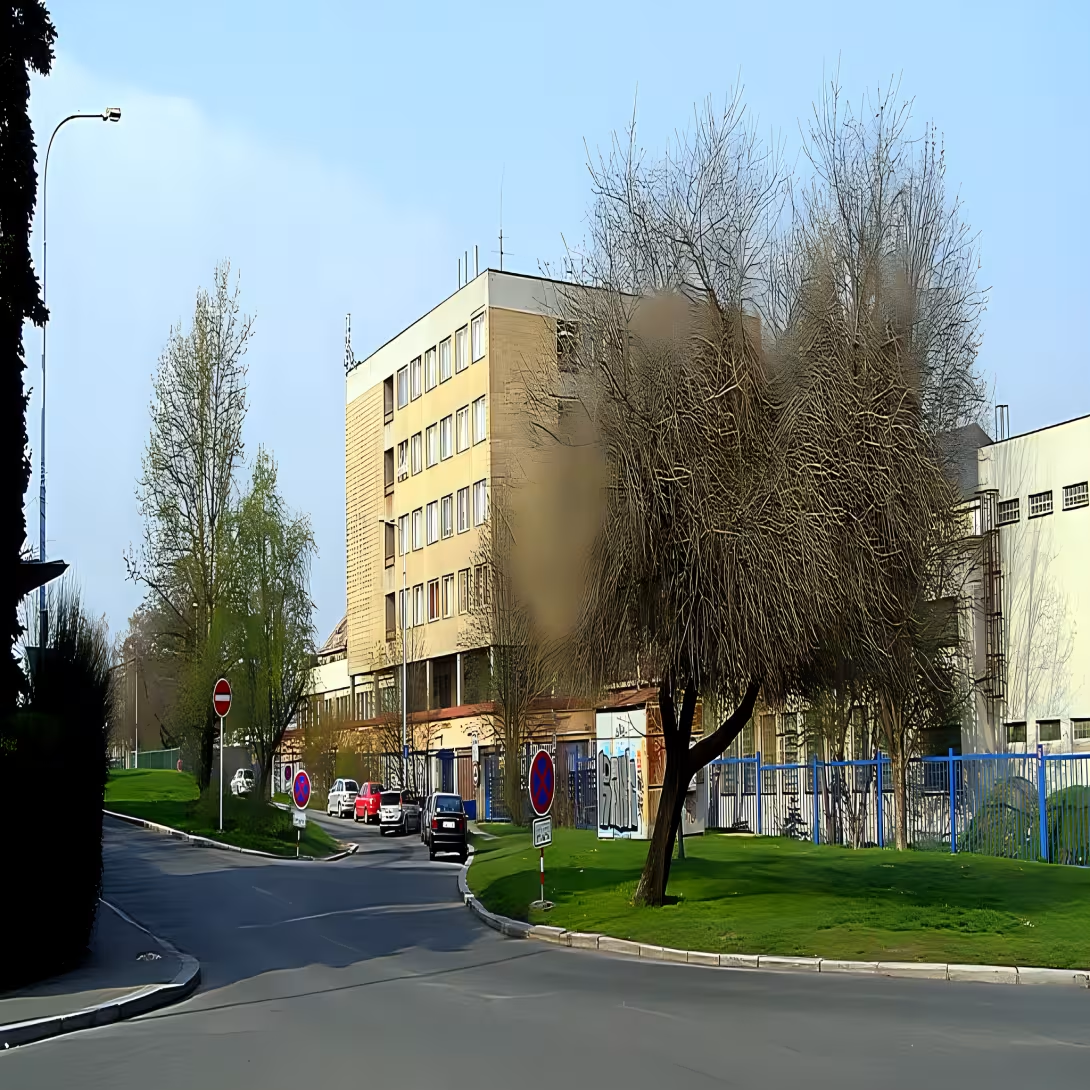
Ústřední vojenská nemocnice, originally known as Masarykova vojenská nemocnice, is a significant healthcare institution located in Břevnov, Prague. It serves the Ministry of Defense of the Czech Republic and has been crucial in military medicine throughout its history. Established in 1938, it initially catered exclusively to military personnel but expanded to include civilians after 1994, reflecting societal changes in post-communist Czech Republic. The hospital is renowned for offering a comprehensive range of medical services, excluding pediatric care, obstetrics, cardiothoracic surgery, and burn treatment.
The origins of Ústřední vojenská nemocnice date back to a 1925 decision by the Czechoslovak National Assembly to integrate military healthcare facilities. It began operations on August 1, 1938, after relocating from previous sites to Břevnov. This move consolidated various medical services under one roof, marking a significant development in military medicine. During World War II, following Nazi Germany's occupation of Czechoslovakia, the hospital was used by the German Wehrmacht. Post-war operations resumed in 1945 under Czechoslovak control, and it was renamed Ústřední vojenská nemocnice in 1950.
Throughout its history, the hospital has experienced significant administrative changes. Initially managed by the Ministry of Defense of the Czechoslovak Socialist Republic, it transitioned to the Ministry of Defense of the Czech Republic after Czechoslovakia's dissolution. Leadership under General František Engel from 1959 to 1970 was notable for enhancing healthcare quality at the facility. In 2012, Minister of Defense Alexandr Vondra granted it "vojenská fakultní nemocnice" status, boosting its educational and medical capabilities.
Key events include opening to civilians in 1994, marking a shift from serving primarily military personnel. The hospital is recognized for advanced medical technologies like the da Vinci surgical robot since 2005 and a specialized facility for long-term care of war veterans with 26 beds. It also manages the Strategická krevní banka, a strategic blood reserve for emergencies in the Czech Republic.
Today, Ústřední vojenská nemocnice remains pivotal in military and civilian healthcare. It provides a full spectrum of medical services with 677 beds and employs 386 doctors who annually hospitalize 26,000 patients. The hospital serves as a clinical base for University of Prague medical students and offers postgraduate training. Its facilities include specialized clinics such as anesthesiology, internal medicine, surgery, neurosurgery, ophthalmology, oncology, ORL, gynecology, orthopedics, and infectious diseases.
The hospital's significance extends beyond healthcare, serving as a training, educational, and professional treatment facility for the Czech Army. It houses the central medical-psychological department of the Army and a military review commission. Additionally, it accommodates specialized facilities like the Institute of Aviation Medicine. In recognition of its excellence, the collective staff was awarded the Prize of Prague 6 on September 3, 2021.
Ústřední vojenská nemocnice is not only a testament to the evolution of military medicine but also an essential part of Prague's healthcare landscape. Its rich history and modern capabilities make it a site worth visiting for those interested in medical advancements and historical developments within the Czech Republic.
Then and now
Drag the slider to compare how the landmark may have looked when it was built with the view today.
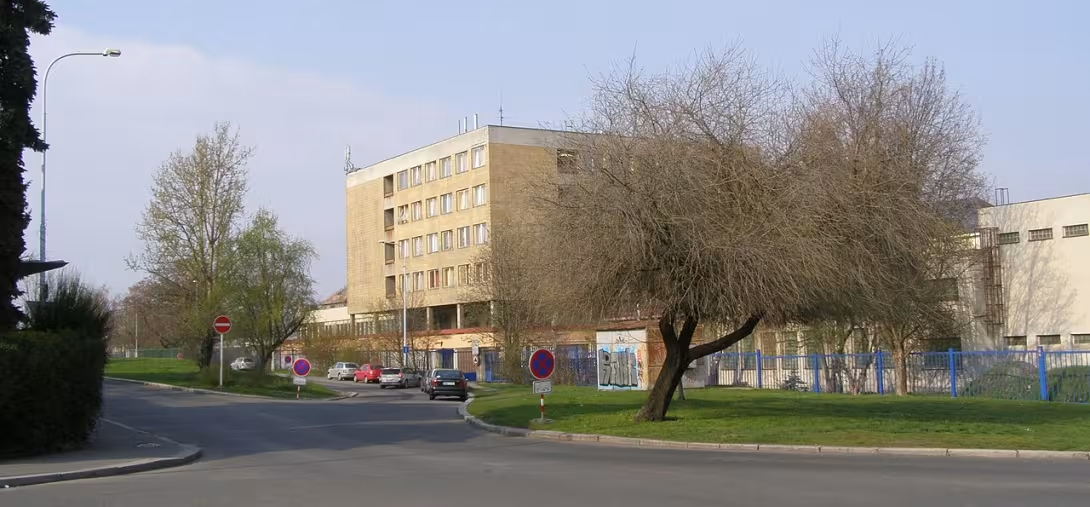

The historical appearance on the left is an AI-generated visualisation and serves as inspiration only.
Historical milestones
- 1938
- The hospital began operations in its new Břevnov location.
- 1945
- Operations resumed under Czechoslovak control after World War II.
- 1994
- Hospital services were opened to the general civilian population.
- 2012
- The hospital was granted the status of 'military faculty hospital'.
Architectural development
The hospital was newly constructed following a decision by the Czechoslovak National Assembly in 1925. It underwent significant changes post-World War II and expanded its facilities over time to accommodate modern medical practices. In 2012, it received the status of 'military faculty hospital' from the Minister of Defense.
Historical events
1938: The hospital began operations in its new Břevnov location after moving from previous sites.
1945: Operations resumed post-World War II under Czechoslovak control.
1994: The hospital opened its services to the general civilian population, expanding beyond military personnel.
Owners
Initially established by the Czechoslovak National Assembly in 1925 as part of a new law to integrate military healthcare facilities. After World War II, it was operated under the Ministry of Defense of the Czechoslovak Socialist Republic. Since the dissolution of Czechoslovakia, it has been managed by the Ministry of Defense of the Czech Republic.
Points of interest
- The hospital's transition to civilian care in 1994 marked a significant shift from its original military-only mandate, reflecting broader societal changes in post-communist Czech Republic and enhancing community healthcare access.
- During World War II, Ústřední vojenská nemocnice was repurposed by the German Wehrmacht after Nazi Germany's occupation of Czechoslovakia, showcasing its strategic importance during turbulent historical periods.
- The hospital achieved a milestone in 2005 with the introduction of the da Vinci surgical robot, positioning it at the forefront of advanced medical technology and robotic-assisted surgery within the region.
- General František Engel's leadership from 1959 to 1970 was instrumental in elevating healthcare quality at the facility, highlighting his significant impact on its development during a crucial period in Czechoslovak history.
- The establishment of the Strategická krevní banka underlines the hospital's role in national emergency preparedness, ensuring a strategic blood reserve for the entire Czech Republic.
Guide
This guide is narrated by a synthetic voice generated by artificial intelligence.
Show guide text
This text was created by artificial intelligence and has not been editorially reviewed. It may contain inaccuracies.
The Central Military Hospital in the Prague district of Břevnov is a large healthcare facility of the Ministry of Defence and at the same time a military university hospital. Originally it bore the name of the Masaryk Military Hospital.
It was established on the basis of a law adopted by the National Assembly of the Czechoslovak Republic in 1925. The hospital was built completely anew. It began its operations on August 1st, 1938, when departments moved from the former military hospital at Karlovo náměstí and from the hospital ward in the barracks at Na Pohořelci to Břevnov. It became fully operational on September 1st, 1938. Already in 1939, after the occupation of the Czech lands by Nazi Germany, it was taken over by the German army as its reserve hospital. After the war, operations were resumed in the autumn of 1945.
In 1950 the hospital received its present name and came under the Ministry of National Defence. From 1959 to 1970 it was led by General František Engel, who contributed to the high standard of care provided here. Until 1994 it served mainly soldiers, their families, civilian defence ministry employees and people from security services. Only then did it open to the general public. The president of the republic is typically treated here. In February 2012 the Defence Minister Alexandr Vondra granted it the status of a military university hospital.
Today the hospital has approximately 680 beds, employs 386 doctors and annually hospitalizes 26,000 patients. It provides nearly a complete range of care. The exceptions are paediatrics, obstetrics, thoracic surgery and burn treatment. In 2004 it became the first hospital in Eastern Europe to obtain a quality certificate from the international organization Joint Commission International. Since 2005 an operating robot da Vinci has been working here. Since 2008 a long-term care ward for war veterans with 26 beds has been operating here.
A special role is played by the Strategic Blood Bank. It is a nationwide blood reserve in case of war, natural disaster or other large-scale catastrophe. The hospital also serves as a training and educational facility of the Army of the Czech Republic. It houses the central medical-psychological department of the army, a military review commission and a workplace of the Institute of Aviation Medicine. Medical students from all three Prague medical faculties of Charles University study here.
In September 2021 the hospital's employees received the Award of the Prague 6 municipal district.
Tips for visitors
The best time to visit Ústřední vojenská nemocnice is during the late spring or early autumn months, when the weather is pleasant, and the surrounding green spaces are particularly beautiful. This period offers a serene environment that complements the historical significance of the site. Visitors can enjoy the mild temperatures and blooming flora, making it ideal for leisurely exploration.
The area is accessible by various modes of public transit, so visitors are encouraged to check current routes via a transportation app or website for the most efficient travel plans.
When visiting Ústřední vojenská nemocnice, it is recommended to bring comfortable walking shoes and weather-appropriate clothing, as you might spend a significant amount of time exploring the site and its surroundings. A camera or smartphone for capturing photos is also suggested, especially if you're interested in documenting the historical architecture and serene landscapes.
For photography enthusiasts, some of the best spots around Ústřední vojenská nemocnice include areas where natural light enhances the architectural features of the buildings. Early morning or late afternoon visits are ideal for capturing soft lighting conditions that highlight the textures and details of the structures. The surrounding green spaces also offer picturesque backgrounds for photographs.
Nearby attractions within a 30-minute distance from Ústřední vojenská nemocnice include several historical and cultural sites, offering visitors a rich experience beyond the hospital grounds. Exploring these nearby locations can provide additional context to Prague's history and culture, making it an enriching part of your visit.
For families with children visiting Ústřední vojenská nemocnice, consider planning a day that includes both educational and leisure activities. The surrounding green spaces are perfect for family walks or picnics, allowing children to enjoy the outdoors while learning about the site's historical significance. Additionally, exploring nearby attractions can offer varied experiences suitable for all ages.
Frequently asked questions
Can the monument be visited?
We have not verified whether this monument is accessible. Please ask the owner or operator, or the local municipal office.
Where is the monument?
Location: Břevnov, Hlavní město Praha. The map on this page shows the exact spot.
Businesses nearby
Do you run a restaurant, accommodation, shop, museum, rental, wellness or other visitor service near this monument? Show yourself directly to the people heading to it — this is how they will see you in the app and on the web:
Natáčelo se zde
- Kdyby tisíc klarinetů (1965) film
Zdroj: Wikidata (vlastnost „místo natáčení“) · Všechna filmová místa
Events nearby

Zdroj akcí: otevřená data měst a obcí ČR (Národní katalog otevřených dat) a kalendář akcí Národního památkového ústavu.
Nearby
Located in Břevnov, Prague, the hospital is surrounded by historical and cultural sites. The area offers a mix of urban and green spaces, contributing to its serene environment.
Accommodation nearby
Trips and activities nearby
Guided tours, tickets and activities nearby from GetYourGuide
Affiliate link: if you buy from the partner, we may receive a commission. The price for you does not change.
Search tours and activities →Themed route
Tematická výletní trasa: Ústřední vojenská nemocnice a okolí Břevnova
1. Ústřední vojenská nemocnice (Vzdělávací instituce) - Typ: Vzdělávací instituce - Proč stojí za návštěvu: Ústřední vojenská nemocnice v Břevnově je nejen důležitým zdravotnickým centrem, ale také poskytuje cenné poznatky o historii a rozvoji vojenských lékařských služeb. Navštívte její vzdělávací instituci pro pohled na moderní medicínu a její integraci s vojenskou tradicí.
2. Benediktinský klášter Břevnov - Typ: Historický klášter - Proč stojí za návštěvu: Klášter, založený v roce 993, je nejstarším na území Prahy a nabízí pohled do historie českého mnichovského života. Jeho architektura a umělecká díla jsou svědectvím bohaté minulosti, která přitahuje návštěvníky z celého světa.
3. Břevnovský pivovar - Typ: Pivovar - Proč stojí za návštěvu: Tento pivovar, který je nejstarším v Česku, nabízí cestu do světa tradičního piva. Navštívte ho pro poznání procesu výroby a možnost si užít kvalitního českého pivního zážitku přímo na místě.
4. Kostel svatého Vojtěcha - Typ: Kostel - Proč stojí za návštěvu: Tento kostel je součástí klášterního komplexu a vyniká svou historickou architekturou. Jeho interiér obsahuje bohaté umělecké prvky, které přitahují návštěvníky zájmem o duchovní i kulturní aspekty minulosti.
5. Nádvoří kláštera - Typ: Nádvoří - Proč stojí za návštěvu: Klidné a krásně zalesněné nádvoří kláštera nabízí útulek od městského života. Je ideálním místem pro relaxaci, promlčení v historickém prostředí nebo fotografii s impozantním pozadím.
Tato trasa vám umožňuje objevit bohatou historii a kulturu obce Břevnov, přičemž zůstáváte blízko Ústřední vojenské nemocnice.
Seasonal recommendations
Spring: Visiting the Central Military Hospital in Břevnov during spring offers a unique experience as nature awakens around this historic site. The blooming flowers and lush greenery create an enchanting atmosphere, making it ideal for photography enthusiasts. As daylight hours increase, the natural lighting beautifully illuminates the architectural details of the building. Visitors should dress comfortably in layers, as temperatures can vary throughout the day. This is a great time to explore before the summer crowds arrive, allowing for a more tranquil visit.
Summer: Summer at the Central Military Hospital in Břevnov is characterized by long daylight hours and vibrant green landscapes, providing perfect conditions for outdoor exploration. The warm weather invites visitors to enjoy the open spaces around the site, though it's advisable to wear sun protection due to increased UV exposure. This season sees a higher number of tourists, so arriving early can help avoid crowds and ensure a more relaxed experience. With its educational significance, summer is an excellent time for school trips, as students can learn in a lively yet historically rich environment.
Autumn: Autumn brings a spectacular display of colors to the Břevnov area, with leaves turning shades of red, orange, and gold around the Central Military Hospital. This creates a picturesque setting that enhances the historical ambiance of the site. The cooler temperatures are ideal for comfortable walking tours without the summer heat. As daylight hours shorten, visitors should plan their visit accordingly to make the most of natural lighting. Autumn is also a quieter season compared to summer, offering a more peaceful experience as nature's beauty unfolds.
Winter: Winter transforms the Central Military Hospital in Břevnov into a serene and quiet retreat. The site takes on a different character under a blanket of snow, with the historic architecture standing out against the white landscape. Despite fewer tourists, it's important to check in advance if special events or exhibitions are taking place during this season. Winter offers a unique opportunity to appreciate the site's beauty in a tranquil setting, away from the hustle of peak tourist seasons.
Visualizations and artistic views


The visualisations are generated by artificial intelligence and serve as inspiration.
Photos from the area
Real photos taken near the monument


Zdroj a licence jsou uvedeny u každého snímku.
Tips from visitors
No tips yet. Be the first!
Log in and add your tip.
Sources and literature
Photos: Daniel Baránek / CC BY-SA 3.0, rozlišení zvýšeno umělou inteligencí — Wikimedia Commons. The author and licence also appear when you hover over the image.
Faktickým podkladem tohoto textu byl článek na Wikipedii, jehož autory jsou přispěvatelé Wikipedie. Článek je dostupný pod licencí CC BY-SA 4.0.
Location on the map

Příběhy a pověsti
Legendy, pověsti a příběhy spjaté s touto památkou

Fotografie návštěvníků
Zatím žádné fotografie. Buďte první, kdo přidá fotografii z návštěvy!
Log in a přidejte svou fotografii nebo hodnoťte.
Za ověřenou návštěvu v aplikaci získáte víc bodů — poznáme podle GPS, že jste na místě.
Reviews and comments