






pavilon Vojtěška Pavilion
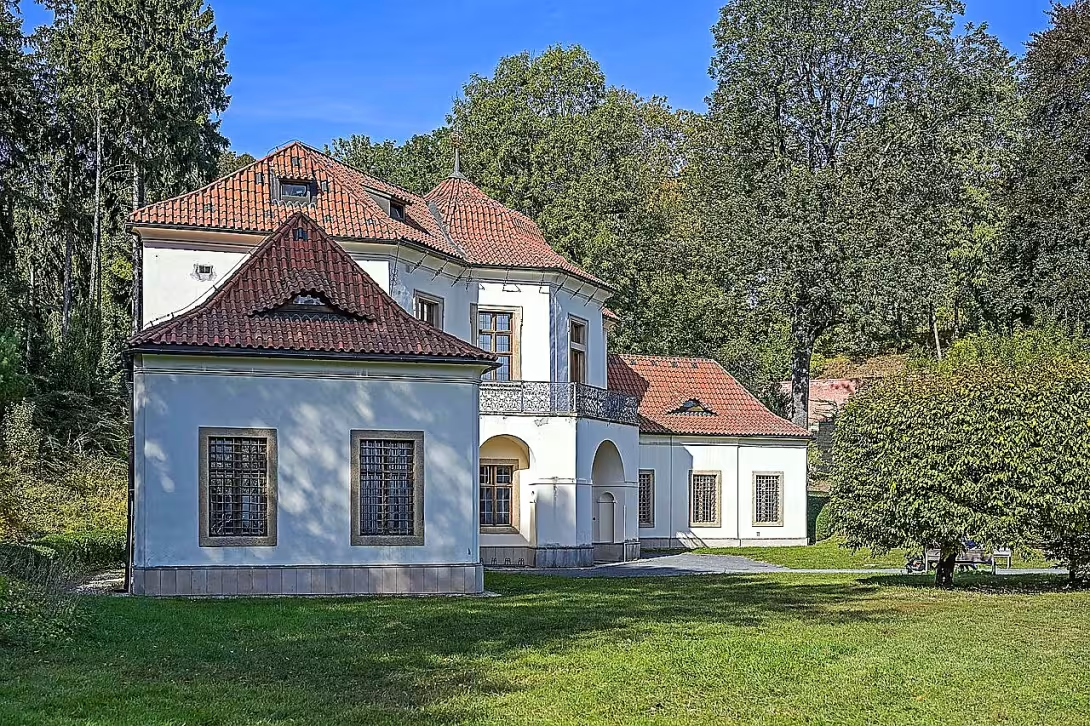
The Pavilion Vojtěška is located in the transverse axis of the lower garden of the Břevnov monastery, which is closed on the west side by the cemetery chapel of St. Lazarus and on the east side by a gloriet with a statue of St. Joseph called Josephka. Since 1981 it has been registered as a cultural monument, since 1992 it has been part of the National Cultural Monastery Břevnov. The name of the pavilion goes to the legendary meeting of St. Vojtěv with Prince Byslav II at the source of Brusnice. The references to the building or shelter above this legendary place come from the Middle Ages. The name Vojtěšek allegedly восходí to the 13th or 14th century, the whole legend was recorded until Czech chronicle Václav Hájek of Libočan from 1541.
The construction of its present form was initiated by Kilián Ignác Dientzenhofer during the large reconstruction of the monastery between 1722 and 1725. The Osmibolic medieval pavilion, originally with a Gothic vault, gained a new look: Dientzenhofer connected two storey wings with ground floor and attic to the older construction from both sides at a blunt angle. The heart of the pavilion remains the atrium with the spring of the stream above which the hall of an oval plan is cloned. On its external east side leads a balcony with a forged rococo railing, whose authors were artisans Matesh Hoffmann (locksmith), Benedict Opitz (carpenter) and Master Schmidt (Štapphire). The metal emblem of the Břevnov Archabbey is located in the front of the pavilion.
The unified axis composition of the lower garden was successful by the archopaths thanks to the fielding of the terrain according to the Dientzenhofer project. The path from the main gate of the monastery to the pavilion is lined from both sides by a habra, originally by an element of French gardens. At the same time, this corner serves as a cross road, marked only by paving cubes with engraved crosses in the clay.
The most valuable parts of the interior are the Torsional statues of Josef Klein from 1750, which stand on a stone plinth above the spring. Four of the five preserved torsos originally represented both protagonists of the legend - Saint Vojtěch and Prince Bloslav II. - and accompanying figures including a deer drinking from a spring. The current creator of this figural composition can be imagined by archival photos a rich group. Vandalism in the 1950s to 1960s fell to part of the sculptures of the head, hands and attributes. In the vault of the hall was preserved wall painting by František Lichtenreiter from 1743, which depicts the ascension of the hermit Vintír in Benedict's robe surrounded by angels.
After decades of destruction, the pavilion had had a major recovery in 1993 to commemorate the millennium since the foundation of the monastery. Vojtěška is not only an architectural monument to the Baroque, but also to the spiritual and compositional center of the monastery garden, which calls upon centuries of godliness and surrender. / p >
Then and now
Drag the slider to compare how the landmark may have looked when it was built with the view today.
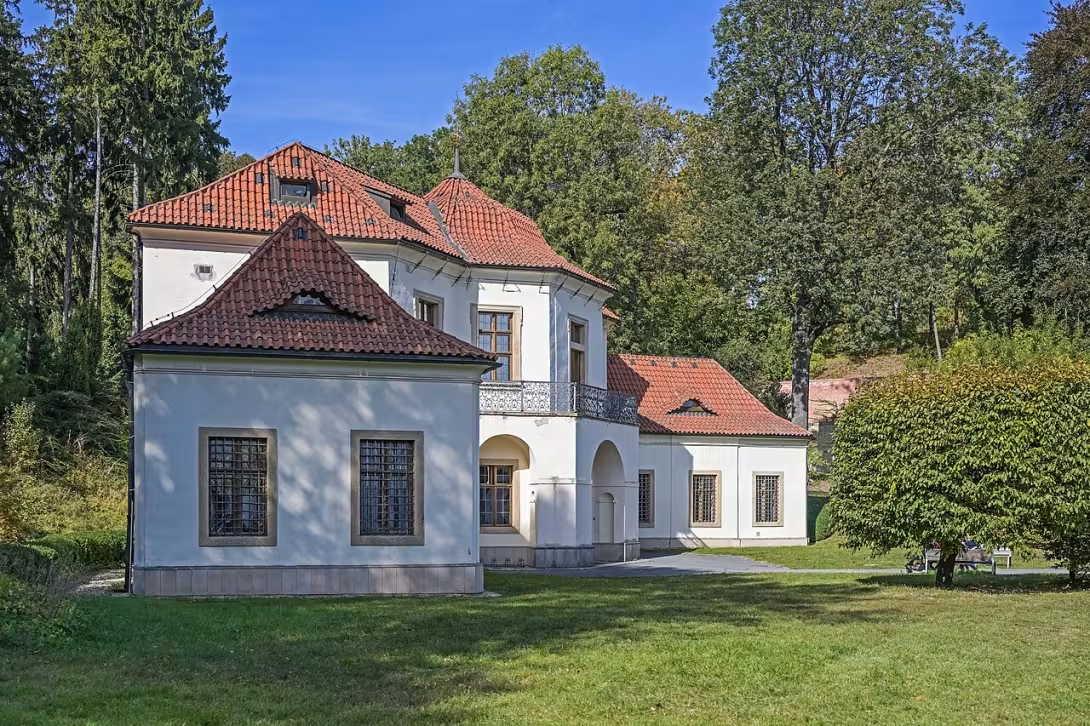
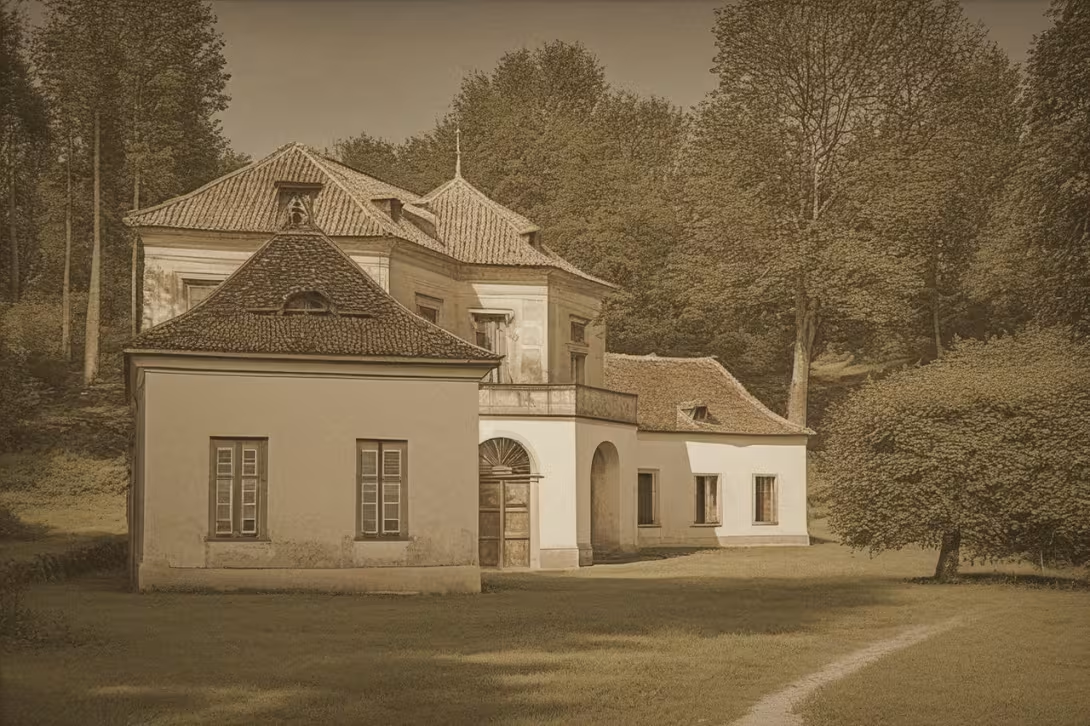
The historical appearance on the left is an AI-generated visualisation and serves as inspiration only.
Historical milestones
- 1722
- The beginning of reconstruction according to the plans of the Diznehofer.
- 1981
- Adding to the list of Cultural Monuments.
- 1993
- Restoring the pavilion for the anniversary of the millennium since the foundation of the monastery.
Architectural development
Originally medieval structures on the site of the pavilion were rebuilt into Baroque form in 1722-1725. The pavilion has an eight-sided vault and is equipped with two storey wings, a hall with balcony and a metal emblem of the Břevnov Archabbey.
Historical events
- 1722
- The beginning of the reconstruction of the pavilion according to the plans of the Diznehofer.
- 1981
- Adding to the list of Cultural Monuments.
- 1993
- Restoring the pavilion for the anniversary of the millennium since the foundation of the monastery.
Points of interest
- Vojtěška Pavilion is located in the transverse axis of the lower garden Břevnov monastery. - Since 1981 it has been registered as a cultural monument and since 1992 as part of the National Cultural Monument Břevnov Monastery. - The construction of its present form was initiated by Kilián Ignác Dientzenhofer between 1722 and 1725. - The most valuable parts of the interior are the Torsional statues of Josef Klein from 1750. - After decades of destruction, the pavilion had a major recovery in 1993 to commemorate the millennium since the foundation of the monastery.
Guide
This guide is narrated by a synthetic voice generated by artificial intelligence.
Show guide text
This text was created by artificial intelligence and has not been editorially reviewed. It may contain inaccuracies.
Welcome to one of the most peaceful and beautiful corners of Prague, right in the heart of the historic Břevnova. Right now, standing here in the lower garden of the Břevnov monastery, you have a place in front of you that carries deep peace and elegance of the past. Please feel the atmosphere of this space, listen to the quiet noise of the water that comes to you directly from the source of the Brusnice stream, and look at the structure that is right in front of you. You're standing in front of Pavilion Vojtešek. It is a place where architecture is bound to nature and where every line of construction has a clear purpose. This pavilion is not just an ordinary building; It's the idea center of this whole garden, the point around which space is organized and which gives the whole place its character.
Let us now return together in time to understand how this place was created and why it is so important to us. In order to understand the importance of this construction, we need to look at the time when the Baroque in our countries reached its greatest expansion. The entire history of this place is inseparably linked to Břevnov Monastery, but it is this pavilion that has acquired its present form thanks to a brilliant design in the eighteenth century. In 1722, extensive reconstruction started according to plans created by one of the most important architects of the time. His work was made by Kilián Ignác Dientzenhofer, a man whose name belongs to the absolute peak of baroque architecture. It is his vision that has transformed this space into a harmonious work that has been addressed to us for centuries. The construction was gradually realized between 1722 and 1725 and has since served as a fixed point in the variable world of the garden.
Now pay attention to the architecture itself, which is right before your eyes. If you look at the structure of the pavilion, notice how much geometry is thought out. Dientzenhofer created a fascinating arched structure here, which gives the whole feeling of stability and light at the same time. Notice how the construction consists of two rectangular wings which are solved exactly in the axis. This symmetry is not random. These two wings form a harmonious whole around the central space, which is the atrium. This atrium, this open space in the middle, forms the heart of the pavilion and allows light and air to flow freely through architecture. If you look around you, you realize that the pavilion isn't built anywhere. It is located exactly in the transverse axis of the lower garden. This means that its location was carefully planned to organise visitors' views and to create order throughout the monastery area. Each element, from arched ceilings to wing layout, works with a garden space and a stream that flows nearby.
Now, if you think about the name of this place, you might wonder why the pavilion is called that. The name Vojtěška brings us to the figures which are absolutely crucial for the history of the monastery and for our countries. There is an echo of the name of Saint Vojtěv, an important spiritual figure, and also a mention of Prince Byslav II. These figures represent the deep roots on which this place stands. Although the pavilion appears to be a separate architectural work, its spiritual importance is firmly linked to the tradition and continuity that the monastery in Břevnov has maintained for centuries.
But it is important to know that this pavilion has not always been as good for our generations as you see it now. The history of its preservation is a story of recognition of its value. Already in 1981, this object was entered in the list of cultural monuments, which officially confirmed that it was an inheritance that we had to protect. Later, in 1992, he became part of a wider national cultural monument, which is the entire Břevnov monastery. And if it seems to you that the building is very fresh and careful, it is because there was an important renewal in 1993. This reconstruction was particularly important as it was associated with the celebration of the millennium since the foundation of the monastery. Thanks to this reconstruction effort, we can now perceive the beauty of baroque lines and enjoy the harmony that Dientzenhofer's work offers.
Do you perhaps have a question, what is the greatest secret in this place? It may not be in the walls themselves, but in how this pavilion affects the perception of the whole area. Notice how your view of the garden changes when you look at it through the structure of the pavilion or when you stand right near it. It's like this object works like a lens that sharpens the beauty of nature and the monastery environment. It's a fascinating combination of human art and natural flow of water and green.
Now that you have known the foundations of this place, its creator and its meaning, you are not expected to end. I suggest you continue your walk through the lower garden. Explore further corners, perceive the movement of water in the Brusnice stream and let yourself drift through the atmosphere of the Břevnov monastery. Every step can lead you to another surprise, another detail that will reveal the rich history of this place. Thank you for spending this moment with us and for stopping by the Pavilion Vojtěšek. We wish you a beautiful and inspiring walk in these historic gardens.
Tips for visitors
Best time to visit the pavilion Vojtěška is in the spring or autumn season when it is quieter and nature offers the most beautiful views. The sunny days are ideal for walking through the gardens of the Břevnov monastery.
Parking can be found near the monastery gates, but we recommend the use of public transport. The monastery is well accessible by bus and tram network; Check the current connection before visiting.
When walking through gardens, remember the shoes suitable for wearing lawn and view. Hot clothes are recommended, especially in colder months.
Photography of the pavilion Vojtěška offers the best light in the early morning or evening. Don't forget to take the camera and experiment with different angles, especially from the perspective of the monastery surroundings.
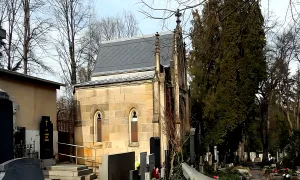
In the vicinity of the pavilion you can visit the Břevnov monastery, the cemetery chapel of St. Lazarus and Gloriet with the chapel of St. Joseph. These places offer rich history and beautiful architecture.
For families with children pavilon Vojtěška is a suitable place for a peaceful walk and exploring nature. Children can enjoy not only views, but also playing in gardens.
Frequently asked questions
Is pavilon Vojtěška open to the public?
Yes, pavilon Vojtěška is open to the public. However, it is important to check the current information on the official website or at the telephone request, as maintenance changes may occur.
How do I get to the place by car / public transport?
If you use a car, park in the parking lot at the Břevnov monastery. Through Dejvicka you can take bus number 119 or 194 directly to the pavilion Vojtěška.
How much is the entrance fee and is it paid on the spot?
The entrance to Vojtěšek pavilion is free. However, a small fee may be required when visiting monastery gardens.
Is the tour suitable for children and seniors?
Pavilion Tour Vojčíška is also suitable for children and seniors. The premises are accessible, but in older people it may be necessary to consider their physical abilities due to the difficult corridors.
How long does the tour take?
The visit to the Vojtěška pavilion takes approximately 30 minutes if you focus on the main architectural elements and a short stop in a quiet atmosphere.
What are the opening times and booking is required?
Opening hours of the pavilion Vojčíška may vary according to season. It is usually open from morning to evening, but we recommend checking the current information before visiting. Reservation is not necessary.
What's interesting in the immediate vicinity?
In the vicinity of the Vojtěška pavilion you will find the historic Cemetery Chapel of St. Lazarus, which is famous for its architectural details and peaceful surroundings. The monastery cemetery offers interesting views of the history of the Břevnov monastery.
For kids
Imagine going back to the past, and if you go through a quiet forest trail near Břevnov in Prague, you'll find a little unusual place. It's like a treasure box full of stories and wonders - pavilon Vojtěška! This is not just an ordinary empty place, but a home of history and mystery.
Businesses nearby
Events nearby

Zdroj akcí: otevřená data měst a obcí ČR (Národní katalog otevřených dat) a kalendář akcí Národního památkového ústavu.
Nearby
Břevnov monastery
St. Lazarus cemetery chapel
Gloriet with chapel of St. Joseph
Accommodation nearby
Trips and activities nearby
Guided tours, tickets and activities nearby from GetYourGuide
Affiliate link: if you buy from the partner, we may receive a commission. The price for you does not change.
Search tours and activities →Themed route
Thematic cruise route around Vojtěška pavilion
1. Vojtěška Pavilion (Pavilion) * Why is it worth visiting: * Pavilion Vojtěška is a unique architectural monument that offers beautiful views of the surrounding landscape. It is an ideal place to relax and disconnect in the urban environment.
2. Břevnov monastery * Why is it worth visiting: * This historic monastery is home to one of the oldest and most famous benedictine communities in the Czech Republic. Its Gothic buildings, the architecturally interesting church of St. Vojtěv and the monastery library are real pearls for visitors.
3. St. Lazarus cemetery chapel * Why is it worth visiting: * The chapel is not only the spiritual centre of the monastery, but also an architectural monument with rich historical elements. Its space offers peace and shelter for visitors.
4. Gloriet with chapel of St. Joseph * Why is it worth a visit: * This picturesque pavilion is a popular place for relaxation and beautiful views of the surrounding Břevnov hills. The chapel of St. Joseph provides peace and quiet, while the very structure of the gloriet is ideal for photography.
This route offers a combination of historical, spiritual and natural attractions within the village Břevnov. Designed so that visitors can explore the rich history and culture of this place with minimal movement between points.
Seasonal recommendations
Spring in the area of the monastery of March and around the pavilion brings awakening nature, when the surrounding orchards and gardens bloom into fine pastels and the landscape smells of freshly chopped grass. The sun's rays penetrate through the still not entirely molten trees and create an impressive game of lights and shadows on the historic facade of the building, ideal for peaceful contemplation. In this period you will meet only a minimum of tourists, which calls for peaceful walks without rush. Wear comfortable fixed shoes in any spring mud and light windbreaker, because the afternoon is pleasantly warmer, but the wounds remain cold. The best time to visit is in the morning, when morning fog slowly retreats to the spring sun.
Summer turns the surroundings of the pavilion into an oasis of deep shadow under densely connected crowns of grown trees, which provide a welcome shelter from the intense noon heat. The intense summer light is reflected from the bright elements of the construction and creates sharp contrasts that will be appreciated especially by lovers of contrast photography. As this is the main tourist season, it is more busy in the wider area, yet this place retains its intimate atmosphere. We recommend choosing to visit either early morning hours before 9: 00 or late evening, when the sun falls to the horizon and air temperature falls. Don't forget to bring a bottle of drinking water, sunglasses and light breathable clothes made of natural materials.
Autumn brings a melancholy mood to the whole location thanks to decaying leaves coloured in colorful shades of yellow, orange and brown, which covers the surrounding lawns as a soft carpet. The lighting is very soft, dispersed throughout the day due to the low sun position and provides a warm patina, which excels especially during a cloudy afternoon. The crowds of people from the summer months have disappeared completely, so you will enjoy the memory in complete silence accompanied by the rustling of leaves under your feet. In this period, the key layers of clothing, waterproof shoes and warmer coats are made because the dry weather and the morning ground freezers can surprise. The best time for walking is around noon, when the thermometer shows the highest daily temperatures.
Winter offers a completely unicum in the form of a snowy landscape, where the white blanket dampens all sounds and gives the place a fabulous and deeply silent feel. The sunlight is very short, but in bright days it creates a low sun on the snow with sparkly glitter and long shadows that underscore architectural lines. You rarely meet visitors here on cold days, which guarantees maximum privacy. It is necessary to wear high-quality winter shoes with anti-slip soles because the roads can freeze, and wear a warm winter jacket, hat and gloves. The best time for a tour is around noon until it is at least partially visible outside because it is soon getting dark.
Visualizations and artistic views


The visualisations are generated by artificial intelligence and serve as inspiration.
Photos from the area
Real photos taken near the monument


Zdroj a licence jsou uvedeny u každého snímku.
Atmosphere of the place
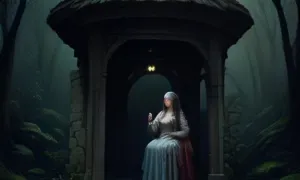
This atmospheric visualisation of the place and period was generated by artificial intelligence. It is not real footage of the location.
Tips from visitors
No tips yet. Be the first!
Log in and add your tip.
Sources and literature
Fotografie: Bengt Nyman from Vaxholm, Sweden / CC BY 2.0 — Wikimedia Commons. The author and licence also appear when you hover over the image.
Faktickým podkladem tohoto textu byl článek na Wikipedii, jehož autory jsou přispěvatelé Wikipedie. Článek je dostupný pod licencí CC BY-SA 4.0.
Location on the map

Příběhy a pověsti
Legendy, pověsti a příběhy spjaté s touto památkou
Fotografie návštěvníků
Zatím žádné fotografie. Buďte první, kdo přidá fotografii z návštěvy!
Přihlaste se a přidejte svou fotografii nebo hodnoťte.
Za ověřenou návštěvu v aplikaci získáte víc bodů — poznáme podle GPS, že jste na místě.
Reviews and comments