






Markétská zahrada Park
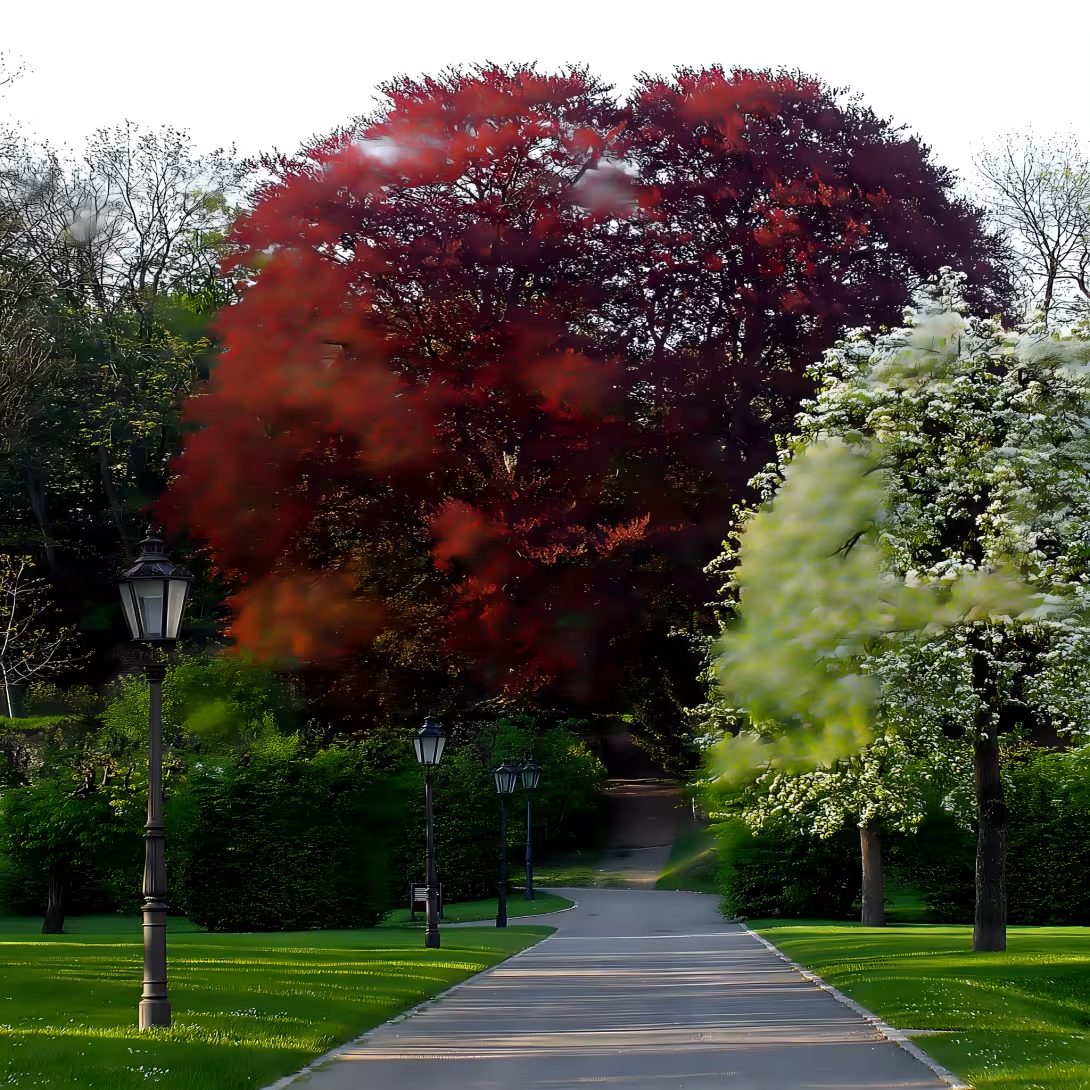
Markétská zahrada is located at an altitude of 325 to 368 metres in the northwest of Prague, between the streets U Vojtěška, U Větrník, Na Větrník and Margaret Street. It occupies an area of 12.4 hectares and creates an important part of the monastery complex of the Benedict Archabbey, the foundation of which dates back to 993, when it was founded by St. Vojtěch and Prince Byslav II.
The current appearance of the gardens is based on the great baroque modifications that took place between 1708 and 1721 under the guidance of P. I. Bayer and architects Kryštof and K. I. Dientzenhofer. At that time, there was extensive landscaping that changed the landscape. In 1738 the garden was formally divided into orchards, vineyards and hops on terraces, to which added the productive, herbal and vegetable parts. In the same year, major buildings grew - fenced walls with gates, terrace walls, pavilion Vojtěška with spring of the Brusnice stream, garden house, orangery and chapel. The entrance gate from Margaret Street to the courtyard of the monastery was exhibited in 1740 by Kilian Ignác Dientzenhofer, and sculptures - statues of St. Benedict and angels - came from the studio of Karl Josef Hiernle.
The gardens are divided into several functionally diverse parts. The publicly available fruit orchard is located on the northern upper plateau, reminiscent of the roots of the economic purposes that originally had gardens. The forest park extends west from the monastery to the cemetery wall. The central part of the gardens uses cascade-arranged terraces - in the upper part there is an orange building, in the lower part leads a habre spilter from the pavilion Vojtěšek to the gloriet Josefka. The original baroque stones were preserved north of the monastery, bringing water to the monastery. The southwest part of the former monastery gardens, where the Brewery and Sádek ponds are spread out, is now a free-access city park.
The monastery part of the gardens, which directly connects to the monastery buildings, remains guarded by a clausure garden with limited access. It only opens during the day - in winter and summer it closes at 20 o'clock and opens at 7 o'clock in the morning. Only two goals are allowed - south of the monastery yard and north of the fruit orchard. Visitors thus view the intimate space that has shaped the life of the monastery community and its horticultural activity for centuries. Before the garden opened for a time-limited public entrance, it was only accessible during weekends and for religious service participants.
The fruit orchard retains its original form of economic use and is riddled with walls, but accessible from four sides without restriction. Before revitalization, fruit trees over 60 years old grew here. Today, the whole complex demonstrates how the Baroque has transformed the natural shape of the landscape into the service of the Archabbey - a dialogue between nature and the planned form, which extends over four centuries and remains a living quarter-century from the acquisition of the status of a national cultural monument.
Then and now
Drag the slider to compare how the landmark may have looked when it was built with the view today.
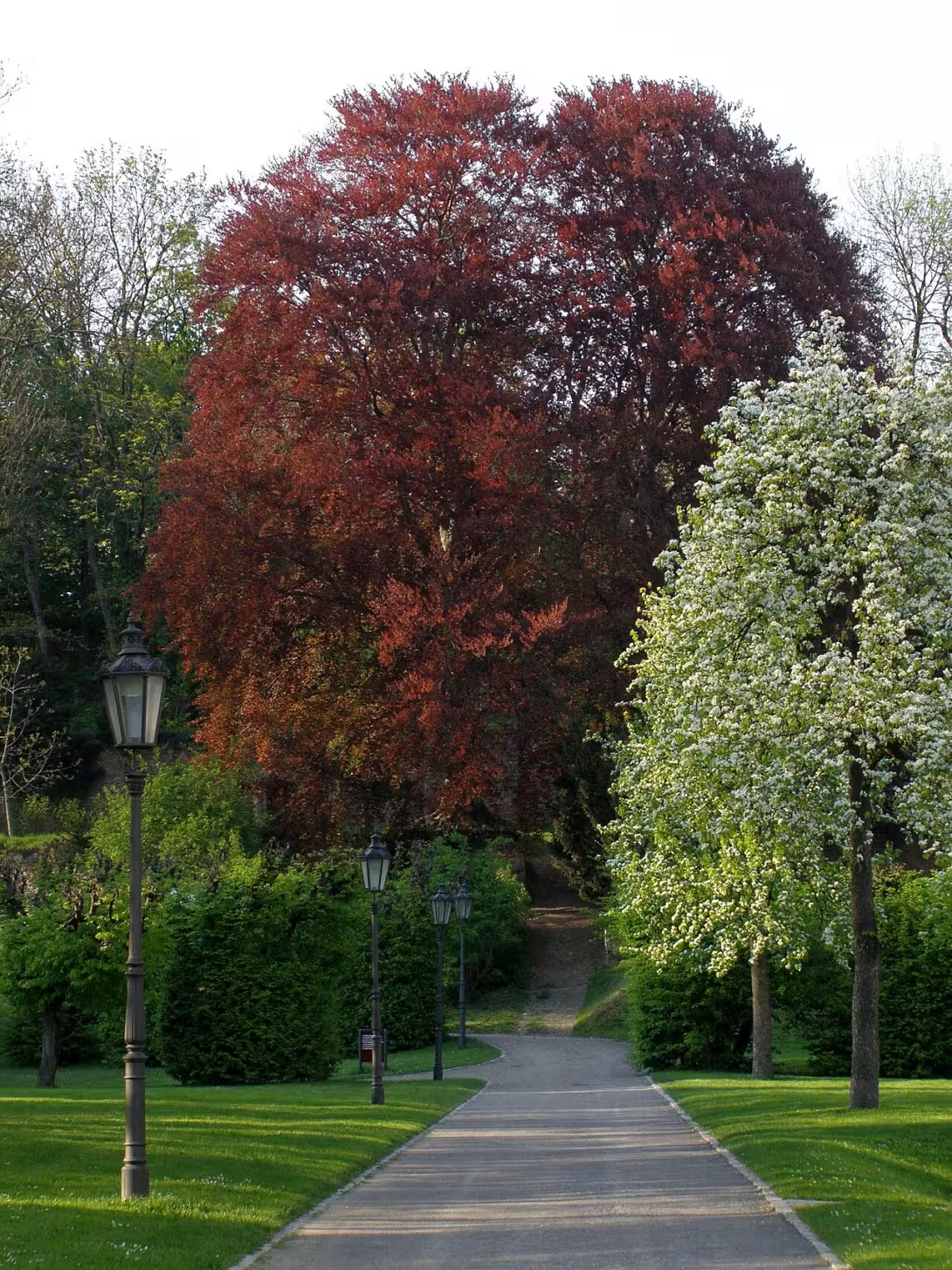

The historical appearance on the left is an AI-generated visualisation and serves as inspiration only.
Historical milestones
- 993
- The establishment of the monastery of St. Vojtěv and St. Margaret, which controlled the gardens from the beginning.
- 1708-1721
- Baroque reconstruction of gardens under the leadership of Kryštof and Kilián Ignác Dientzenhofer, including construction of pavilons, orangeries and landscapes.
- 1738
- The gardens were officially divided into orchards, vineyards, hops and utility areas, including the creation of a cemetery.
- 1740
- The entrance gate from Margaret Street to the monastery courtyard was built, by Karel Josef Hiernle.
Architectural development
The gardens were created gradually from the 10th century as a utility area of the monastery, but their Baroque form was created in 1708-1721. They were terraciously arranged, supplemented by boundary walls, pavilions (e.g. Vojtěška), orange and baroque stols. In the 18th century the gardens were divided into orchards, vineyards, hops and utility areas. The historical mill converted into an apartment house and a restaurant is included.
Historical events
- 993
- The establishment of the first male monastery in Bohemia in this place by St. Vojtěch and Prince Byslav II.
- 1708-1721
- Great Baroque reconstruction of gardens under the leadership of Kryštof and Kilián Ignác Dientzenhofer, including landscaping and pavilion construction.
- 1991
- Declaration of the monastery area (including gardens) as a national cultural monument.
Owners
- 993- 1708 (original monastery land)
- from 1708
Points of interest
- The garden is located at an altitude between 325 and 368 metres and is part of the monastery complex of the Benedict Archabbey, whose foundations date back to 993.
- The current appearance of the gardens was created after extensive Baroque modifications in the years 1708 to 1721 by architects Kryštof and K. I. Dientzenhofer and P. I. Bayer.
- In 1738 the garden was divided into orchards, vineyards, hop trees, utility, herbal and vegetable parts, and also formed fenced walls, terraces and pavilion Vojtěška with the spring of the Brusnice stream.
- The entrance gate from Margaret Street was built in 1740 by Kilian Ignác Dientzenhofer, supplemented by sculptures by Karel Josef Hiernle.
- The clauzurní part of the gardens, directly connected to the monastery buildings, is opened only limited - by day, with access only two goals.
Guide
This guide is narrated by a synthetic voice generated by artificial intelligence.
Show guide text
This text was created by artificial intelligence and has not been editorially reviewed. It may contain inaccuracies.
Welcome to Margaret Garden. You have just entered a space that is much more than just a simple green area in the middle of Prague's Břevnova. You're standing in front of a place where history touches nature and where every step of the way can take you back centuries. Look around you and perceive this unique atmosphere. In front of your eyes is a vast area of twelve and four chainsaws of a hectare, which immediately gives an impression of harmony by its structure and calm. You may already notice how the terrain is changing, how the garden is constantly developing and how its face is firmly linked to the nearby monastery complex of the Benedict Archabbey Saint Vojtěv and Saint Margaret.
But to really understand why this place is so special, we need to go back deep into the past together. Imagine the year nine hundred ninety-three. This is the moment when the foundations of the monastery were laid, which controlled and shaped this garden from the very beginning of its existence. This whole territory has been a part of the spiritual and economic life of the Benedict monks for many centuries. The garden was not only for beauty, it was a living organism that provided the monastery community with everything necessary for life and prayer. This incredible continuity, lasting over a thousand years, is what gives Margaret's garden its unique depth.
Now pay attention to what you see around you within the architecture of this place. Although the garden seems to be a natural part of the landscape, its present, spectacular form is the result of a brilliant Baroque reconstruction that took place between seventeen hundred and eight and seventeen twenty-one. At this time there were two of the most important architects of their time, Kryštof and Kilián Ignác Dientzenhofer. It was their vision that turned the garden into a masterpiece of baroque art. Notice how the entire complex is arranged cascading. Terraces are gradually launched along a slope, creating fascinating dynamics and a game of height that ranges between 23 and 35 feet above sea level.
In your next look at the structure of the site, notice that it is very logically and carefully divided. You have two different worlds ahead of you. One part is publicly accessible and consists mainly of fruit orchard and forest park, where you can enjoy the peace of nature. The second part, the more noble and closed one, is the clausure part of the monastery complex. It is here that the most significant elements of Baroque architecture, such as terraced garden, historical orangery and various pavilions, used to relax and observe the beauty of the surroundings. This cascading architecture is not random, it is a deliberate arrangement to guide the visitor's eye and create a feeling of infinite but also of a controlled space.
If you now head towards the gate that leads to the monastery courtyard, you will encounter another important historical element. This entrance gate from Margaret Street was built in seventeen hundred forty and its authorship is linked to artist Karl Joseph Hiernl. Even if we do not pay attention here to the detailed description of each statue, pay attention to the overall elegance of this entrance, which separates the outside world from the world of monastery peace.
It is fascinating to realize how the purpose of these soils changed over time when the garden became not only a place for rest, but also an important source of livelihood. In seventeen hundred thirty-eight the site was officially divided into different areas of use. The garden wasn't just an aesthetic thing, it was a complex agricultural unit. At that time different zones were clearly defined: there were fruit orchards, vineyards, hops and also utility areas, including the cemetery at the time. This practical aspect of life, where the fragrance of rare plants with the scent of hops and grape vineyards was mixed in baroque gardens, gives us an idea of how rich and versatile life in the monastery took place.
You might find one interesting thing that connects this garden to its spiritual foundation. This whole area is not just a random cluster of trees and buildings, but it is living proof of perseverance. While the world was changing around, wars were coming and going, and cities were growing, this garden remained faithful to its origins and its role as part of the Benedict Archabbey. It's a place where time seems different, where history doesn't just read from books, but feels in every shadow thrown on the terraces and every wind in the trees.
Now I want to invite you to further explore. Let yourself be guided by these paths, walk between the trees in the forest park, stop by the orangery and perceive the constant transformation of light and shadow on the baroque structures. Every part of the Margaret Garden has its own story, which will only reveal to you when you stop and listen to its silence. Enjoy this journey through time and the beauty this historic place offers you. Thank you for being with us.
Frequently asked questions
Is Markétská zahrada open to the public?
Yes, Markétská zahrada is a public park. Opening hours are from 6: 00 to 10: 00.
How do I get to the place by car / public transport?
The car can be parked in nearby streets or in garages nearby. The public transport (metro) station Malá Strana is closest to which the park is 5 minutes walking distance.
How much is the entrance fee and is it paid on the spot?
There is no entrance to Margaret Garden. The park is publicly available and free.
Is the tour suitable for children and seniors?
Yes, Markétská zahrada is a suitable place for families with children and seniors. There are several children's games areas and bench places to relax.
How long does the tour take?
The tour of the Margaret garden is flexible, it can be done within a few hours or all day. The opening hours of the park are from 6: 00 to 10: 00.
What are the opening times and booking is required?
The opening hours of the Margaret garden are from 6: 00 to 10: 00. Reservation is not necessary, the park is publicly available.
What's interesting in the immediate vicinity?
In the immediate vicinity of the Margaret garden there is a historical centre of Prague with many monuments such as the Old Town Hall, Týn Square and more.
For kids
Imagine going back to when Praha was a small town and people lived in a tight spot. And right here, in the middle of town, there was a beautiful park known as Markétská zahrada. It was a place where markets and entertainment took place.
At that time, there were many people who were selling food, clothes, modifications and other things. The park was full of life, music and the smell of fresh pastries. Who knows, maybe even the first Czech kings played in the park in their time.
Businesses nearby
Events nearby

Zdroj akcí: otevřená data měst a obcí ČR (Národní katalog otevřených dat) a kalendář akcí Národního památkového ústavu.
Nearby
The surrounding landscape consists of the historical centre of Prague, other parks and streets.
Accommodation nearby
Trips and activities nearby
Guided tours, tickets and activities nearby from GetYourGuide
Affiliate link: if you buy from the partner, we may receive a commission. The price for you does not change.
Search tours and activities →Themed route
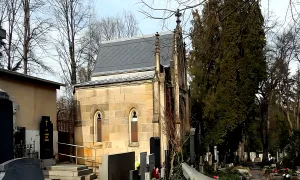
1. Margaret ponds (Brewery and Sádka), water area: A quiet place to start walking in the countryside in the southeast. 2. Markétská zahrada, park: The main destination of the trip, which offers space for relaxation and relaxation. 3. The Benediktin monastery of St. Vojtěch and St. Margaret, monastery: The historical area directly adjacent to the garden, which fascinates its architecture. 4. Cemetery at the monastery of St. Vojtěv and St. Margaret, cemetery: Place of silence and contemplation located northwest of the gardens. 5. College College Na Větrník, student college: Final stop in the northwest part of the route.
Seasonal recommendations
Spring Markétská zahrada in Břevnov awakens to life in spring in a delicate, almost intimate atmosphere. Blossoming trees - especially apple trees and cherry alleys - disperse light into pastel shades, while green lawns still bear traces of winter rest. The morning fog slowly dissolves, but in the narrow roads between the historical buildings of the monastery there is peace, disturbed only by the singing of birds and the rustling of leaves. The soft lighting is also specific when the sun shines almost horizontally in the morning and creates long shadows on old stone walls. It is practically best to visit the garden in the second half of April until May when the first rose bushes bloom. It is recommended to arrive early in the morning (before 9: 00) to avoid tourist groups starting to appear since mid-May. Clothing should be layered - spring weather in Prague is unpredictable, it may be cold in the morning, but the temperature rises quickly after noon. For walking along steep paths are convenient comfortable shoes, as some sidewalks are stone and slippery after the rain.
---
Summer In summer Markétská zahrada will turn into a lively but often busy space where the calm of the historical park with summer vitality is mixed. The main attractions are green meadows, which are often used for picnics and relaxation in June and July, and thus there are families with children and groups of friends. A long daylight is specific - until late evening, the park sinks into a golden glare, while in the shade of old trees there is pleasant coldness. Due to the high attendance rate, it is best to come immediately after opening (around 6: 30) or in the afternoon after 16: 00, when the crowds shrink. It is recommended light but covering clothing - the summer sun in Prague can be intense, especially on open areas. Don't forget the sunglasses and the hat because the shade from the trees is often interrupted. For those who want to escape the crowds, there are ideal beds near the monastery or narrow paths leading to the pond where it is calmer.
---
Autumn Autumn Markétská zahrada offers a unique combination of color and silence, when nature prepares its winter rest. They dominate the golden and red shades of the leaves, especially with maple and flame, which create contrast with the darker walls of the monastery. The atmosphere is melancholy, but calm - the air is cleaner than in summer, and in the morning there is often a light fog veil. A soft, scattered light is also specific, which in September and October creates fine shadows and gives the landscape a delicate touch. Practically, it is best to visit the garden in September, when temperatures are pleasant and leaves are not completely fallen. Early morning (within 10 o'clock) is recommended in October, as the afternoon can be windy and cold. Clothes should be warm, but not too mass - autumn weather changes rapidly, and even when the sun shines, evenings can be cold. Comfortable shoes with rough soles are suitable for walking, as fallen leaves on the road can be slippery.
--- Winter Winter Markétská zahrada is like a fairy tale - covered with a thin layer of snow or frosted drops of dew that shine like diamonds in the sun. Specific is a sparse but beautiful atmosphere where bare trees and dark walls create contrast with a white winter coat. Due to the lower number of visitors there is peace and privacy, which is ideal for those looking for an escape from a busy city. Practically, it is best to visit the garden in November, when it is still pleasantly cold and nature offers the last autumn colors, or in December, when the snow cover supplies the landscape with magic. It is recommended to come in the morning (until 11: 00) as the afternoon can be cold and windy. Clothes should be warm, layered and waterproof - even if the snow is not frequent, damp and frost can be unpleasant. Heavy shoes with good grip are suitable for walking, because some roads are steep and covered with ice. In winter it is also important to watch opening times - in advent time access can be limited, and some parts of the garden can be closed for maintenance.
Visualizations and artistic views


The visualisations are generated by artificial intelligence and serve as inspiration.
Photos from the area
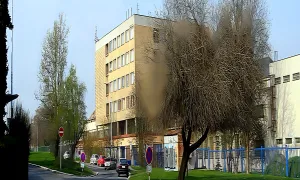
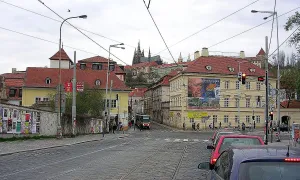
Real photos taken near the monument


Zdroj a licence jsou uvedeny u každého snímku.
Tips from visitors
No tips yet. Be the first!
Log in and add your tip.
Sources and literature
Fotografie: Daniel Baránek / CC BY-SA 3.0, rozlišení zvýšeno umělou inteligencí — Wikimedia Commons. The author and licence also appear when you hover over the image.
Faktickým podkladem tohoto textu byl článek na Wikipedii, jehož autory jsou přispěvatelé Wikipedie. Článek je dostupný pod licencí CC BY-SA 4.0.
Location on the map
Příběhy a pověsti
Legendy, pověsti a příběhy spjaté s touto památkou

Fotografie návštěvníků
Zatím žádné fotografie. Buďte první, kdo přidá fotografii z návštěvy!
Přihlaste se a přidejte svou fotografii nebo hodnoťte.
Za ověřenou návštěvu v aplikaci získáte víc bodů — poznáme podle GPS, že jste na místě.
Reviews and comments