



Bezovka Hostinec
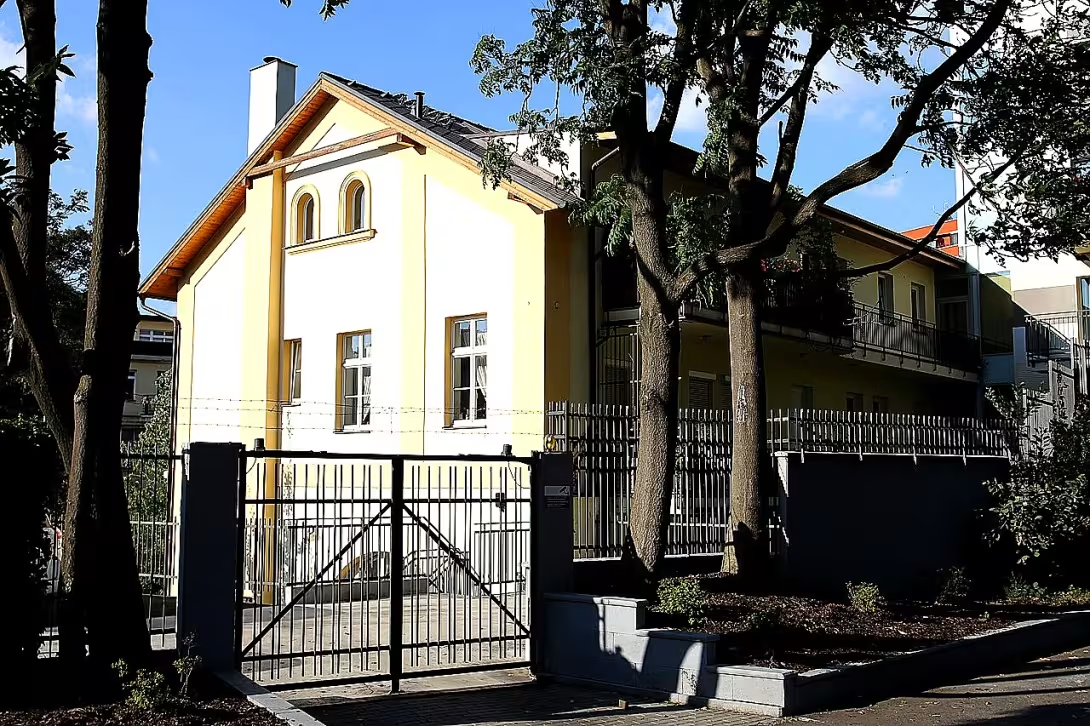
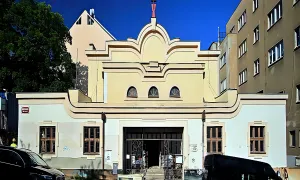
Bezovka, formerly known as Fliedermühle, was a extinct inn and mill in Prague Žižkov. Today, all that remains is a protected two-storey villa. The building represents a representative proof of the original pre-industrial development of the district and its later urban development.
At the intersection of Prokopova and Rokycan Street, under the western slope of the hill of the Holy Cross, there was originally a water mill with a tavern. In the middle of the 19th century there was a small flowing pond on the northwest side, from which a stream was flowing through Karlín to Vltava. In the second half of the century, the site was significantly rebuilt by the Lysan landowner Gütling, who inspired Viennese and Berlin garden entertainment companies. The new storey building was designed and implemented by Prague builder Josef Kalkus in 1876. There was a large garden with a park pond at the site of the original pond.
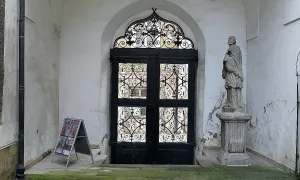
Architecturally it is a valuable ensemble from the turn of the 18th and 19th centuries with modifications from the 3rd quarter of the 19th century. The main storey building was later extended mainly by part of the dance hall. The only preserved element of the original complex remains a two-storey villa, now registered as a cultural monument of the Czech Republic.
Until 1908, the property and inn were owned by the hotel Karel Cífka. Then the Committee of the Council of the Žižkova bought the building, which had the building rebuilt further. The area subsequently developed a variety of activities. In addition to balls, masquerade balls and exhibitions, there was a gym of Workshop Body Unity, in the rear wing of the kindergarten or on the first floor of the workshop Emanuel Stepan Petr. In the garden there were competitions in balloon flying, fireworks and a summer cinema.
The important events in Bezovka include hosting the pioneer of the cinema Dismas Šlamboro (alias Viktor Ponrepo), who spent ten days here in March 1904. Since 1883, it was the first of the four horse-riding tracks to Malostranski and Old Town Square. The inn also served as a place of political assembly. For example, in September 1917 there was a meeting of Social Democracy during which Bohumil Šmeral was attacked by a nationalist.
The main complex died in 1936 when the inn was demolished due to the extension of Prokop Street towards the Olšans. In the nearby area there is also the Ant-Atomic bunker Parukářka, built in the years 1950-1955 in the underground top of the Holy Cross.
Today Bezovka is represented only by the mentioned two-story villa. This building serves as a tangible reminder of the time when Žižkov was transformed from a suburban village into a working district. Visiting the place allows you to map the changes of Prague urbanization and remember the center of the former social life of the neighborhood.
Then and now
Drag the slider to compare how the landmark may have looked when it was built with the view today.
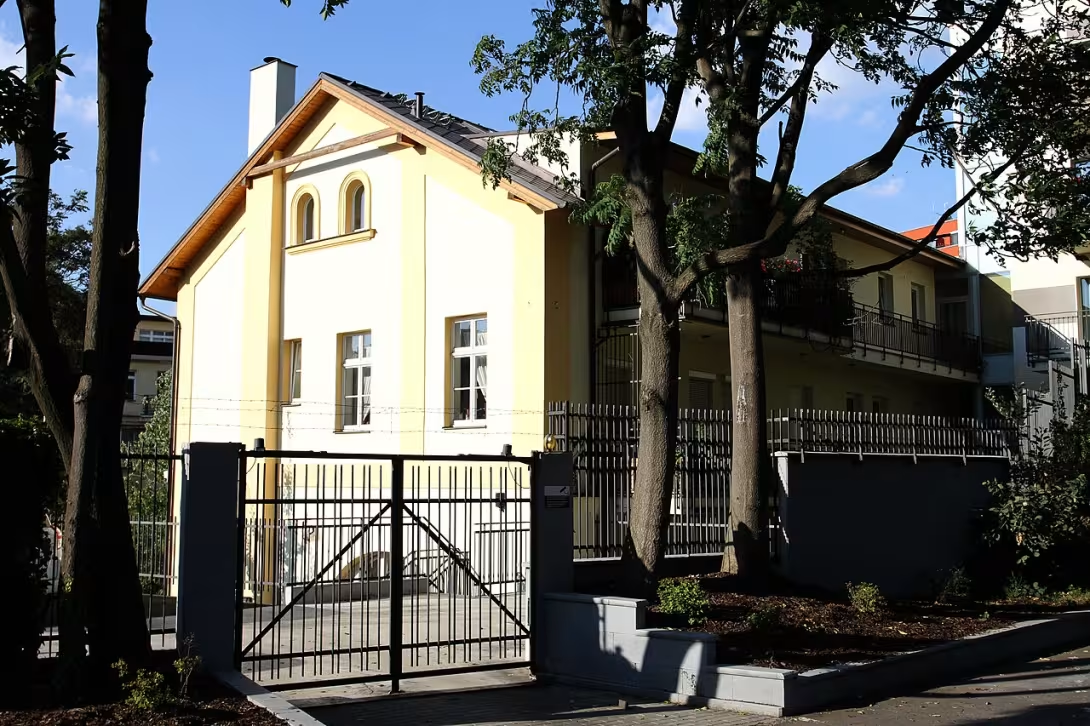
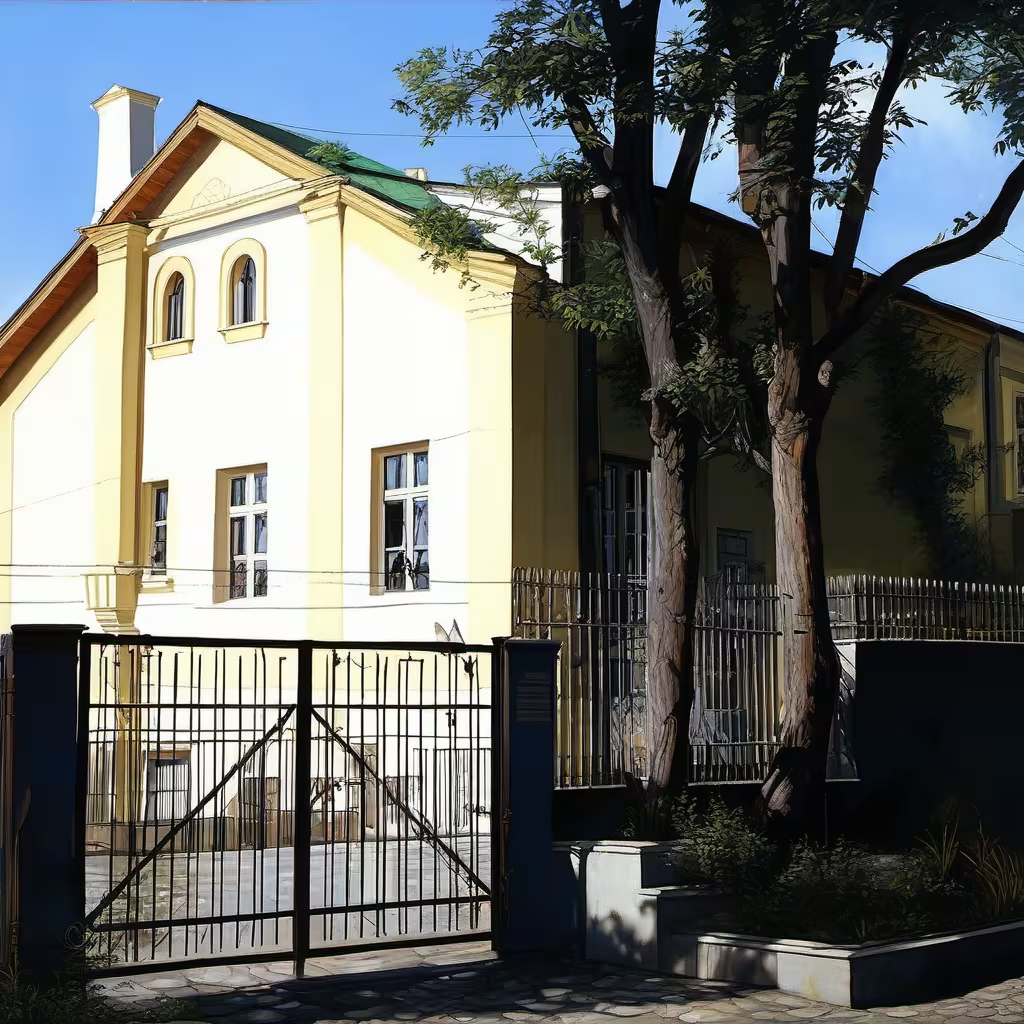
The historical appearance on the left is an AI-generated visualisation and serves as inspiration only.
Historical milestones
- 1876
- realization of new storey building by builder Josef Kolkus
- 1883
- establishment of the first of the horse-drawn tracks from the inn to Old Town and Malostranská Square
- 1908
- purchase of the inn by the board of Žižkova and subsequent reconstruction
- 1936
- demolishing the inn while extending Prokopy Street
Architectural development
Originally it was a water mill with a pub. In 1876 a new storey building was built with a large garden and a park pond. Later, the dance hall was expanded and there was a two-storey villa, which is now a cultural monument.
Historical events
1904: hosting the pioneer of the cinematography of Dismas Šlambor; 1917: Meeting of Social Democracy and Assault of Bohumil Šmeral; 1936: demolishing the inn.
Owners
until 1908 Karel Cífka, since 1908 Board Committee Žižkova
Points of interest
- Bezovka was originally a water mill with a pub, later rebuilt in the spirit of Vienna and Berlin garden businesses. - There was a gym, nursery school, organist workshop and there was competition in balloon flying or summer cinema. - In March 1904, a pioneer of the cinema Dismas Šlambora hosted here for ten days. - Since 1883, the first of the four horse-riding routes to Malostransky and Old Town Square started here. - In September 1917 there was a meeting of Social Democracy, where Bohumil Šmeral was attacked.
Guide
This guide is narrated by a synthetic voice generated by artificial intelligence.
Show guide text
This text was created by artificial intelligence and has not been editorially reviewed. It may contain inaccuracies.
Welcome, distinguished visitors, to this place in the heart of Žižkov. Please stop for a moment and look around you. You may now wonder why you're standing right here, where at first glance you don't see any magnificent palace or high tower. It's because you're in a place that used to beat the heart of the social life of the entire district. You're standing in front of the tracks of Bezovka, places that no longer exist in its original form, but its story is so powerful that we can still feel its presence in the very air of this space.
Try to close your eyes for a moment and forget the noise of today's transportation and modern buildings. Imagine going back more than a hundred years. In the place where you are now standing, a vast area once spread out, which began its journey very modestly. Originally it was a water mill with a small touring pub. It was such a stop for passengers, a place of rest and rest by the water. But with the advancing time and development of Prague, this mill has become something much bigger.
In the second half of the nineteenth century, it was decided that the place would get a whole new face. In the year eight hundred seventy six, the builder Josef Kalkus implemented a new storey construction. It wasn't just an ordinary house, it was an ambitious project. Bezovka was converted into a garden entertainment company at the time. If you have ever visited Vienna or Berlin, perhaps you can imagine those famous garden restaurants where nature, culture and entertainment were united. According to this model Bezovka was built. The goal was to create a space where people could relax from the dust and noise of the city, find peace in the green while meeting friends at a glass of beer or a piece of food.
Now, when you look around, feel the atmosphere of this place. Although the main building from the year one thousand eight hundred seventy-six is no longer visible, try to imagine what the period architecture must have looked like. A storey building with large terraces, surrounded by carefully maintained gardens, where walks were made. Notice the surroundings and realize that this is where thousands of stories took place. Bezovka wasn't just a restaurant, it was a real institution. She became the center of social and social life of Žižkov. Imagine the Saturday nights where the dances took place, where the couples in their elegant dresses, or the days when there were various shows that attracted people from all over the city.
Now let's think about how people got here. In the year of the thousand eight hundred eighty-three there was a fundamental change which connected Bezkoka even more with the centre of Prague. The first horse track was established. Imagine those horse-drawn cars that regularly drove out of the inn towards Old Town and Malostran Square. It was a luxury journey at that time, which made Bezovka a sought-after target not only for local Žižkovans, but also for the Prague bourgeoisie, which sought to escape from the centre.
Now pay attention to how the site evolved further. In the year one thousand and nine hundred and eight, the inn was redeemed by the board committee Žižkova. This meant that the company was in the hands of the city, which led to further reconstruction and extension of its functions. Bezovka wasn't just about food and drink anymore. It has become a multi-functional centre, which may today resemble modern cultural houses. There was a gym where people took care of their health, and even a kindergarten was set up so that parents could spend time in the gardens. There was also space for crafts, such as the organist workshop, which shows how diverse people attracted this place.
When we think about the personalities we associate with Bezovka, remember names like Dismas Šlambor, known under his artistic pseudonym Viktor Ponrepo, or Bohumil Šmerala. They were people who formed the face of the then Žižkov, people with vision and passion, who found room for their meetings and discussions in Bezovka. Imagine those heralds, poets and politicians sitting here in the shade of trees planning the future of their neighborhood.
And now we come to the part that may interest you most. Bezovka was a place of real adventure and unexpected events. Try to imagine looking up into the sky. This is where the balloon flying races took place. By the time the flying was in diapers, the view of the colored balloons taking off from the Žižkov gardens must have been absolutely fascinating. And that wasn't all. Summer cinema worked here during the summer months, which was the peak of modernity at that time. People sat in the grass or on chairs and watched the painting projected on the screen under the stars.
One more interesting thing that points to the international overlap of this place. In March of the year a thousand nine hundred and four here hosted a pioneer in communication and technology. The fact that such people decided to stop in Bezová shows how high the level and prestige of this business was at that time.
Unfortunately, every story has a break. If you look at Prokop Street today, you'll see a modern traffic deposit. This is exactly what happened at the end of the main building. In the year one thousand nine hundred thirty-six, the main building was demolished. The reason for this was to adjust traffic and extend the street. It was a painful decision by which the city sacrificed a piece of its history in favour of modernisation and mobility.
Today, all that remains of the premises is traces and memories that are stored in the archives and hearts of people who remember telling their ancestors. If you stand in this place today, you may not see the walls, but feel the spirit of the place. Feel the joy of balls, the excitement of balloon flights, the silence of kindergarten and the intellectual discussion of beer. Bezovka was a symbol of Žižkov identity, a place where the simple mill with the elegance of Vienna gardens was connected.
It's fascinating how the landscape of the city changes. What was once the center of the world for thousands of people changed in the street we walk through every day without realizing what was under our feet. Bezovka teaches us that monuments are not only made of stone and bricks, but that the monument is also the very space and emotions that we associate with it.
Thank you for stopping in time for a moment. I hope you could imagine this lost paradise Žižkova. Now I invite you to continue your journey and explore other corners of this fascinating circuit. Follow the details, look for clues of the past in the details of the houses and ask what stories other streets hide. I wish you a pleasant continued walk through Prague and seek new inspiration. Goodbye.
Tips for visitors
The best time to visit is late spring or autumn when the surrounding nature is in the colors that complement the atmosphere of this extinct place. Transport to Žižkova is possible by car and public connections; Check your maps for specific routes. Take a walk with comfortable shoes suitable for the field, as you move in an area where there was once a water mill and a garden business. We also recommend that you take a map of the old Žižkov with you to better imagine the original range of the inn. For the best photos I recommend to come in the morning or late afternoon light, which gently illuminates the rest of the building and surrounding greenery. Focus on the details of the terrain that resemble a former entertainment establishment. During the visit you can visit the Hill of the Holy Cross or the Ant-Atomic bunker of the Parakarka. For families with children it is ideal to connect the way through the game in search of the tracks of the former mill, which makes children more fun than simply viewing.
Frequently asked questions
Can the monument be visited?
The building is in use (offices, a school, shops and the like). The interior is generally accessible only during operating hours and tours are not usually offered; we have not verified the details. You can see the exterior from the street.
Where is the monument?
Location: Prokopova 2849/2a, Žižkov, Praha, Hlavní město Praha. The map on this page shows the exact spot.
Why is the monument protected?
It is listed in the Central List of Cultural Monuments of the Czech Republic as a cultural monument (register no. 51977/1-2287).
For kids
Imagine going back to the past in the Middle Ages. You sit on the ruins of castle Bezovka, which stands in the middle of forests and meadows near our village. This place is full of history and adventure.
How did it look here? In this castle lived the lords of Boskovice. They were powerful and rich because they had great land and the right to hunt and fish in a nearby lake. Gentlemen from Boskovice were also good soldiers and helped the Czech kings fight against their enemies.
Businesses nearby
Do you run a restaurant, accommodation, shop, museum, rental, wellness or other visitor service near this monument? Show yourself directly to the people heading to it — this is how they will see you in the app and on the web:
Events nearby


Zdroj akcí: otevřená data měst a obcí ČR (Národní katalog otevřených dat) a kalendář akcí Národního památkového ústavu.
Nearby
Vrch svatého Kříže, Protiatomový bunkr Parukářka.
Accommodation nearby
Trips and activities nearby
Guided tours, tickets and activities nearby from GetYourGuide
Affiliate link: if you buy from the partner, we may receive a commission. The price for you does not change.
Search tours and activities →Themed route
Here is the design of the thematic route:
1. Anti-atomic bunker Parukářka (military object) - Walk begins at this unique hiding place, which was used to protect against a nuclear attack. 2. Bezovka (view tower) - The main destination of the road, thanks to the height is a beautiful view of the whole Prague and surrounding area. 3. Top of the Holy Cross (elevated place) - Final stop on top, which offers peace and natural beauty near the tower.
Seasonal recommendations
In the spring, the surroundings of the buildings in Žižkov awaken to life and the greenery in the adjacent streets are starting to sound rich. The light is soft and pleasant, which helps the perception of architecture from the outside. We recommend light but laminated clothing and walking in the morning when the air is the cleanest.
Summer brings intense sun and hot asphalt urban roads. The atmosphere is dynamic and the space around the operated building is active live. It is advisable to choose breathable materials, a sun hat and visit the place in the early morning or late evening to avoid the greatest Closing waves of heat.
Autumn in this urban space excels with golden colours of leaves and frequent fog, which give the place a mysterious touch. The lighting is damper and the shadows are longer. Practical is footwear suitable for wet weather and waterproof coat, the best time to visit is in the afternoon with soft light.
Winter turns the environment into a quiet and cold place where the surface can be covered with snow or frost. The atmosphere is cramped and raw, typical of Prague winter days. It is necessary to wear warm winter clothes, gloves and fixed footwear with anti-slip soles, and we recommend short visits during bright days.
Visualizations and artistic views


The visualisations are generated by artificial intelligence and serve as inspiration.
Photos from the area
Real photos taken near the monument


Zdroj a licence jsou uvedeny u každého snímku.
Atmosphere of the place
This atmospheric visualisation of the place and period was generated by artificial intelligence. It is not real footage of the location.
Tips from visitors
No tips yet. Be the first!
Log in and add your tip.
Sources and literature
Photos: Ondřej Kořínek / CC BY-SA 3.0 — Wikimedia Commons. The author and licence also appear when you hover over the image.
Faktickým podkladem tohoto textu byl článek na Wikipedii, jehož autory jsou přispěvatelé Wikipedie. Článek je dostupný pod licencí CC BY-SA 4.0.
Location on the map
Příběhy a pověsti
Legendy, pověsti a příběhy spjaté s touto památkou
Fotografie návštěvníků
Zatím žádné fotografie. Buďte první, kdo přidá fotografii z návštěvy!
Log in a přidejte svou fotografii nebo hodnoťte.
Za ověřenou návštěvu v aplikaci získáte víc bodů — poznáme podle GPS, že jste na místě.
Reviews and comments