






Blücherův palác Palace
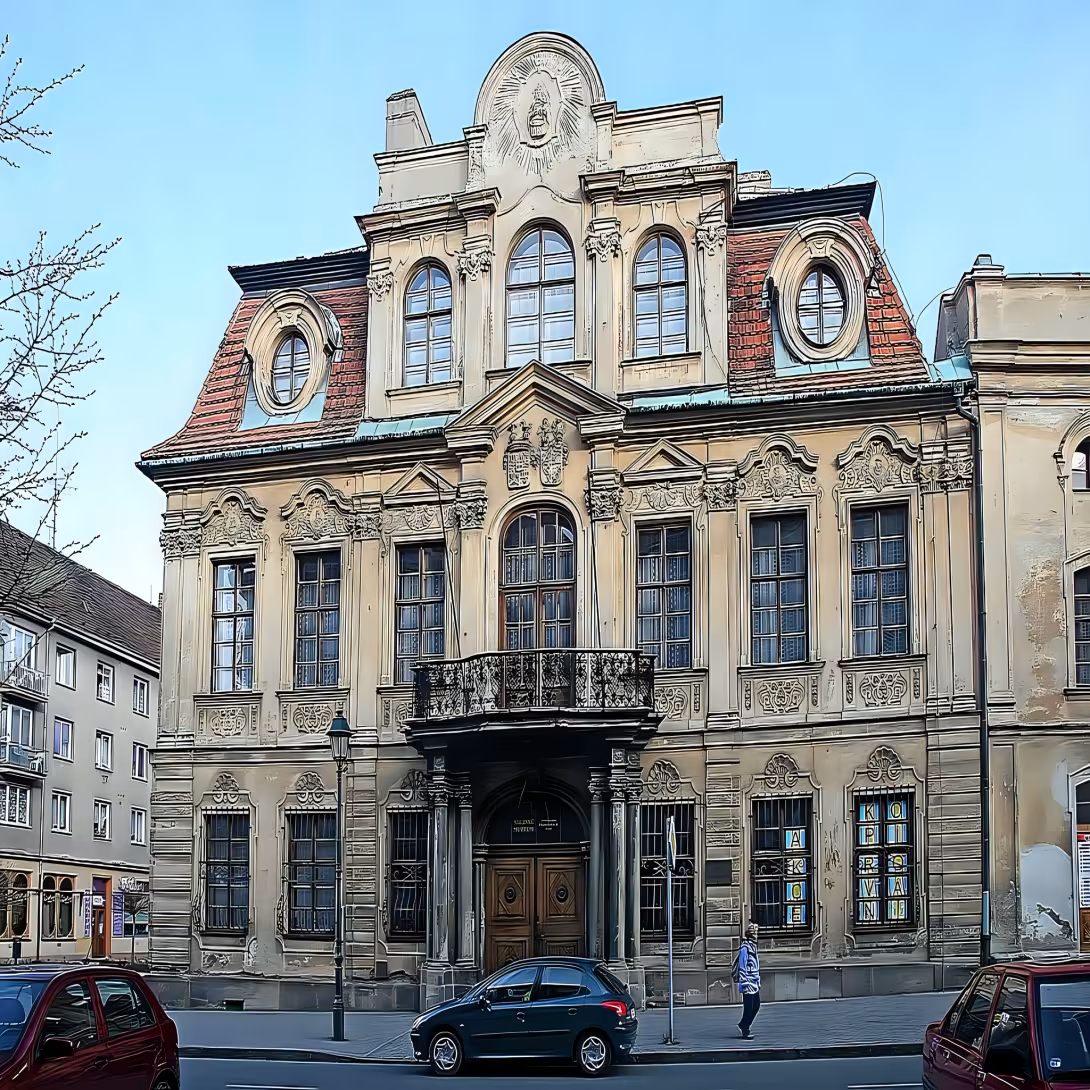
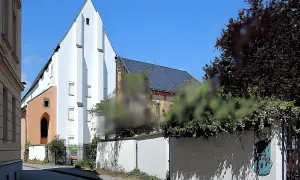
Blücherův palác stands in the centre of Opava and is protected as a cultural monument of the Czech Republic. The building is in a state of emergency and requires extensive reconstruction.
The history of the place dates back to 1400, when there was a Gothic house built by a local priest. In the 16th and 17th centuries, the plot and the construction gradually changed: in 1635 it was bought and modified by the Ships of Bránice, after which the land in 1565 was owned by the genus Tvorkovsky from Kravař. In 1570 there was an extension and reconstruction to the Renaissance mansion.
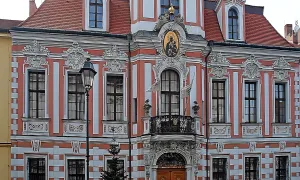
Today's appearance of the palace dates back to 1737, when Jiří Rudolf Wipplar had the old building torn down and built a Baroque palace in its place. He served as a temporary residence of a nobleman during his stay in Opava. In 1762 it was bought by Ignác Dominik Chorinský, a well-known art supporter. The palace became the cultural centre of Opava - there were dance and music productions, cantates, and theatre on the first floor. That's why he became the center of life of the social elite back then.
In 1800, the palace was sold by Igstejn's daughter Anna to Count Larisch-Mönnich. The house was modernized and in 1820 with the scene of a major visit - the Russian Tsar Alexandr I. Pavlovič was accommodated here on the occasion of the Opava Congress. In 1832 his owner became Gebhard II Blücher, who married into the Larisch family. Since the second half of the 19th century, the house has left the palace. Stores were built on the ground floor and the floors turned into rental apartments. The family stopped taking care of the house, and the building started to decay.
In 1930, the Czechoslovak Museum of Agriculture bought it and established a branch. After World War II, it was returned to the museum, but in a desolate state with destroyed collections. The gradual renewal began in 1956 by removing insensitive modifications and repairing facades. Since 1959, the Palace has belonged to the Silesian Museum, which uses it as a depository and research facility. The roof was reconstructed in 2010.
In January 2026, it was announced that the long-awaited extensive recovery is finally beginning. The planned budget is up to CZK 750 million. The first stage will focus on repairing the roof, insulation and divorces. Work on facade and interiors aimed at stabilising the building and preparing for new use will be followed. The museum management plans to restore the theatre hall and turn the palace into a centre of exhibitions and cultural events, which will be opened to the public again.
Then and now
Drag the slider to compare how the landmark may have looked when it was built with the view today.
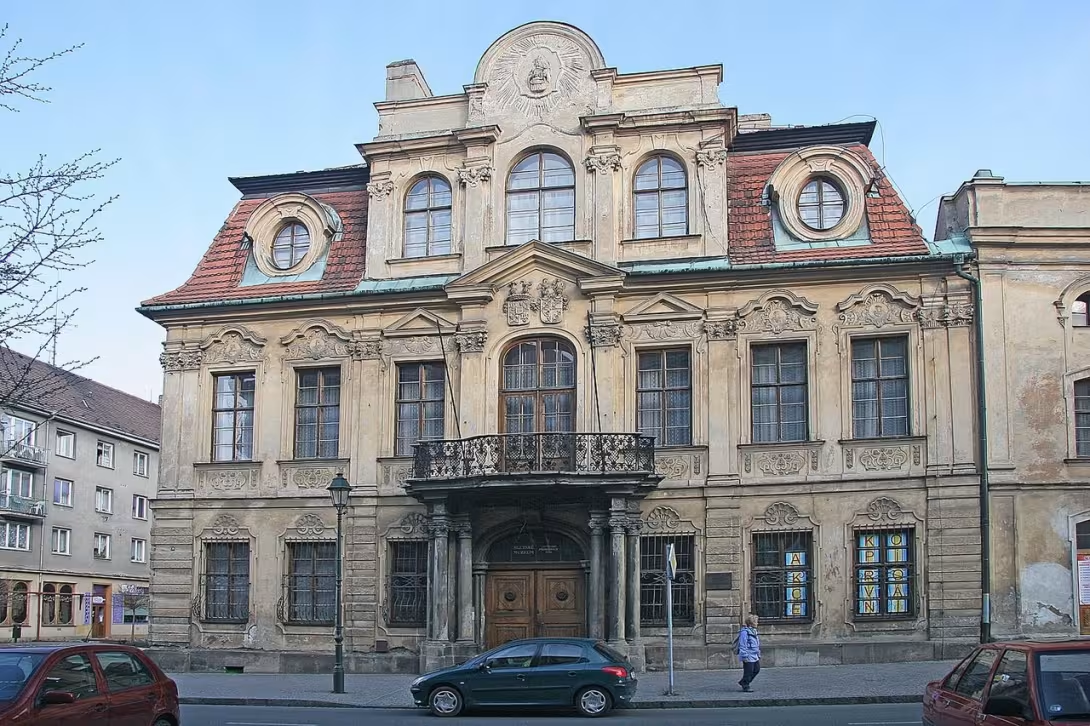
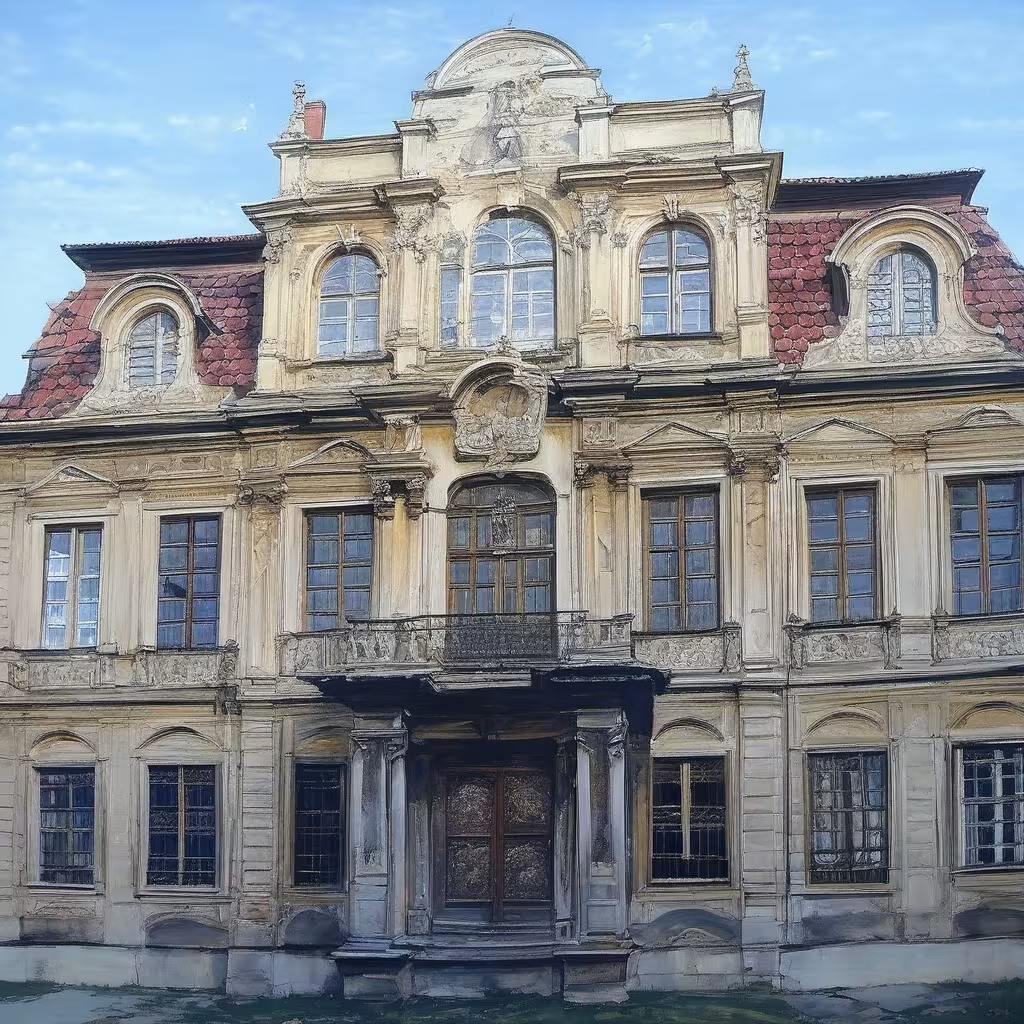
The historical appearance on the left is an AI-generated visualisation and serves as inspiration only.
Historical milestones
- 1400
- First written mention of a Gothic house on this parcel.
- 1570
- Rebuilding the house to the Renaissance mansion.
- 1737
- Building the present Baroque palace by Jiří Rudolf Wipplar.
- 1820
- The residence of Russian Tsar Alexander I. Pavlovich in the palace.
- 1959
- The building is being transferred to the property of the Silesian Earth Museum.
Architectural development
In the place of the original Gothic house from 1400, a Renaissance residence was established in 1570. In 1737, the building was replaced by a contemporary Baroque four-wing palace with a richly stacked facade. There was modernization in the 19th century and in 1883 a commercial part was built on the ground floor.
Historical events
1820: Accommodation of Russian Tsar Alexander I. Pavlovich at the Opava Congress. 1959: Transfer of the building to the property of the Silesian Museum of the Earth.
Owners
Arrows from Branice (1635), Fvorkovsky from Kravař (1565), Jiří Rudolf Wipplar (1737), Ignác Dominik Chorinský (1762), Count Larisch-Mönnich (1800), Gebhard II. Blücher z Wahlstadtu (1832), Czechoslovak Agricultural Museum (1930), Silesian Museum (1959).
Points of interest
- The history of the place dates back to 1400, when there was a Gothic house built by a local priest. - For the ownership of Ignatius Dominik Chorinski, the palace served as a cultural centre with theatre, music and dance productions. - In 1820 a Russian car Alexandr I. Pavlovič was housed in the building on the occasion of the Opava Congress. - Since 1959, the Palace has belonged to the Silesian Museum, which uses it as a depository and research facility. - The planned extensive renewal announced in January 2026 has a budget of up to 750 million crowns.
Guide
This guide is narrated by a synthetic voice generated by artificial intelligence.
Show guide text
This text was created by artificial intelligence and has not been editorially reviewed. It may contain inaccuracies.
Welcome to the heart of the historic Opava. You are standing in front of one of the most important building units this city has to offer - the Blücher Palace. While modern life revolves around you, you just stopped at the gate to the past. Look at this monumental building that controls this space with its presence. Her four wings create a sense of stability and grandeur, which will enchant you immediately. Feel the atmosphere of a place where power, art and the greatest political decision of Europe at that time were met. There is something magical in it that, right here, in this place, such a fundamental history has taken place over the centuries.
In order to fully understand what you see today, we must return together to a time when the maps of the world were still constantly rewriting. The history of this particular place goes incredibly deep into the past, until the year 44. Imagine Opava back then, much more modest and perhaps a little more mysterious. The first written mention of this place relates to the Gothic house that stood here at the time. This house was not built for kings or wealthy businessmen, but for a man of faith. It was built by a local priest, giving us a sense of spiritual peace that once prevailed in this place. It is fascinating to think that beneath today's Baroque walls lies the foundations of a house that witnessed a completely different era.
Over time, however, the world around you was changing and with it this place. In the year one thousand pięćset of seventy, a major reconstruction took place. The old Gothic house was replaced by a Renaissance residence, which already had a higher level of representation and elegance. But what dominates today before your eyes is the result of another great transformation. In the year one thousand seven hundred thirty-seven, the present Baroque palace was born. Jiří Rudolf Wippler was behind his creation, who was able to build this magnificent Baroque complex on the site of the older Renaissance building. It is thanks to him that the building has acquired its present, majestic form, which you are now seeing.
Now pay attention to the architecture itself, which is right in front of you. Notice how the palace is arranged. It's a four-wing building, which is typical of the aristocracy of the time. This extensive floor plan creates a closed and representative space that acts monumentally. Even though the building appears to be a unified baroque entity, in its structures there is still a legacy of the previous epoch. When looking at the facade, remember the harmony and balance that is so characteristic of Baroque style. Feel the strength and stability this architecture emits. It is a building designed to give the impression of wealth, power and the unwavering position of its owners.
Let us now move on to the people who revived this palace and made it the center of their world. This palace was not just an ordinary home, it was a vibrant center of social culture. When Ignác Dominik Chorinský was based here, the palace turned into the most important cultural centre in the whole area. Imagine those times when there were not only political debates, but above all artistic acts. Theatrical performances, music productions and noble dance evenings were held in these areas. It was a place where the nobles gathered to share the joys of art and social elegance. The palace was literally the heart of culture at the time.
But the palace witnessed events that weighed the entire empire. In the year one thousand eight hundred twenty, an event took place here, leaving a permanent mark in history. During the important Opava Congress, the Russian Tsar Alexandr I. Pavlovič was housed in the palace. Imagine the atmosphere - the presence of a powerful monarch, the constant movement of courtiers, diplomatic chess and tension that accompanies great political action. This palace was not just a cultural centre, it was at that time one of the most important political points in the region. And of course, we must not forget the name the palace wears today - Gebhard II. Blücher z Wahlstadtu, a character whose legacy is inextricably linked to this place.
There's one other thing that might interest you. It's a fascinating idea that this place has undergone such an incredible transformation. From a simple priesthood in the time of Gothic, to a Renaissance mansion, to a baroque palace that hosted the Tsar. Every era left its invisible layer. It's like you're writing a book where each chapter has a different style, but the story of the place remains continuous. This constant transformation of roles - from spiritual sanctuary to noble residence to political center - is one of the most interesting aspects of this building.
Today, this palace is protected as a valuable cultural monument and since the year one thousand nine hundred fifty-nine belongs to the administration of the Silesian Museum. This means that his history is now safe and we can study and admire it. The Palace is no longer just a private residence, but a common heritage that tells us about our ancestors, their art and their ambitions.
I hope this brief view of Blücherův palác inspired you to explore Opava's history further. Before you go any further, stop for a moment, feel the atmosphere of this place and let yourself be carried away by the imagination of what could have happened here. Every stone and every wing of this building has its own voice. Thank you for your journey and I wish you a wonderful rest of the tour of this beautiful city.
Tips for visitors
The best time to visit Blücher Palace is in the spring or autumn season when the weather is pleasant and fewer people are going to the historic place. This time of year offers ideal lighting conditions for shooting architectural details of the palace.
Parking can be found near the center of Opava, but due to limited capacity we recommend using public transport. It is good to look at local search engines or maps for accurate information on the availability of parking lots and public transport connections.
When visiting the palace take with you suitable shoes because exploring historical buildings often involves walking on stone floors. Fill your inventory with an umbrella or curtain in case of unforeseen weather.
Photography of Blücher Palace offers many possibilities, especially from nearby streets, where an interesting view of its Baroque architecture can appear. The best light for photography is usually in the early morning hours or in the evening when the sun is not directly above your head.
The historic centre of Opava with its streets and other monuments is located around the palace. Explore this part of the city that offers interesting views and information about the past of the region. For families with children it is advisable to visit local museums or parks where children can move freely.
Frequently asked questions
Is Blücherův palác open to the public?
Yes, Blücherův palác is open to the public. The palace is open every year from April to October and visitors can see its interiors and exteriors.
How do I get to the place by car / public transport?
The palace is located in the centre of Prague, so it is easily accessible to public transport. The nearest metro station is Staromestska or Charles Square. The car can be parked in the nearby area, but we recommend public transport.
How much is the entrance fee and is it paid on the spot?
Payment is made at the cash register in the palace.
Is the tour suitable for children and seniors?
Yes, Blücherův palác is also suitable for families with children. The Palace offers interactive exhibitions and children's games that are suitable for children from the age of 6.
How long does the tour take?
The tour of Blücher Palace takes approximately 1-2 hours. We recommend sufficient time for a tour and also for photography.
What are the opening times and booking is required?
The palace is open from April to October, daily from 10: 00 to 6: 00. Reservation is not necessary, but it is recommended for larger groups.
What's interesting in the immediate vicinity?
In the immediate vicinity of Blücher Palace is located Staromestska Square with beautiful architecture and many historical buildings. We also recommend visiting Charles Square and Prague Clock.
For kids
Imagine going back to when this place was an unknown forest valley. How would you feel? Like in some fantastic game?
You know history? So you know that place where Blücherův palác stands today was once the residence of some great prince of the Schwarzenberg family. He lived here with his family and his people took care of forests and forest animals. The prince wanted to create a beautiful park so he could spend time out with his family.
Businesses nearby
Do you run a restaurant, accommodation, shop, museum, rental, wellness or other visitor service near this monument? Show yourself directly to the people heading to it — this is how they will see you in the app and on the web:
Events nearby
Zdroj akcí: otevřená data měst a obcí ČR (Národní katalog otevřených dat) a kalendář akcí Národního památkového ústavu.
Nearby
Close location:
Accommodation nearby
Themed route
1. Blücherův palác (architectural object) - A tour of the historical facade and the overall appearance of the building. 2. Internal courtyard (area) - Observing the details of architecture in a quiet environment of enclosed space. 3. Exposure (indoor space) - A tour of historical rooms and exhibited memorial items.
Seasonal recommendations
Spring: Spring season brings new life and fine, scattered light around the palace, which beautifully highlights the texture of decayed walls. Nature begins to flourish again around the building, creating an interesting contrast between the fragility of flowers and the crop of historical ruins. We recommend a visit in the morning when the air is the cleanest. Prepare your layered clothes because spring weather in this region can be very variable.
Summer: In the summer months the palace is shrouded in thick green, which provides a pleasant shade, but can also limit the view of the details of architecture. The sun hits the facade directly and creates sharp shadows, which gives the building a dramatic look. Due to the increased movement of people in the city area, we recommend you come first thing in the morning to enjoy peace. Do not forget the headgear and plenty of fluids, and choose fixed shoes due to emergency condition.
Autumn: Autumn months cover Blücherův palác with melancholy atmosphere, underscored by morning fog and golden shades of leaves. Lighting is low and soft during this period, which is ideal for capturing details of ruins. It is advisable to wear a waterproof jacket and shoes with good grip, because moisture can make the surrounding paths slippery. The best time for a tour is in the afternoon when the sun best illuminates historical elements.
Winter: Winter visit offers a raw and tender experience where frost and snow emphasize the tragic state of the monument. The gray sky and empty streets of Opava create a sense of isolation and history that survives in difficult conditions. Due to shorter daily times and lower temperatures it is necessary to take very warm clothes and plan a visit around noon. Consider that during this period access to certain parts may be restricted due to snow or ice.
Visualizations and artistic views


The visualisations are generated by artificial intelligence and serve as inspiration.
Photos from the area
Real photos taken near the monument

Zdroj a licence jsou uvedeny u každého snímku.
Tips from visitors
No tips yet. Be the first!
Log in and add your tip.
Sources and literature
Fotografie: Prazak / CC BY 2.5, rozlišení zvýšeno umělou inteligencí — Wikimedia Commons. The author and licence also appear when you hover over the image.
Faktickým podkladem tohoto textu byl článek na Wikipedii, jehož autory jsou přispěvatelé Wikipedie. Článek je dostupný pod licencí CC BY-SA 4.0.
Location on the map

Příběhy a pověsti
Legendy, pověsti a příběhy spjaté s touto památkou
Fotografie návštěvníků
Zatím žádné fotografie. Buďte první, kdo přidá fotografii z návštěvy!
Přihlaste se a přidejte svou fotografii nebo hodnoťte.
Za ověřenou návštěvu v aplikaci získáte víc bodů — poznáme podle GPS, že jste na místě.
Reviews and comments