



Borský park Park
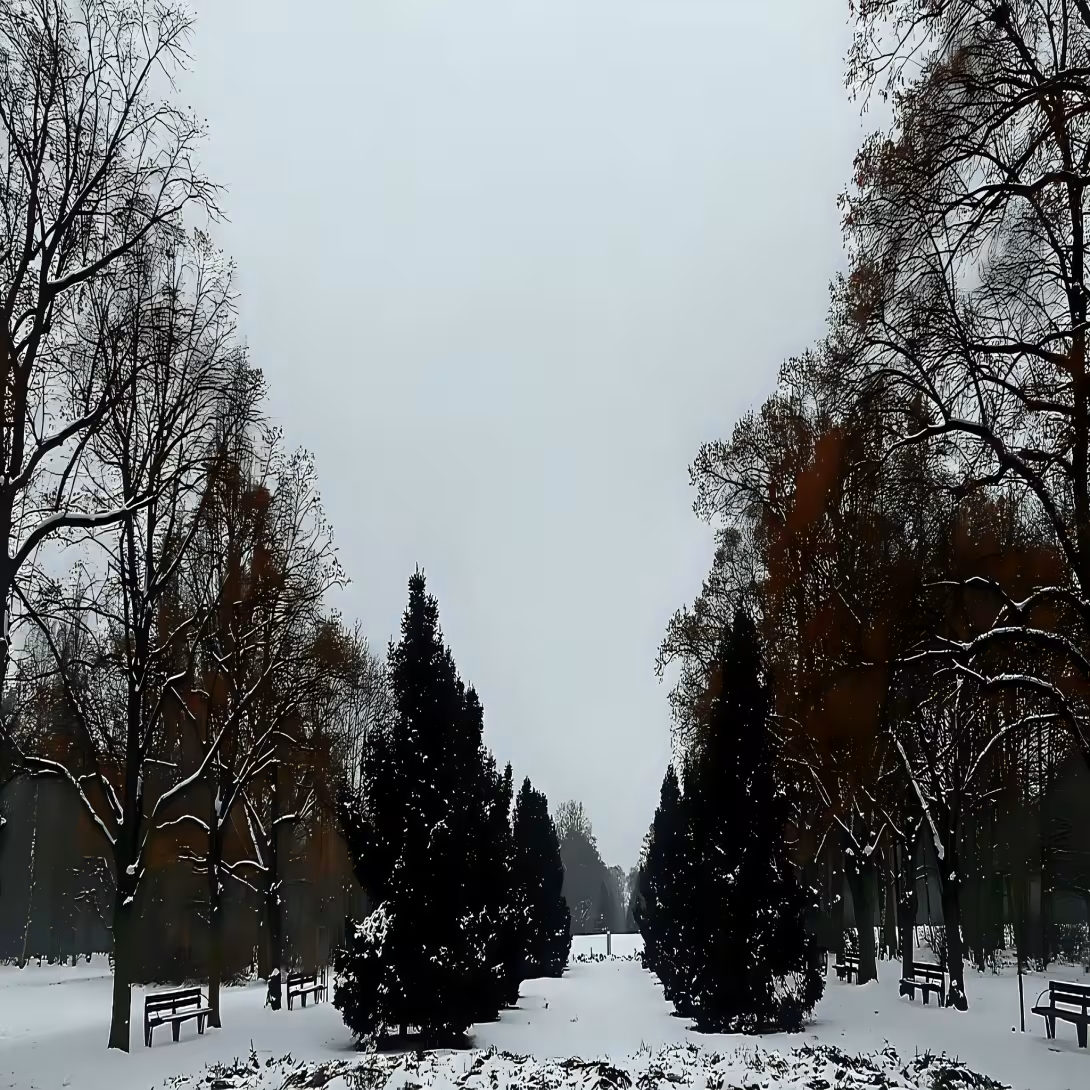
Borský park was developed gradually according to the design of architect Leopold Batìk, who designed it since 1914. The centre of the park was supposed to be a meadow surrounded by promenades and alleys, while the designer deliberately left open spaces to maintain the view of Radyni Castle. But the First World War prevented the original plan from being fully implemented. The gradual planting of the park began only in the following year - in April 1915 there was planted Husova lípa, commemorating the 500th anniversary of the death of Master Jan Hus. Shortly afterwards, in April of that year, the children of Polish refugees dropped Mickiewicz's linden in memory of the time they found refuge in Pilsen. Both lashes have been preserved until now; Their history resembles stone slabs placed near their roots.
After the end of World War I, the orchard received a new name - Set of Czech legions (also in maps of Czech legionnaires). In 1926 it was taken over by the city of Plzeň as a gift from the district. At that time the park spread over more than 23 hectares and was the largest set in the entire Plzeň region. Another significant expansion occurred after 1930 when new trees were introduced on the south side. The park has thus grown to the railway track connecting Plzeň to the Iron Red.
During World War II, between May and September 1945, its territory was transformed into a camp and a field hospital of the 3rd American Army under the command of General Patton, who was established in the liberation of Western Bohemia. In May 2025, an archaeological survey of the remains of the camp was conducted by experts from the Department of Archaeology of the Faculty of Arts of the Faculty of Arts, in cooperation with scientists from the University of Amsterdam. There is a sports ground at the field hospital today.
Public transportation played an interesting role in the park's life. In the southwest part, until 1933, there was a tram line number 2 which connected Bory to Lobbýin. The tram loop was then moved to the northern part of the park to the intersection of the streets of Kaplířov and U Borský Park with Klatovy class. This sector operated until 2019, when it was replaced by a public transport terminal in Kaplířov Street. The historical centre of the park was joined by a forest park extending east around the Bora estate until Doudlevec to the Tyrše Bridge, while the southern part of the park is bounded by the Radbuza River.
The extensive reconstruction started in 2005 and focused mainly on the historical core of the park. Oval meadow has been quartered and equipped with modern irrigation system. The quality of revitalization met with recognition - in 2008 Borský park placed second in the Czech Republic's Park of the Year competition. Today the park is a very popular place among the inhabitants of the southern part of Pilsen. It offers options for both quiet and relaxing and active relaxation - visitors will find a mini golf course, gym and tennis courts of the TK Slavia Plzeň.
Then and now
Drag the slider to compare how the landmark may have looked when it was built with the view today.
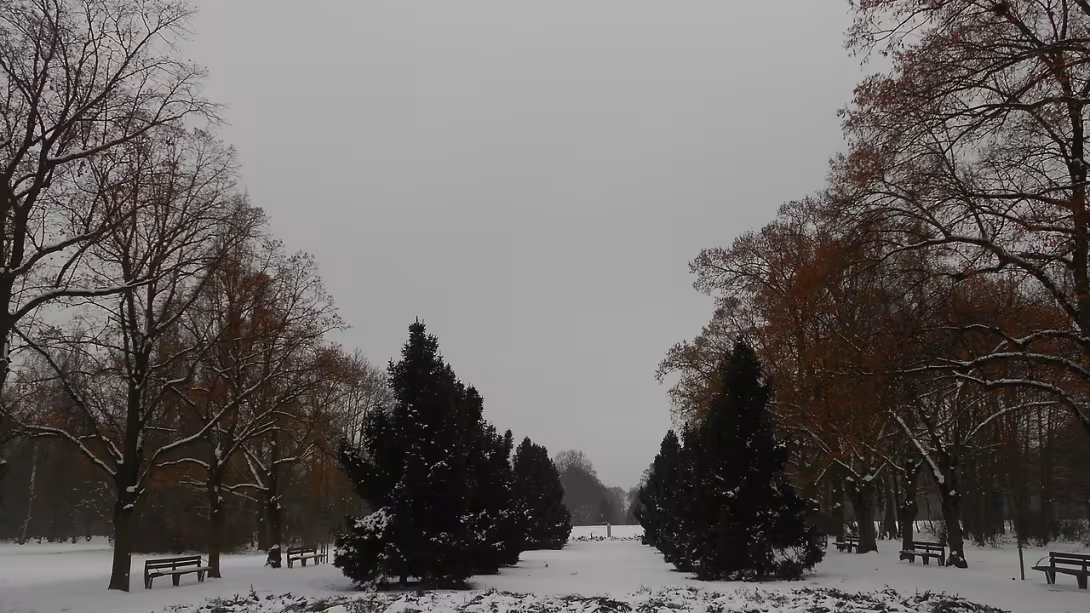
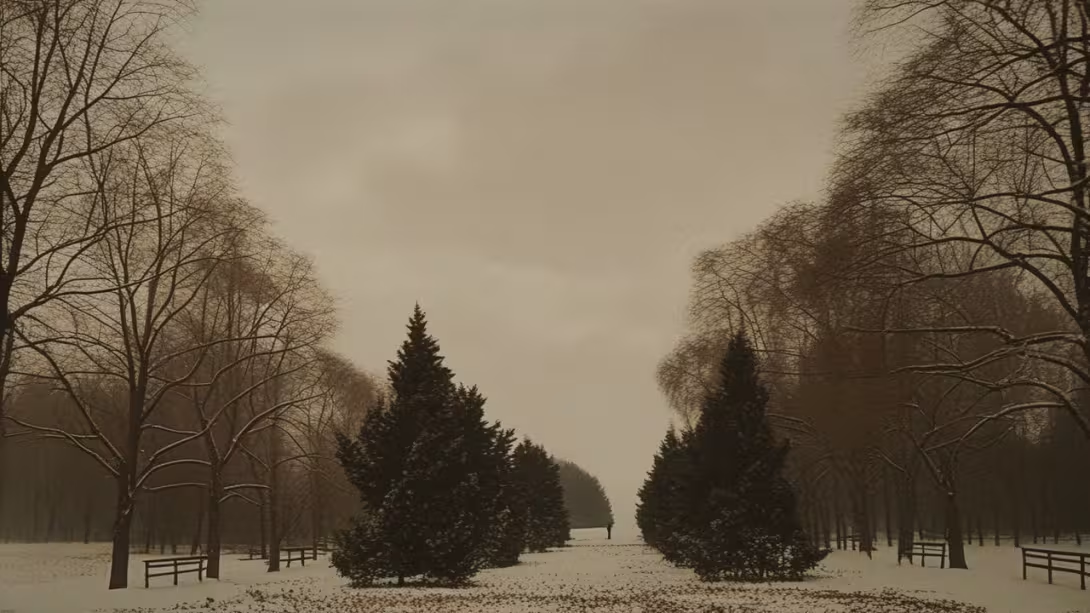
The historical appearance on the left is an AI-generated visualisation and serves as inspiration only.
Historical milestones
- 1914
- Architect Leopold Batěk drew up a proposal to set up the kit, but it was not fully realized because of the First World War.
- 1915
- Disposing of two important better - the Lips of Husova and Mickiewicz Lips - as symbols of Czech and Polish history.
- 1926
- The city of Plzeň took over the management of the park from the district and renamed it the Sad of Czech Legions.
- 1945
- The presence of the camp and field hospital of General Patton's 3rd Army during the liberation of Western Bohemia.
- 2005
- The start of extensive park reconstruction, which included a new grassy meadow and irrigation system.
Architectural development
The original proposal from 1914 included a meadow with promenades and alleys, some of which remained free to maintain the view of Radyna Castle. In the 1930s, the park was extended by the southern part to the railway line. In the 1950s, the reconstruction was carried out with a new grass oval meadow and irrigation system. The park is currently adapted for recreational and sports use.
Historical events
- 1915
- Discontinuation of the Hus (18 April) and Mickiewicz (22 April) as symbols of Czech and Polish history.
- 1945
- The presence of the camp and field hospital of General Patton's 3rd Army during the liberation of Western Bohemia.
- 2005
- The start of extensive park reconstruction, mainly focused on the historical centre.
Owners
1914- 1926 – District Plzeň (donated to the city of Pilsen); since 1926 – City Plzeň.
Points of interest
- In the park in April 1915, two important lids were planted: Hus's linden commemorating the 500th anniversary of the death of Master Jan Hus and Mickiewicz's linden planted with children of Polish refugees.
- During World War II, the park between May and September 1945 served as a camp and field hospital of the 3rd American Army under General Patton's command.
- In 1926, the city took over Plzeň Park as a gift from the district, where it spread out over 23 hectares and was the largest set in the Plzeň region.
- Tram loop in the park worked first in the southwest part (until 1933) and later moved to the north part until 2019.
- In 2008 Borský park won second place in the Czech Republic competition Park of the Year.
Guide
This guide is narrated by a synthetic voice generated by artificial intelligence.
Show guide text
This text was created by artificial intelligence and has not been editorially reviewed. It may contain inaccuracies.
Borský park is the largest park in Plzen. It is located on the southern edge of the city and its history begins in 1914. At that time, architect Leopold Batěk proposed the establishment of an orchard. Its center was a meadow, around which ran a promenade and avenues. In some places, open spaces were left so that Radyně castle could be seen. Because of the war, however, the entire plan was not carried out.
In 1915, two linden trees were planted there, which still grow in the park today. Husova linden was planted on April 18th to mark the 500th anniversary of the death of Master Jan Hus. Four days later, children of Polish refugees planted the Mickiewicz linden in memory of the time when they found shelter in Plzen. Stone plaques commemorate the history of both trees. After the First World War, the orchard was given a new name, the Orchard of Czech Legions.
In 1926, the city of Plzen received the orchard as a gift from the district. At that time it covered more than 23 hectares and was the largest orchard in the entire Plzen region. After 1930, new trees were added on the southern side and the orchard expanded all the way to the railway line from Plzen to Železná Rudy.
From May to September 1945, a camp and field hospital of the Third American Army of General Patton stood there. The general's forces distinguished themselves in the liberation of western Bohemia. In May 2025, archaeologists from the Faculty of Philosophy of the University of West Bohemia uncovered the remains of the camp. Experts from the University of Amsterdam helped them identify the finds. A sports facility now stands on the site of the hospital.
The park is also connected to the Plzen tram. Until 1933, there was a terminus for line number 2 in its southwestern part, which connected Bory with Lochotín. The loop was then moved to the north of the park to Klatovská street. In 2019, it was replaced by a terminus with a transfer hub on Kaplířova street.
Later, a forest park was added to the historic part. It stretches eastward around the Bory housing estate to Doudlevec to Tyršův bridge. On the south, the park is bounded by the Radbuza river. Since 2005, the historic center underwent extensive renovation and the oval meadow received a new lawn and irrigation. In 2008, Borský park came second in the nationwide Park of the Year competition.
Residents of southern Plzen come here for peace and for sports. They can find a mini golf course, a gymnasium, and tennis courts belonging to the Slavia Plzen tennis club.
Frequently asked questions
Is Borský park open to the public?
Yes, Borský park is publicly available. The opening hours are from 8:00 to 20:00.
How do I get to the place by car / public transport?
By car you can reach the parking lot in front of the entrance to the park. The public transport can be used by lines 12 or 24 which stop not far from the park.
How much is the entrance fee and is it paid on the spot?
Admission is free. There are no fees to enter the park.
Is the tour suitable for children and seniors?
Yes, Borský park is suitable for visiting families with children and seniors. There are specially prepared routes for families with children and there are benches and tables available.
How long does the tour take?
The length of the tour depends on the speed of the visitors. On average, the tour takes about 1-2 hours.
What are the opening times and booking is required?
The opening hours are from 8:00 to 20:00. Reservation is not necessary, but it is recommended to contact the park manager in advance for groups over 10 people.
What's interesting in the immediate vicinity?
In the immediate vicinity there are other Pilsen parks such as Park Štrunc or Park Petřín. The local museums and galleries can also be visited.
For kids
Imagine going back 112 years... Until Plzeň was not yet the city it is today. The city had different faces, different colors and different sounds. And among them was Borský park.
It was like a game where everything starts from scratch. The park began to be built in 1914 when architect Leopold Batěk drew up a proposal to set up the set. Back then, there were people who used to feed on agriculture and livestock. Park was their refuge where they could relax and have fun.
Businesses nearby
Do you run a restaurant, accommodation, shop, museum, rental, wellness or other visitor service near this monument? Show yourself directly to the people heading to it — this is how they will see you in the app and on the web:
Events nearby

Zdroj akcí: otevřená data měst a obcí ČR (Národní katalog otevřených dat) a kalendář akcí Národního památkového ústavu.
Accommodation nearby
Trips and activities nearby
Guided tours, tickets and activities nearby from GetYourGuide
Affiliate link: if you buy from the partner, we may receive a commission. The price for you does not change.
Search tours and activities →Themed route
1. Radyna Castle, medieval fortress: This historic building is located about 1 km west of the park and offers well preserved architecture. 2. Borský park, park: Main destination trip. 3. Radbuza River, River: Water flow borders the southern part of the park and is part of its landscape. 4. Tyre Bridge, Bridge: Passage over the Radbuza River.
Seasonal recommendations
Spring Borský park offers a unique atmosphere of awakening nature in the spring months, with the gentle smell of flowering bushes and young leaves spreading between old trees and historical monuments. The light of the sun, which begins to break through the trees for longer days, creates a shadow game on the pavement and gazebo, while in the morning the park is surrounded by fog, which gives the place a mysterious, almost fairy-tale mood. The singing of birds is also specific, which in spring noise prevails over urban noise. For a visit is the ideal period from April to May, when the park is still relatively calm, but nature offers its most beautiful colors. It is recommended to come early in the morning to avoid the late tourism of tourists, and to wear layered clothes - spring weather in Pilsen can be variable, from sunny days to cold rainy days. It is also convenient to take a light umbrella and comfortable shoes, as some trips in the park are unasphalted.
Summer In the summer months, Borský park will turn into a vibrant, pulsating space where historical architecture is mixed with lush greenery and visitors' activity. The main attraction is the long sunny days when the park becomes a popular place of rest for local and tourist alike - especially in the main summer season (July and August) there are often cultural events in the open air. Warm evenings bring a pleasant atmosphere where families, couples and loners meet on benches. The lighting is also specific, which lasts until late in the summer months, allowing romantic walks even after sunset. It is recommended to visit the park early in the morning or late in the afternoon to avoid the biggest crowds, and to take enough water, sunglasses and light clothes made of natural fabrics. It is also convenient to avoid visiting in the hottest hours, when there may be a more pleasant temperature in the overshaded parts of the park, but even here it is necessary to count on the possibility of sudden storms.
Autumn Autumn Borský park is like a picturesque painting where golden and red shades of deciduous leaves are projected into quiet water and historic buildings. Colder air and shorter days create a quiet, contemplative atmosphere where the park appears to be an ideal place for reclusion or photography. The changing lighting is also specific - the sun shines low above the horizon, which gives monuments a dramatic look, especially in the morning and evening. In November, when the period of St. Catherine's frost begins, the park is surrounded by fog and lost in gray tones, which gives it mystery. It is recommended to visit it in September or October, when nature is still rich in color, and to wear warm but comfortable clothes - autumn weather in Pilsen is unstable, with rapid temperature changes. It is also convenient to take a thermos with a hot drink, as it can be cold in late afternoon hours, and choose less frequent paths to enjoy peace.
Winter Winter Borský park is like a fairy tale from another world - snow cover changes historical monuments and trees into a white landscape, while the freezing air creates a crystal atmosphere. Particularly specific is the lighting, when artificial light on the promenade and at the sights creates magical glare on snow, and the sun, which is very short in winter, adds silver shine to the site. In Advent Time, the park becomes a popular place for romantic walks, where its peace and beauty are even more emphasized. It is recommended to visit it in December, when the park is the most beautiful but also early afternoon, as opening hours in winter months are usually limited. It is necessary to dress in warm but comfortable layers, including waterproof shoes, as the roads can be slippery. It is also convenient to take a warm drink and choose a quiet place on the bench where you can observe how the park's face changes in winter light.
Visualizations and artistic views


The visualisations are generated by artificial intelligence and serve as inspiration.
Photos from the area
Real photos taken near the monument


Zdroj a licence jsou uvedeny u každého snímku.
Atmosphere of the place
This atmospheric visualisation of the place and period was generated by artificial intelligence. It is not real footage of the location.
Tips from visitors
No tips yet. Be the first!
Log in and add your tip.
Sources and literature
Photos: Srpen / CC BY-SA 4.0, rozlišení zvýšeno umělou inteligencí — Wikimedia Commons. The author and licence also appear when you hover over the image.
Faktickým podkladem tohoto textu byl článek na Wikipedii, jehož autory jsou přispěvatelé Wikipedie. Článek je dostupný pod licencí CC BY-SA 4.0.
Location on the map
More monuments – Plzeň
Show all in the municipality

Příběhy a pověsti
Legendy, pověsti a příběhy spjaté s touto památkou

Fotografie návštěvníků
Zatím žádné fotografie. Buďte první, kdo přidá fotografii z návštěvy!
Log in a přidejte svou fotografii nebo hodnoťte.
Za ověřenou návštěvu v aplikaci získáte víc bodů — poznáme podle GPS, že jste na místě.
Reviews and comments