



Boží muka u Vyšehradu v Praze Plague column
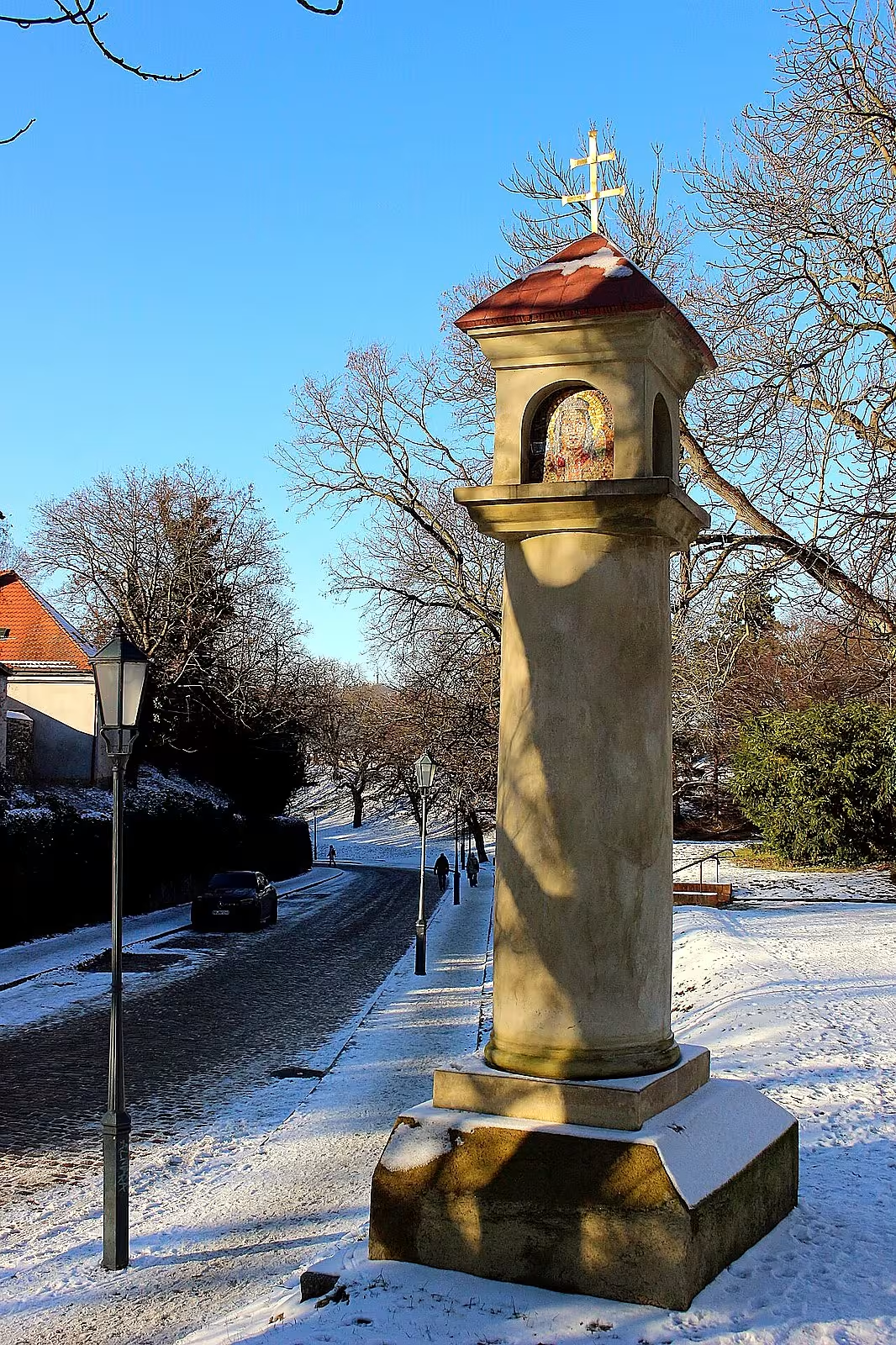
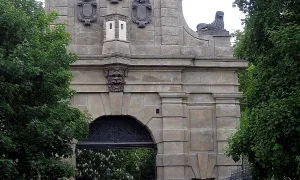
The divine torture at Vyšehrad is a plague column from 1800, located in Prague in the location Vyšehrad at the address K rotunda. This object is part of a highly valuable complex, which represents a unique whole in terms of history, urban planning and architecture.
We are not aware of the exact circumstances of the creation or of who it was specifically created. This monument, however, is firmly integrated into the historical space and is protected as a cultural object.
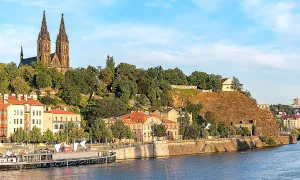
The whole area in which it is located is one of the most important Czech monuments. This highly valuable location is closely linked to the beginnings of the Czech state as well as to a number of important national personalities. Thanks to its position in Prague, the column forms part of a wider urban context, which is essential for the history of the country.
The object is currently registered in the register of conservation under number 113. It retains its integrity in the protected area. For visitors it is an authentic element that complements the character of the site.
Visiting this place allows you to touch history in its true submission. It is an opportunity to quietly observe the monuments that form the basis of the Czech state heritage.
Then and now
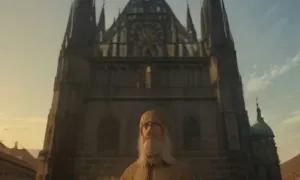
Drag the slider to compare how the landmark may have looked when it was built with the view today.
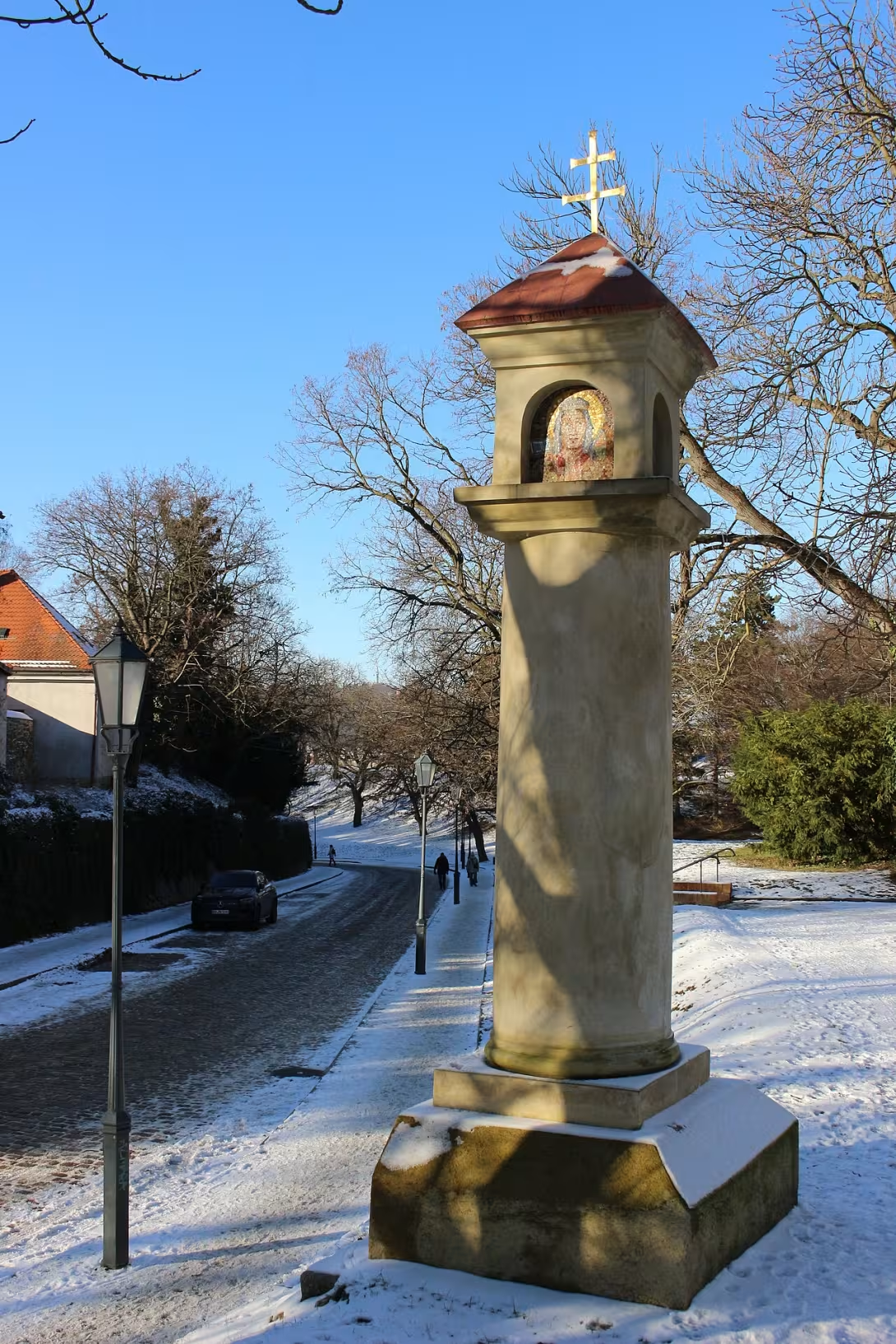

The historical appearance on the left is an AI-generated visualisation and serves as inspiration only.
Historical milestones
- around 900
- Establishment of castle Vyšehrad, on whose premises is the column located
- 1800
- Building a pestilence column (God's torment)
- present
- Registration of the object in the register of monument protection under number 113
Points of interest
- God's torment represents a plague column from 1800. - The building is part of a highly valuable complex with historical, urban and architectural value. - The area belongs to the most important Czech monuments and is closely connected with the beginnings of the Czech state. - The building is registered in the register of conservation under number 113. - The site allows visitors to touch history and observe the authentic element of the Czech state heritage.
Guide
Show guide text
This text was created by artificial intelligence and has not been editorially reviewed. It may contain inaccuracies.
Welcome to one of the most beautiful and oldest places in our country. You have just stopped in the quiet corner of the historic Vyšehrad site, in a place where time seems to be a little slower and where every thing has its own story. Before your eyes stands God's torment, which is also known in this place as a pestilence. It may seem to be a silent witness to history at first sight, but believe me, this object carries much more than it can at first glance indicate. You are facing a protected cultural monument that is a solid part of this important historical entity. Please feel the atmosphere of peace that rules around this place, and let yourself be carried away by the thoughts of what this object has experienced.
Now let's take a look together at why this place came into being. Although we have not been able to find out the exact date of its creation or the names of the people who designed it and built it, its nature is clear to us. This type of monument, called the pestilence column, has a very deep and human meaning. In times when mankind faced great dangers, such as sudden and unexpected diseases, people sought to find a way to express their faith, their hope, or their gratitude for survival. Such columns were built as symbols of protection or as a reminder of the difficult times that the community had to overcome. Although we do not know the specific story of this column, its very existence reminds us of a human effort to find support in difficult moments and create permanent signs that will stand long after people have left.
Now pay attention to the very form of this place. You're standing right in front of it, so you can see its shape and how it got wedged into the landscape of Vyšehrad. Even if we don't talk about specific details that history wouldn't tell us, I suggest you focus on how this object works all around you. Look how his presence changes the space around him. Feel his shapes, his attitude, and the way the light hits him. It is fascinating to see how this object, although relatively small compared to the large buildings of the entire complex, can control the attention around it with its strength and its history. Look at its surface, see its structure and how it reflects time. Every clue you see on him is part of his long existence in this important place.
Maybe now you can think of who's been around this column. Even though we don't know the names of any famous personalities associated with this particular place, we can imagine countless people standing here in your place. Imagine all those people here looking for solace, who have rested here on their way or who have stopped here to look at this object with respect. This monument is not just a stone or material object, it is a place of meeting human destinies. It's a quiet point where the past meets the present. Even though the names of those who built this column are lost in the fog of time, their intentions and their work are still here, right in front of you, and they keep forcing us to think.
Something that might really interest you here is the unknown. Nowadays, when everything is easily traceable and every thing has its exact description, it's fascinating to run into something that remains a secret. When exactly did this column start? Who was his creator? Why was this particular point selected on the Vyšehrad site? This missing data is not a weakness, but a great force in this place. It's the ambiguity and the empty spaces in our books that give us room for our imagination. This monument forces us to stop looking and to really begin to perceive. This mystery is part of her beauty and her value. It is a challenge for every visitor to try to figure out in his mind what could have happened in this place.
Now, however, we will not keep you in one place for too long. Vyšehrad is huge and offers you an infinite number of other experiences, views and stories that await your discovery. This column is just one of many silent voices that can tell you something here. I suggest you continue your walk around the whole area, listen to the wind in the trees' crowns and watch how the views of the city of Praha change. Any next step can lead you to something new and unexpected. Thank you for stopping by this very monument and for paying attention to this silent witness to history. We wish you a beautiful and inspiring journey along the rest of Vyšehrad. Enjoy every moment spent in this special place.
Tips for visitors
The best time to visit is spring and autumn months, when the colors of the surrounding nature complement the appearance of a stone pillar. We recommend to arrive early in the morning or shortly before sunset when the atmosphere is quieter and light more pleasant to observe details.
The location is available by car and by public transport; Check the current connection in the search engine.
For a walk around the premises we recommend comfortable shoes that allow you to easily circumvent the memory from different sides. Remember the camera to capture architectural elements.
We recommend taking advantage of the soft light of the morning or evening hours, which will highlight the texture of the stone. The best shots are created when viewed from the outside, when the column is placed in the wider context of the Vyšehrad complex.
For families with children, the visit is suitable because the monument is located in public space. You can involve children in finding different details on the column and tell them about the history of this place.
Frequently asked questions
Can the monument be visited?
This is a structure in a public space that can usually be seen from outside free of charge. We have not verified that this particular one is freely accessible.
Where is the monument?
Location: K rotundě, Vyšehrad, Praha, Hlavní město Praha. The map on this page shows the exact spot.
Why is the monument protected?
It is listed in the Central List of Cultural Monuments of the Czech Republic as a national cultural monument (register no. 113). It is protected as part of a larger listed ensemble.
Businesses nearby
Do you run a restaurant, accommodation, shop, museum, rental, wellness or other visitor service near this monument? Show yourself directly to the people heading to it — this is how they will see you in the app and on the web:
Events nearby

Zdroj akcí: otevřená data měst a obcí ČR (Národní katalog otevřených dat) a kalendář akcí Národního památkového ústavu.
Nearby
➜ Zobrazit interaktivní přehled okolí – restaurace, ubytování, půjčovny a další místa v okruhu 15 km.
Data: OpenStreetMap contributors, okruh 15 km.
🏰 Historické památky
- Gorlice (0.1 km)
- Cihelná brána (0.2 km – V pevnosti 46/1)
- Hlávkova kolej (1.3 km – Gorazdova 1994/9)
- Clam-Gallasův palác v Praze (2.5 km – Husova 156/21)
- Dům U Kohouta (2.7 km)
- Galerie Troba (2.9 km – Velehradská 1320/24)
- Jaroslav Vrchlický (2.9 km)
- Vojenský historický ústav Praha (3.1 km – U Památníku 1600/2)
🍽️ Restaurace a stravování
- Legenda (1.2 km)
- Restaurant River's smokelab (1.3 km – Lidická 2)
- Pizzerie U Tučňáka (1.4 km – náměstí 14. října 1)
- McDonald's (1.8 km – Vodičkova 736/15)
- McDonald's (3.7 km)
- Yi Xiang Ge (6.5 km)
- Švejk restaurant U Brázdů (6.7 km – U Svobodárny 18)
- Pizzeria Cerreto (6.8 km)
🏨 Ubytování
- EA Hotel Tosca (1.7 km – Blanická 718/10)
- Old Prague Hotel (2.2 km – Skořepka 421/5)
- The Mozart Prague (2.3 km – Karoliny Světlé 208/34)
- Old Town Jewel Apartments (2.9 km – Elišky Krásnohorské 10/2)
- Hotel AXA (3.0 km – Na Poříčí 40)
- Hotel Olšanka (3.3 km)
- Villa Voyta (4.8 km)
- Plaza Prague Hotel (5.3 km)
🚲 Půjčovny a sport
- Centrum volného času Botič (0.6 km)
- Virus Sport (2.1 km – Černomořská 235/5)
- Kieser Training (2.1 km)
- Pavé Cycles (3.0 km – Chvalova 1577/12)
- Velox Sport (3.8 km)
- Florbal expert (3.9 km)
- JUN (4.1 km – Haškova 629/7)
- Umbro CZ & SK (4.1 km – Novodvorská 1709/140)
🥾 Turistika a příroda
- Vyšehrad (0.3 km)
- Petřínka (2.7 km)
- Informační a rezervační centrum (2.8 km – Maiselova 38/15)
- ÚAMK, a.s. (2.8 km – Na Strži 1837/9)
- Pražský hrad (3.3 km)
- Masarykova vyhlídka (3.6 km)
- Gabrielka (7.2 km)
- Vyhlídka Emy Destinnové (7.3 km)
Accommodation nearby
Trips and activities nearby
Guided tours, tickets and activities nearby from GetYourGuide
Affiliate link: if you buy from the partner, we may receive a commission. The price for you does not change.
Search tours and activities →Themed route
Thematic cruise route: God's torture at Vyšehrad
1. God's Torture at Vyšehrad (Pestilence Column) - Type: Historical landmark - Why is it worth a visit: This pestilence is a unique monument from the 17th century, which resembles the times of the pestilence and has a rich history associated with St. Peter and Paul's Saints Chapel. It is an important symbol of the resilience and faith of the people of Prague.
2. Chotko sets - Type: Green Zone - Why is it worth a visit: These quiet sets offer a beautiful view of Vyšehrad and are an ideal place to relax after exploring historical monuments. It is a place where you can enjoy nature and peace in the centre of Prague.
3. Vyšehrad Cemetery - Type: Historical cemetery - Why is it worth visiting: Vyšehrad cemetery is one of the oldest and most famous burial grounds in Prague. Here lies many famous personalities of Czech history, culture and literature. It's a place full of monuments and beautiful sculptures.
4. Vyšehrad Castle - Type: Historical castle - Why is it worth visiting: The castle is not only an architectural pearl, but also home to the Vyšehrad Concert Hall. Its history dates back to the 10th century and offers a view of the ancient church of St. Peter and Paul.
5. St. Peter and Paul's Chapel - Type: Church - Why is it worth visiting: This Romanesque chapel is one of the oldest buildings in Prague. It is known for its historical significance and architectural details that attract visitors from all over the world.
This route offers a combination of history, culture and nature, making it an ideal choice for anyone who travels to Prague.
Seasonal recommendations
Spring: During the spring season, God's torture at Vyšehrad appears in a new light, when the sun's rays illuminate its historical details. Flowers are beginning to bloom around and the surrounding green nature is gaining life. The atmosphere is full of hope and renewal, creating ideal conditions for a relaxed walk around the monument. It is recommended to visit in the morning or in the evening in order to be able to use mild temperatures and fewer people on the streets. A good idea is to dress appropriately for temporary weather - easy clothes with handkerchief or jacket, because morning and evening can become colder.
Summer: In summer, God's torture at Vyšehrad is a popular place to visit thanks to the warm sunlight that increases its beauty. Long days allow a long walk around Vyšehrad and knowledge of the history of the plague column in peaceful conditions. Summer is the period of the greatest attendance, so it is recommended to visit in the morning or late afternoon to avoid larger crowds. Clothes should be light and light, with sun protection - the hat or scarf should not be missing.
Autumn: In autumn, the surrounding trees acquire colour shades, creating a beautiful atmosphere around God's torture at Vyšehrad. The sunny days are still frequent and the sweet air increases the attractiveness of this place to visit. Despite falling temperatures, it should be borne in mind that autumn rain may be unexpected - good advice are to wear clothes with layers and perhaps even an umbrella. The best time to visit is at noon, when temperatures rise to the highest level.
Winter: During the winter period, God's torment at Vyšehrad is gaining a calm and quiet character. The light is different - the sun occurs for a shorter time, which gives the monument a specific atmosphere. Freezing air may be pleasant for a short walk, but long-term temperature should be kept in mind. It is recommended to visit in the morning or at noon when the sun is stronger and warm. Clothes should be warm - with jacket, gloves and possibly protective glasses against snow or cloud.
Visualizations and artistic views


The visualisations are generated by artificial intelligence and serve as inspiration.
Photos from the area
Real photos taken near the monument


Zdroj a licence jsou uvedeny u každého snímku.
Tips from visitors
No tips yet. Be the first!
Log in and add your tip.
Sources and literature
Photos: J.Broukal / CC BY 4.0 — Wikimedia Commons. The author and licence also appear when you hover over the image.
Location on the map

Příběhy a pověsti
Legendy, pověsti a příběhy spjaté s touto památkou
Fotografie návštěvníků
Zatím žádné fotografie. Buďte první, kdo přidá fotografii z návštěvy!
Log in a přidejte svou fotografii nebo hodnoťte.
Za ověřenou návštěvu v aplikaci získáte víc bodů — poznáme podle GPS, že jste na místě.
Reviews and comments