






Sequensova vila Villa
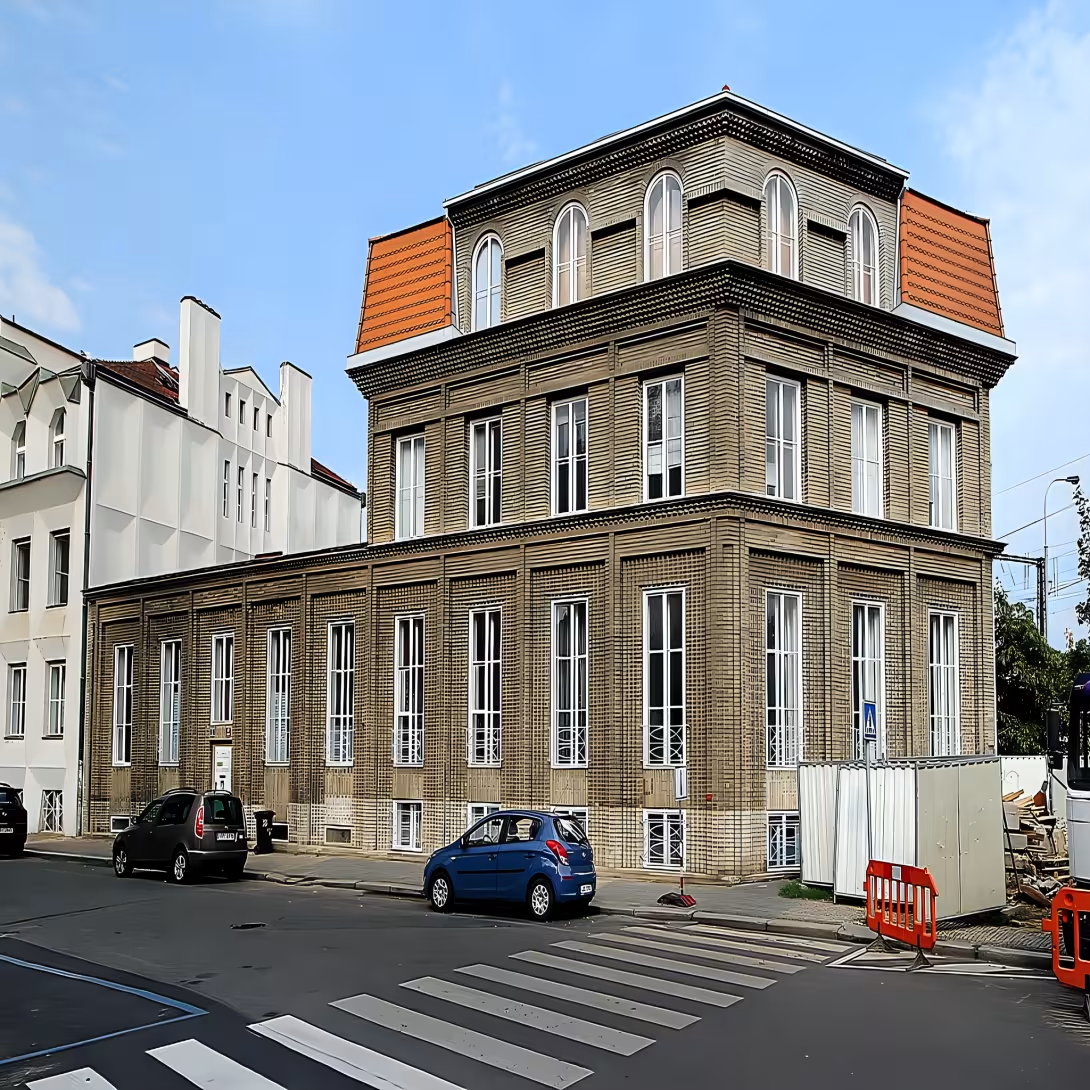
Sequensova Vila: A Testament to Rational Modernism in Prague
Located in Prague 2-Vyšehrad, Sequensova Vila is a family residence built between 1912 and 1913 in the rational modernist style. This architectural gem sits near the Vltava river embankment, offering a fascinating glimpse into the city's early 20th-century design trends.
Architect Otakar Novotný designed the villa, prioritizing functionality and simplicity. The resulting structure features a straightforward design with a mansard roof and light-colored exposed brick. Its irregular pentagonal floor plan adds to its distinctive character.
Built for teacher František Sequens and his wife Zdena, the property was sold to the Hanuš family in 1916. The family has maintained ownership ever since, making the villa a rare, well-preserved piece of architectural heritage.
The building's low side wing once served as a nursery and rehabilitation center, highlighting its practical utility. As an early example of rational modernism in Prague, Sequensova Vila predates the prominent Cubist period, making it a significant site for enthusiasts.
Today, the villa continues to exemplify the era's emphasis on minimalist design. Nearby, visitors can discover other notable landmarks, such as the Cubist Kovařovicova Villa and its elegant garden, the Cubist Vila Na Libušince, and the Vyšehrad Sokolovna, home to the TJ Sokol Vyšehrad basketball club.
Sequensova Vila is an essential destination for those exploring Prague's diverse architectural history. Its seamless blend of utility and elegance provides a unique perspective on the city's evolving styles. Stroll along the Vltava embankment to discover this hidden treasure.
Historical milestones
- 1912
- Construction of the villa began.
- 1913
- Construction of the villa was completed.
- 1916
- The Sequens family sold the house to the Hanuš family.
Architectural development
The house was designed by Otakar Novotný in the rational modern style, featuring a floor plan in the shape of an irregular pentagon. The exterior is made of exposed light brick, reflecting the era's focus on functionalism and simplicity. A low side wing once housed a rehabilitation center and a nursery.
Historical events
Construction completed in 1913; sold to the Hanuš family in 1916.
Owners
Built for teacher František Sequens and his wife Zdena; sold to the Hanuš family in 1916, whose descendants still own it today.
Points of interest
– Designed by architect Otakar Novotný, the villa was built between 1912 and 1913 in the rational modernist style. – The structure features a mansard roof, light-colored exposed brick, and an irregular pentagonal floor plan. – Originally built for teacher František Sequens and his wife Zdena, the property was sold to the Hanuš family in 1916. – The Hanuš family has maintained ownership of the villa since 1916, making it a well-preserved piece of architectural heritage. – The building's low side wing once served as a nursery and rehabilitation center.
Guide
Show guide text
This text was created by artificial intelligence and has not been editorially reviewed. It may contain inaccuracies.
Welcome to the historic heights of Vyšehrad. As you stand here, take a moment to breathe in the atmosphere of this unique location. You are positioned near the banks of the Vltava river, in a place where the pulse of the city meets the quiet dignity of history. Directly in front of you stands Sequensova vila, a residence that serves as a beautiful testament to a turning point in architectural thought. As you look at the building, you might notice a striking sense of calm. It does not shout for your attention with gilded ornaments or towering statues. Instead, it commands respect through its composure, its simplicity, and its unmistakable sense of purpose.
This villa was born during a period of great transition. To understand what you are seeing, we must travel back to the years 1912 and 1913. At that time, the world was moving away from the heavy, decorative styles of the previous century and leaning toward something much more disciplined and clear. This house was constructed to reflect that shift. It was built as a family home, a sanctuary of modern living, designed for a teacher named František Sequens and his wife, Zdena Sequensová. For them, this was not just a structure of brick and mortar, but a carefully planned environment that would support their lives and their values.
As you observe the facade, please direct your attention to the materials and the overall composition. The villa is a prime example of rational modernism, a style that prioritizes logic and utility above all else. You will notice that the building is constructed from light-colored exposed brick. This choice is significant. In the era of rationalism, architects wanted to move away from hiding the true nature of a building behind layers of plaster or paint. By leaving the brick exposed, the architect, Otakar Novotný, allowed the very essence of the construction to be visible to the eye. The light color of the brick gives the house a sense of lightness and elegance, preventing its austere design from feeling heavy or imposing.
Now, look upward toward the roofline. You will see a mansard roof, a classic architectural element that adds a sense of volume and character to the structure. Even in a building dedicated to simplicity, the mansard roof provides a sophisticated silhouette against the sky. If you could look down upon the villa from above, you would discover one of its most fascinating geometric secrets. The floor plan is not a standard rectangle or square; it follows an irregular pentagonal shape. This irregularity is not an accident. It is a deliberate move by Otakar Novotný to break away from traditional, predictable shapes and to create a space that responds to the specific needs of the site and the inhabitants. This geometric complexity, hidden within an exterior of outward simplicity, is a hallmark of the rationalist approach.
The life within these walls was shaped by the people who called it home. Imagine the daily routines of František Sequens. As a teacher, his life was likely defined by order, knowledge, and a commitment to the future—values that are mirrored perfectly in the architecture of his home. The villa was designed to be functional, to work efficiently for the family living inside it. It was a place of stability. However, the history of a house is often a story of changing hands and evolving lives. Just a few years after the villa was completed, in 1916, the Sequens family sold the property to the Hanuš family. This transition marked the beginning of a new chapter for the house, as it continued to stand as a silent witness to the changing social fabric of Prague.
As you stand here, I invite you to consider the philosophy behind this design. In an age where many buildings were becoming increasingly complex and cluttered, Sequensova vila stood as a statement of clarity. It asks us to find beauty in the essential. It suggests that a home does not need to be covered in carvings to be meaningful; it only needs to be honest, functional, and well-proportioned. This is the essence of rational modernism. The austerity you see is not a lack of creativity, but rather a highly disciplined form of it. It is the art of knowing exactly what is necessary and having the courage to leave everything else behind.
There is a certain mystery in how such a structured, logical building can feel so harmonious with its surroundings. Despite its modern lines, it sits comfortably near the Vltava, integrated into the landscape of Vyšehrad. It is as if the building understands its place in the world. It does not compete with the river or the hills; it simply exists with a quiet, confident strength.
As you prepare to continue your journey through this historic area, take one last look at the interplay of light on the exposed brick and the sharp, clean lines of the roof. Sequensova vila is more than just a house; it is a piece of architectural history that reminds us of the power of simplicity. Thank you for joining me for this brief moment in time. Please, continue your walk and enjoy the many other wonders that Vyšehrad has to offer. Goodbye.
Tips for visitors
To best experience the rational modernist style of Sequensova vila, aim to visit during the day when natural light can emphasize its architectural details. For photography enthusiasts, the best shots are often found when the light highlights the villa's geometric shapes, making the Vyšehrad surroundings a beautiful backdrop.
The site is located in the Vyšehrad district near the Vltava river embankment and is reachable by both car and public transport. To ensure a smooth journey, please verify current transit connections using a search engine and check for local parking options in advance.
When preparing for your visit, bring comfortable walking shoes to explore the area. It is also wise to check the official website of the monument for the most current information regarding entry fees and any specific visiting requirements.
If you have more time, you can explore nearby landmarks such as the Cubist Kovařovicova Villa with its stylish garden, the Cubist Vila Na Libušince, or the Vyšehrad Sokolovna. These sites are within easy reach and complement a visit to the villa.
For families with children, the area around Vyšehrad provides a scenic environment for a stroll. Exploring the nearby architectural gems can be an engaging way to introduce younger visitors to different styles of design.
Businesses nearby
Events nearby

Zdroj akcí: otevřená data měst a obcí ČR (Národní katalog otevřených dat) a kalendář akcí Národního památkového ústavu.
Nearby
The villa is located near the Vltava river embankment in the Vyšehrad district. Nearby monuments include the Cubist Kovařovicova Villa with its stylish garden, the Cubist Vila Na Libušince, and the Vyšehrad Sokolovna, which is the home of the TJ Sokol Vyšehrad basketball club.
Accommodation nearby
Trips and activities nearby
Guided tours, tickets and activities nearby from GetYourGuide
Affiliate link: if you buy from the partner, we may receive a commission. The price for you does not change.
Search tours and activities →Themed route
1. Kovařovicova Villa (Cubist Villa) – Explore this architectural gem and its stylish garden. 2. Vila Na Libušince (Cubist Villa) – Admire the striking Cubist design of this residence. 3. Sequensova vila (Villa) – The main destination of your trip, this villa is the central landmark of the route. 4. Vyšehrad Sokolovna (Building) – Visit the home of the TJ Sokol Vyšehrad basketball club to conclude your walk.
Seasonal recommendations
Spring
As you visit Sequensova vila in the spring, you'll be greeted by the vibrant atmosphere of blooming flowers and lush greenery. The warm sunlight casts a gentle glow on the historic villa's façade, making it an ideal time for photography. Be prepared for moderate crowds, especially during weekends. Wear comfortable shoes and layers for changing weather conditions.
Summer
During the summer, Sequensova vila comes alive with the sounds of birds chirping and children playing in the surrounding park. The warm sunshine makes it perfect for outdoor activities like picnics or leisurely strolls. Arrive early to avoid the peak tourist hours, and don't forget your sunscreen and a hat.
Autumn
As autumn arrives, Sequensova vila takes on a cozy atmosphere with the leaves turning golden hues. The crisp air is filled with the scent of ripe fruits and woodsmoke, making it an ideal time for a relaxing visit. Be prepared for shorter opening hours due to the cooler weather, and dress warmly.
Winter
In the winter, Sequensova vila transforms into a serene oasis amidst the snow-covered landscape. The soft glow of festive lights adds to the magical atmosphere, making it perfect for a romantic getaway or a family outing. Dress warmly, as the temperatures can be quite chilly. Arrive early to beat the crowds and enjoy the tranquil surroundings.
Visualizations and artistic views

The visualisations are generated by artificial intelligence and serve as inspiration.
Photos from the area
Real photos taken near the monument


Zdroj a licence jsou uvedeny u každého snímku.
Tips from visitors
No tips yet. Be the first!
Log in and add your tip.
Sources and literature
Fotografie: VitVit / CC BY-SA 4.0, rozlišení zvýšeno umělou inteligencí — Wikimedia Commons. The author and licence also appear when you hover over the image.
Faktickým podkladem tohoto textu byl článek na Wikipedii, jehož autory jsou přispěvatelé Wikipedie. Článek je dostupný pod licencí CC BY-SA 4.0.
Location on the map

Příběhy a pověsti
Legendy, pověsti a příběhy spjaté s touto památkou
Fotografie návštěvníků
Zatím žádné fotografie. Buďte první, kdo přidá fotografii z návštěvy!
Přihlaste se a přidejte svou fotografii nebo hodnoťte.
Za ověřenou návštěvu v aplikaci získáte víc bodů — poznáme podle GPS, že jste na místě.
Reviews and comments