






Vyšehrad (Vyšehrad) Castle
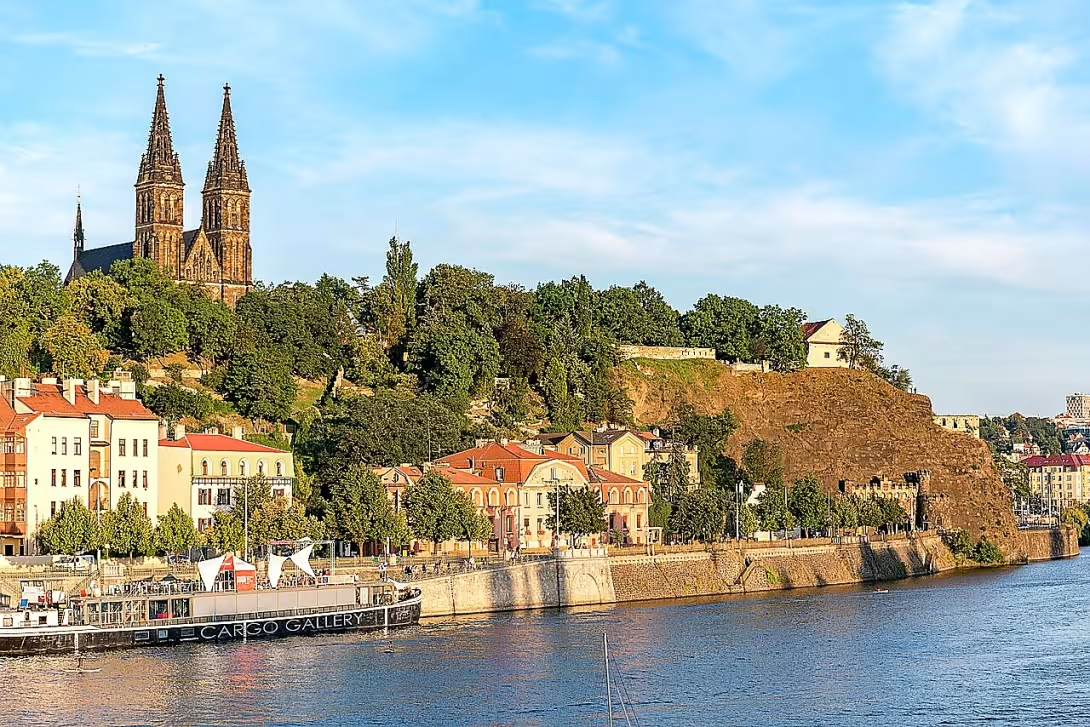
Vyšehrad is a historic fortress in Prague, located only 3 km southeast of Prague Castle along the east bank of Vltava. Vyšehrad was founded probably in the 10th century and has significant cultural and historical significance. It houses the basilica of St. Peter and St. Paul, the oldest Rotund of St. Martin from the 11th century and the cemetery Vyšehrad, where many famous Czechs are buried.
The origin of Vyšehrad follows the local legend, which suggests that the Duke of Step founded it as a safer place than the Buddha. The fortification was based on a steep rock above the Vltavou after cleaning the forest. Legends also tell of Prince Křesolý, the Knights of Horymir for destroying silver mines and dramatic leaks that concern jumps across walls into the river.
In the past, Vyšehrad became an important seat in the second half of the 11th century, when Wroclaw II moved from Prague Castle. It turned her into a complex with palatial residences, churches and administrative centers.
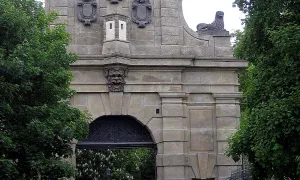
From an architectural point of view Vyšehrad has undergone several transformations. Initially built as a ducal fortress at the end of the 10th century, his zenith occurred in the second half of the 11th century under the rule of Wroclaw II. After the Thirty Years War, the fort was later rebuilt into a Baroque fortress in the mid-17th century by the Habsburg Monarchy. During this period, powerful brick walls and basements with two gates and a royal palace were built. Important architectural elements from earlier periods include the rotunda Romanesque St. Martin and fragments of medieval gate Špička and spa Libuše.
In the history of Vyšehrad saw different owners and administrators. Initially it was founded by Duke Krok and became a significant seat of the first Czech king Vratislav I. at the end of the 11th century. During the reign of Charles IV, Vyšehrad was integrated into Prague fortifications, but later abandoned as a royal residence. The Hussite burned down the castle in 1420, and King George of Podbradie did the same in 1448, which led to his possible destruction. In the 17th century, the reconstruction of the Habsburg monarchy was completed, which turned into a Baroque fortress.
Key events at the Vyšehrad include his burning of the Hussite in 1420 and subsequent race in 1448. This meant a significant period of collapse. Its historical significance is also highlighted by legends such as the legends of Duke Krok and Princess Libuše, who chose Přemysl as her successor. On the website are statues reminiscent of mythical Czech rulers and legendary figures such as the Battle and Slavoj, leaders in battles against German soldiers.
Vyšehrad today serves as a public park and is a popular holiday place for the inhabitants of Prague and visitors. It offers panoramic views of the city and the Vltava River, making it an attractive place for celebrations like New Year's Eve. The area around Vyšehrad has become one of the Prague cadastral areas since 1883, which reflects its integration into the capital.
Vyšehrad stands as evidence of Czech history and culture and offers views of the history of the nation through its architecture, legends and remarkable interments at the Vyšehrad cemetery. Its conversion from a medieval fortress to a baroque fortress and ultimately to a public park underlines its lasting importance. Visitors are invited to explore this historic place where they can appreciate its rich history and enjoy the picturesque beauty it offers.
Then and now
Drag the slider to compare how the landmark may have looked when it was built with the view today.
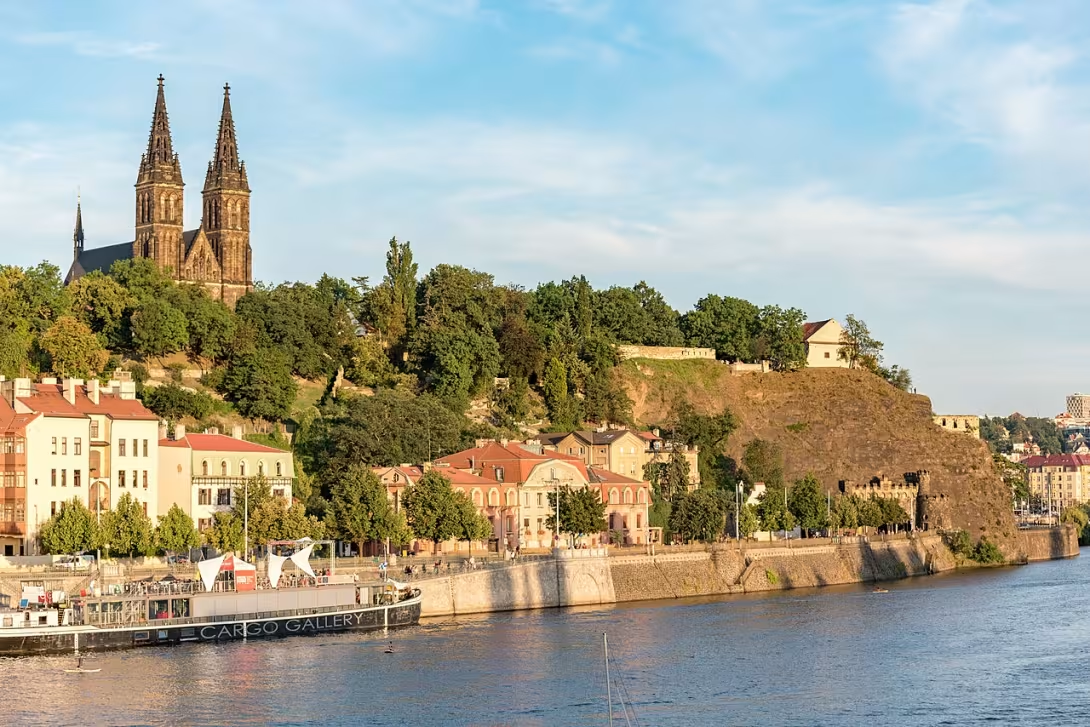
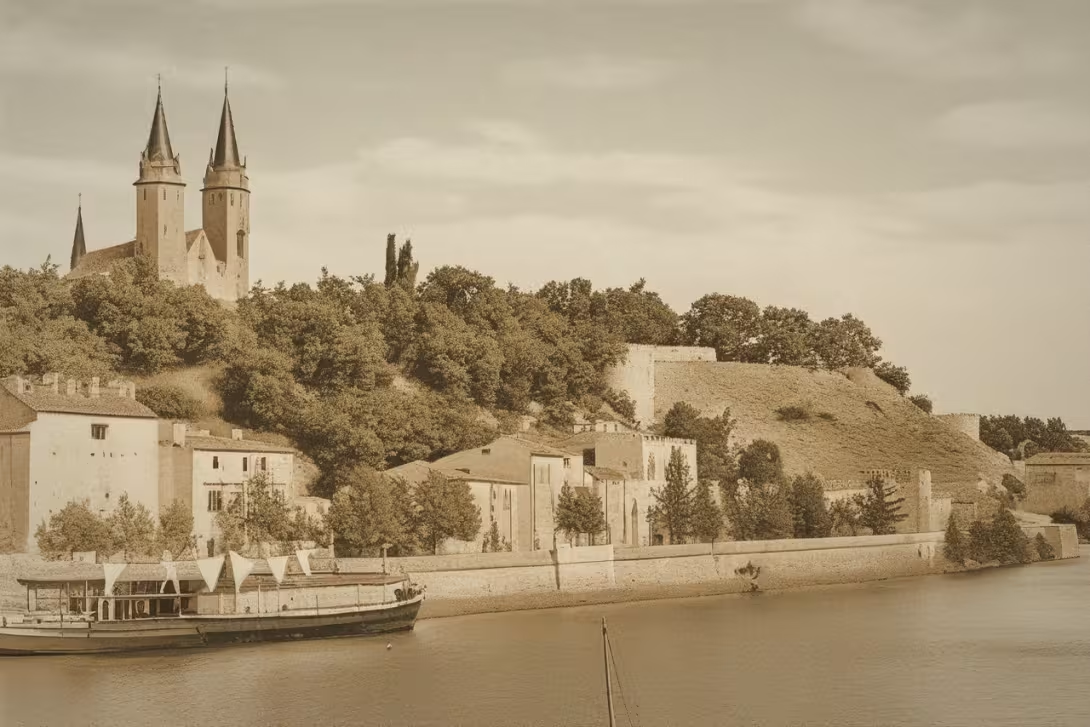
The historical appearance on the left is an AI-generated visualisation and serves as inspiration only.
Historical milestones
- 1420
- The Hussites burned down the castle.
- mid-17th century
- Remodeled as a Baroque fortress.
Architectural development
The architectural evolution of Vyšehrad began at the end of the 10th century as a ducal fortress. She underwent significant changes in Charles IV when it was incorporated into Prague fortifications and later transformed into a Baroque fortress in the mid-17th century.
Historical events
Founded in the second half of the 10th century as a ducal fortress.
In 1420, the Hussite burned down the castle.
In the middle of the 17th century it was converted into a Baroque fortress.
Owners
Initially it was founded by the legendary Duke of Krok and became an important seat of the first Czech king Vratislav I. at the end of the 11th century. During the reign of Charles IV, Vyšehrad was incorporated into Prague fortifications and later transformed into a Baroque fortress in the mid-17th century.
Points of interest
- According to legend, Vyšehrad was founded by Duke Krok as a safer place than Budec, which highlighted its strategic importance from ancient times.
- The dramatic story of Prince Křesomysl's accommodation knight Horymir for damaging the silver mines and his subsequent escape by jumping over the walls to Vltava adds an adventurous twist to the history of Vyšehrad.
- Vyšehrad was transformed into a Baroque fortress in the mid-17th century, reflecting its architectural evolution from a ducal fortress to a fortified complex with powerful brick walls and bastions under the rule of Habsburg.
- The Hussites burned Vyšehrad twice, for the first time in 1420 and again in 1448 by King George of Podbradia, marking a significant period of destruction and collapse of the fortress.
- Statues resembling mythical Czech rulers such as the Battle and Slavoj on Vyšehrad celebrate legendary figures that led battles against German soldiers, blending myths with history.
Guide
This guide is narrated by a synthetic voice generated by artificial intelligence.
Show guide text
This text was created by artificial intelligence and has not been editorially reviewed. It may contain inaccuracies.
Vyšehrad is a historic fortified settlement, castle, and fortress on a rock above the right bank of the Vltava River, on the southern edge of historic Prague. It lies just over three kilometers southeast of Prague Castle. From the Pankrác Plain, a promontory stretches out here, approximately six hundred meters long, wedged between the river and the valley of the Botič stream in Nusle. The slopes are very steep. On the southwest side, a rock face forty-two meters high made of Ordovician shale drops directly into the Vltava, and the river reaches its greatest depth in all of Prague here. From the summit, you can see both the city and the Vltava River practically from Braník to Staré Město. It is considered one of the most beautiful natural viewpoints in Prague.
According to legend, Vyšehrad was founded by the legendary prince Krok, who was searching for a safer seat than Budeč. After him, his daughter Libuše ruled. But the men did not wish for a woman to govern, so she sent messengers to find her horse. The horse led them to Stadice to Přemysl, who was ploughing there with a pair of oxen. Přemysl then took his seat beside Libuše on the throne. The legend of the knight Horymír also belongs to Vyšehrad. He was imprisoned under Prince Křesomysl. His horse Šemík jumped the fortress walls with him and leaped into the Vltava. Horymír was saved, but Šemík died from the effects of the fall. Legend has it that a secret vault with golden treasure also lies within the rock. An old Czech lion with twelve lion cubs watches over it and will roar if the land faces danger.
The actual princely fortified settlement likely arose in the second half of the tenth century. By the end of the eleventh century, the first Czech king Vratislav the First resided here, and he established the Vyšehrad chapter. Vyšehrad effectively became part of Prague under Charles the Fourth. He had it rebuilt and connected it to the fortifications of New Town. In the year fourteen twenty, the Hussites set the castle on fire, and in the middle of the seventeenth century it was rebuilt as a Baroque fortress. From the fifteenth to the nineteenth century, Vyšehrad and its surrounding area formed an independent town, until the year eighteen forty-eight subordinate to the chapter. It was annexed to Prague in the year eighteen eighty-three.
Around the same time, a national cemetery was established here. In the Vyšehrad Cemetery, by the Slavín monument at the Church of Saint Peter and Paul, notable Czech personalities are buried. The complex also includes the oldest Prague rotunda, the Rotunda of Saint Martin. In nineteen hundred and four, a tunnel was cut through the rock, which opened a right-bank connection between Prague and the southern surroundings. The park-like complex has been a national cultural monument since the year nineteen sixty-two.
Tips for visitors
The best time to visit Vyšehrad is at the end of spring or early autumn when the weather is pleasant, allowing you to fully enjoy the stunning views of Prague and the Vltava without crowds that peak season can bring. During this time, the surrounding green increases the natural beauty of the place, making it an ideal environment for peaceful exploration.
To ensure a smooth path, check the current routes online before your visit.
When visiting Vyšehrad, it is advisable to bring comfortable walking shoes because there is plenty of soil to cover the examination of the fortress and cemetery. A camera or smartphone with a good camera will be necessary to capture breathtaking views from the highest rock face in Prague. Don't forget the water and refreshments, especially if you plan to spend several hours on site.
For lovers of photography, the panoramic view of Prague and the Vltava River is among the best places, especially during the golden hour when the light is soft and warm. The interior of St. Peter and Paul's Basilica also offers unique photographic opportunities with its stunning architecture and stained windows. Early morning or late afternoon are the ideal time to photograph to avoid hard noon light.
Near attractions within a 30-minute walk include the picturesque cemetery Vyšehrad, where many famous Czechs are buried, offering an interesting cultural experience. For families with children, consider visiting the nearby Petřín hill, which is home to the cable car and offers another picturesque view of Prague.
Frequently asked questions
Can the monument be visited?
Some buildings of this kind are open for guided tours, others serve another purpose or are privately owned. We have not verified whether and when this monument is open – please ask the operator.
What are the opening hours and admission?
We have not verified the opening hours or admission. Current information is published by the operator. Official website: https://www.praha-vysehrad.cz
Where is the monument?
Location: K rotundě, Vyšehrad, Praha, Hlavní město Praha. The map on this page shows the exact spot.
Why is the monument protected?
It is listed in the Central List of Cultural Monuments of the Czech Republic as a national cultural monument (register no. 113).
Businesses nearby
Do you run a restaurant, accommodation, shop, museum, rental, wellness or other visitor service near this monument? Show yourself directly to the people heading to it — this is how they will see you in the app and on the web:
Events nearby

Zdroj akcí: otevřená data měst a obcí ČR (Národní katalog otevřených dat) a kalendář akcí Národního památkového ústavu.
Nearby
Vyšehrad is located slightly more than 3 km southeast of Prague Castle and offers beautiful views of Prague and the Vltava River. The surrounding landscape includes steep slopes and the highest rock wall in Prague, which provides one of the most beautiful natural views of the city.
Accommodation nearby
Trips and activities nearby
Guided tours, tickets and activities nearby from GetYourGuide
Affiliate link: if you buy from the partner, we may receive a commission. The price for you does not change.
Search tours and activities →Themed route
Vyšehrad Thematic walking tour
1. Castle Vyšehrad: Start your journey in the heart of Vyšehrad, explore this historic fortress with a rich history that goes back to the 10th century. The castle is famous for its stunning architecture and panoramic views of Prague and Vltava. Walk through the picturesque grounds and visit the iconic basilica of St. Martin in the complex, a masterpiece of Romanesque architecture.
2. cemetery Vyšehrad: A short walk from the castle leads to the cemetery Vyšehrad, one of the most important Prague burial sites. This quiet area is home to many remarkable Czech characters and offers beautiful landscaping trails that pass through historical cemeteries. The cemetery provides a peaceful atmosphere for reflection in the middle of artistic monuments.
3. Vyšehrad Rock: Climb the steep slopes around Vyšehrad to reach the highest rock face in Prague, which offers one of the most fascinating natural views of the city. This place is ideal for photographing and enjoying the undisturbed view of the Vltava River, which flows through the countryside. Climbing itself adds a sense of adventure to your visit.
4.Vyšehrad Water Tower: Close your tour to iconic Vyšehrad water tower, located near the top of the rock face. This historical structure offers another panoramic view and serves as a symbol of the architectural heritage of the area. Its unique design of it before leaving this picturesque place makes the bridge-see milestone.
This thematic walking tour combines history, culture and natural beauty and provides an enriched experience in one of Prague's most picturesque areas.
Seasonal recommendations
Spring: Vyšehrad offers a one-way atmosphere in the spring business, when the castle and surrounding facilities awaken from their winter sleep. The green grass and the increasing shrubs provide a living background for historic buildings that are intended for some radial sunny world. They should be transported to other seizures, so it is advisable to dress in layered. Although the crowds are not as intense in this giant as in the summer, they are recommended early in the morning for a quiet experience.
Summer: The summer months at Vyšehrad are full of lives and sunshine. It should be noted that this Decision is addressed to the Member States, which means that ideal support for the photovoltaic history of monuments in view of possible transport activities. Where this change concerns changes in relation to individual products, it should be noted that they are type products. It's exciting to come early in the morning or later to avoid the heat and the crowd. Warm round tips of sunflower and umbrella for rent storms that can count in summer kisses.
Autumn: In the autumn case Vyšehrad melancholy and peaceful experience. The colour of the leaves shall be graduated in accordance with Article 2 (2). Due to its moderate temperature, the ideal purpose is for castle law or sitting in quiet foreign places. They should be transported to a cold morning and evening, so it is advisable to dress with warm layers. This time of year is usually less visceral, which means smaller crowds and quiet invasions.
Winter: Winter Vyšehrad offers an unambiguous atmosphere with left-click castle lights that are bound by magical law. The dark round is a persistent amount of cold temperature and a shorter daily light. The fort can be designed, which means a new device should be designed without changing. Hot umbrellas and suitable shoes for cold numbers should be made. In Advent Dheth is the atmosphere of the castle beauty, where traditional leading events may appear, which may have up to other magic.
Visualizations and artistic views


The visualisations are generated by artificial intelligence and serve as inspiration.
Photos from the area
Real photos taken near the monument

Zdroj a licence jsou uvedeny u každého snímku.
Tips from visitors
No tips yet. Be the first!
Log in and add your tip.
Sources and literature
Photos: Tilman2007 / CC BY-SA 4.0 — Wikimedia Commons. The author and licence also appear when you hover over the image.
Faktickým podkladem tohoto textu byl článek na Wikipedii, jehož autory jsou přispěvatelé Wikipedie. Článek je dostupný pod licencí CC BY-SA 4.0.
Location on the map

Příběhy a pověsti
Legendy, pověsti a příběhy spjaté s touto památkou

Fotografie návštěvníků
Zatím žádné fotografie. Buďte první, kdo přidá fotografii z návštěvy!
Log in a přidejte svou fotografii nebo hodnoťte.
Za ověřenou návštěvu v aplikaci získáte víc bodů — poznáme podle GPS, že jste na místě.
Reviews and comments