






Boží muka v Jaroslavicích u kostela svatého Jiljí Wayside shrine
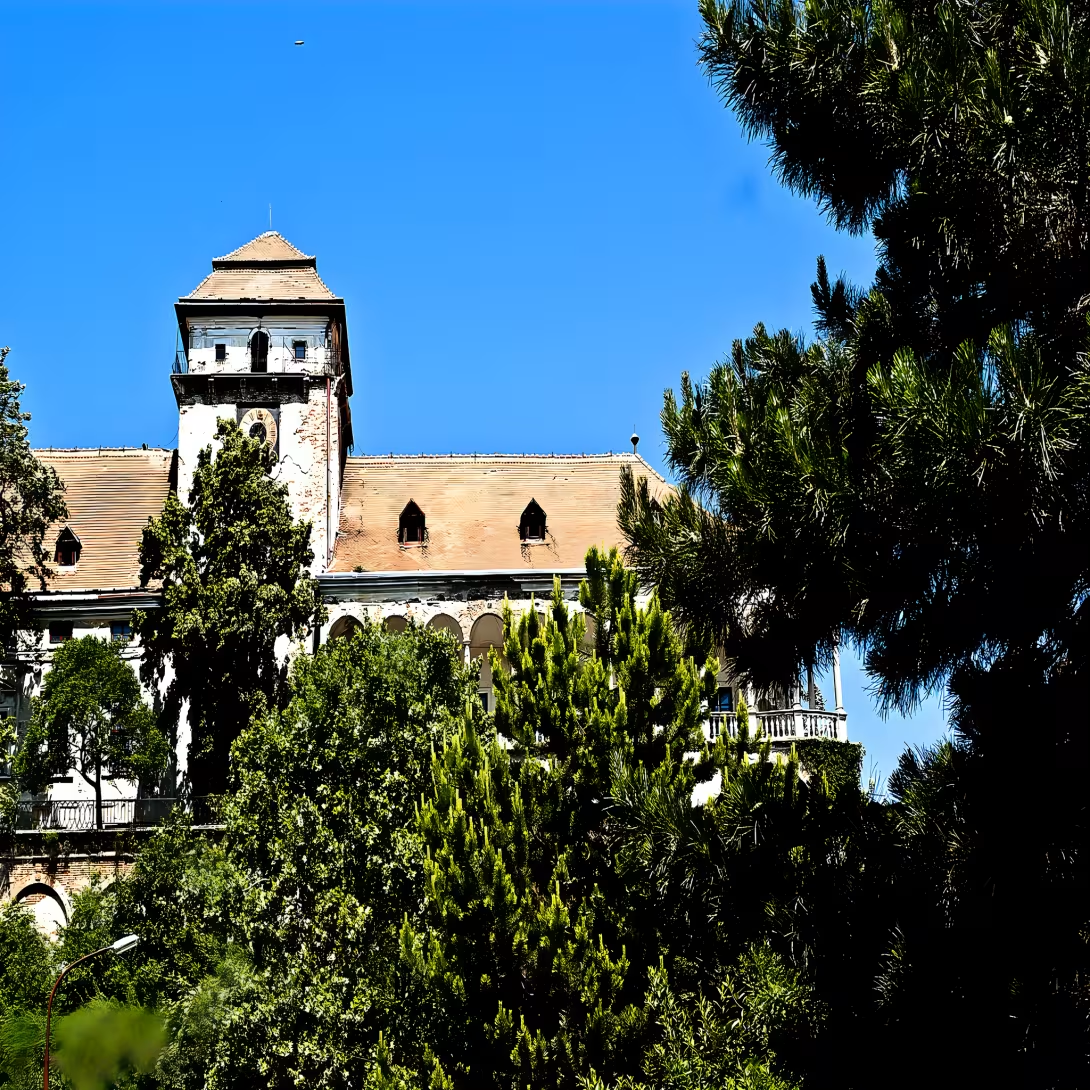
Boží muka v Jaroslavicích u kostela svatého Jiljí is a protected cultural monument located in the Znojmo district. This building is part of a historically valuable sacral area under lock and key in the village Jaroslavice.
The specific details of God's suffering are not known from available sources. However, this monument is part of the wider complex of St. Jilje Church, which is characterized by valuable building and sculpture elements. The whole sacral space is connected with a lock covered by a staircase, built in the style of a late Baroque.
Today the building is registered in the register of conservation and is located at the address of Zámecká. It is considered an important monument in the Znojmo district.
The location offers visitors a view of the historically valuable area where the elements of different periods intersect. For people interested in architecture and sacral monuments, this district is an interesting destination near the castle.
Points of interest
- The torment of God in Jaroslavice is a protected cultural monument.
- It is located in the district of Znojmo and is part of the historically valuable sacral area under the castle in the village Jaroslavice.
- The entire sacral space is connected to a lock covered by a staircase, built in the style of a late Baroque.
Guide
Show guide text
This text was created by artificial intelligence and has not been editorially reviewed. It may contain inaccuracies.
Welcome to Jaroslavice, a small village in the South Moravian Region, which offers visitors peace and a view of history. You are standing at the address of Castle, in the middle of a historically valuable area that dominates the slope under the local castle. Your eyes are now attracted to the attention of God's torment, a protected cultural monument that is located in the immediate vicinity of the church of St. Gilji. This monument is not only an isolated object, but part of the overall urban and spiritual space that has been created here for centuries. When you look at her, you see her as a quiet guardian of a place that connects the sacral life of the village to its noble roots. The atmosphere here is calm, almost thoughtful, and that is what your mood should be, while you listen to the story of this place.
Let's stop for a while and think about what you see in front of you. The torture of God is a typical example of folk architecture, which performed a specific function in Czech countries. It was not only a decorative building, but instead of prayer, celebrations and reminders of God's presence in the everyday life of people. In Jaroslavice, this monument was preserved as proof of how closely the faith was linked to the local environment. Although the exact date of the creation of this particular building is not clearly documented in the available sources and thus remains a mystery to researchers, its existence in this area is indicative of a long-term tradition. It was created at a time when such objects were becoming a common part of rural communities, often as a thank-you for grace, for protection from the plague or as an expression of religious sentiments of the local population.
Now pay attention to the general sense of this monument. Although we do not have detailed architectural plans or the names of the builders who created it, you can enjoy the aesthetics and harmony it represents. God's torments are usually built of stone or bricks, often with elements decorated with tiny ornaments, which gives the whole lightness and nobility. Look up and see the dimensions of the building. These objects were designed to be visible from a distance, to remind the pilgrims and locals that faith is constantly present. In Jaroslavice, torture is found on the premises of the church of St. Jilje, which creates a strong visual and symbolic relationship. The church and the torture together form unity that affects the overall shape of the slope under lock and key. This position is not random. The slope provides a natural stage that highlights the importance of sacral objects while protecting them from floods and other natural influences.
The historical context of Jaroslavic is closely linked to the existence of the local castle and noble families that lived here. The church of St. Jilji and the adjoining God's torment are witnessing changes that have been going through the village from the Middle Ages to the present day. Although specific persons associated with the construction or modification of the mukan are not mentioned in our background, it can be assumed that their creation and maintenance were supported by local nobility and clergy. At that time, it was common for gentlemen in the castle to finance or have restored sacral monuments in their manor to emphasise their piety and social responsibility. This cooperation between secular and spiritual power shaped the face of many Czech municipalities and Jaroslavice is no exception.
The interesting thing about this place is its location and connection to a wider area. The torment of God at the church of St. Gilya is not an isolated phenomenon, but part of a complex that includes a church, cemetery and castle. This concentration of historical values in one place creates a unique atmosphere that you will appreciate if you walk around the area. You can imagine how pilgrims, local citizens on their way to the church, or nobles coming out of the castle once went through here. Each had a different reason to visit, but they all encountered this silent symbol of faith. Today this monument is protected as a cultural monument, which ensures its preservation for future generations. Protecting such objects is important because it carries the memory of the community and its spiritual life.
Note the details that can be easily overlooked during the search. Even if we cannot specify the exact materials or ornaments because they are not listed in the base, focus on the overall impression. How does the building relate to the surrounding green? How does it reflect light? How does her appearance change during the day? These questions will help you better understand the aesthetic value of the monument. God's anguish is often built to be as harmonious as possible with nature as possible, to interfere with it as a natural part of the landscape. In Jaroslavice, this is especially seen in relation to the slope on which they are located. The slope provides dynamism and depth of view, while torture supplies a vertical accent that leads the view upwards, to the sky.
Another aspect worth mentioning is the role of these monuments in community life. In the past, God's torment was a place where festivities took place, where people gathered to pray together, or where important news was read. It was a sort of public area with spiritual emphasis. Today, when the lifestyle has changed, these places remain important symbols of the identity of the village. The visitors who come here feel connected to the past and the people who lived here before them. This connection is valuable, and that is why it is important that such monuments behave with respect and respect.
Finally, we would like to stress that God's torment in Jaroslavice is not only an architectural object, but also a cultural and spiritual symbol. Their presence on the premises of the church of St. Jilje and under lock and key creates a unique historical unit worth a tour. Although the exact date of origin and the names of the builders remain unknown, it does not take away their value and secrets. On the contrary, this unsub gives the place an atmosphere of mystery and curiosity. Let us ask you to enjoy a moment of silence and peace, to let the atmosphere of this place penetrate. Take a look around, walk around the grounds of the church and the castle, and be inspired by the history that has been pulsating here for centuries.
We thank you for your attention and hope that this audio guide has helped you better understand the meaning of God's mummies in Jaroslavice. This monument is one of the many jewels Jihomoravský kraj offers. If you have the opportunity, spend time with other historical monuments in the surroundings, which are equally interesting and challenging for attention. Your visit is important because this is how you help maintain the living memory of this place. When you leave, you will bring with you not only memories of a beautiful day, but also a deeper understanding of the history and culture of Czech rural communities.
We wish you a pleasant continuation of the journey and many other discoveries. No
Tips for visitors
The best time to visit God's torment in Jaroslavice is early spring or late autumn when vegetation is full of beauty and the area offers a peaceful atmosphere. This historical monument is suitable for those who want to know local architecture and enjoy the natural beauty of the surroundings.
Parking can be found near the church of St. Jilji, where God's torment is located. For those travelling by public transport, the place is available from the main routes to the village of Jaroslavice; verify the specific connection in advance in the search engine.
When you visit, wear a suitable suit because the climate can be variable. Don't forget the protective sunglasses and water, especially if you plan to walk around.
Photography here is great thanks to quiet environment and historical background. The best light offers early morning or afternoon hours when the sun is not directly above your head. Try out different angles and perspectives for interesting images.
It is possible to visit the historically valuable area of St. Jilji's Church, which is located in the same place as God's torture. This complex offers interesting architecture and suitable space for families with children, where they can enjoy quiet moments.
Businesses nearby
Do you run a restaurant, accommodation, shop, museum, rental, wellness or other visitor service near this monument? Show yourself directly to the people heading to it — this is how they will see you in the app and on the web:
Nearby
ITEX Show interactive overview of the surroundings - restaurants, accommodation, rentals and other places within a 15 km radius.
Data: OpenStreetMap contributors, 15 km radius.
‡ Historical monuments
- Saint Shebestián (3.4 km)
- StateJan Nepomuké (3.7 km)
- memorial Liberation Red Army (5.3 km)
- sv. Donate from Münstereifelu (5.3 km)
- sv Florian (5.3 km)
- Panna Maria (5.4 km)
- sv Jan apostol (5.4 km)
- memorial of the fallen from World War I (5.4 km)
Restaurant and catering
- Hostinec (2.6 km)
- Hrade (3.3 km)
- Heda (5.1 km)
- Pulkautaler (10.2 km)
- Schlosskeller Mailberg (10.5 km - 1)
- Meat & Eat Fleisch Öller (11.3 km - Thayapark 6)
- Restaurant at Mostu (12.0 km)
- Jet-Rest Niki Lauda (12.3 km)
Accommodation
- Táborářice Hrade (2.8 km)
- Tábor Krhovice (7.5 km)
- Penzion Deer farm Yachmeniztl (7.6 km)
- Schlosshotel Mailberg (10.5 km - 1)
- Guesthouse For three lip (10.5 km)
- Táboríštáště Hevlán (10.9 km)
- Hotel Zetocha (10.9 km)
- Weingut Rain (11.3 km)
› Rental and sports
- Hodonice (8.8 km)
- Relax centrum (9.3 km)
- Sportclub Laa (11.0 km)
- Mörth Sports (11.1 km - Thayapark 29)
- Tom's Radhaus (11.8 km - Nordbahnstraße 19c)
- Sportcentrum Shanov (12.2 km)
- Adidas (12.6 km)
- Regatta Great Outdoors (12.6 km)
© Tourism and nature
- Jaroslavic pond (0.5 km)
- Shop in mill (3.7 km)
- Cross-border Information Centre Hevlin (10.8 km)
- Weißweinsorten (11.3 km)
- Hanf als Droge (11.3 km)
- Hanf-Faser (11.3 km)
- Geschichte des Hanf (11.4 km)
- Zirbe (11.5 km)
Accommodation nearby
Themed route
Thematic cruise route from Jaroslavic
1. Church of St. Gilya and the Torment of God - * Type: * Historical monument, religious building - Why is it worth a visit: The Church of St. Gilji is an important Baroque building with a rich history. The torture of God here, unique in its architecture and location, represents an important religious symbol and is an ideal starting point for exploring the surrounding monuments.
2. Municipal Office Jaroslavic - * Type: * Historical city centre - Why is it worth a visit: The Municipal Office is located in the historical heart of Jaroslavic, where an architecturally interesting house from the 18th century can be viewed. This place offers insight into the local life and history of the village.
3. Old Cemetery - * Type: * Historical landmark - Why is it worth visiting: Old cemeteries are a key element of the cultural heritage of Jaroslavic. Their history and location next to the church of St. Gilji bring a deeper understanding of local religious and social life.
4. Church of Saint Anne - * Type: * Religious construction - Why is it worth a visit: This church, though smaller than the main church of St. Gilji, is an important place to understand Baroque architecture in the area. Its location and history add another layer to the understanding of religious life in Jaroslavice.
5. The Chapel of St. Gilji - * Type: * Religious construction - Why is it worth a visit: the chapel of St. Gilji, close to the main church, is a place of peace and reflection. Its history and architecture bring further knowledge of local spiritual life and its development.
This route offers a comprehensive view of the cultural and religious monuments of Jaroslavic, each point adding a new layer of understanding of the history and heritage of this village.
Seasonal recommendations
Spring in Jaroslavice lights up the ancient stones of God's torments with a fine sunlight, which is reflected from blooming trees and green meadows around the church of St. Gilya. In this period nature wakes up, birds sing and the smell of fresh flowers complements the quiet atmosphere of the place. We recommend to come early in the morning when the crowds are still small, and dress up in a light jacket or sweaters because temperatures can be variable. Comfortable shoes on uneven terrain and umbrella or raincoat for spring showers are suitable.
Summer brings long shadows and warm light to God's torment, highlighting detailed carvings and stone reliefs. The surrounding fields and vineyards are in full bloom, creating a picturesque background for photography. In the main summer season visitors gather especially in the afternoon, so it is best to arrive right after opening to avoid crowds and sunlight. We recommend a sunflower, water and light, breathable clothes, but also solid shoes, because stone paths can be hot and slippery in the heat.
Autumn covers God's torment in golden shades of fallen leaves and colder light, which underlines the mystical atmosphere of the place. The air is fresh and the smell of mushrooms and autumn land brings a sense of peace. There are fewer visitors in this period, so you can explore the surroundings in peace. It is appropriate to dress in layered clothes - sweater under jacket, scarf and tight shoes, because autumn rains are common. The ideal time is the morning when the sun still lights up reliefs and the temperature is pleasant.
Winter will turn God's torment into a silent, snowy jewel; snow covers the stones and surrounding forests, creating dramatic contrasts and a calm, almost meditation atmosphere. The opening hours are shortened in winter, so it is necessary to check the current times before visiting. We recommend warm clothes - winter coat, hat, gloves and waterproof shoes because the roads can be slippery. Come in the late afternoon when the sun's rays reflect off the snow and create unique light effects, and avoid any crowds that concentrate around noon.
Visualizations and artistic views


The visualisations are generated by artificial intelligence and serve as inspiration.
Photos from the area
Real photos taken near the monument


Zdroj a licence jsou uvedeny u každého snímku.
Tips from visitors
No tips yet. Be the first!
Log in and add your tip.
Location on the map

Příběhy a pověsti
Legendy, pověsti a příběhy spjaté s touto památkou
Fotografie návštěvníků
Zatím žádné fotografie. Buďte první, kdo přidá fotografii z návštěvy!
Přihlaste se a přidejte svou fotografii nebo hodnoťte.
Za ověřenou návštěvu v aplikaci získáte víc bodů — poznáme podle GPS, že jste na místě.
Reviews and comments