



Bratranců Veverkových 586 House
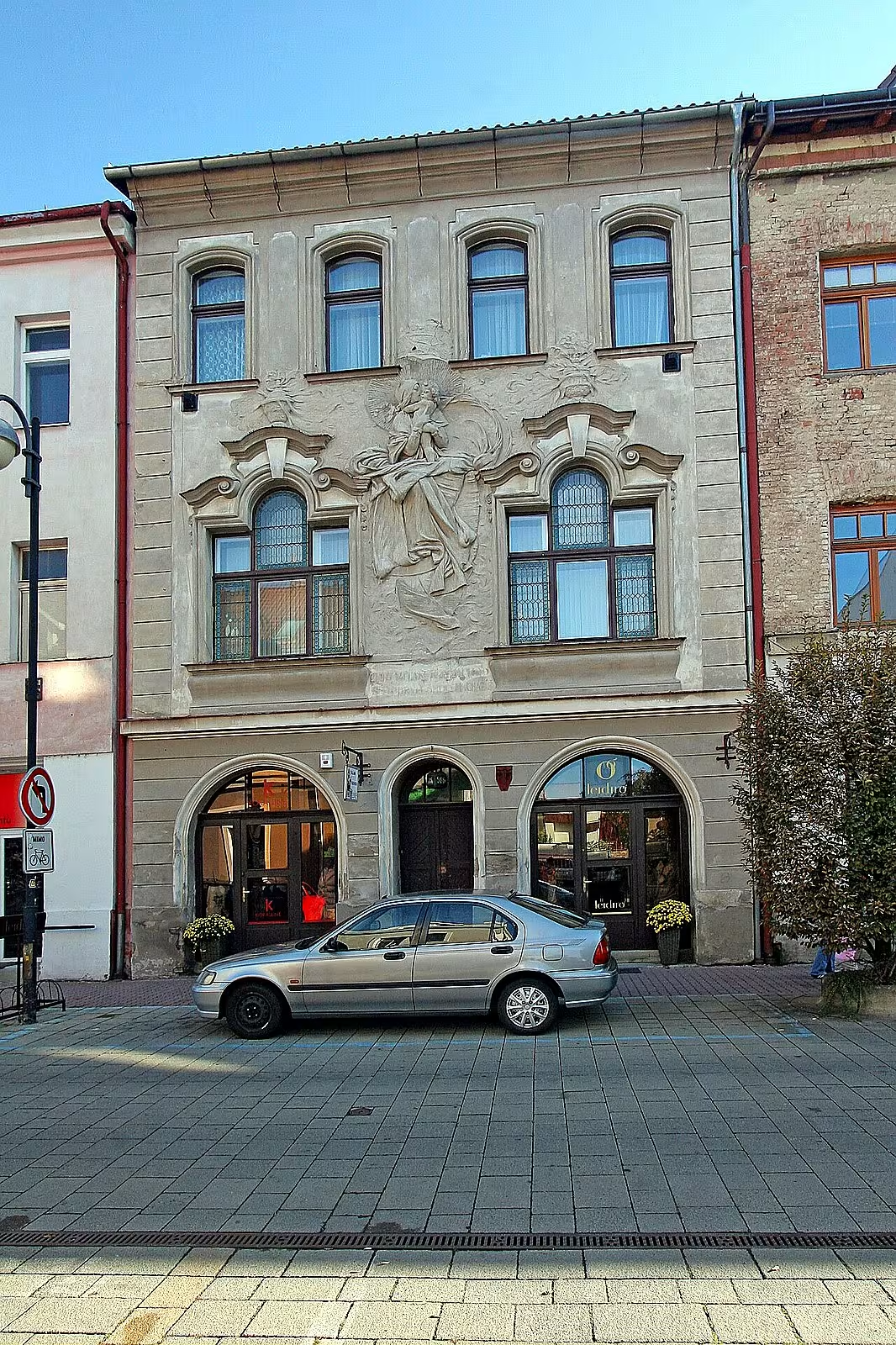
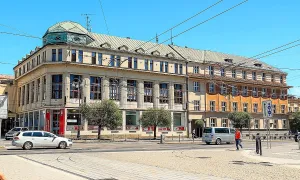
The house in the street Bratranců Veverkových 586 in the village Zelené Předměstí in the district of Pardubice is a cultural monument of the Czech Republic. It is a very valuable implementation of Art Nouveau city house, which is excellent especially with quality decoration of the facade.
The building is located in the Pardubice Region and is registered in the register of cultural monuments under the number 47801 / 6-4866. There are only a limited number of reports about the details of its creation and the historical context.
The decoration of the facade is a key element of architecture and art processing. The sculptor Vilém Amort worked on the decoration of the facade, which influenced the appearance of several pardubice houses. It is this artistic trail that gives the construction a specific value within the Art Nouveau style.
In the available records, there is no detailed information about ownership of the house or its fates over the years. However, the monument is currently protected, which confirms its importance for the urban and architectural form of the site.
Today, the building serves as a reminder of the high-quality urban budownism from the Art Nouveau period. For visitors and interested in architecture, a concrete example of the work of Wilhelm Amorta in the Pardubice region.
The construction proves a high level of craft processing of the details of the then city houses. It is therefore appropriate to visit it during the tour of Art Nouveau elements in the municipality of Zelené Předměstí.
Historical milestones
- around 1890
- The creation of a Art Nouveau city house in Green Suburb.
- around 1900
- The work of sculptor Wilhelm Amorto on the facade of the house.
Points of interest
- It is a valuable realization of Art Nouveau city house with quality decoration facade. - The sculptor Vilém Amort worked on the decoration of the facade. - The construction is registered in the register of cultural monuments under the number 47801 / 6-4866. - The object serves as a demonstration of the work of Wilhelm Amorto in the Pardubice Region. - The house proves a high level of craft processing of the details of the then city houses.
Guide
Show guide text
This text was created by artificial intelligence and has not been editorially reviewed. It may contain inaccuracies.
Welcome to the village Zelené Předměstí where time stopped and where you can feel the spirit of the past in peace. You're standing in front of the house with the number five hundred and eighty-six of the Cousin Squirrels. The first impression of this place is the impression of stability and urban order. In front of you is a building that is now recognised as a cultural monument of the Czech Republic. It is a typical representative of the city house, which, by its presence, defines the character of this part of the Pardubice region. When you look at it now, you may only see a quiet home, but you're actually looking at a piece of history that has survived for decades and has become part of the national heritage.
Now let's think about how this house came into being and in what context it stood in at the time of its greatest glory. Although the exact date of the construction and the names of the architects who designed the project remain in oblivion, the very fact that the construction is protected as a monument suggests its value. When Zelené Předměstí developed, these urban houses were the cornerstone of the community. Imagine how people used to flow through here, how the voices of neighbors sounded, and how the face of the surrounding countryside was changing, while this house lasted. He is a silent witness to history, who may not tell us exactly when his cornerstone was laid, but by his very existence he tells the story of the urbanisation and development of the region.
Now pay attention to the architecture itself. Since we don't know the specific stylistic details of the construction times, I suggest you just observe the overall composition of the building. Look at the facade and see how the house fits into the rhythm of the street. Notice how the space around the house naturally complements with the surrounding area. Follow the wall lines and the way the building divides space. It is in this simplicity and functionality of the city house that its strength lies. It is an architecture that was not intended to impress its pomp, but to serve its inhabitants while yawning with the surrounding buildings. Try to imagine what the windows and doors looked like a century ago and how they probably changed with the upcoming trends and needs of time.
When we talk about the people who were connected to this place, we cannot ignore one important person. The name of William Amorta is linked to this house. Even though this name may not be close to any of us today, in the context of the history of this house, it represents a connection to a particular human destiny. Imagine William Amort living in this house or working with him somehow. What were his thoughts when he walked out this door into the street this morning? What kind of conversations were held in these walls? It is because of these names that the monument ceases to be just a pile of bricks and mortar and becomes a place with a soul. Personalities like Vilém Amort breathe life into buildings and remind us that history is not just about data in books, but about people who actually lived here, loved and worked.
You may now wonder if there's a deeper mystery in this house. And that's where the greatest fascination lies. The greatest secret of this house is his silence. The fact that we don't know the names of his creators or the exact time of his creation creates empty spaces that we can fill our minds with our own imagination. It is a fascinating paradox that a building that is officially recognized as a cultural monument of the state remains anonymous in some ways. Who was the master who invented her layout? What plans were on the table when the base pit was digging? This mystery from the house makes a sort of historical puzzle that no one has to solve today, but it can just be perceived and respected.
Stop for a moment and feel the atmosphere that rules here. Zelené Předměstí has its specific energy and this house is an integral part of it. It is a reminder that even an ordinary city house can be of great importance if it carries the memory of generations. It's proof that we don't have to have monumental cathedrals or royal palaces to feel a connection to the past. All you have to do is stand in front of the house that survived the trials of time and realize how many stories he's got in him.
Now that you've seen this fascinating piece of Pardubice region, I suggest you continue to explore the surrounding area. Zelené Předměstí offers many other places that can impress you with their quiet beauty and hidden stories. Let your curiosity guide you and look for details that others overlook. You may encounter other traces of the past waiting to be rediscovered.
Thank you for stopping by the house five hundred and eighty-six at the cousin squirrel street. I hope this short trip to history has helped you feel the value of this place more. I wish you a pleasant further journey and many new discoveries while you are wandering around our beautiful landscapes. Goodbye.
Tips for visitors
The best time to visit is late afternoon when the sun hits the facade of the city house and highlights the details of its architecture. Transport to the village Zelené Předměstí is possible by car and public connections; Check the specific routes and timetables in the maps.
To visit we recommend to take opposites and comfortable shoes to walk around. Since it is a residential building, we recommend to maintain calm and respect the privacy of the people.
For the best photos we recommend you search for an angle that captures the whole width of the house in natural daylight. The most interesting pictures come in clear weather, when the colours of the facade are the most distinctive.
Families with children can use a visit to explain what older city houses in Pardubice looked like. There are no other specific targets in the vicinity of the monument, so we recommend focusing on the architecture of the building itself.
Frequently asked questions
Can the monument be visited?
This is a residential or farm building, not a museum with opening hours. Please view it from public space and respect the owners' privacy. We have no information about access to the interior.
Where is the monument?
Location: Bratranců Veverkových 586, Zelené Předměstí, Pardubice, Pardubický kraj. The map on this page shows the exact spot.
Why is the monument protected?
It is listed in the Central List of Cultural Monuments of the Czech Republic as a cultural monument (register no. 47801/6-4866).
Businesses nearby
Do you run a restaurant, accommodation, shop, museum, rental, wellness or other visitor service near this monument? Show yourself directly to the people heading to it — this is how they will see you in the app and on the web:
Events nearby
Zdroj akcí: otevřená data měst a obcí ČR (Národní katalog otevřených dat) a kalendář akcí Národního památkového ústavu.
Nearby
➜ Zobrazit interaktivní přehled okolí – restaurace, ubytování, půjčovny a další místa v okruhu 15 km.
Data: OpenStreetMap contributors, okruh 15 km.
🏰 Historické památky
- Pomník obětem 1. světové války (0.6 km)
- Svatý Jan Nepomucký (0.9 km)
- Václav Bubeník (0.9 km)
- Pomník Osvobození (1.3 km)
- Muzeum Historie železniční dopravy a městské hromadné dopravy (2.4 km – Nádražní 53)
- Pomník obětem 2. sv. války (2.6 km)
- Památník obětem 1. a 2. sv války (2.8 km)
- Památník Bratrancú Veverkových (5.8 km)
🍽️ Restaurace a stravování
- U Čížků (0.1 km – 17. listopadu 2723)
- Birdie (0.2 km – Hlaváčova 392)
- McDonald's (0.2 km – třída Míru 420)
- U Taxisu (0.3 km – Štefánikova 672)
- Tommy's restaurant dine&wine (0.3 km – Malá 210)
- Staré časy (0.4 km – Havlíčkova 1080)
- St. Patrick Irish Pub (0.5 km – Anenská 2641)
- Veselka (0.5 km – Hlaváčova 230)
🏨 Ubytování
- Hotel Atrium (0.1 km – Smilova)
- Pension Podkova (0.1 km – Smilova 335)
- Birdie (0.3 km – Hlaváčova 392)
- Arnošt (0.4 km)
- Hotel Euro (0.6 km – Jiráskova 2781)
- Zlatá štika (1.0 km)
- Hotel Kristl (1.2 km)
- Hotelový Dům Pardubice (1.6 km – Bělehradská 458)
🚲 Půjčovny a sport
- Bodyflex (0.5 km – Jiřího z Poděbrad 2593)
- Cyklo Bike (0.7 km)
- Sportcentrum I-R CLUB (0.8 km – K Vinici 1256)
- Přístaviště − Loď Arnošt z Pardubic (0.9 km)
- OK GYM Dukla (1.4 km – náměstí Dukelských hrdinů 2551)
- Kolda R+P (1.6 km)
- Sportisimo (2.5 km)
- Yoga Marga (2.7 km)
🥾 Turistika a příroda
- Turistické informační centrum Pardubice (0.4 km – třída Míru 60)
- Cyklotrasy podél Opatovického kanálu (7.1 km)
- Opočinek žst (7.4 km)
- Masarykovo náměstí (8.1 km)
- Kokešov (8.3 km)
- Čivická studánka (8.4 km)
- Bílý kopec (9.7 km)
- Lepějovice (10.4 km)
Accommodation nearby
Themed route
Walk in Green Suburb
1. Bratranců Veverkových 586 (others) - Main objective. A visit to a unique building within the village. 2. Landmark area - Walk through the immediate surroundings of the building and its courtyard for better perception of the whole. 3. Internal spaces - Inspection of exhibitions and details of the building itself.
Seasonal recommendations
In the spring, the surroundings of the building awaken to life and the young greenery in the Pardubice Region create fresh sets for the view of the facade. We recommend a visit in the morning when light is fine and color natural. Due to the variable weather, it is advisable to choose layered clothes and moisture resistant shoes.
The summer season brings sharp sun and rich colors that highlight the details of the building. The best time for arrival is the time shortly before sunset, when the building gets a golden touch and the heat retreats. It is necessary to have light, breathable substances on yourself and not forget to protect from direct sunlight.
Autumn in Green The suburb comes with coloured leaves and melancholy atmosphere, which approaches the historical appearance of the house very naturally. For the best photos we recommend to use a foggy wound that gives the place a mystery. It's practical to carry a waterproof coat and a warm scarf.
Winter moons turn the surroundings into a quiet area where snow can highlight the outlines of the building and calm the street. In Advent time the place is cozy, especially during evening lighting of the surrounding houses. Due to the frost and snow, it is necessary to wear quality warm shoes and to wear a warm sweater and a hat.
Visualizations and artistic views


The visualisations are generated by artificial intelligence and serve as inspiration.
Photos from the area
Real photos taken near the monument

Zdroj a licence jsou uvedeny u každého snímku.
Tips from visitors
No tips yet. Be the first!
Log in and add your tip.
Sources and literature
Photos: Petr1888 / CC BY-SA 3.0 — Wikimedia Commons. The author and licence also appear when you hover over the image.
Location on the map
More monuments – Zelené Předměstí
Show all in the municipality

Příběhy a pověsti
Legendy, pověsti a příběhy spjaté s touto památkou

Fotografie návštěvníků
Zatím žádné fotografie. Buďte první, kdo přidá fotografii z návštěvy!
Log in a přidejte svou fotografii nebo hodnoťte.
Za ověřenou návštěvu v aplikaci získáte víc bodů — poznáme podle GPS, že jste na místě.
Reviews and comments