






Býčí schodiště Other
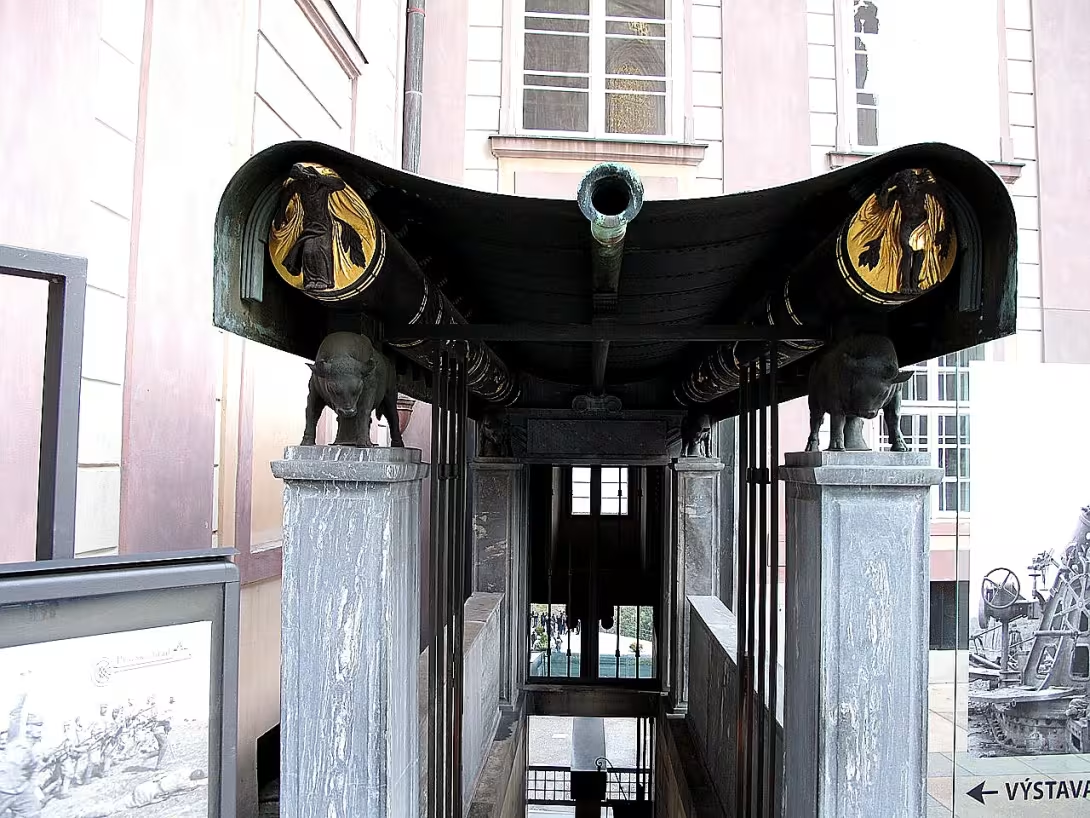
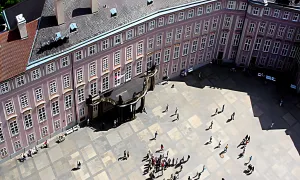
Býčí schodiště is an impressive architectural function connecting The third courtyard of Prague Castle with garden Na Valech. The architect Josip Plečnik designed it in 1927 and the construction took place between 1929 and 1931. This staircase is an example of the Secessionist style. Its design includes four ion columns of Lipovsky marble, with bronze bulls that support a gilded embossing beam covered with bronze carpet. The structure is named after its mythological bison motive, which reflects the use of plaice materials and its commitment to national heritage.
The staircase was designed at a time when Czechoslovakia experienced significant cultural development after its independence in 1918. This era emphasized the integration of local heritage into modern architecture, which is evident in the work of Plček on Býčí schodiště. The proposal reflects G. Semper's textile theory in architecture and combines mythological topics with innovative materials.
Architecturally Býčí schodiště underwent unique development under the Plennik vision. The initial single-arcade part passes through the Romanesque Sobeloslav wall, while the second double-arcade part offers protruding platforms reminiscent of viewing balconies. The local Czech materials were more widely used: the grey sandstone Mrákotín for stairs and stripes and black diorite columns of Prachatice. The walls are lined with plaster, the material traditionally used only as building material but used here for its aesthetic properties.
Plennik's choice of use of local Czech materials was important in supporting regional quarry and revitalisation of the stone industry in Czechoslovakia. This approach highlighted the natural beauty of Czech resources and contributed to national pride by integrating these elements into a prominent architectural project in Prague Castle.
Today Býčí schodiště is an accessible historical monument within Prague Castle and offers visitors a view of architecture and design in the early 20th century. Its innovative use of materials and integration of local heritage makes it remarkable for interested people interested in Czech history and architectural evolution. Visitors are advised to explore this unique staircase, which serves as evidence of Plennik's vision and cultural importance of his time.
Then and now
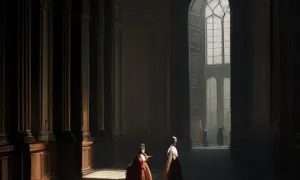
Drag the slider to compare how the landmark may have looked when it was built with the view today.
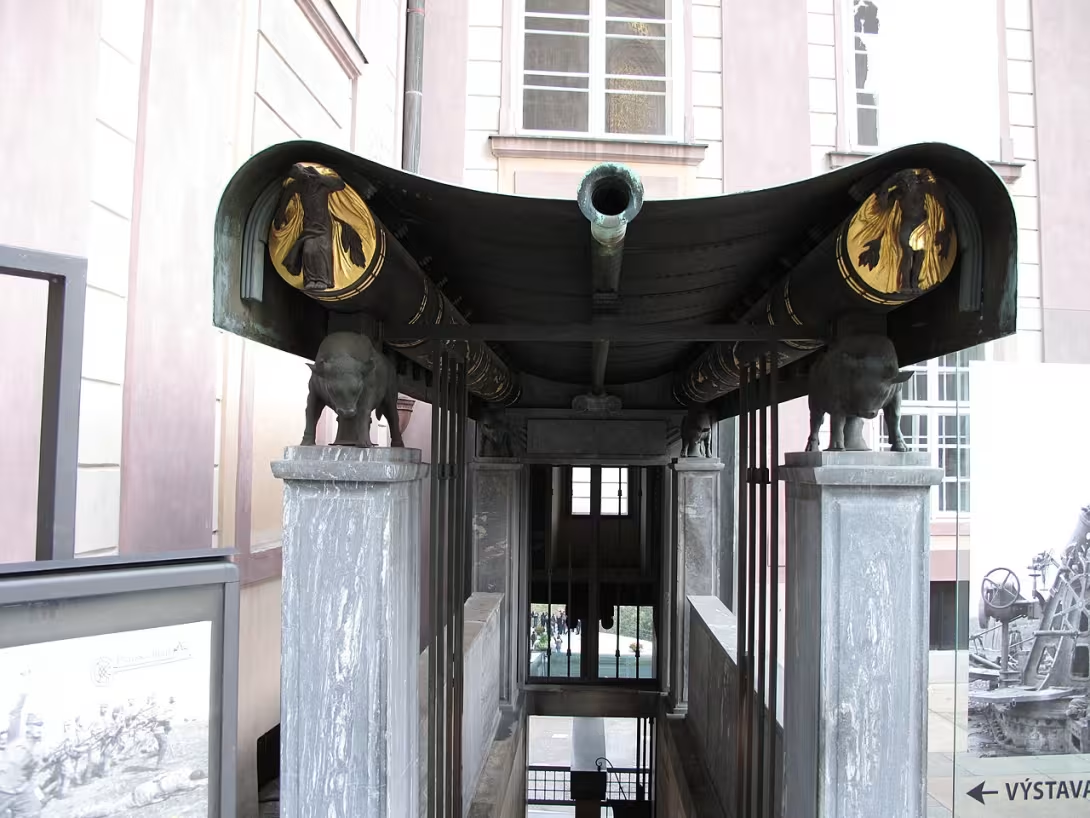
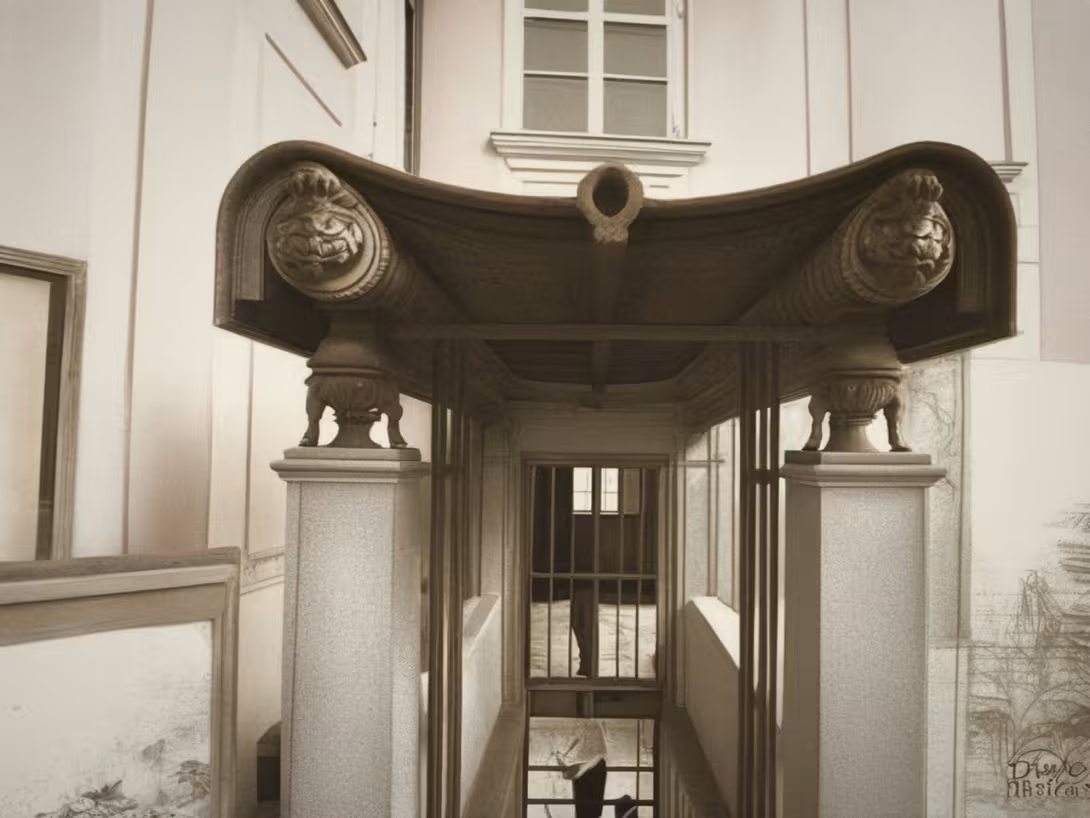
The historical appearance on the left is an AI-generated visualisation and serves as inspiration only.
Historical milestones
- 1918
- Czechoslovakia is gaining independence.
- 1927
- Josip Plečnik proposes Býčí schodiště.
- 1929
- Construction Býčí schodiště begins.
- 1931
- Construction of Býčí schodiště ensembles.
Architectural development
Býčí schodiště underwent a unique architectural development under Plennik's design. The initial single-arcade part passes through the Romanesque Sobeloslav wall, while the second double-arcade part offers protruding platforms reminiscent of viewing balconies. Local materials were used as grey sandstone for stairs and stripes and black diorite columns of Prachatice, highlighting Czech sources. The construction of the staircase also contains plaster on the walls.
Historical events
1927: Josip Plečnik designed by Býčí schodiště.
1929-1931: The construction of the staircase was completed.
Points of interest
- Bronze bulls on top of columns Býčí schodiště are not just decorative; symbolize strength and protection, which reflects Plennik's integration of mythological elements into his architectural designs.
- Býčí schodiště was a pioneering project during its construction between 1929 and 1931, which introduced innovative use of local materials in architecture and set a precedent for future buildings in Czechoslovakia.
Guide
This guide is narrated by a synthetic voice generated by artificial intelligence.
Show guide text
This text was created by artificial intelligence and has not been editorially reviewed. It may contain inaccuracies.
Welcome to the historic site of Býčí schodiště, a remarkable architectural miracle, which is hidden in the third courtyard of Prague Castle and leads elegantly to the garden of Na Valech. As you stand here today, take a moment to absorb the magnificence before you - the testimony of both history and art.
The story of Býčí schodiště begins with Czechoslovakia gaining independence in 1918, a key moment that built the stage to create this iconic structure. Designed by the renowned architect Josip Plečnik in 1927, the construction began in 1929 and ended three years later in 1931. This staircase is not just a functional element; embodies a Secesionist style that shows Plejnik's unique vision.
As you look at Býčí schodiště, notice its remarkable structural elements. The staircase is equipped with four ion columns made of excellent Lipovský marble - a material that provides elegance and durability of the building. Above these columns stands bronze bulls, each of which is supported by gilded relief decorated with bronze carpet. These details are not merely decorative; symbolize strength and protection, which reflects Plennik's integration of mythological elements into his architectural designs.
Although there may not be widely known historical figures directly associated with this place, the presence of Plečnik itself grows in its creation. His innovative approach in the construction period from 1929 to 1931 made Býčí schodiště a pioneering project that continues to impress visitors and historians.
Now let's dive into an interesting aspect of this staircase - bronze bulls. These characters are more than ornamental; carry a symbolic weight representing strength and guardianship. This integration of mythological motives is a characteristic of Plečnik's work and invites you to think about the deeper meanings of these artistic possibilities.
At the end of our journey here in Býčí schodiště I invite you to explore Prague Castle and its many wonders further. Every corner has stories waiting to be discovered, as well as this staircase, which smoothly blends history with art. Thank you for joining me and let your curiosity lead you to even more fascinating discoveries in the heart of Prague.
Businesses nearby
Events nearby

Zdroj akcí: otevřená data měst a obcí ČR (Národní katalog otevřených dat) a kalendář akcí Národního památkového ústavu.
Nearby
PHARMAShow interactive okolí - Restaurant, accommodation, numerous and other city in the district 15 km.
Data: OpenStreetMap contributors, district 15 km.
Historical monuments
- Kolovrat Palace in Waldstein [v okolí] (0.6 km - Waldstein 150 / 4)
- Jaroslav Vrchlický (0.7 km)
- Clam-Gallasus thumb in Praze [v okolí] (1.3 km - Husova 156 / 21)
- Dem U Kohouta [v okolí] (1.3 km)
- Hlavkova railway [v okolí] (2.0 km - Gorazdova 1994 / 9)
- Trolleybus Transport Memorial on Hanspaulce (2.8 km)
- Gorlice [v okolí] (3,1 km)
- Brick gate [v okolí] (3,1 km - In strength 46 / 1)
ANNEX
- McDonald's (1.9 km - Vodickova 736 / 15)
- Restaurant's smokelab (2.0 km - Lidická 2)
- Pizzeria U Penzav (2.0 km - Square 14 October 1)
- LegendA (2.8 km)
- Yi Xiang Ge (6.3 km)
- Švejk restaurant U Brážek (6.5 km - U Svovarna 18)
- Pizzeria Cerreto (6.5 km)
- Pizzeria Giovanni (6.5 km - Gunnery)
ANNEX
- The Mozart Prague (1.1 km - Karolina Svěé 208 / 34)
- Old Town Jewel Apartments (1.3 km - Elishka Krasnomountain 10 / 2)
- Old Prague Hotel (1,5 km - shell 421 / 5)
- Hotel AXA (2.5 km - Na Poříčí 40)
- EA Hotel Tosca (3.2 km - Blancka 718 / 10)
- Theatrino (3.7 km - Bořivova 1216 / 53)
- Plaza Prague Hotel (4.0 km)
- Hotel Olšanka (4.1 km)
Handlebars and sports
- Floral expert (0.7 km)
- U Tyršexz3ZX (0.9 km - Jaselská 464 / 38)
- JUN (2.2 km - Haškova 629 / 7)
- Kieser Training (2.2 km)
- Velox Sport (2.4 km)
- Cycloservice Richard Eger (2.6 km)
- Centre of free space Botič (2.7 km)
- Bike Gallery (2.7 km - Kladenská 19)
Garantica Tourism and nature
- Prague Castle (0.1 km)
- Masaryk prospect (0.5 km)
- Petrinka (0.8 km)
- Information and regulatory centre (1,2 km - Maiselova 38 / 15)
- Vyšehrad (3.1 km)
- Gabrielka (4.2 km)
- ÚAMK, a.s. (6.0 km - On the Union 1837 / 9)
- Šesták's well (6.0 km)
Accommodation nearby
Trips and activities nearby
Guided tours, tickets and activities nearby from GetYourGuide
Affiliate link: if you buy from the partner, we may receive a commission. The price for you does not change.
Search tours and activities →Themed route
Thematic walking tour: Bull Stairs and Surrices
1. Bull Stairs * Type: * Historical memorial * Why Visit: * Start your journey to iconic Bull Stairs, a remarkable example of Gothic architecture in Prague, known for its unique spiral staircase, which leads to St. James's Church in the square. This architectural miracle offers not only a stunning view, but also a view of the medieval history of Prague.
2. Church of St. James in the Square * Type: * Historic site / Church * Why Visit: * After the rise of Beèí Stairwell, explore the church of St. James, in which there is an impressive collection of Baroque art and architecture. The church is famous for its decorative interior and historical importance, which provides a view of Prague's religious heritage.
3. Old Town Square (Old Town Square) * Type: * Historical Square * Why Visit: * A short walk from St. James's Church leads to Old Town Square, one of Prague's most famous and lively squares. This area is rich in history, with monuments such as astronomical clock and Old Town Hall. It is an ideal place for an experience of the lively atmosphere of Prague.
4. Tyne Church (Church of the Virgin Mary before Tyne) * Type: * Historic site / Church * Why Visit: * Tynese church is located in Old Town Square and is an excellent example of Gothic architecture with its two turrets that dominate the horizon. Its complex facade and historical importance make it a compulsory view of anyone interested in the architectural evolution of Prague.
5. Kinsky Palace (Kinsky Palace) * Type: * Historical building * Why Visit: * Close your tour at the Kinsky Palace, an elegant Baroque building which now houses the Museum of Czech Music. The palace offers a quiet environment to reflect on Prague's musical history and enjoy its beautiful interior.
This walking tour provides a comprehensive survey of Gothic and Baroque architecture, historical churches and living squares in the heart of Prague.
Seasonal recommendations
Spring: Býčí schodiště offers a unique atmosphere in the spring business where the green dose is distributed and illuminated every foot step. Flowers count the amount around the monument to be alive and color. This time of year is ideal for travelers seeking mild weather without extra heat or studio winter. A new quantity is supplied for production such as sweaters and short gloves, the abyss of its own use for landscape production. JARO IS LESS INTENDED FOR FAMILITIES IN COMPARISON WITH AIRPORT CIRCUMSTANCES THAT ARE CONTAINED BY LIKELY CATCHES AND COMPLETELY ACCEPTABILITY TO VERIFICATION OF TOTOTOGRAPHES OTHER THAN THE OTHER RUSSIAN ELEMENTS.
Summer: Summer is a slight change for Býčí schodiště, when the sun sings every zero and a clear change into the historical process. A wet summer can be a heavy bag due to warm temperatures, so it is important to prepare for hot and potential large crowd tourists. The invention should be new, which would be a walk early in the morning or late in the proceedings, so that they can choose their own services and expel themselves with superior rights. It is supplied to wear Light Clothes, Sunshine Glasses and drinking water supply, the abyss Growth hydrated during their own proms.
Autumn: Býčí schodiště offers either a calm atmosphere in the autumn obituary, when the leaves of the trees are in gold and red colors. This time of year is ideal for those that are lower than normal costs without special heat or study costs. It is recommended that there is no need to carry out and perhaps an umbrella, since autumn can transfer appropriate guarantees. This time of year is usually less intrusive not in the summer, with a locked resting area of the reading and better adjacent photographs without disturbing contracts. Beautiful conditional decision regarding the historical state of the project, which is intended for use.
Winter: The winter value of the White Training Centre is called a one-way experience with a lubricant carriage and a possible progressive dream, an added magical magical magical device with a historic advantage. It is possible that this Decision will have an effect on the adoption of measures which should be taken in accordance with Article 4 (1) of Regulation (EU) No 1307 / 2013. They should wear a warm round, including a fur coat or blanket and high-quality feet, to keep the heat of your lap. While winter is usually less demanding on the crowd, it is important to realize the potential hours associated with cold and short opening hours. The remaining quantity to be delivered to the historical existing installation for use.
Visualizations and artistic views


The visualisations are generated by artificial intelligence and serve as inspiration.
Photos from the area
Real photos taken near the monument

Zdroj a licence jsou uvedeny u každého snímku.
Tips from visitors
No tips yet. Be the first!
Log in and add your tip.
Sources and literature
Fotografie: Juandev / CC BY-SA 3.0 — Wikimedia Commons. The author and licence also appear when you hover over the image.
Faktickým podkladem tohoto textu byl článek na Wikipedii, jehož autory jsou přispěvatelé Wikipedie. Článek je dostupný pod licencí CC BY-SA 4.0.
Location on the map

Příběhy a pověsti
Legendy, pověsti a příběhy spjaté s touto památkou
Fotografie návštěvníků
Zatím žádné fotografie. Buďte první, kdo přidá fotografii z návštěvy!
Přihlaste se a přidejte svou fotografii nebo hodnoťte.
Za ověřenou návštěvu v aplikaci získáte víc bodů — poznáme podle GPS, že jste na místě.
Reviews and comments