






Bývalá fara (Býčkovice) Parish house
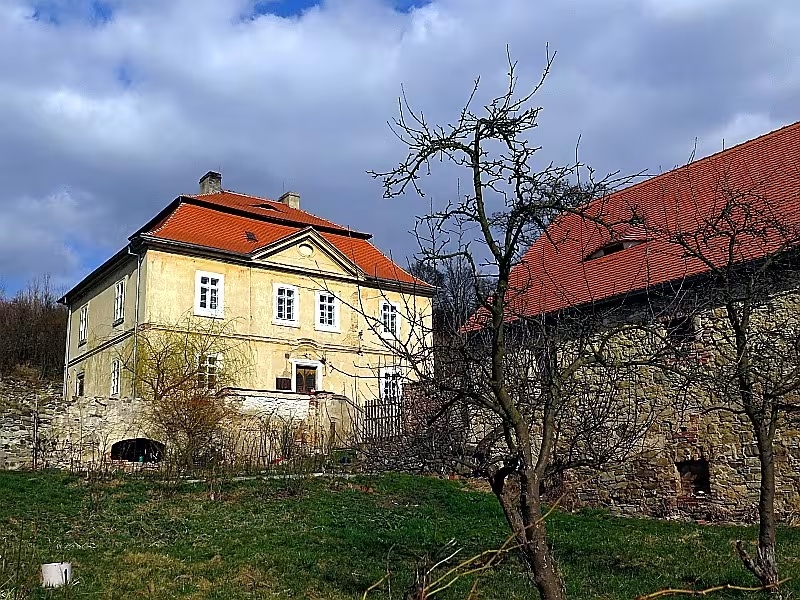
The former rectory in Běčkovice is a Baroque building located on the northeast edge of the village Býčkovice in the district of Litoměřice. It was built in 1741 and since 1964 it has been protected as a cultural monument. It is likely to be located in the places of the former commenda and the demolished church of St. Havel.
The history of the rectory dates back to 1741, when it was founded and mostly built. The wars on Austrian heritage brought difficulties which led to a delay in moving the priest into the building until 1749. According to the 1768 parish chronicle, the area consisted of three saints, offices, two chambers, basins, granaries, three livestock stalls, barns and beer and wine cellars. During the eighteenth and nineteenth centuries, small repairs and expansion of economic buildings took place, but also financial difficulties associated with the repayment of new organs. A significant change was the roofing of the bags at the direction and cost of the superintendent instead of the old shingles. Also in the first half of the twentieth century there were building modifications, but in the second half the building was used for housing regardless of its historical value. In the 1990s, successive repairs began after the conversion of the premises from the Church's property into private hands.
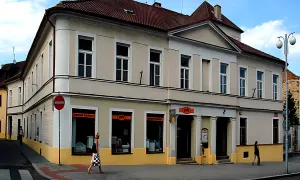
The architecture of the rectory is characteristic of the Baroque style. The one-story building has a rectangular floor plan and a mansard roof. It is entered on a two-arm stone staircase in front of the south facade, which highlights a flat risalite with a triangular shield. The entrance portal is decorated with oval cartouche. The ground floor rooms are encapsulated with vaulted vaults with lunettes, while the rooms on the first floor have flat ceilings. A Baroque gate with diagonal pilasters and a niche with the statue of the guardian angel leads to the parish court.
The building was the property of the Church until the 1990s, then it went into private hands. In 1741 the rectory was founded and built, in 1749 the vicar could move in, and in 1964 it was declared a cultural monument.
The parish area once contained various economic buildings, a bakery and a fish pool. The baroque gate leading to the parish court is decorated with the statue of the guardian angel. Probably standing in the place of the medieval commendation and St. Havel's Church.
Today, the former rectory in Bulkovice is protected as a cultural monument, making it an interesting destination for historically curious tourists. Its rich history and architectural elements represent a valuable contribution to understanding the Baroque period in the region. Visiting this memory is not only to explore her past, but also to appreciate the efforts to preserve and restore her.
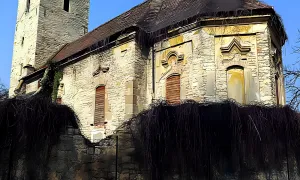
Then and now
Drag the slider to compare how the landmark may have looked when it was built with the view today.
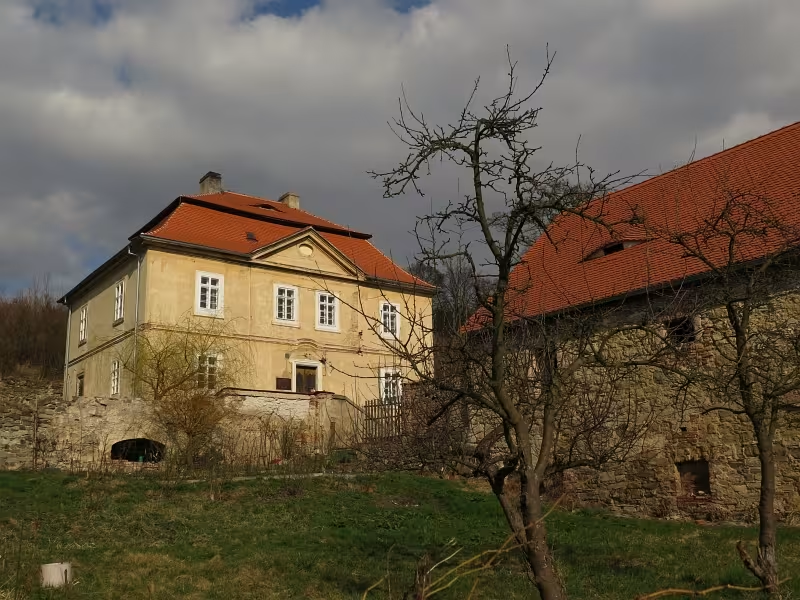
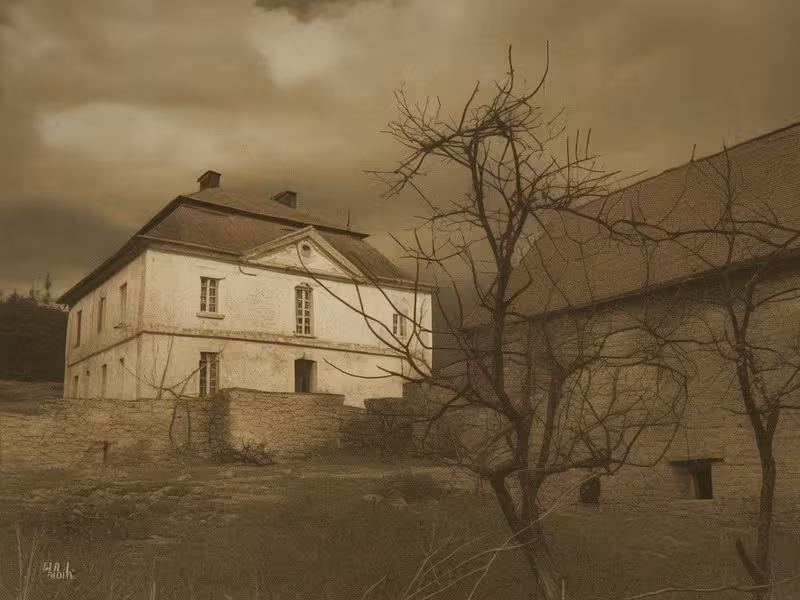
The historical appearance on the left is an AI-generated visualisation and serves as inspiration only.
Historical milestones
- 1741
- Establishment and status of the rectory building.
- 1749
- Possible move of the priest into the building after wars about Austrian heritage.
- 1964
- Writing the building into a list of cultural monuments.
Architectural development
The one-storey Baroque building has a mansard roof and a rectangular floor plan. The ground floor is covered with vaulted vaults, while the floors have flat ceilings. During the eighteenth and nineteenth centuries, repairs and expansion of economic buildings took place.
Historical events
In 1741 the rectory was founded and built. In 1749, a priest could have moved into the building. In 1964, the building was declared a cultural monument.
Owners
Until the 1990s, it belonged to the Church, then moved into private hands.
Points of interest
- The former rectory in Blčkovice is a Baroque building built in 1741 and has been protected as a cultural monument since 1964.
- It's probably in the places of the former commenda and the demolished church of St. Havel.
- Top changes in architecture included roofing with bags instead of old shingles.
- The building has a rectangular floor plan, a Mansard roof and is decorated with baroque elements as an oval cartouche at the entrance and a statue of the guardian angel at the gate.
- It is today protected as a cultural monument and represents a valuable contribution to understanding the Baroque period in the region.
Guide
Show guide text
This text was created by artificial intelligence and has not been editorially reviewed. It may contain inaccuracies.
Welcome to Bulls. At this very moment, you're standing in front of a building that carries the incredible power of time and the silent dignity of the past. Before your eyes is a former rectory, a Baroque building that has been watching over this part of the village for almost three centuries. Before you go any further, I suggest you stop for a moment, soak up the atmosphere of this place and see how history intertwines with the present. This building is not just a wall and a roof, it's a chapter in history that you're experiencing right now.
Let's look deeper into the past together and understand why this place is so special. The whole history of this building began in 174anem, when the rectory was built as part of the wider complex of the estate number 36. It's important to realize the world that existed back then. It was a world that formed in the rhythm of religion, agriculture and the slow but relentless movement of human life. This building was created at a time when the Baroque style had long since strengthened its position in our country and brought with it a sense of order and harmony.
If we follow the fate of this building in the next few years, we'll come across a very interesting moment. 1749 was crucial to this site. After a period of unrest and wars about the Austrian heritage, which shook the whole of Central Europe, spiritual administrators probably settled here. Imagine the contrast - after years of uncertainty and conflict, stability, peace and spiritual support brought to the village. This building has thus become a symbol of recovery and return to normal after a period of major shocks.
Now pay attention to the architecture itself, which is right in front of you. Notice how balanced the building is. Its rectangular plan gives the whole building a sense of stability and strength. It is an architecture that does not appear chaotic, but rather orderly, which is typical of the baroque thinking of that time. Look at the roof. Do you see that distinctive Mansard roof? It is this element that gives the building its specific, noble character and changes its silhouette against the sky.
And if you look even more closely at the material that covers the roof, you'll see the bags. But it is fascinating to know that this form is not eternal. In the past, the roof was covered with something quite different - old shingles. The transition from wooden shingles to more durable bags was one of the most important moments in the architecture of this building. This change was not only a question of aesthetics, but, above all, a question of resilience and modernisation, which is inevitably happening over time. Every layer of this house, from the foundation to the top of the roof, tells the story of trying to keep things in order and in good condition for future generations.
Looking at this building, however, you should not forget that its importance in the past was much broader than you see today. Imagine this place in its greatest glory. It wasn't just a silent residence for the vicar. The whole space was once much more lively and extensive. This area included various economic buildings which ensured the self-sufficiency of the site. There was a bakery that probably supplied the surrounding humanity with fresh bread, and there were ponds that were an important part of the local ecosystem and the economy. It was a place where the daily efforts of the people working in the field met with the spiritual activity and peace offered by the rectory.
And this is where we come to something that might surprise you. You're standing in a place that has layers of history underneath it that can't be seen at first sight. This parish building is probably in a place where a commenda used to work, and where the church of St. Havel also stood. Imagine the nobility this broken church once radiated. Even though its walls no longer exist and its name is now only in historical records, its presence is still felt in the very ground you walk on. It's a fascinating idea that beneath your feet there are traces of something that was once the center of the village, but what time and human decision gradually changed. So this parish building is basically the guardian of a monument to what's long since disappeared.
This constant transformation of the place where the old takes turns with the new is what makes history so fascinating. Although some parts of history have been lost, such as the Church of St. Havel, other parts have been preserved and are now available to our admiration. This is why this building was included in the list of cultural monuments in 1964. It is recognition of her value, her importance to our identity, and proof that even this seemingly simple building can be a treasure that we must protect from oblivion.
Now that you have a better idea of what you are seeing and what has happened here, I suggest you continue your search. Don't forget to look around, see the details of the environment and think about how many other stories there are in every building and in every piece of this country. History is not only in the books, it is right around you, in every stone and in every shadow cast by this baroque structure.
Thank you for joining me on this short journey through time. I wish you a beautiful and inspirational walk along the Bulls.
Tips for visitors
For the best experience we recommend a visit in the late afternoon, when sunlight beautifully highlights the Baroque face of the building and its Mansard roof. A quieter period outside the main season allows you to observe the architecture of the estate in peace.
You can travel to the monument by car and public transport; Please check the current connection in the search engine. Parking is usually possible in normal places in the village.
For photography we recommend looking for angles that capture the rectangular ground plan of the building. The best light for architecture pictures is during late afternoon. Remember to bring comfortable shoes and water for possible walks.
In the vicinity you can discover traces of the medieval commenda and the church of St. Havel. For families with children, it is advisable to use the surroundings for a simple walk around the historical area, which links history to fresh air.
Businesses nearby
Do you run a restaurant, accommodation, shop, museum, rental, wellness or other visitor service near this monument? Show yourself directly to the people heading to it — this is how they will see you in the app and on the web:
Events nearby


Zdroj akcí: otevřená data měst a obcí ČR (Národní katalog otevřených dat) a kalendář akcí Národního památkového ústavu.
Nearby
The place of the rectory was probably a medieval commenda and the church of St. Havel.
Accommodation nearby
Trips and activities nearby
Guided tours, tickets and activities nearby from GetYourGuide
Affiliate link: if you buy from the partner, we may receive a commission. The price for you does not change.
Search tours and activities →Themed route
Bývalá fara (Býčkovice) Type: Historical building Why is it worth a visit: This object represents a key point for understanding the medieval history of the village. Here are the remains of the original residence, which served as the administrative and spiritual centre of the region.
Medieval commenda Type: Archaeological site / Ruins Why it is worth a visit: In the immediate vicinity of the rectory was this important institution that ensured the administration and defence of the territory. Visitors can imagine how life in the past took place here and what was the structure of power in this area.
Church of St. Havla Type: Sacral monument Why is it worth a visit: This church was an integral part of the original area and served as a spiritual support for the local population. His existence shows the importance of Christian tradition and worship of Saint Havel in this particular place.
Ambient of former fary Type: Natural and Cultural Landscape Why is it worth a visit: Walk around the area allows you to combine individual historical points into one whole. Tourists can admire the preserved atmosphere of the place where traces of medieval commenda, rectory and church intersect in the harmonious environment of the village Býčkovice.
This route is designed so that visitors gradually discover layers of history. It starts at the main target, which is the former parish, and then it starts at the places that have historically been linked to this building. Thanks to the fact that all points lie close to each other, the route is also suitable for persons with reduced mobility or for short afternoon trips. Travelers have the opportunity to contextualize information on the medieval commendation and St. Havel's Church on the spot. It is not a long hike, but rather an intense cultural experience focused on details and historical context. It is recommended to devote enough time to each point in order to fully appreciate the importance of these monuments for the history of the village Býčkovice.
Seasonal recommendations
Spring: In the spring season, the former rectory of the Bulls gains incredible radiance when flowering shrubs and trees are revived with vivid colour. The sun's rays penetrate the misty air, creating magical lighting on old brick walls and green roofs. Nature awakens from its winter sleep, bringing an undeniable sense of recovery and hope to the region. It is advisable for visitors to visit the memory in the early afternoons when the temperature is pleasant and the crowd is less than during the summer peak period. It is recommended to wear clothes suitable for mild temperature with the possibility of adding a layer because the weather can be variable.
Summer: In the summer period, the former rectory in Bulkovice is most visited. The sun illuminates and warms the historic building, which contributes to a revived atmosphere full of tourists and locals. Green vegetation is in full bloom, turning the whole area into a lively and colorful landscape. Due to the great interest in this place, it is advisable to come early in the morning or later in the afternoon to avoid the most difficult times with redundant news. It is important to remember solar protective equipment and water-rich food because temperatures can be very high.
Autumn: The former rectory in Bulkovice gains a unique charm in autumn when trees turn into golden and red shades. Sunrise at the end of the day gives the buildings a romantic, nostalgic look, making this time ideal for a visit. The atmosphere is quieter and milder than in the summer, when crowds become less. It is recommended to visit the monument around noon, when the sun is at the highest level and ensures optimal lighting for the photo. It is advisable to prepare clothes suitable for colder temperatures with layering, because autumn can be very variable.
Winter: In the winter, the former rectory of the Bulls takes on a mysterious and peaceful character. The shadow dawn of trees and snow cover can add landscape beauty, while the cool air gives the atmosphere a sense of relief from summer heat. Opening times are often shorter due to lower daylight conditions, so it is important to check the current information before visiting. Visitors should be dressed warm, with protective handkerchiefs and tops against cold winds. Visiting a memorial at noon means enjoying the best lighting that can be limited for short days.
Visualizations and artistic views


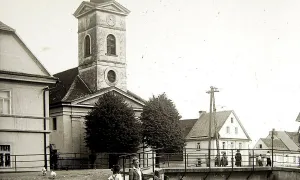
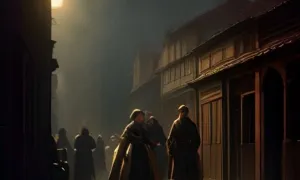
The visualisations are generated by artificial intelligence and serve as inspiration.
Photos from the area
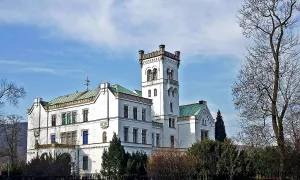
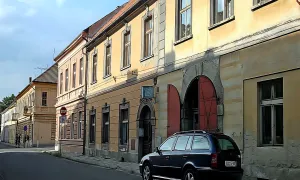
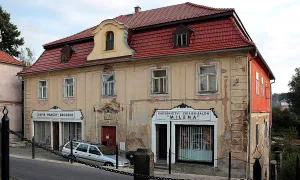
Real photos taken near the monument


Zdroj a licence jsou uvedeny u každého snímku.
Tips from visitors
No tips yet. Be the first!
Log in and add your tip.
Sources and literature
Photos: Sovicka169 / CC BY-SA 4.0 — Wikimedia Commons. The author and licence also appear when you hover over the image.
Faktickým podkladem tohoto textu byl článek na Wikipedii, jehož autory jsou přispěvatelé Wikipedie. Článek je dostupný pod licencí CC BY-SA 4.0.
Location on the map
Příběhy a pověsti
Legendy, pověsti a příběhy spjaté s touto památkou
Fotografie návštěvníků
Zatím žádné fotografie. Buďte první, kdo přidá fotografii z návštěvy!
Log in a přidejte svou fotografii nebo hodnoťte.
Za ověřenou návštěvu v aplikaci získáte víc bodů — poznáme podle GPS, že jste na místě.
Reviews and comments