






Domek U Zlatého slunce House
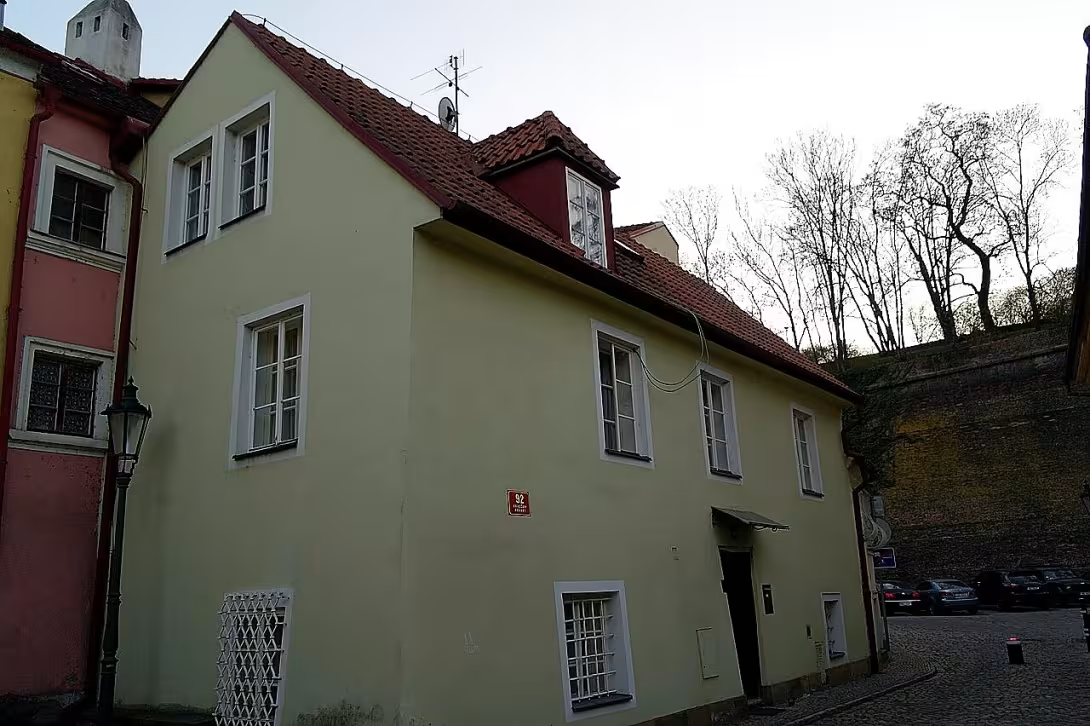
Domek U Zlatého slunce in Prague Hradčany is a rare example of early Baroque urban architecture. It is located on the corner of the plot in Nová Svět Street, where one of the oldest building monuments from the 17th century was preserved. Its original form from the turn of the 17th and 18th centuries ranks among the oldest preserved houses in this part of Hradčan. Yet little information has been kept about its original owners and purpose.
Today it is protected as a cultural monument and its modest but typical ground plan contributes to the picture of Prague's urban environment at that time. Its origin and historical context are unclear. According to the register records, it was probably built at the turn of the 17th and 18th centuries, which corresponds to the period of development of Hradčan as an important seat of nobility and clergy. The village of Hradčany at that time was transformed from a rural estate to a urban area with its own monuments.
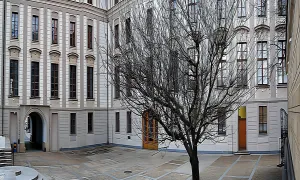
The building design of the house reflects the features of early Baroque architecture. It is a one-storey corner object with an elongated plan, built on an irregular plot. The facade is simple, without significant decorative elements, which corresponds to the modest character of the then urban houses. The layout probably combined residential areas with commercial functions, which was common in the 17th century.
Over the centuries, the house was probably changing in its hands. In the 19th century, Hradčany became the center of a rich bourgeois and academic community, but no detailed records of its specific owners were kept. The preservation of the house until now is mainly given by its architectural and historical value.
Today it is open to the public and forms part of the historical core of Hradčan. Its importance lies in maintaining the original layout and construction form, which illustrates the typical city house from the turn of the 17th and 18th centuries. There are other important monuments such as the Hradčanská Palace or St. Ludmila's Church. Visiting the Golden Sun House offers the opportunity to become acquainted with early Baroque architecture in Prague's urban environment.
Historical milestones
- Evidence from the turn of the 17th and 18th centuries according to the register data.
Points of interest
- It is one of the oldest preserved buildings in Hradčany from the turn of the 17th and 18th centuries.
- The original form of the house ranks among the oldest preserved houses in this part of Hradčan.
- The facade is simple and without significant ornaments, which corresponds to the modest style of the then city houses.
- He probably served both for housing and business purposes, which was common in the 17th century.
- Today it is protected as a cultural monument and is open to the public.
Guide
Show guide text
This text was created by artificial intelligence and has not been editorially reviewed. It may contain inaccuracies.
Welcome to Prague, its most important and oldest part, in Hradčany. Stop for a moment, take a breath and feel the atmosphere of this place where history in every stone intersects with the present. Right now, you're standing in front of one of the silent witnesses of Prague's history. The Domek U Zlatého slunce stands before you. At first glance you may be interested in his modesty compared to the magnificent palaces you meet around the castle, but it is in this stealth that his true charm lies. Look at him carefully. It's a corner, one-storey house that defines the character of this particular alley by its location. Note how the house is set on an elongated parcel, which is very typical of the historical centre of Prague, where the space previously used very efficiently and the parcels were often narrow and deep.
Now let's move back in time together. When was this house built? According to the available register data, the construction of this house is likely to date back to the turn of the seventeenth and eighteenth centuries. So imagine Prague at the time. It was a time of great change, a time when the city was gaining its present face and various social layers were mixed in the streets. While there was nobility and high spiritual status in the vicinity of the castle, there were people living in houses like this that made up the daily life of Hradčan. Although we do not know the exact name of the builder or the particular reason why it was built here, it is clear that this house was intended to serve as a practical living space which, thanks to its corner position, offered good access from several sides.
Now pay attention to the architecture itself. Even though the house does not have complex ornaments or monumental columns, I urge you to pay attention to the details in front of you. Take a look at the facade and see how the one-story building is harmoniously supplemented with the surrounding environment. Watch the lines of the house and the way they cut the corner of the street. It is this corner position that gives the building some momentum. Notice how the building uses its elongated plot. It's a fascinating example of how people in the past had to adapt to the space. Domek U Zlatého slunce is not just an ordinary building, it is a protected cultural monument. This means that the state has recognised its historical and architectural value and decided that it must be preserved for future generations. When you look at it, you don't just see walls and roofs, but you see a piece of preserved history that has survived centuries, wars and political change.
Maybe now you can wonder who lived in this house or who designed it. Here we come across one of the biggest secrets of many old Prague houses. The architects who built this house remained in oblivion. Their names are not written in any chronicles available today. Nor do we know any specific personalities that are closely connected to this place. But there's something poetic about this anonymity. Domek U Zlatého slunce is not a monument to one famous person, but to ordinary life. It's the story of thousands of strangers who may have lived here, worked here or just walked by. Think about how many conversations have taken place in these walls, how many dreams have been born here and how many generations of Pražans have seen the world from this very corner. This house is like an open book whose pages are empty, but we can complement it with our imagination.
And now for one interesting thing that may interest you. Notice the name of this house. Domek U Zlatého slunce. Nowadays, we're used to numbers of descriptive and orientations that tell us exactly where we are. However, there were no figures at the time this house was built. People used so-called home signs. They were image symbols that helped people orient themselves in the city. The sun was one of the most popular symbols. Imagine people in the seventeenth or eighteenth century telling their friends to meet at the Golden Sun. This name carries some optimism and warmth that contrasts with the cold stone streets of Hradčan. Although today you may not see the original sign in its original form, the name remains in the city's memory and still reminds us of the time when the city was named by images and symbols.
It's fascinating how such a small and inconspicuous house can tell so much about the history of our city. While the great cathedrals and palaces tell of power and faith, little houses like this tell of humanity, craft and everyday survival. It's an important counter to the grandeur of the Hradcany. Without these small structures, Praha would lose its human face and its authenticity. Domek U Zlatého slunce reminds us that history is not only made up of kings and warlords, but also by silent constructions that simply last and observe the flow of time.
Now that you have seen this house and its story closely, I suggest you continue to explore the surroundings. Hradčany has another small gem hidden in every corner waiting for your discovery. Watch the facades, see the texture of the old walls and look for other home signs that can tell you how people lived in Prague centuries ago. Let your curiosity guide you and enjoy the peace of these historic streets that guide you on the way to the highest places of our city.
Thank you for stopping by the Golden Sun House with me. I hope this short stop has helped you see more than just an ordinary building and that you have felt a connection with the people who lived here hundreds of years ago. I wish you a pleasant further walk through Prague, full of new discoveries and inspiration. See you in the next corner of our beautiful city.
Tips for visitors
The best time to visit this small historical house is during spring or autumn months. The temperatures are pleasant, but not too hot as in summer, while there are fewer tourists than in the summer months. The sunny morning is ideal for a tour, because the light better illuminates the details of the facade and interior. If you want to escape crowds, avoid weekends when the place is often visited.
The house is available by car and public transport. If you arrive by car, look for parking near Hradčan, where is the possibility to park. It is recommended to use public transport because parking is often difficult and expensive in the centre of Prague. You can get for example by tram or bus to the vicinity of the monument and then continue on foot. Find out the current connection in the map search engine.
When visiting, wear comfortable shoes as the tour may include corridors or staircases. It may be cold in the interior, so bring a light sweater or coat. If you want to take photos, do not forget your mobile phone or camera with enough zoom to capture the facade details. Also take some money with you, because the entrance fee is paid on the spot.
The best places for photography are the front and side facade of the house where its corner location and historical appearance are captured. It is recommended to photograph in bright daylight, for example in the morning or in the afternoon, when light falls favourably and creates fewer shadows. If you want to take a picture in front of the house, choose a place where you will not disturb other visitors.
Around the house There are several interesting places near the Golden Sun that are worth visiting. For the first stop you can choose the Hradčanská Palace, which is one of the most important historical buildings in Hradčany. Another possibility is the church of St. Ludmila, which is famous for its beautiful architecture and historical significance. It is advisable for families with children to visit the nearby Hradčanská Square, where children can have fun on a small playground.
For families with children is a visit home The Golden Sun is interesting because children can watch history and architecture from the past century. It is recommended to take with you some games or small activities that will entertain children while waiting for a tour. In the surroundings it is also possible to relax on benches and observe the surrounding architecture. If you are going with young children, consider visiting at a time when there is less excitement around, for example in the week.
Businesses nearby
Do you run a restaurant, accommodation, shop, museum, rental, wellness or other visitor service near this monument? Show yourself directly to the people heading to it — this is how they will see you in the app and on the web:
Events nearby

Zdroj akcí: otevřená data měst a obcí ČR (Národní katalog otevřených dat) a kalendář akcí Národního památkového ústavu.
Nearby
V okolí se nachází historické centrum Prahy-Hradčan s dalšími památkami, jako je například Hradčanský palác nebo kostel sv. Ludmily.
Accommodation nearby
Trips and activities nearby
Guided tours, tickets and activities nearby from GetYourGuide
Affiliate link: if you buy from the partner, we may receive a commission. The price for you does not change.
Search tours and activities →Themed route
Thematic cruise route: Hradčany
1.Domek U Zlatého slunce (house) Type: Historical House Why is worth a visit: This small but important historical house is famous for its beautiful Renaissance facade and rich history. It is one of the oldest home buildings in Prague and served various purposes, from the business space to the apartment for artists.
2. Castle Palace (Palace) Type: Historical Palace Why is it worth a visit: The Hradčany Palace is one of the most beautiful Baroque palaces in Prague. Its impressive architecture and rich interiors attract many visitors who are interested in history and art.
3. Church of St. Ludmila (Church) Type: Historical church Why is it worth a visit: This Baroque church is not only a spiritual centre but also an architectural pearl with excellent interior and beautiful frescoes. He is known for his history associated with the legend of Ludmile and her son Václav.
4. Church of St. Nicholas (Church) Type: Historical church Why is it worth visiting: This Gothic church is one of the oldest in Prague and served as a burial ground for members of the Lobkovic family. His history and architecture are fascinating, especially his Gothic facade and interior.
5. Small Page (historical center) Type: Historical Center Why is it worth a visit: Although it is a wider area, a walk on the streets of the Small Party offers a view of many historic buildings and a beautiful view of Prague. It's a place full of atmosphere and Czech culture.
This route offers visitors a deep view of the history and architecture of Hradčan, with an emphasis on key sights in the surroundings.
Seasonal recommendations
Spring: In the spring, the mood around Hradčan is very fresh. The blooming trees supply the surrounding colour and the sun shines soft, which beautifully highlights the features of the old house. I recommend you take several layers of clothing because the wounds are cold and the afternoon can be warm. It's good to come early in the morning before the first groups start showing up.
Summer: In the summer months, there is the greatest rush in Prague. The sun shines the strongest and the streets are full of visitors. Because of the great crowds, it is best to arrive immediately after opening so that you enjoy the tour in peace. Dress lightly, don't forget to wear a sunscreen and have plenty of water with you because heat can be tiring.
Autumn: Autumn brings a quieter mood to the neighborhood and beautiful golden colors of leaves. Due to the low sun, lighting is very cosy and ideal for capturing beautiful views. Prepare a waterproof jacket and warmer clothing, because wind days can be unpleasant. Afternoon hours are best for walking around the sights.
Winter: Zimą is quiet and comfortable in this part of town, especially if snow falls. The days are short and the shadow is early, which gives the house a mysterious mood. It is necessary to dress very well in warmer layers and choose stronger shoes. The opening time is shorter in this period, so plan your visit so you can do everything before dark.
Visualizations and artistic views


The visualisations are generated by artificial intelligence and serve as inspiration.
Photos from the area
Real photos taken near the monument


Zdroj a licence jsou uvedeny u každého snímku.
Tips from visitors
No tips yet. Be the first!
Log in and add your tip.
Sources and literature
Photos: Jklamo / CC BY-SA 3.0 — Wikimedia Commons. The author and licence also appear when you hover over the image.
Location on the map

Příběhy a pověsti
Legendy, pověsti a příběhy spjaté s touto památkou
Fotografie návštěvníků
Zatím žádné fotografie. Buďte první, kdo přidá fotografii z návštěvy!
Log in a přidejte svou fotografii nebo hodnoťte.
Za ověřenou návštěvu v aplikaci získáte víc bodů — poznáme podle GPS, že jste na místě.
Reviews and comments