






Domov svatého Karla Boromejského Monastery
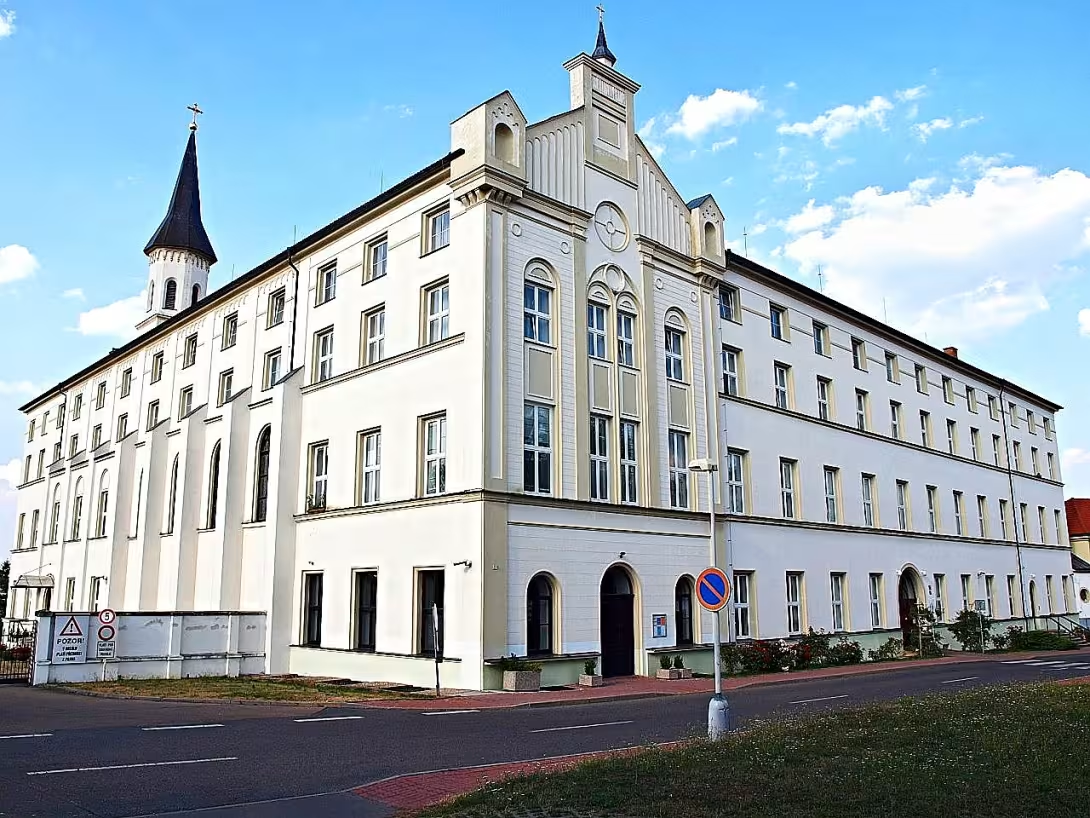
The Monastery of Saint Charles Borromeo in Prague-Řepy is a historically significant site established in 1859 by the Sisters of Charity of Saint Charles Borromeo. Located in the Řepy district, it initially served as an orphanage and later became a correctional facility for women before adapting to various roles throughout history. Its architecture reflects mid-19th century designs, crafted by architect Jan Ripota.
The foundation was part of 19th-century movements towards institutionalized charity work in Europe. The Sisters arrived in Prague in 1837, taking over orphan care in 1855 at Pod Petřínem before acquiring a property in Řepy in 1858. Construction began on April 30, 1859, and by August 1861, both the monastery building and the Church of Saint Family were completed. The site was consecrated on August 6, 1860.
Architecturally, the original structure featured a two-story square floor plan designed by Jan Ripota. It accommodated orphans initially and later adapted for various uses, including housing prisoners and serving as an agricultural research institute during the communist era. The Church of Saint Family was completed within a year, showcasing mid-19th century architectural elements.
Throughout its history, the monastery has experienced significant changes in ownership and function. Initially managed by figures like Eufemie Němcová and Marie Karolína Johana Neumannová, it transitioned from an orphanage to a correctional facility for women by 1864. In 1948, communist efforts to suppress religious orders led to the displacement of most sisters, repurposing the site as a research institute until political changes in 1989 allowed its restoration.
Key events include its consecration in 1860 and transformation into an agricultural research institute by 1948. It also served as a correctional institution for women, reflecting its diverse historical roles. During the communist era, it functioned under drastically different purposes before returning to religious use post-1989.
Today, the Monastery serves as a nursing home and senior care facility with approximately 500 patients annually. It also houses an institution for female prisoners, offering various work opportunities. The site remains accessible to visitors interested in its rich history and current charitable activities.
The Monastery of Saint Charles Borromeo stands as a testament to the resilience and adaptability of religious institutions through changing political landscapes. Its historical significance and ongoing community service make it a worthwhile visit for those exploring Prague's diverse heritage.
Then and now
Drag the slider to compare how the landmark may have looked when it was built with the view today.
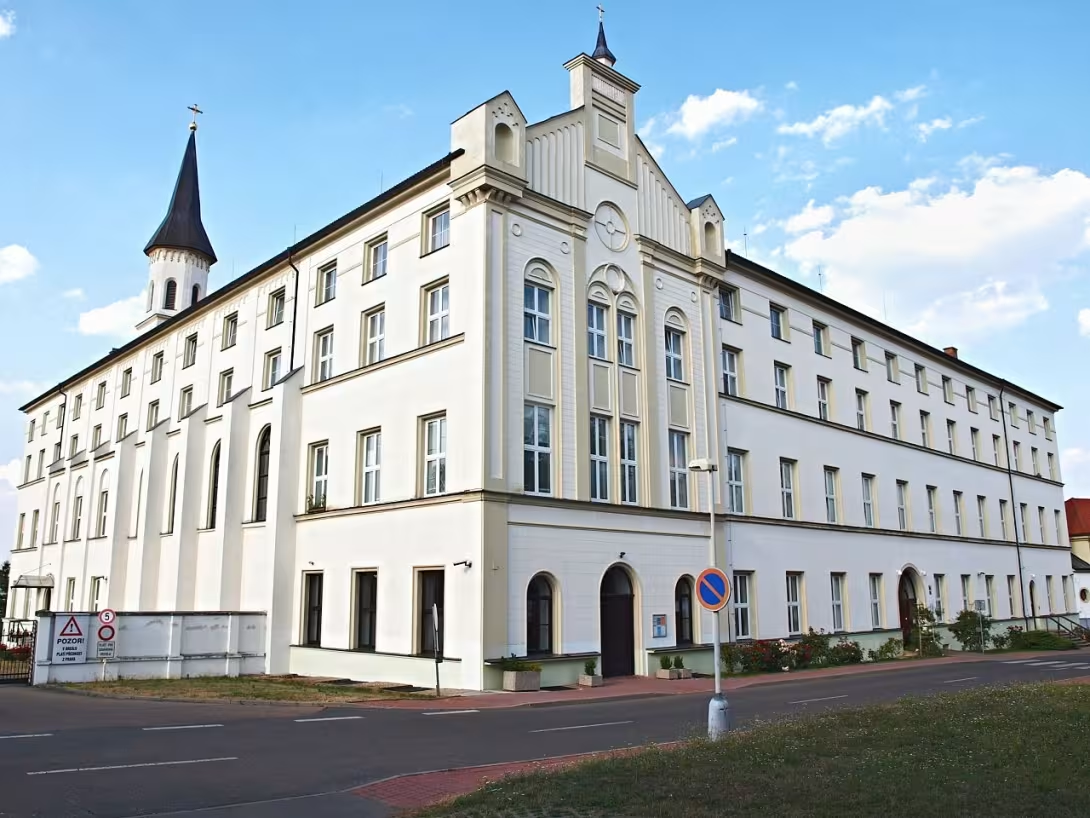
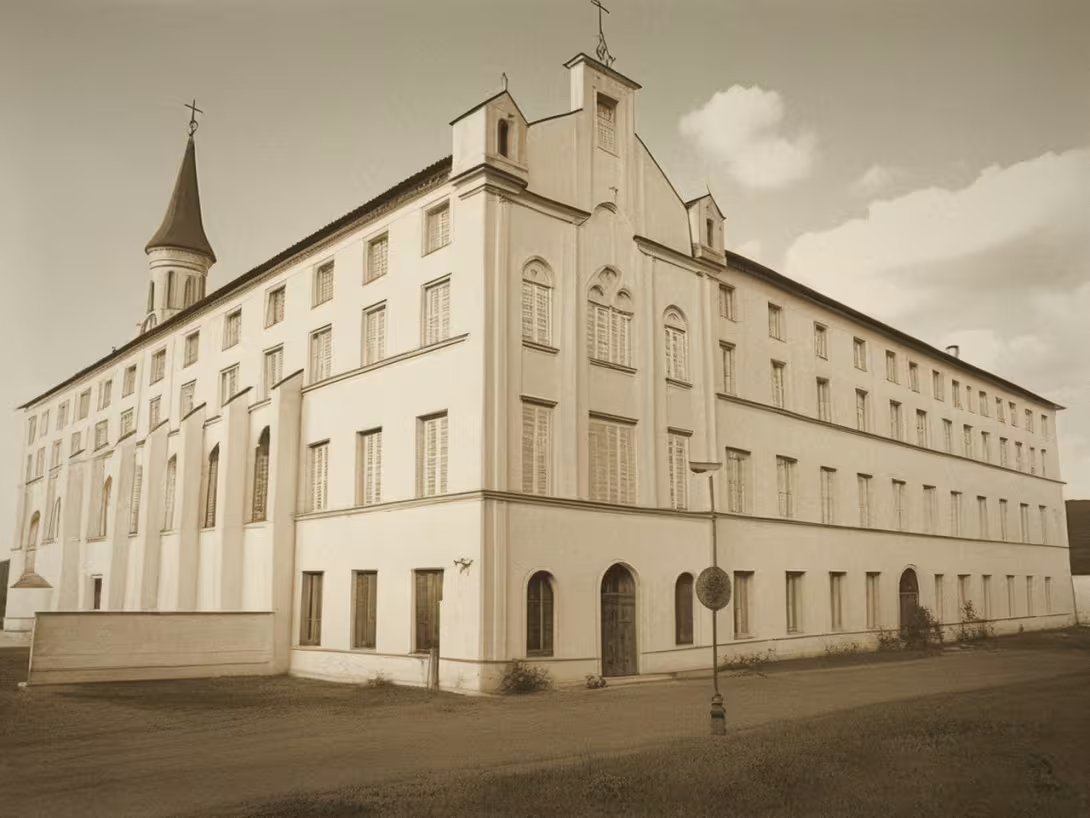
The historical appearance on the left is an AI-generated visualisation and serves as inspiration only.
Historical milestones
- 1837
- The Sisters of Mercy arrived in Prague.
- 1855
- They took over the care of orphans at Pod Petřínem.
- 1858
- Acquired property in Řepy for a new convent.
- 1859
- Began construction of the convent and Church of the Holy Family.
- 1860
- The convent was consecrated.
- 1864
- Converted into a women's prison.
Architectural development
The original construction began in 1859 under Jan Ripota's direction, resulting in a two-story building with a square floor plan. The church of Saint Family was completed by 1861. Over time, the monastery underwent adaptations for various uses, including housing prisoners and serving as an agricultural research institute.
Historical events
In 1860, the monastery and church were consecrated, marking their completion and readiness for use.
By 1948, during communist regime efforts to suppress religious orders, most sisters were displaced, and the facility was repurposed as a research institute.
Owners
The Sisters of Charity of Saint Charles Borromeo have been the primary custodians since its establishment in 1859.
Points of interest
- The Monastery of Saint Charles Borromeo was originally established as an orphanage in 1859 but later became a correctional facility for women by 1864, showcasing its adaptability to societal needs over time.
- Architect Jan Ripota designed the monastery with a two-story square floor plan, reflecting mid-19th century architectural styles that have endured through various transformations of the site's purpose.
- In an unusual twist of history, during the communist era beginning in 1948, the Monastery served as an agricultural research institute, diverging significantly from its religious and charitable origins.
- Eufemie Němcová played a crucial role in managing the orphanage before it transitioned to other functions, highlighting her influence on early social welfare initiatives in Prague.
- Despite political upheavals that led to the displacement of most sisters in 1948, the Monastery was restored for religious use after the fall of communism in 1989, symbolizing resilience and continuity amidst change.
Guide
This guide is narrated by a synthetic voice generated by artificial intelligence.
Show guide text
This text was created by artificial intelligence and has not been editorially reviewed. It may contain inaccuracies.
Welcome to the Monastery of Saint Charles Borromeo in Prague-Řepy, a site rich with history and spirituality nestled within this vibrant city. As you stand here, take a moment to soak in your surroundings. The monastery’s presence is both serene and commanding, its architecture speaking volumes about its storied past.
The origins of this significant site date back to 1859 when it was founded by the Sisters of Charity of Saint Charles Borromeo. Initially established as an orphanage, the monastery quickly became a beacon of hope for those in need. The sisters first arrived in Prague in 1837 and began their mission with great compassion and dedication. By 1855, they had taken over the care of orphans at Pod Petřínem, and by 1858, they acquired property in Řepy to build this new monastery and church dedicated to the Holy Family.
The architecture of the monastery is a testament to its historical roots. Designed by architect Jan Ripota, it features a two-story square floor plan that reflects mid-19th-century design sensibilities. As you look around, take note of how these architectural choices create a sense of order and tranquility—a fitting environment for reflection and care.
Throughout its history, this place has been home to many significant figures. Eufemie Němcová, Marie Karolína Johana Neumannová, and Charitas hraběnka z Coudenhove are just a few of the women whose lives intertwined with the monastery’s mission. Their stories add depth to this place, illustrating its role as more than just a building but as a living community.
One fascinating aspect of the Monastery of Saint Charles Borromeo is its adaptability over time. Originally serving orphans, by 1864 it had transformed into a correctional facility for women. This shift highlights how the monastery has continually responded to the changing needs of society while maintaining its core mission of care and service.
As you continue your exploration, consider the layers of history embedded in these walls. Each stone tells a story of resilience, compassion, and transformation. We invite you to delve deeper into this remarkable place, discovering more about its past and reflecting on its enduring legacy.
Thank you for joining us on this journey through time at the Monastery of Saint Charles Borromeo. May your visit inspire reflection and appreciation for the rich tapestry of history that surrounds you.
Tips for visitors
The best time to visit the Monastery of Saint Charles Borromeo is during late spring or early autumn when the weather is pleasant for exploring both the monastery grounds and nearby natural areas like Petřín Hill. During these seasons, you can enjoy the lush greenery without the crowds that often accompany peak summer months. Additionally, visiting on a weekday might offer a quieter experience compared to weekends.
Always check current routes and schedules online before your visit.
When visiting the Monastery of Saint Charles Borromeo, it's recommended to bring comfortable walking shoes as there are several areas within the grounds to explore. Also consider bringing a light jacket or sweater, especially if you plan to spend time outdoors during cooler months. A small backpack for essentials like water and snacks can be handy, particularly if you're exploring nearby attractions such as Petřín Hill.
For photography enthusiasts, some of the best spots within the Monastery include capturing its architectural details in natural light, ideally during the golden hours at sunrise or sunset when shadows are soft. The interior spaces also offer unique opportunities for photos with their historical ambiance. Don't forget to check if there are any restrictions on photography inside certain areas.
In addition to visiting the monastery itself, you can explore nearby attractions within a 30-minute travel time. Petřín Hill is an excellent spot offering panoramic views of Prague and features attractions like the Petřínská rozhledna (Petřín Lookout Tower). The Řepský Cemetery also provides a serene environment for those interested in historical sites.
For families with children, the Monastery grounds can be a peaceful place to explore. Consider bringing along some books or activities related to history or architecture to keep younger visitors engaged. If you're visiting during a time when guided tours are available, they might offer interactive elements that appeal to kids.
Frequently asked questions
Can the monument be visited?
Religious buildings are usually open mainly during services; at other times a visit is normally arranged with the parish or the operator. We have not verified specific times.
Where is the monument?
Location: K šancím 50/6, Řepy, Praha, Hlavní město Praha. The map on this page shows the exact spot.
Why is the monument protected?
It is listed in the Central List of Cultural Monuments of the Czech Republic as a cultural monument (register no. 50561/1-2344).
Businesses nearby
Do you run a restaurant, accommodation, shop, museum, rental, wellness or other visitor service near this monument? Show yourself directly to the people heading to it — this is how they will see you in the app and on the web:
Events nearby
Zdroj akcí: otevřená data měst a obcí ČR (Národní katalog otevřených dat) a kalendář akcí Národního památkového ústavu.
Nearby
Located in Prague-Řepy, the area features the Řepský Cemetery and is characterized by residential neighborhoods. The surrounding landscape includes urban settings with nearby natural areas like Petřín Hill.
Accommodation nearby
Trips and activities nearby
Guided tours, tickets and activities nearby from GetYourGuide
Affiliate link: if you buy from the partner, we may receive a commission. The price for you does not change.
Search tours and activities →Themed route
Thematic Walking Tour: The Legacy of Saint Charles Borromeo
1. Domov svatého Karla Boromejského (Klášter) - Type: Historical Monastery - Why Visit: Begin your journey at the heart of this spiritual retreat, where you can immerse yourself in the life and legacy of Saint Charles Borromeo. The monastery offers a serene atmosphere for reflection and learning about his contributions to the Catholic Church.
2. Řepský Cemetery - Type: Historical Cemetery - Why Visit: A short walk from the monastery, this cemetery is not only a resting place but also an open-air gallery of historical gravestones and memorials. It provides insight into local history and culture, offering a peaceful setting for contemplation.
3. Petřín Hill - Type: Urban Natural Area - Why Visit: Ascend Petřín Hill to enjoy panoramic views of Prague's skyline. The hill is an ideal spot to connect with nature amidst the urban landscape, offering walking paths and scenic vistas that highlight the city’s beauty.
4. Residential Neighborhoods - Type: Urban Exploration - Why Visit: Explore the charming residential areas surrounding Řepy for a glimpse into local life. These neighborhoods offer quaint streetscapes, traditional architecture, and opportunities to interact with the community, enriching your understanding of Prague’s diverse urban fabric.
This tour provides a balanced experience of history, nature, and culture within the vicinity of Saint Charles Borromeo's home, offering both spiritual enrichment and exploration of Prague’s unique environment.
Seasonal recommendations
Spring: Visiting the Karlskirche in Prague during spring offers a unique experience as nature awakens around this historic site. The blooming flora and longer daylight hours create a vibrant atmosphere, enhancing the beauty of the church's baroque architecture with natural light playing on its intricate details. While the weather can be unpredictable, it's advisable to dress in layers to accommodate fluctuating temperatures. Early mornings are ideal for exploring as crowds tend to build up later in the day, allowing you to appreciate the serene ambiance and fresh blooms without much distraction.
Summer: The summer months bring a lively atmosphere to Prague, with the Karlskirche surrounded by lush greenery and warm sunshine. This season is perfect for enjoying outdoor activities before or after your visit to the church. However, be mindful of larger crowds, especially during peak tourist seasons, so consider visiting early in the morning or later in the afternoon to avoid long lines. Light, breathable clothing is recommended due to higher temperatures, and don't forget sunscreen if you plan on spending time outdoors.
Autumn: Autumn transforms Prague into a picturesque landscape with warm hues of red, orange, and yellow adorning the trees around Karlskirche. The cooler weather makes it an ideal time for leisurely exploration without the summer heat. As the days grow shorter, take advantage of the softer lighting that enhances the church's architectural beauty. Light jackets are advisable as temperatures can drop in the evenings. This season also tends to have fewer tourists, providing a more tranquil experience.
Winter: Winter envelops Karlskirche in a magical atmosphere with snow-covered surroundings and festive lights adding charm to its baroque architecture. Dress warmly in layers to stay comfortable while exploring the historic site. Early mornings are often quieter, offering a peaceful experience before the day's activities begin. Despite the chill, winter provides a unique and enchanting perspective of Prague’s iconic landmarks.
Visualizations and artistic views


The visualisations are generated by artificial intelligence and serve as inspiration.
Photos from the area
Real photos taken near the monument

Zdroj a licence jsou uvedeny u každého snímku.
Tips from visitors
No tips yet. Be the first!
Log in and add your tip.
Sources and literature
Photos: VitVit / CC BY-SA 4.0 — Wikimedia Commons. The author and licence also appear when you hover over the image.
Faktickým podkladem tohoto textu byl článek na Wikipedii, jehož autory jsou přispěvatelé Wikipedie. Článek je dostupný pod licencí CC BY-SA 4.0.
Location on the map

Příběhy a pověsti
Legendy, pověsti a příběhy spjaté s touto památkou

Fotografie návštěvníků
Zatím žádné fotografie. Buďte první, kdo přidá fotografii z návštěvy!
Log in a přidejte svou fotografii nebo hodnoťte.
Za ověřenou návštěvu v aplikaci získáte víc bodů — poznáme podle GPS, že jste na místě.
Reviews and comments