



Dr. Stejskala 11 House
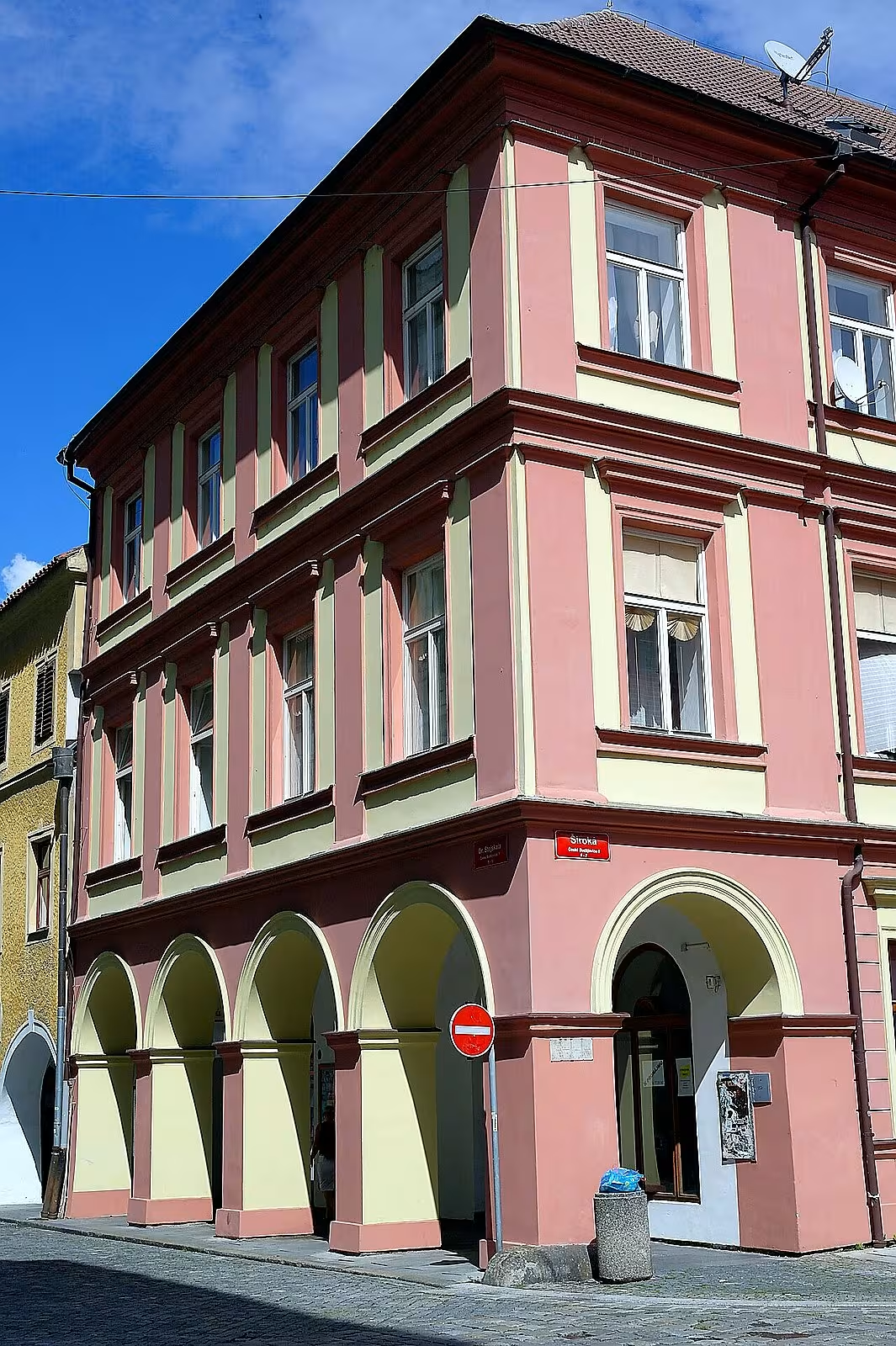
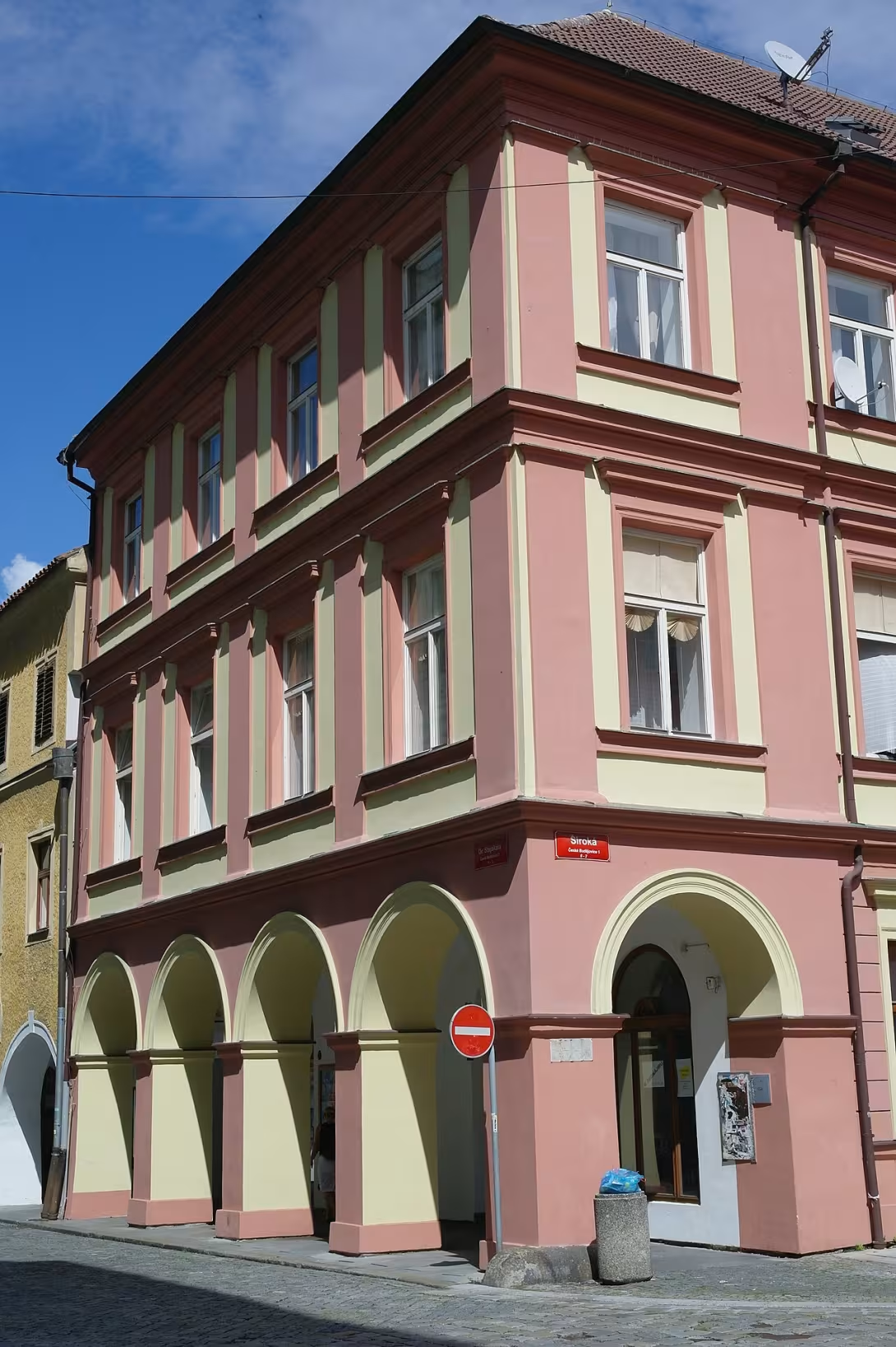
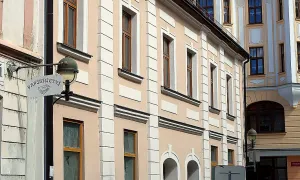
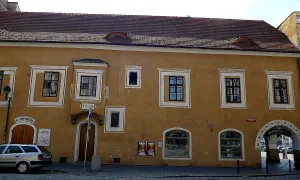
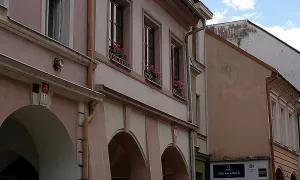
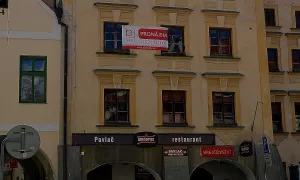
The two-storey house at the address Dr. Stejskala 11 in České Budějovice is a cultural monument that attracts visitors and local residents with its architecture and history. This building from 1844 boasts a late-classicist facade marked by four half-circle arcades peeling into Dr. Stejskala Street. The arch is surrounded by four arches of flat cross arches, which gives the building unique aesthetics and architectural importance.
The house was built in a period of late classicism, characterized by symmetry, harmony and the use of classical elements. These are visible both in the facade design and in the lining construction. The architectural work of the time focused on aesthetics and functionality, which is visible in this object.
In 1844 he was the owner of the house Josef Sandner, who was probably interested in creating a prestigious and functional residential or commercial space. The house became part of the cultural heritage of České Budějovice, where it is registered as a protected object with registration number 14349 / 3-783.
Today, this house stands as a testament to historical architecture and local culture. It is accessible to visitors who want to know more about the history of České Budějovice and their architectural wealth. If you visit this house, you can appreciate its classicist elements and at the same time realize how history has translated into the current appearance of this place.
This monument is not only an architectural work but also part of the cultural identity of České Budějovice. It is worth a visit so you can realize the history and aesthetics of this unique object with your own eyes.
Then and now
Drag the slider to compare how the landmark may have looked when it was built with the view today.

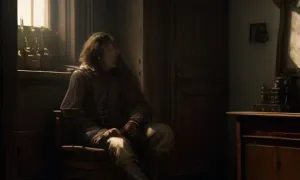
The historical appearance on the left is an AI-generated visualisation and serves as inspiration only.
Historical milestones
- 1844
- Building a house in late classical style, the owner was Josef Sandner.
- 1844
- The creation of the arch with the vault, typical of the architecture at the time.
- around 1900
- The period of urban development in the centre of České Budějovice.
- Present
- Registration of the building in the register of cultural monuments under the number 14349 / 3-783.
Points of interest
- It is a two-story building from 1844 with a late-classical front. - The facade is marked with four half-circle arcs arched to the street. - The arch is surrounded by four fields of flat cross arches. In 1844, he owned the house of Josef Sandner. - The object is registered as protected by the registration number 14349 / 3-783.
Guide
Show guide text
This text was created by artificial intelligence and has not been editorially reviewed. It may contain inaccuracies.
Welcome to the heart of South Bohemia. You have just stopped at one of the most important points in the city of České Budějovice and I am here to help you fully experience this moment. You're standing right outside the building at Dr. Stejskal's number 11 address. Before we go into deeper research, just stop for a moment and feel the atmosphere of this place. Do you hear the noise of the city, feel the rhythm of the street surrounding this object? This place is not just another point on the map, it is a silent witness for many years that have been here, and even those that are yet to come.
Now look straight ahead at the building that just approached you with its presence. It's a corner house, which is always a very special location in urban architecture. National buildings have a special ability to define the area of the entire street, be its fixed point and orient sign. Feel how this building naturally follows the two streets that meet here, and how they form a solid line between the public space and the privacy that lies inside.
Notice its height. It is a two-storey house whose structure is very natural and stable in this urban context. Although at first glance it may not seem to be a monumental building, its meaning is far deeper than its size could suggest. This building is registered in the official registers as a cultural monument of the Czech Republic. That's an important word, isn't it? Cultural landmark. This means that this object is not just an ordinary house where people live or work. It's part of our common heritage, a precious piece of the puzzle from which the story of our nation and our city is compiled.
Now let's think a little bit about what you see. Take a look at the facade, pay attention to how the line of the house breaks in the slices. Although we do not know the exact date when this house was first built, its presence here within the historical core České Budějovice is undoubted. Every house in this city has its own clue, its own energy. This house, with its two-story structure, is part of this continuity. It's part of the tissue of a city that's constantly evolving, but it's kept its essence.
Now pay attention to one special thing that may seem mysterious. In the historical documents relating to this particular site, we encounter empty fields. We don't know the name of the architect who designed this building. We don't know the exact year of its creation. We don't even know the names of any significant personalities who would sign up in these walls over the centuries. At first glance, it might seem to be a lack of information, but I want to invite you to a different perspective.
This ignorance is actually a great challenge for your imagination. Imagine all the people who went through this corner hundreds of years ago. Imagine those who have experienced their greatest joys and deepest sadness on these two floors. Imagine the craftsmen who worked here, the traders who negotiated here, and the residents who were hiding here from storms or rain. This house is like an open book in which the characters' names are missing, but the story itself is still alive in every stone and every detail of its structure. It's the anonymity that gives this place its greatest charm. It's a house that doesn't belong to one particular person, but it belongs to all of us as part of the history of this town.
Feel the beauty of the fact that some things remain hidden. In today's world, where everything is immediately traceable and every information is at hand, this monument offers something rare - space for your own reflection and your own perception. You might ask, who drank coffee here this morning? Who was looking at the city from this window when it wasn't so full of cars and noise? This question is part of your own visit experience.
You stand before the symbol of stability. The National House, which holds its two floors tight, serves as an anchor for the entire neighborhood. Even if the surroundings change, even if the trade names in the surrounding buildings change, or the way people walk the streets changes, this object continues here. It's proof of the continuity of human being in this city.
In front of the building at the address of Dr. Stejskal 11 you can see the special combination of everyday and historical weight. It's a house that's part of your town today, but it's also a guardian of the past. And that is what lies in the greatest value of cultural monuments - their ability to exist at the same time in both times.
Now that you've looked at this object and perceived its presence, I suggest you continue your walk. České Budějovice offers an infinite number of other secrets and details that await your discovery. But don't forget to stop at other buildings on your next trip, which may remind you that every facade, every slug and every floor has its own, even if ever unknown, story.
Thank you for stopping by this monument. I hope this brief moment has helped you see something more than just a simple building in this corner house. I wish you a beautiful and inspiring journey further along the historic streets of our city. Enjoy your discovery every moment. Goodbye.
Tips for visitors
The best time to visit this corner house is in the morning, when sunlight best highlights its architectural details. For photography we recommend looking for an angle that captures the entire geometry of the building.
You can reach Dr. Stejskala 11 by car and public transport.
We recommend taking comfortable shoes and possibly small cash payments with us.
It is advisable for families with children to plan a visit in calmer times. Since there are no other sights in the immediate vicinity, we recommend paying attention to the construction itself.
Frequently asked questions
Can the monument be visited?
This is a residential or farm building, not a museum with opening hours. Please view it from public space and respect the owners' privacy. We have no information about access to the interior.
Where is the monument?
Location: Dr. Stejskala 110/11, České Budějovice 1, České Budějovice, Jihočeský kraj. The map on this page shows the exact spot.
Why is the monument protected?
It is listed in the Central List of Cultural Monuments of the Czech Republic as a cultural monument (register no. 14349/3-783).
Businesses nearby
Do you run a restaurant, accommodation, shop, museum, rental, wellness or other visitor service near this monument? Show yourself directly to the people heading to it — this is how they will see you in the app and on the web:
Events nearby
Zdroj akcí: otevřená data měst a obcí ČR (Národní katalog otevřených dat) a kalendář akcí Národního památkového ústavu.
Nearby
ITEX Show interactive overview of the surroundings - restaurants, accommodation, rentals and other places within a 15 km radius.
Data: OpenStreetMap contributors, 15 km radius.
‡ Historical monuments
- Basic Kamen (0.1 km)
- Former synagogue (0.3 km)
- Energy Museum (0.8 km)
- _ (2.0 km)
- Machovice (7.7 km)
- Machovice (8.0 km)
- Zavish z Falknštejna (1290) (8.8 km)
- Kotek (8.9 km)
Restaurant and catering
- Singer Pub (0.3 km - Czech 7 / 55)
- Meat stuff (0.3 km - Landscape 13)
- Minibrewery Landscape 27 (0.4 km - Landscape 235 / 27)
- Pomada baguetery (0.4 km - Landscape 265 / 26)
- The Pub (0.6 km - On orchards 1850 / 30)
- Hadog (0.7 km - Husova tr. 1831 / 16)
- Franko's restaurant burgeria & pizzeria (0.8 km - B. Smetany 1464 / 27)
- U Nespora (1.5 km - Student 556 / 2)
Accommodation
- Grandhotel Zvon (0.1 km - us. _
- U Salt Gate (0.2 km - City Council 138 / 11)
- Café Hostels (0.5 km - Men's 177 / 13)
- Hostel U Railway station (0.8 km)
- Guesthouse Begonie (2.4 km - Jar. Ježka 772 / 24)
- Olympia (2.8 km)
- Fencl Jan (3.8 km)
- Kemp České Vrbné (4.9 km)
› Rental and sports
- Daniels K (1.2 km)
- Sport Bazar (1.4 km)
- Fitness Pouzar (2.3 km - Long 1371 / 35a)
- Cyclo Elijah (2.3 km)
- Yoga on Still lifes (2.5 km)
- Zvonarna (3.0 km)
- Decathlon (3.9 km)
- DAJ SPORT (4.3 km)
© Tourism and nature
- Red top (4.0 km)
- Rudolfov - Forest street - edge of the city (5.7 km)
- Bavaria (6.2 km)
- Deep (Podskalská meadow) (7.5 km)
- U Vondrova (8.6 km)
- Deep n. Vltavou - Zámostí (ŽST) (8.7 km)
- Deep over Vltavou (year) (8.8 km)
- View from tower (9.0 km)
Accommodation nearby
Trips and activities nearby
Guided tours, tickets and activities nearby from GetYourGuide
Affiliate link: if you buy from the partner, we may receive a commission. The price for you does not change.
Search tours and activities →Themed route
1. Tanks at Dr. Stejskala 11, type: area, why: Space allowing you to see the details of architecture and the atmosphere of the building. 2. Dr. Stejskala 11, type: monument, why: The main destination of the route, which represents the historical core of the entire building. 3. Exposure in Dr. Stejskala 11, type: exhibition, why: Offers a deeper insight into the history and importance of this place.
Seasonal recommendations
In spring it dominates the surroundings of the awakening nature and fine light, which highlights the details of the facade. The atmosphere is fresh and full of optimism. We recommend wearing layered clothes because the weather is variable. The best time to visit is in the morning hours, where the streets are quiet and the air is the cleanest.
The summer season brings intense sun and lively atmosphere typical of the main season. The building in bright light is very distinctive and the surroundings are full of colors. Because of the great crowds of tourists, it is advisable to come right after opening to avoid the biggest sound. Don't forget light, airy clothes and plenty of fluids.
Autumn is characterized by golden leaves and frequent fog that give the place a mysterious and melancholy mood. The lighting is softer and the shadows are more, which creates interesting visual contrasts. The practical recommendation is to take with you a waterproof coat or umbrella and plan the arrival for the late afternoon.
In winter, the freezing air and short days rule, while in Advent time the surrounding area is heated by the festive mood. The building in contrast to snow looks very elegant and peaceful. It is necessary to wear warm winter clothes and count on shorter opening time, therefore we recommend a visit in the morning.
Visualizations and artistic views


The visualisations are generated by artificial intelligence and serve as inspiration.
Photos from the area
Real photos taken near the monument


Zdroj a licence jsou uvedeny u každého snímku.
Tips from visitors
No tips yet. Be the first!
Log in and add your tip.
Sources and literature
Photos: Jklamo / CC BY-SA 4.0 — Wikimedia Commons. The author and licence also appear when you hover over the image.
Location on the map
More monuments – České Budějovice 1
Show all in the municipality
Příběhy a pověsti
Legendy, pověsti a příběhy spjaté s touto památkou
Fotografie návštěvníků
Zatím žádné fotografie. Buďte první, kdo přidá fotografii z návštěvy!
Log in a přidejte svou fotografii nebo hodnoťte.
Za ověřenou návštěvu v aplikaci získáte víc bodů — poznáme podle GPS, že jste na místě.
Reviews and comments