






Lubasův dům House
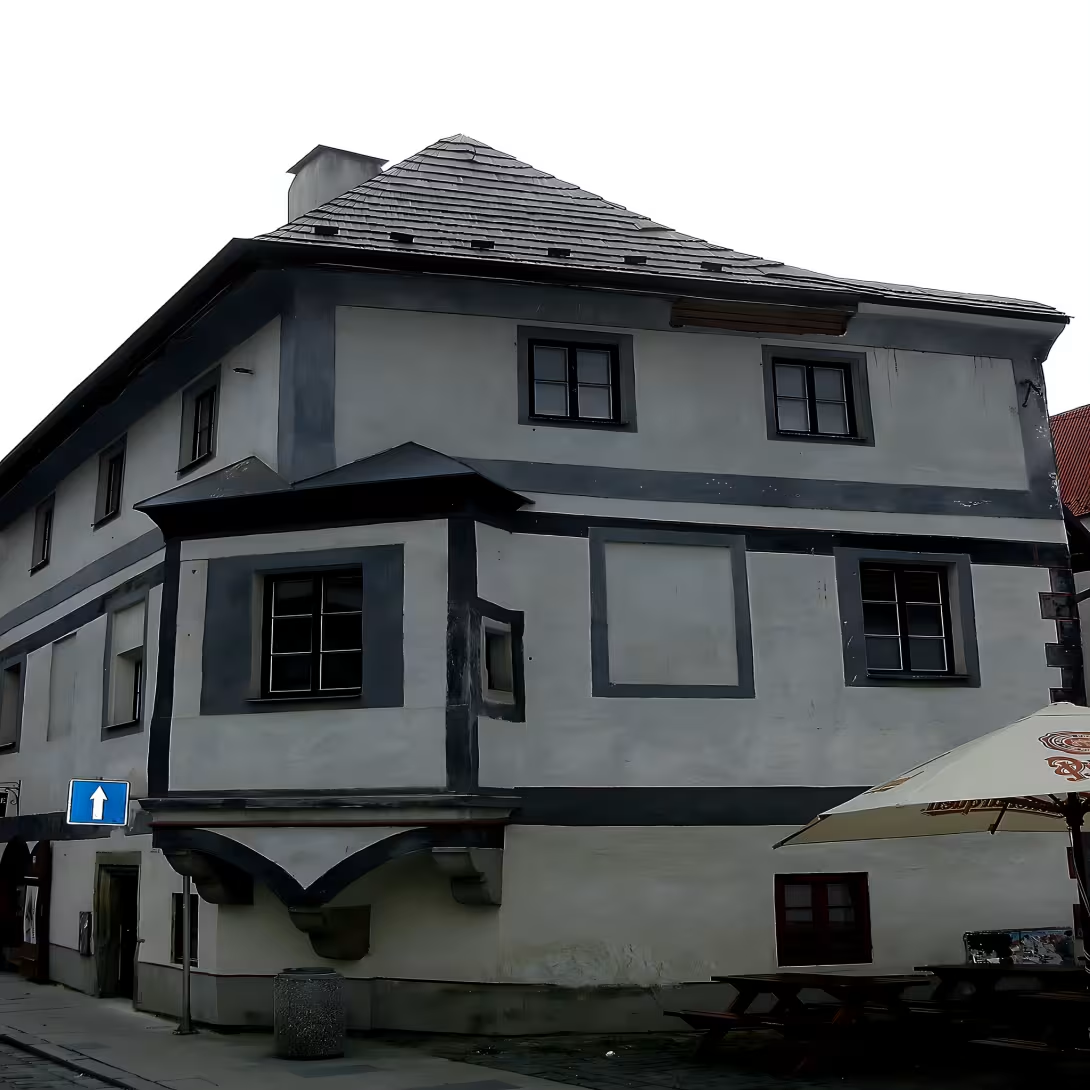
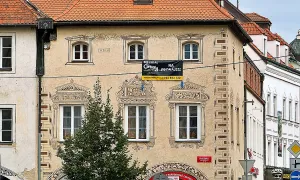
Lubasův dům, situated at the intersection of Česká and Hroznová streets in České Budějovice 1, is a late Gothic cultural monument dating from the early 16th century. Noted for distinctive architectural features like a rough corner bay window supported by three corbels, the building reflects the urban growth of southern Bohemian towns during the Jagiellonian dynasty. It stands as a valuable historic burgher structure featuring a preserved interior layout and a documented heritage history spanning over a century.
Construction of the building dates to the beginning of the 16th century, a time when the Kingdom of Bohemia was ruled by the Jagiellonian dynasty and southern Bohemian towns experienced steady urban development. Sturdy burgher houses from this era reflected the wealth and status of local merchants and craftsmen. The modern designation Lubasův dům is a recent term. Its origin is not documented in available literature, as older sources and the Encyclopedia of České Budějovice do not use it.
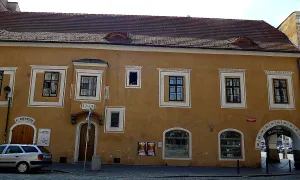
Architecturally, the structure is built in the late Gothic style. The entrance is framed by a late Gothic profile showcasing a distinct stonemason's mark. Extending toward the street intersection is a rough corner bay window, which rests upon a trio of corbels. The overall complex also includes a historic surrounding wall that possesses official monument protection.
The interior layout of the house exhibits unique historical traits. A black kitchen formerly occupied a section of the upper floor, while the ground floor apparently lacked any heating system. The historic surrounding wall that forms part of the site originally flanked a small alley leading diagonally from the České and Hroznová intersection toward Piaristické náměstí, which served as the former cemetery.
Several notable events mark the modern history and preservation of the site. The building was already officially registered as a monument by the year 1900. In 1903, alterations to the surrounding urban fabric occurred when a Baroque gate and an adjacent house within the original alley leading to Piaristické náměstí were demolished, leaving Lubasův dům as the sole surviving structure of that group. Decades later, on May 3, 1958, the edifice was formally inscribed into the modern state list of cultural monuments.
Today, the monument rests within the historic center of České Budějovice in the district of České Budějovice 1, located near Piaristické náměstí and the intersection of Česká and Hroznová streets. Visitors exploring the historic core of the city can view its exterior architectural elements, including the corner bay window and the historic surrounding wall. A visit to the site offers a direct encounter with early 16th-century urban architecture in southern Bohemia and provides insight into the historical layout of the old town.
Historical milestones
- 1900
- The building was already registered as a monument.
- 1903
- The Baroque gate and one of the adjacent houses were demolished, leaving only Lubasův dům standing.
- 1958
- The house was inscribed into the modern state list of cultural monuments on May 3.
Architectural development
The building was constructed at the beginning of the 16th century in a late Gothic style. The entrance is framed by a profile with a mason's mark, and towards the crossroads rises a rough corner arch on three corbels. Part of the complex is also a historic defensive wall that originally bordered the street leading to Piarist Square.
Historical events
1900: The house was registered as a monument. 3rd May 1958: Entered into the modern state list of cultural monuments. 1903: A baroque gate and the neighboring house in the original street leading to Piarist Square were demolished.
Points of interest
– Lubasův dům is a late Gothic cultural monument dating from the early 16th century, located at the intersection of Česká and Hroznová streets in České Budějovice 1. – The modern designation Lubasův dům is a recent term whose origin is not documented in available literature and is not used in older sources or the Encyclopedia of České Budějovice. – Architectural features of the structure include a distinct stonemason's mark framing the entrance and a rough corner bay window supported by three corbels extending toward the street intersection. – The historical interior layout included a black
Guide
Show guide text
This text was created by artificial intelligence and has not been editorially reviewed. It may contain inaccuracies.
Welcome, and thank you for taking the time to explore the historic streets with us today. You are now standing right at the intersection of Česká and Hroznová streets in České Budějovice 1, and right in front of you rises the remarkable structure known as Lubasův dům. Take a quiet moment to look at the building standing before you, and let yourself soak in the atmosphere of a place that has witnessed centuries of local history unfold around this busy crossroads.
As you gaze at the exterior, you are looking at a remarkable piece of architecture that dates back to the early sixteenth century. While the names of the original master builders and architects who designed this structure have been lost to time, and historical personalities directly tied to its creation remain largely unknown in the available records, the building itself speaks volumes through its enduring presence. This significant late Gothic cultural monument has stood the test of time, adapting to the changing rhythms of the city through generations.
Now, let us take a closer look at the architectural details that you can see right in front of you today. Direct your gaze upward and examine the distinctive features that make this building so unique. Notice the prominent corner bay window, a striking element that catches the eye and is supported from below by a sturdy trio of corbels. If you shift your attention toward the entrance, you will find that the doorway is framed by a late Gothic profile, which even bears a traditional mason's mark left behind by the craftsmen who shaped the stone centuries ago. Beyond these specific features, take in the overall facade and the way the building commands the street corner, reflecting the master stonemasonry and structural traditions of its era.
Pojďme se posunout... Let us move from the visual details to the timeline that shaped the surroundings of Lubasův dům. The history of this site is marked by significant transformations over the centuries. Imagine what this corner looked like in the past, long before the modern layout of the city fully took shape. A major turning point came in 1903, when dramatic changes altered the immediate vicinity. During that year, the old Baroque gate and one of the adjacent houses were completely demolished. When the dust settled, Lubasův dům remained standing as a solitary survivor of those older architectural layers, preserving a vital link to the past while the surrounding urban landscape evolved.
Nyní věnujte pozornost... Now pay attention to an intriguing detail regarding the identity of the building itself. The modern designation Lubasův dům is actually a relatively recent term. Its exact origins are not documented in the available historical literature, and interestingly enough, this name was not even used in older records. It stands as a curious reminder of how buildings can acquire new layers of identity and local lore long after their original construction, sometimes even taking on names whose exact beginnings are lost to historical mystery.
The resilience of Lubasův dům is further underscored by its official recognition through time. Long before modern preservation laws, the building's historical value was already acknowledged, and by 1900, it was already officially registered as a monument. Decades later, on the third of May in 1958, the house was formally inscribed into the modern state list of cultural monuments, ensuring its protection for future generations to study and admire.
As we bring our time together to a close, take one last look at the corner bay window and the stone doorway before you, imagining the countless footsteps that have passed this exact intersection over the last five hundred years. We hope this glimpse into the past has enriched your walk through České Budějovice 1. Feel free to continue exploring the charming streets nearby, and thank you for listening. Enjoy the rest of your day!
Tips for visitors
The best time to visit Lubasův dům is in the morning when the historic center of České Budějovice is quieter and the soft daylight beautifully highlights the late Gothic architecture of the early 16th century. Since the monument is situated right at the intersection of Česká and Hroznová streets, the best way to reach it is on foot while exploring the old town, though you can arrive by car or public transport; check current connections in your transport planner. Comfortable walking shoes are essential for navigating the surrounding historic streets, and carrying a wide-angle camera lens will help you capture the unique details of the building.
For photography, the best spots include angles from nearby Piaristické náměstí and across the street junctions where you can frame the distinctive late Gothic features against the historic streetscape. Morning light offers the clearest illumination without harsh shadows, perfect for architectural photography. As this is an exterior and cultural landmark located directly in the historic center, visitors should respect the surrounding urban space.
When exploring nearby within a short walking distance, you can easily visit Piaristické náměstí and the charming area around the intersection of Česká and Hroznová streets as mentioned in the local area details. These nearby historic spots offer a wonderful extension to your walk through the heart of the city.
Visiting with children is quite manageable because the site is located outdoors in an accessible urban area, making it easy to integrate into a family stroll. Parents should keep children close due to standard city traffic at the street intersection, and turning the walk into a fun architectural treasure hunt for old Gothic details can keep younger visitors engaged.
Businesses nearby
Do you run a restaurant, accommodation, shop, museum, rental, wellness or other visitor service near this monument? Show yourself directly to the people heading to it — this is how they will see you in the app and on the web:
Events nearby
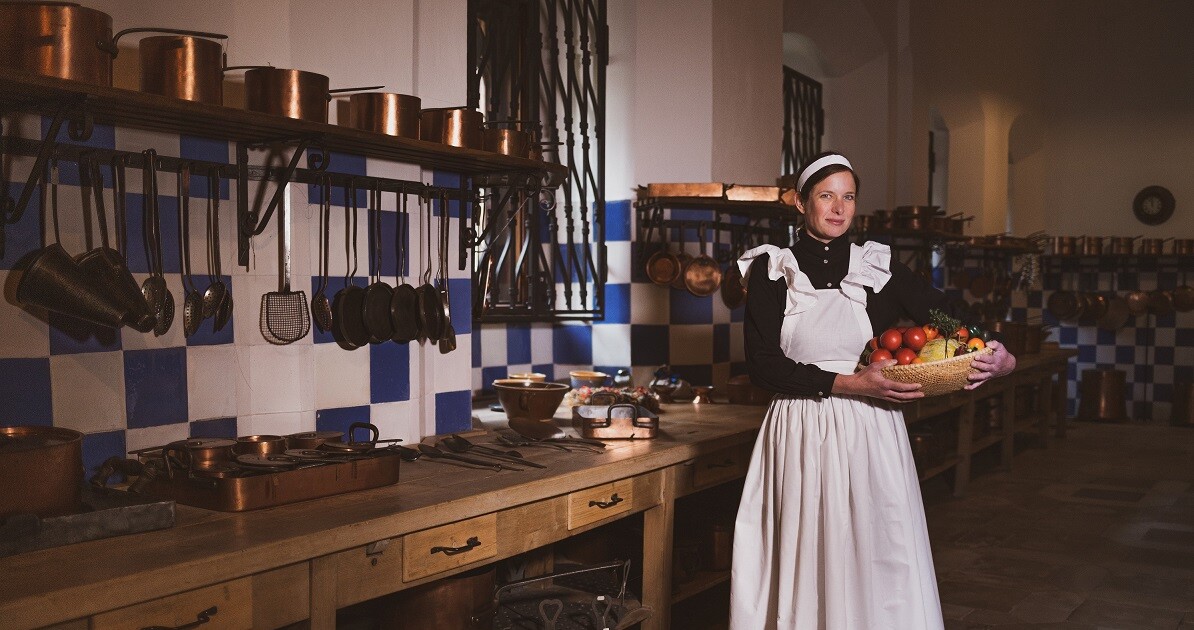
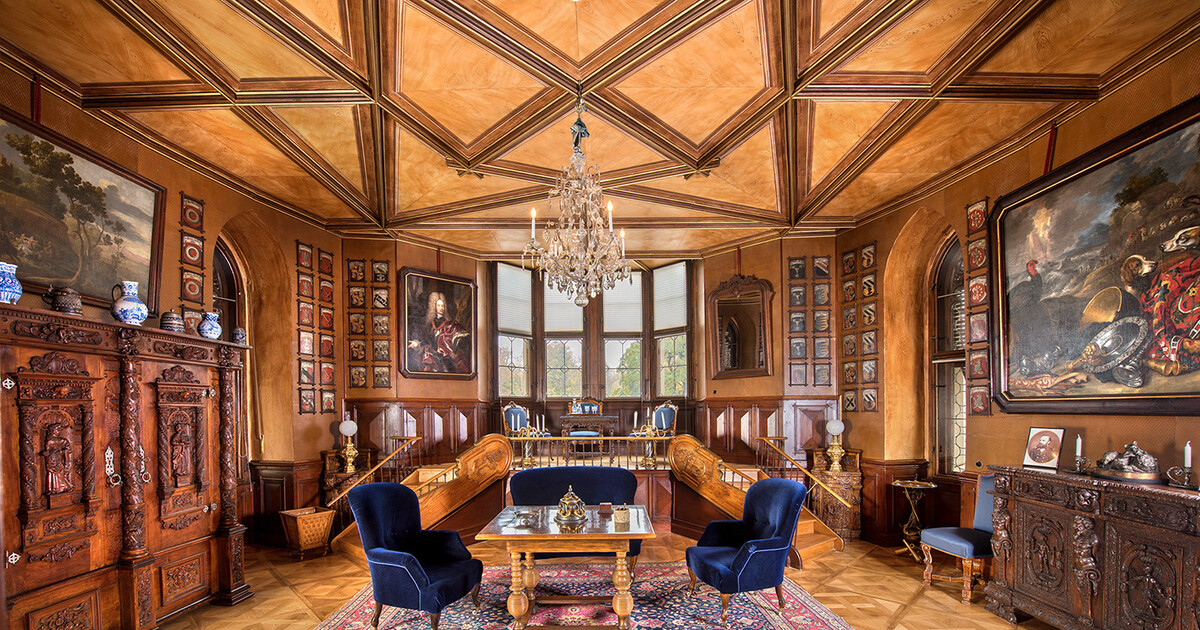

Zdroj akcí: otevřená data měst a obcí ČR (Národní katalog otevřených dat) a kalendář akcí Národního památkového ústavu.
Nearby
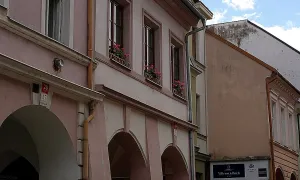
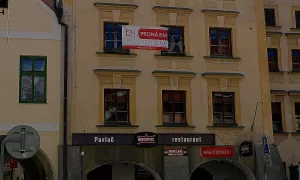
The monument is located in the historic center of České Budějovice (České Budějovice 1), near Piaristické náměstí and the intersection of Česká and Hroznová streets.
Accommodation nearby
Trips and activities nearby
Guided tours, tickets and activities nearby from GetYourGuide
Affiliate link: if you buy from the partner, we may receive a commission. The price for you does not change.
Search tours and activities →Themed route
1. Piaristické náměstí - Type: Historic square - Why visit: Located right in the heart of the historic center of České Budějovice 1, this atmospheric square offers a glimpse into the city's medieval past with its charming surrounding architecture.
2. Lubasův dům - Type: Historic building / Main destination - Why visit: Situated near the intersection of Česká and Hroznová streets, this notable landmark is a key architectural feature of the historic core and the primary focus of the tour.
3. Česká and Hroznová streets intersection - Type: Historic street intersection - Why visit: This vibrant urban spot right next to the main destination connects some of the oldest pathways in the city center, perfect for experiencing the authentic atmosphere of České Budějovice 1.
Seasonal recommendations
Spring brings a fresh awakening to České Budějovice 1, where the historic architecture of Lubasův dům contrasts beautifully with blooming trees in nearby squares and parks. The springtime lighting is soft and golden, casting gentle shadows across the building's facade, creating an inviting atmosphere for leisurely architectural photography without the harsh glare of summer. Practical advice for this season includes wearing comfortable layered clothing, as spring weather can shift quickly from warm sunshine to brisk breezes. Crowds are generally moderate, making the late morning hours the best time to visit for a peaceful experience.
Summer transforms the city into a vibrant hub of activity, enveloping Lubasův dům in the lively energy of the peak tourist season. The long, bright days provide intense, direct illumination that highlights the intricate details of the exterior, though it can create stark contrasts. To escape the midday heat and heavy crowds, the best time to arrive is early in the morning right after opening. Visitors should opt for lightweight, breathable clothing, sunglasses, and sun protection, ensuring a comfortable stroll through the historic streets during the warmest months of the year.
Autumn offers a picturesque and reflective mood around Lubasův dům, as the surrounding urban greenery shifts into rich shades of amber, copper, and russet. The autumn light is uniquely diffused and misty, often hanging low over the historic rooftops, which yields a moody, atmospheric charm ideal for quiet contemplation. Because temperatures drop significantly during this period, practical preparations require warm coats, scarves, and sturdy footwear for damp pavement. Tourist numbers decline sharply after the summer peak, allowing visitors to enjoy unhurried exploration, especially during the early afternoon when the temperature is most pleasant.
Winter casts a serene, fairytale-like spell over České Budějovice 1, with Lubasův dům often standing quietly against a backdrop of frost or occasional snow. The winter atmosphere is exceptionally tranquil, marked by early sunsets that bathe the historic district in a cozy, dim glow as streetlights flicker on. Practicality is key during this season: visitors must dress in heavy winter gear, including insulated boots, gloves, and thick hats, to stay warm while exploring outdoors. Due to shorter daylight hours and winter operating schedules, the best time to visit is around midday to maximize the available natural light and avoid the bitter cold of early morning and evening.
Visualizations and artistic views


The visualisations are generated by artificial intelligence and serve as inspiration.
Photos from the area
Real photos taken near the monument


Zdroj a licence jsou uvedeny u každého snímku.
Tips from visitors
No tips yet. Be the first!
Log in and add your tip.
Sources and literature
Fotografie: Mark Ahsmann / CC BY-SA 3.0, rozlišení zvýšeno umělou inteligencí — Wikimedia Commons. The author and licence also appear when you hover over the image.
Faktickým podkladem tohoto textu byl článek na Wikipedii, jehož autory jsou přispěvatelé Wikipedie. Článek je dostupný pod licencí CC BY-SA 4.0.
Location on the map
More monuments – České Budějovice 1
Show all in the municipality
Příběhy a pověsti
Legendy, pověsti a příběhy spjaté s touto památkou
Fotografie návštěvníků
Zatím žádné fotografie. Buďte první, kdo přidá fotografii z návštěvy!
Přihlaste se a přidejte svou fotografii nebo hodnoťte.
Za ověřenou návštěvu v aplikaci získáte víc bodů — poznáme podle GPS, že jste na místě.
Reviews and comments