



Hroznová 9 House
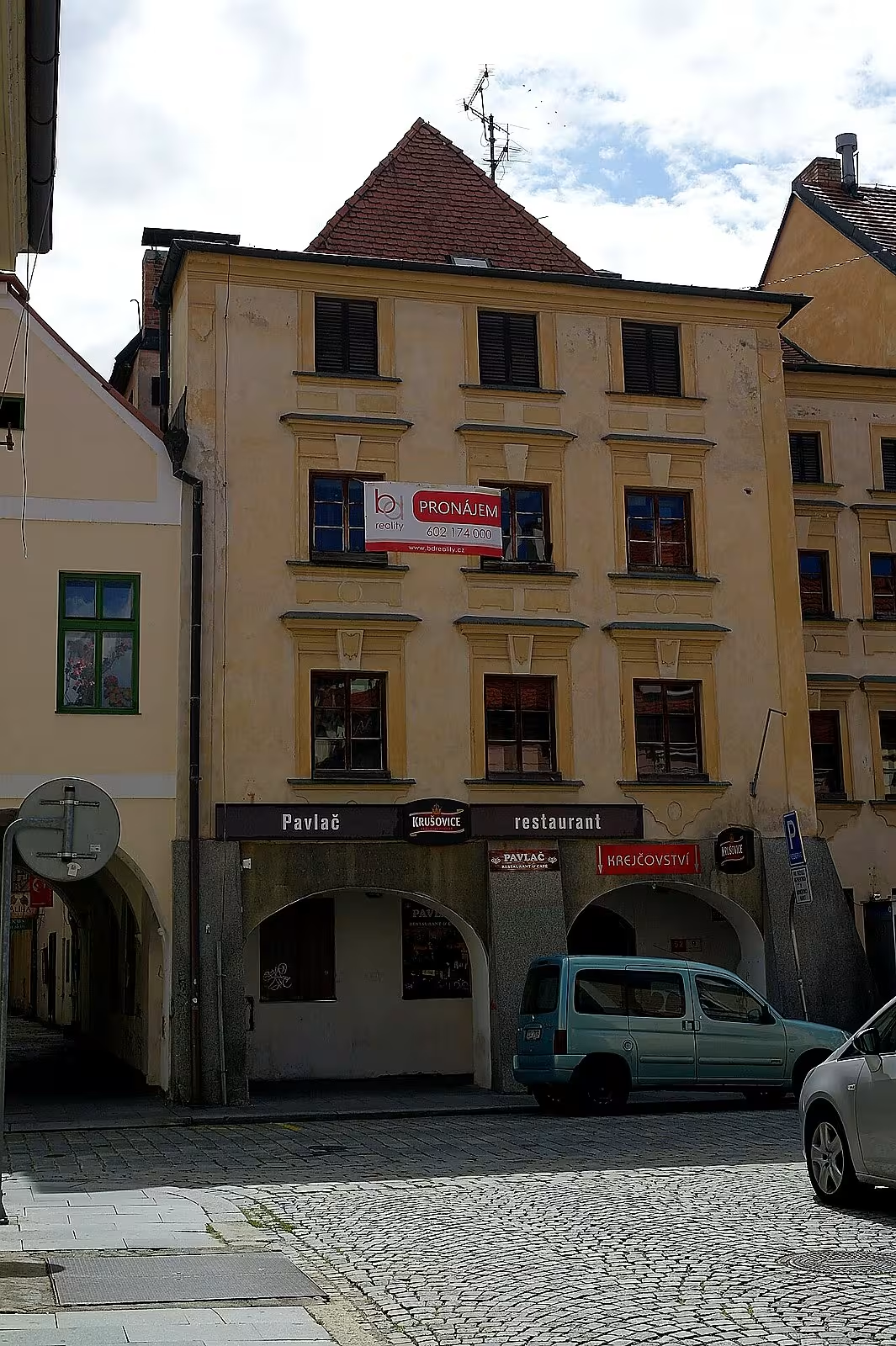
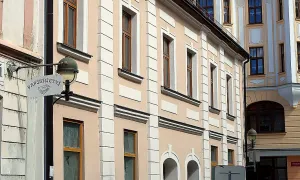
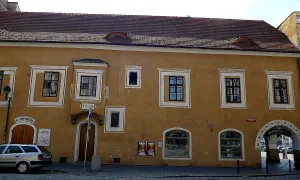
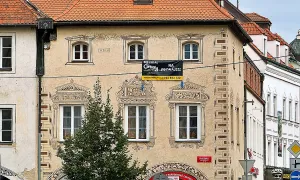
Hroznová 9, also known as U Hromádků or historically U Milleretů, is a culturally significant monument in České Budějovice. This Renaissance-style house has undergone several architectural transformations over the centuries, including Baroque and Classical modifications. It stands as part of the České Budějovice urban heritage reserve, protected since May 3, 1958.
The building is notable for its historical role in the community, having served various purposes such as a tavern with a large social hall under Jan Bapt. Milleret's ownership. Its origins trace back to at least 1625 when it was purchased by Jan Gruber from the Toch family. After a devastating fire in 1641, Michal Hoffer acquired and restored it. By 1786, Jan Bapt. Milleret had taken ownership, establishing a tavern with one of the largest social and dance halls in České Budějovice at that time.
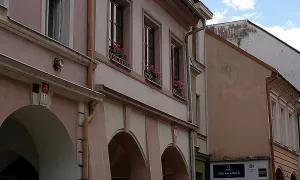
Architecturally, Hroznová 9 was initially constructed in the Renaissance style. Over the years, it underwent several renovations introducing Baroque and Classical elements. The main facade facing Hroznová Street features two arched arcades supported by reinforced pilasters, while its side faces a narrow alley leading to Přemysla Otakara II Square. These changes reflect broader historical trends in Bohemia during the Renaissance, Baroque, and Classical periods.
Throughout its history, Hroznová 9 has seen various owners who contributed to its evolution. After Jan Bapt. Milleret's era, Václav Hromádka became the owner by the late 19th century. Following World War II, in 1948, the house was repurposed as a cultural center, continuing its legacy of serving the community.
Key events at Hroznová 9 include its transformation into a significant social venue under Jan Bapt. Milleret and its role as a cultural center post-1948. These developments highlight the building's importance in fostering communal activities and cultural enrichment over the centuries.
Today, Hroznová 9 remains an integral part of České Budějovice's heritage, accessible to visitors who wish to explore its rich history. Its architectural beauty and historical significance make it a worthwhile destination for those interested in understanding the cultural evolution of this region. Visitors are invited to experience firsthand the legacy of Hroznová 9, a monument that continues to embody the vibrant history of České Budějovice.
Then and now
Drag the slider to compare how the landmark may have looked when it was built with the view today.
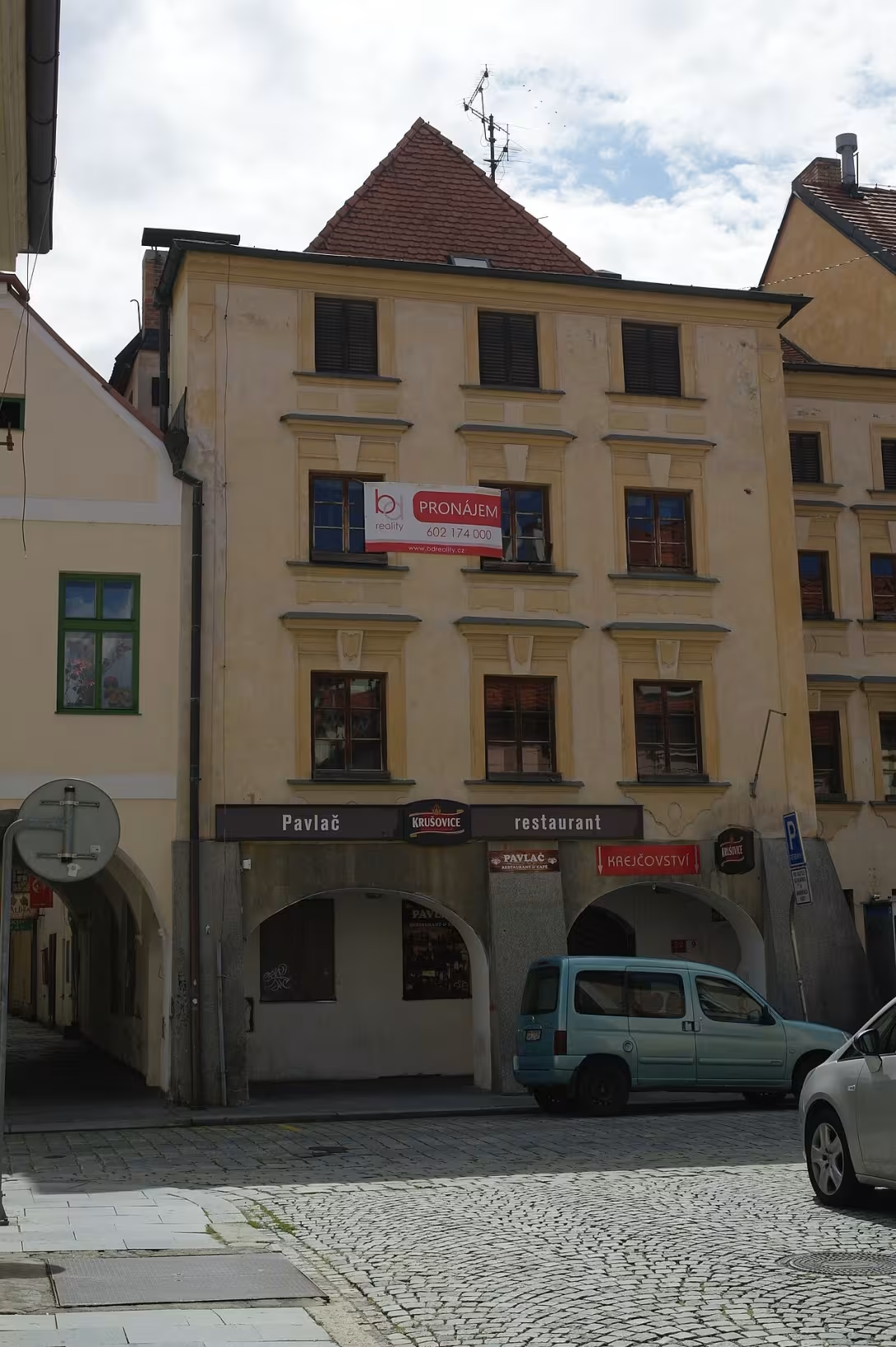
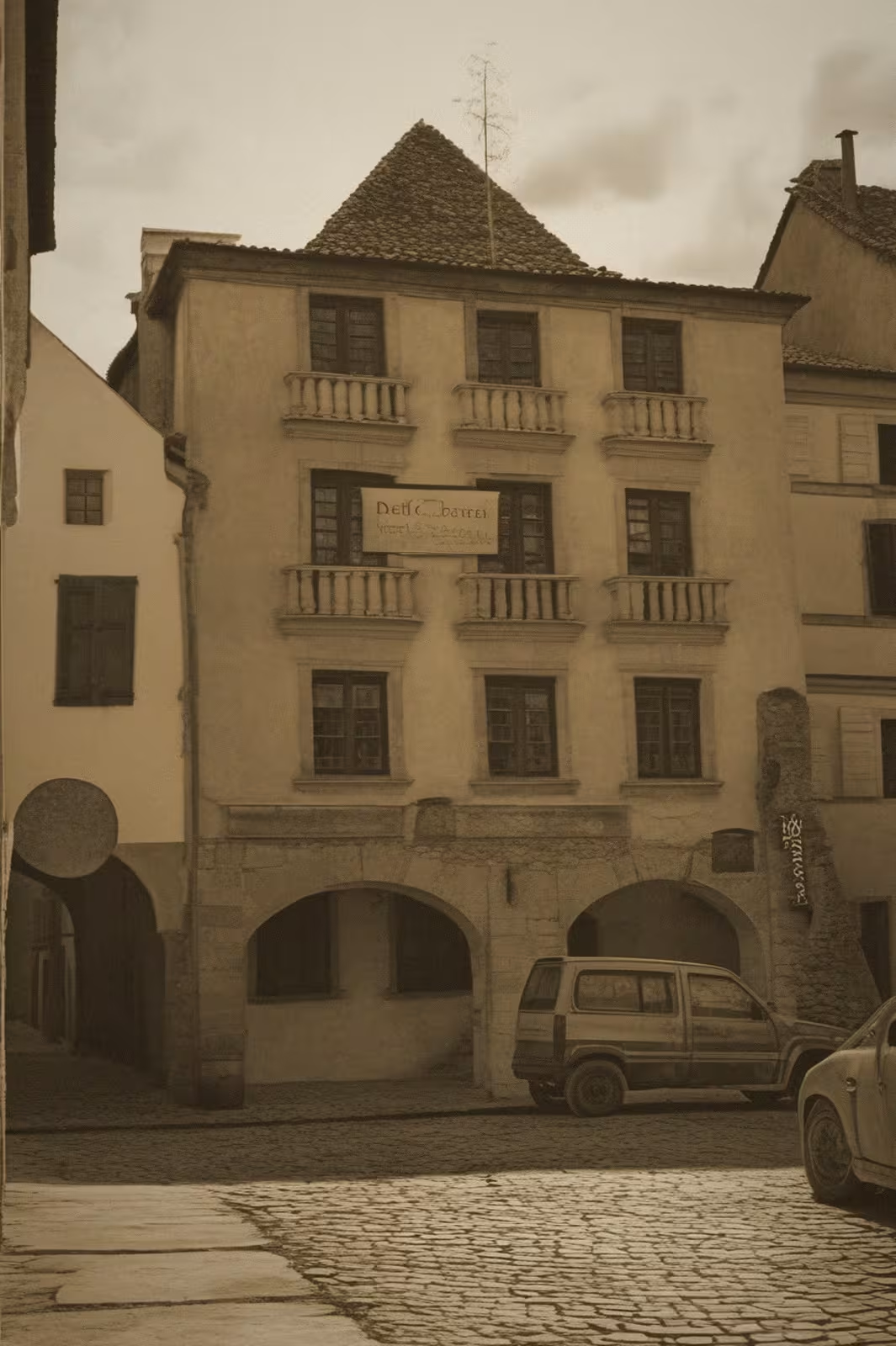
The historical appearance on the left is an AI-generated visualisation and serves as inspiration only.
Historical milestones
- 1625
- Jan Gruber purchased the house from the Toch family.
- 1641
- The building was destroyed by fire.
- 1786
- Jan Bapt. Milleret acquired the property and established a tavern.
Architectural development
Constructed initially in Renaissance style, the house underwent significant architectural changes over the centuries. It was remodeled around 1820, and further modifications occurred in 1845 and 1933. Additional renovations took place in the 1980s and early 21st century, reflecting Baroque and Classical influences.
Historical events
1625: The house was purchased by Jan Gruber from the Toch family.
1641: A fire destroyed the building, which was later bought by Michal Hoffer in 1646.
1786: Jan Bapt. Milleret acquired the property and established a tavern with a large social hall.
Owners
The house was first mentioned in 1625 when Jan Gruber purchased it from the Toch family for 700 kop. After being destroyed by fire in 1641, Michal Hoffer acquired it in 1646. It later became a property of Jan Bapt. Milleret, who established a tavern and hosted musical events with composer Jan Nepomuk Vocet. By the late 19th century, Václav Hromádka owned the house.
Points of interest
- The house was originally purchased by Jan Gruber from the Toch family in 1625, marking its first recorded change of ownership and beginning a long history of transformation.
- After a major fire in 1641, Michal Hoffer acquired the property and undertook significant restoration efforts, showcasing resilience and adaptability in the face of disaster.
- Under Jan Bapt. Milleret's ownership, Hroznová 9 became renowned for its large social hall, serving as one of the largest venues for gatherings and dances in České Budějovice at that time.
- The architectural evolution of Hroznová 9 from Renaissance to Baroque and Classical styles reflects broader historical trends in Bohemia, illustrating how local structures adapted over centuries.
- In 1948, following World War II, the building was repurposed as a cultural center, continuing its tradition of serving the community by fostering cultural activities and engagement.
Guide
This guide is narrated by a synthetic voice generated by artificial intelligence.
Show guide text
This text was created by artificial intelligence and has not been editorially reviewed. It may contain inaccuracies.
House number 52 in Hroznovas ulice in České Budějovice is also called the U Hromádků house. In the past, people called it U Milleretů. It belongs to the city heritage reserve and has been protected as a cultural monument since May 3, 1958.
The first mention of the house dates from 1625. At that time, Jan Gruber bought the house from the Toch family, and its price was 700 kopeks. In 1641, a fire devastated the city. The destroyed house was then purchased in 1646 by Michal Hoffer for just 60 kopeks. After repairs, several other owners followed. It was a burgher's house with the right to brew beer.
A major change came in 1786. The house was then acquired by innkeeper Jan Baptista Milleret. He paid 1604 gold coins for it from the butcher Matěj Růžička and his creditors. Milleret established an inn in the house. The largest social and dance hall of the city at that time was also created here. Musician and composer Jan Nepomuk Vocet performed during musical productions in it.
At the end of the nineteenth century, the house was purchased by Václav Hromádka, after whom it bears its present name. After 1948, a cultural centre was located in it.
The house was built in the Renaissance style. It was later renovated in the spirit of Baroque and Classicism. Renovations took place around 1820 and then in 1845 and 1933. Further modifications came in the eighties of the twentieth century and again at the beginning of the twenty-first century.
The façade of the house faces Hroznovas ulice. It has a covered passage with two arches, and its pillars are reinforced by buttress pillars. The side of the house faces a narrow lane that connects to Plachého ulici and leads to náměstí Přemysla Otakara Druhého.
Tips for visitors
The best time to visit Hroznová 9 is during the late spring or early autumn months, when the weather is pleasant for walking around České Budějovice and exploring its historical sites without the crowds of peak tourist season. This period also offers beautiful natural lighting that enhances the architectural details of the Renaissance-style building.
When visiting Hroznová 9, comfortable walking shoes are recommended as you'll likely be exploring on foot. Given its historical nature, a camera or smartphone for photography is also suggested. While specific spots inside the building may not be accessible without permission, the exterior and surrounding streets offer excellent opportunities for capturing the essence of České Budějovice's architectural heritage.
For families with children, Hroznová 9 offers an engaging glimpse into Renaissance architecture that can spark interest in history and art. While there may not be interactive exhibits inside, the area around the monument is child-friendly, allowing for leisurely walks. Nearby, within a 30-minute walk, are several parks and open spaces where families can relax or play.
Frequently asked questions
Can the monument be visited?
This is a residential or farm building, not a museum with opening hours. Please view it from public space and respect the owners' privacy. We have no information about access to the interior.
Where is the monument?
Location: České Budějovice 1, Jihočeský kraj. The map on this page shows the exact spot.
Why is the monument protected?
It is listed in the Central List of Cultural Monuments of the Czech Republic as a cultural monument (register no. 1000146647).
Businesses nearby
Do you run a restaurant, accommodation, shop, museum, rental, wellness or other visitor service near this monument? Show yourself directly to the people heading to it — this is how they will see you in the app and on the web:
Events nearby
Zdroj akcí: otevřená data měst a obcí ČR (Národní katalog otevřených dat) a kalendář akcí Národního památkového ústavu.
Accommodation nearby
Trips and activities nearby
Guided tours, tickets and activities nearby from GetYourGuide
Affiliate link: if you buy from the partner, we may receive a commission. The price for you does not change.
Search tours and activities →Themed route
Trasa: Hroznová 9 a okolí
1. Hroznová 9 (hlavní cíl) - dům, kde se narodil a zemřel Bedřich Smetana, český skladatel, který je známý svými operami jako "Dalibor" a "Libuše". Dům je nyní muzeem a nabízí pohled do života skladatelova. 2. Kostel svatého Mikuláše - gotický kostel z 14. století, který je dominantou města a nabízí krásný výhled na okolí. Je to také místo, kde Smetana často navštěvoval. 3. Městské náměstí - historické jádro města, kde se nachází mnoho zajímavých budov, včetně radnice a kostelů. Je to ideální místo, kde se můžete seznámit s historií města. 4. Pražská brána - jedna z dochovaných městských bran, která je symbolem města. Je to také místo, kde se nachází mnoho obchodů a restaurací.
Seasonal recommendations
Jaro
In the spring, Hroznová 9 is surrounded by blooming trees and flowers, creating a pleasant atmosphere. The specific spring lighting also creates an appealing presentation of the historic building. For a visit in the spring, it's recommended to arrive before 9:00 AM to avoid crowds that typically gather after opening. It's also advisable to wear clothing suitable for walking tours and photography.
Léto
During the main summer season, Hroznová 9 is a very popular destination, so it's recommended to arrive early to avoid crowds. Summer is also an ideal time for photography when the sunlight creates pleasant conditions for photographic endeavors. It's also good to wear comfortable clothing and shoes suitable for walking around the city.
Podzim
In the autumn season, Hroznová 9 is surrounded by beautiful colorful leaves, creating a pleasant atmosphere. The specific autumn lighting also creates an appealing presentation of the historic building. For a visit in the autumn, it's recommended to arrive after 2:00 PM to avoid crowds that typically gather after work. It's also advisable to wear clothing suitable for walks and photography.
Zima
In winter, Hroznová 9 is surrounded by a calm atmosphere, creating a pleasant environment for visiting. The specific winter lighting also creates an appealing presentation of the historic building. For a visit in winter, it's recommended to arrive after 10:00 AM to avoid crowds that typically gather after breakfast. It's also good to wear warm clothing and shoes suitable for walking around the city.
Visualizations and artistic views


The visualisations are generated by artificial intelligence and serve as inspiration.
Photos from the area
Real photos taken near the monument


Zdroj a licence jsou uvedeny u každého snímku.
Tips from visitors
No tips yet. Be the first!
Log in and add your tip.
Sources and literature
Photos: Jklamo / CC BY-SA 4.0 — Wikimedia Commons. The author and licence also appear when you hover over the image.
Faktickým podkladem tohoto textu byl článek na Wikipedii, jehož autory jsou přispěvatelé Wikipedie. Článek je dostupný pod licencí CC BY-SA 4.0.
Location on the map
More monuments – České Budějovice 1
Show all in the municipality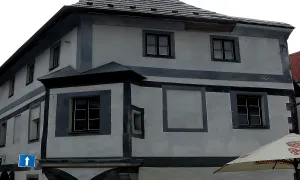
Příběhy a pověsti
Legendy, pověsti a příběhy spjaté s touto památkou
Fotografie návštěvníků
Zatím žádné fotografie. Buďte první, kdo přidá fotografii z návštěvy!
Log in a přidejte svou fotografii nebo hodnoťte.
Za ověřenou návštěvu v aplikaci získáte víc bodů — poznáme podle GPS, že jste na místě.
Reviews and comments