



Česká 39 House
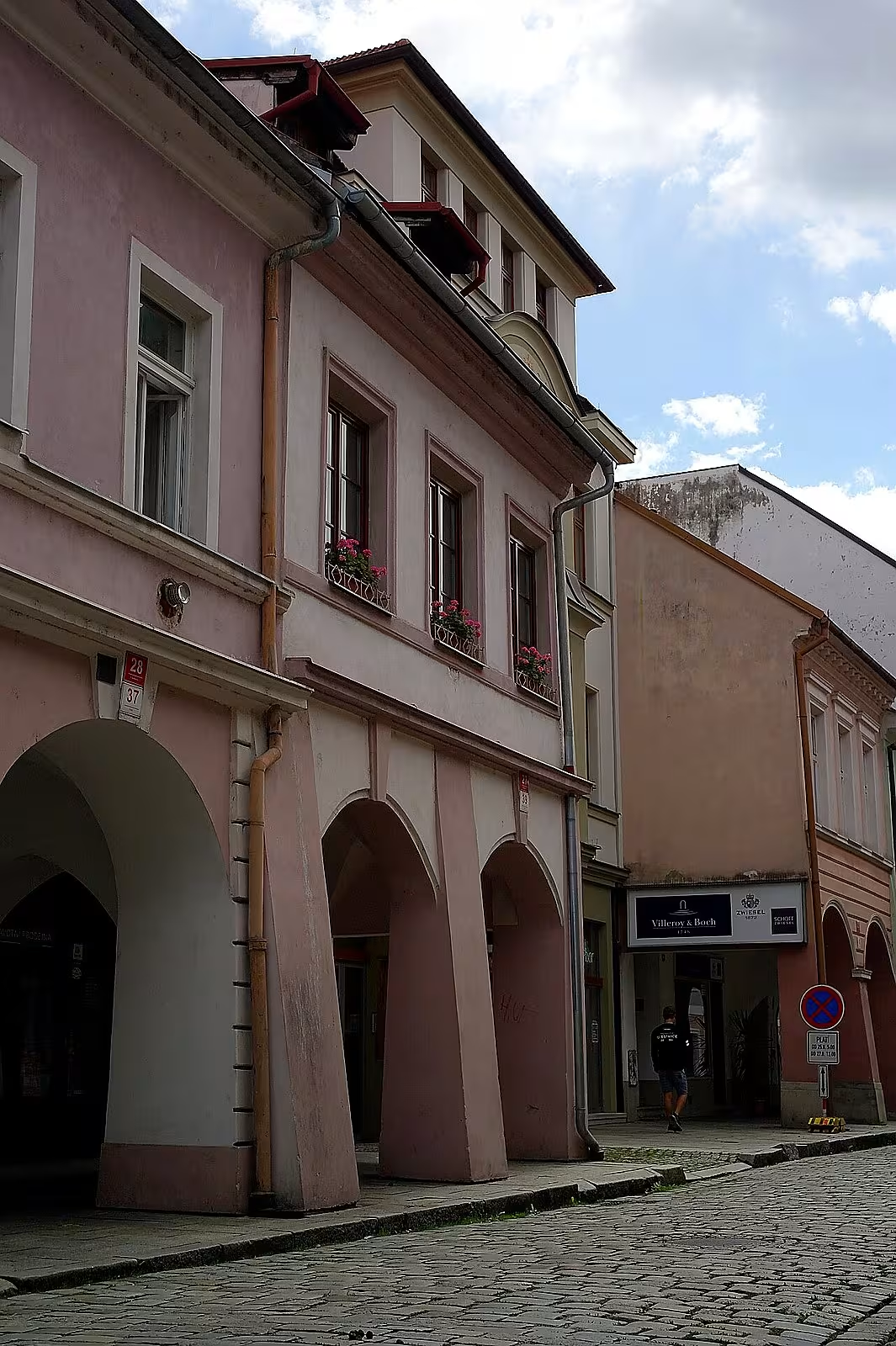
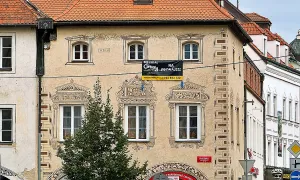
The city house Česká 39 in České Budějovice is an important cultural monument in the historical reservation of the city. Originally built in Gothic style, during the early Renaissance and later modifications of Classicism, a major reconstruction was carried out. The facade was updated at the end of the 19th century, reflecting its development architectural importance over time. This building is remarkable for its historical architecture and connections with important characters such as Felix Zdarssa, bookshop and bishop printer.
The oldest documented history of the City House Česká 39 dates back to 1534, when it was acquired by Martin Lapačka, then mayor of České Budějovice. The building began as a Gothic building before the transformation in the early Renaissance period. Later it was substantially changed in Classicism, at the end of the 19th century with a remarkable update of the facade. These changes reflect broader cultural and political developments in the Czech Republic.
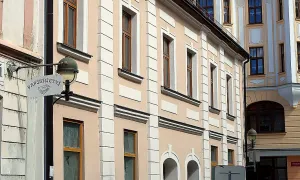
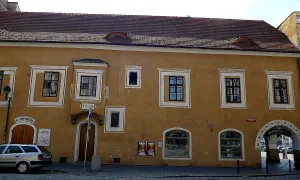
Architectural, the city house Česká 39 is proof of evolving styles for centuries. The building has arched arcades and cross cellars, suggesting its architectural evolution from goth to renaissance to classicism. His facade was updated at the end of the 19th century, showing stylistic shifts as it changed at various historical times.
Owning the house has seen several important characters throughout history. Martin Lapačka first owned it in 1534, followed by Johann Franz Zdarssa in 1799, who bought it for its printer. The Zdarssa family played an important role in its history and Felix Zdarssa became an important bookseller and bishop printer. Anton Zusche became owner after the fire in 1834, which led to further modifications.
The key events in the history of the building include fires that require reconstruction and renovation. In 1450 it was rebuilt after the fire, which probably led to the construction of its arched passage. Another important event happened on November 16, 1834, when the fire damaged the building, which led to changes such as a new tile roof and philedge- in the basement. These events stress the resilience and adaptability of the structure over time.
Today the City House Česká 39 remains an accessible cultural monument in the historical reservation of České Budějovice. Its rich history and architectural evolution make it a useful visit for interested people to discover the Czech heritage rooted in the walls. Visitors can appreciate a mixture of Gothic, Renaissance and classical elements that define this remarkable building.
The town house Česká 39 is a testament to the historical and architectural journey of České Budějovice. Its importance lies not only in its structural evolution, but also in relation to influential figures and events throughout history. This monument invites visitors to immerse themselves in the past and offers views of the cultural tapestry that has shaped this region for centuries.
Then and now
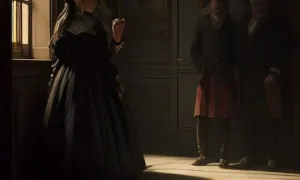
Drag the slider to compare how the landmark may have looked when it was built with the view today.
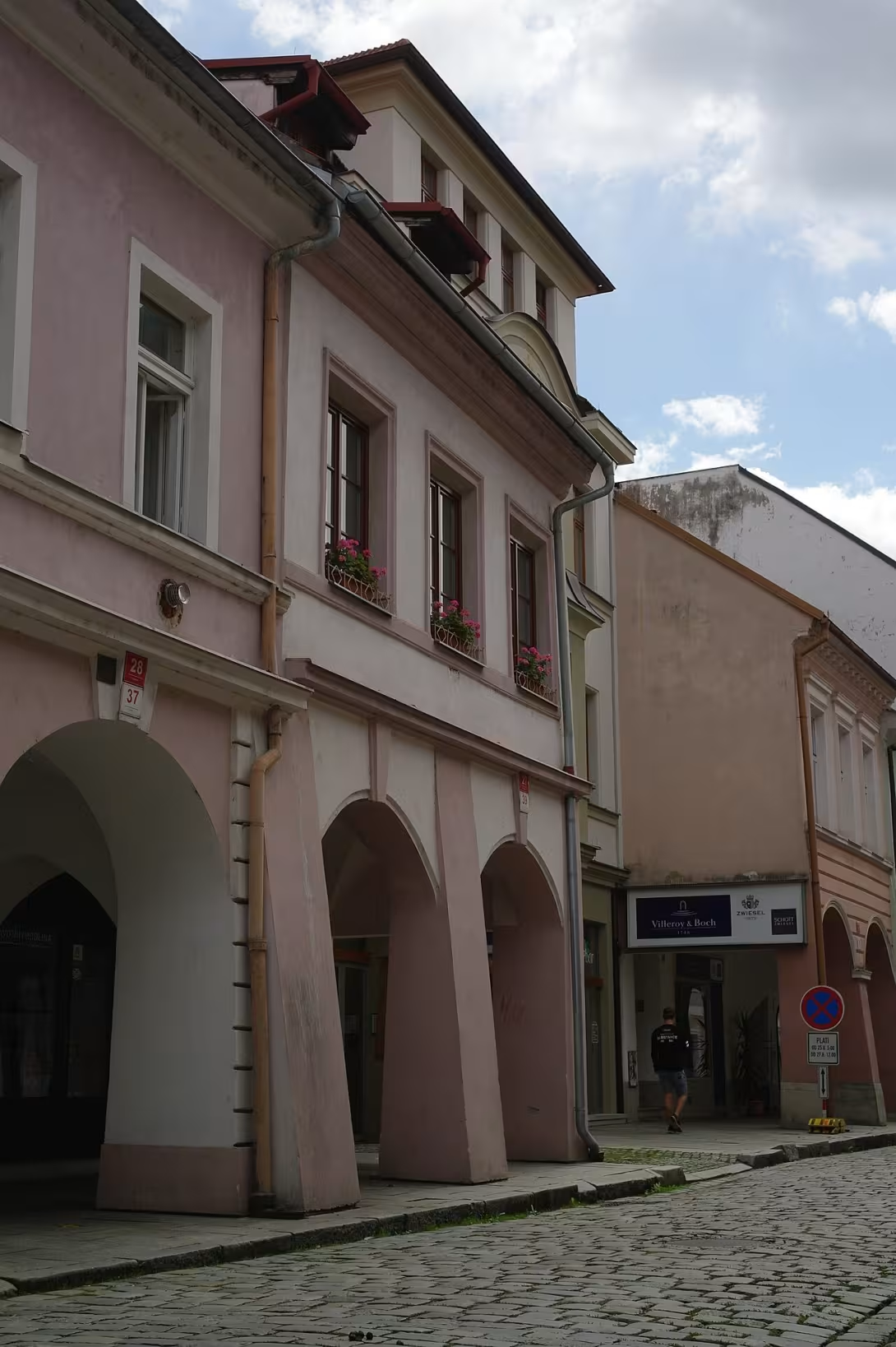

The historical appearance on the left is an AI-generated visualisation and serves as inspiration only.
Historical milestones
- 1450
- The building was reconstructed after the fire.
- 1834
- The fire led to significant changes including a new tile roof and filed- in the basement.
Architectural development
The building began as a Gothic building before being transformed in the early period of the Renaissance. Later it was substantially changed in Classicism, at the end of the 19th century with a remarkable update of the facade. The house is equipped with vaulted arcades and overarched cellars, suggesting its architectural evolution.
Historical events
1450: The house was rebuilt after a fire which probably led to the construction of its arched passage.
1834: A significant fire damaged the building, which led to changes such as a new tile roof and fille- in the basement.
Owners
Martin Lapačka
1799: Johann Franz Zdarssa
1834: Anton Zusche
Points of interest
- The facade building was updated at the end of the 19th century to reflect its evolving architectural significance, showing how it adapts to changes in styles in time.
- After the fire on November 16, 1834, significant changes were made, including the installation of a new tile roof and the filling of cellars, highlighting building resistance and adaptability through renewal.
- Felix Zdarssa, the leading bookseller and bishop's printer, was associated with the property, underlining its historical importance as a centre for cultural and intellectual activity during his time.
- The construction contains arched arcades and cross cellars, which testify to its architectural evolution from goth to renaissance to classicism, which offers views into various historical periods that are reflected in his design.
- Originally built in Gothic style, the city house Česká 39 has undergone extensive renovation during the early Renaissance and subsequent adaptation of Classicism, illustrating the rich tapestry of architectural influences for centuries.
Guide
This guide is narrated by a synthetic voice generated by artificial intelligence.
Show guide text
This text was created by artificial intelligence and has not been editorially reviewed. It may contain inaccuracies.
The townhouse at Česká 39 stands in Česká Street in the urban heritage reserve in České Budějovice and is a protected cultural monument. It is a multi-storey terraced house of Gothic origin. In the early Renaissance it was rebuilt and more substantially modified in the Classical period. The façade took on its present appearance in the late nineteenth century.
The first written record of the house dates from fifteen thirty-four. At that time, the Česká Budějovice mayor Martin Lapačka purchased it from Václav Probošt ze Zhoře for two hundred and forty kop. The purchase deed very ceremoniously mentions Princess Anna Rožmberská z Hradce. This style apparently relates to the then city clerk, bachelor Jan Petrík z Benešova. He translated the works of Erasmus of Rotterdam and Sebastian Franck and earlier tutored Joachim and Zacharias z Hradce.
In seventeen eighty-eight, the city permitted Johann Joseph Diesbach to establish a printing house in Česká Street. From seventeen ninety-two it was owned by Johann Franz Zdarssa, and in seventeen ninety-nine he purchased this house from the butcher Martin Wagner for one thousand gulden. The most famous of his three sons was Felix Zdarssa, who lived from eighteen hundred and seven to eighteen hundred and sixty-one. After his father's and older brother's deaths, he took over the family business. He worked in it as a bookseller, factor, typesetter and printer, later as editor and publisher of the newspaper Budweiser Wochenblatt. He was also a bishop's printer.
The house's present appearance is related to two fires. Following the first one in fourteen fifty, a vaulted arcade presumably came into being. The second fire affected the house on November sixteenth, eighteen thirty-four, when it was owned by the carpenter master Anton Zusche. During the reconstruction, the roof received tile roofing, and the charred remains of the old roof were used to fill in the vanished cellars in the courtyard.
On the ground floor of the façade, two segmented arcades of the arcade open up. The arcade with stone paving is covered by cross vaults with partly broken ends. The left arch towards the neighbouring house is pointed. The entrance hall, known as the mázhaus, is separated from the arcade by late Classical doors with a sun motif, with original ironwork and lock. The corridor to the courtyard and the shop are also vaulted. Behind the mázhaus is an entrance to a Gothic cellar. Its vaulted ceiling is supported by a brick column, partly of stone.
In the early nineteen thirties, two Gothic-Renaissance houses with arcades were demolished to the right of the house. A wine tavern U Höflingerů was created in their place, later a wine tavern called Split. The house originally had the house number twenty-five and reference number forty-one. It was renumbered in nineteen seventy-eight.
Frequently asked questions
Can the monument be visited?
This is a residential or farm building, not a museum with opening hours. Please view it from public space and respect the owners' privacy. We have no information about access to the interior.
Where is the monument?
Location: České Budějovice 1, Jihočeský kraj. The map on this page shows the exact spot.
Why is the monument protected?
It is listed in the Central List of Cultural Monuments of the Czech Republic as a cultural monument (register no. 1000142585).
Businesses nearby
Do you run a restaurant, accommodation, shop, museum, rental, wellness or other visitor service near this monument? Show yourself directly to the people heading to it — this is how they will see you in the app and on the web:
Events nearby
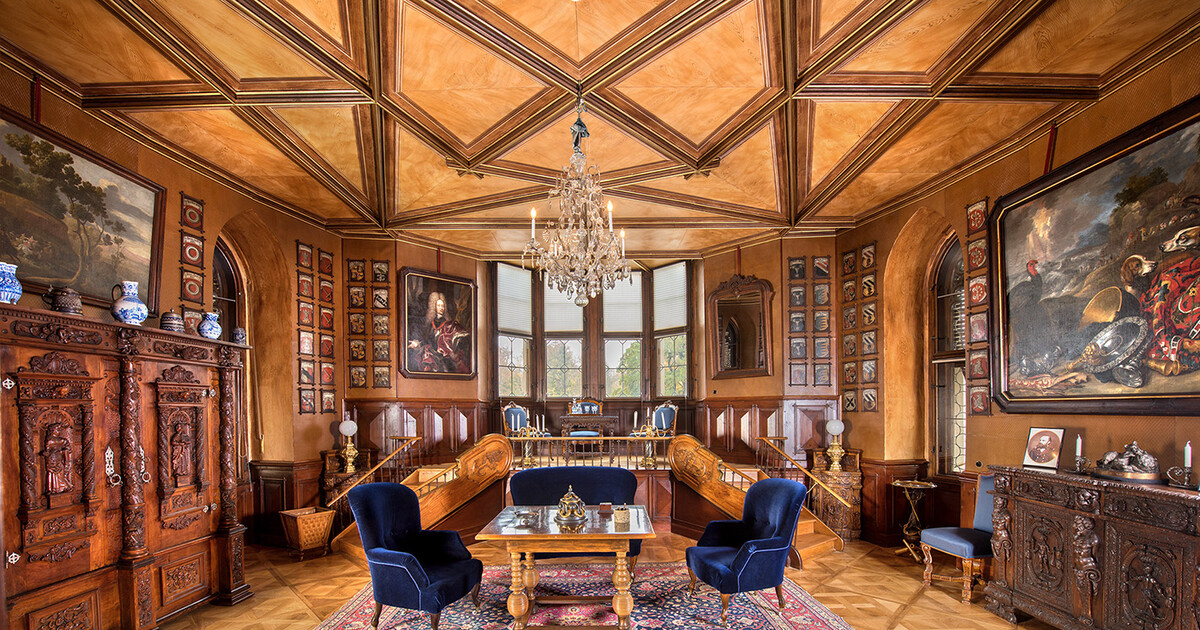
Zdroj akcí: otevřená data měst a obcí ČR (Národní katalog otevřených dat) a kalendář akcí Národního památkového ústavu.
Accommodation nearby
Trips and activities nearby
Guided tours, tickets and activities nearby from GetYourGuide
Affiliate link: if you buy from the partner, we may receive a commission. The price for you does not change.
Search tours and activities →Themed route
Thematic cruise route: Česká 39 and surroundings
1.Česká 39 (Dum) - * Type: * Historical business buildings - * Why is it worth visiting: * This monument is a positive example of Baroque architecture in Czech Budejovice. Dom, built in the 17th century, served as an obch with furs and now there are home museums and galleries. Inner interiors for use on historical art and architecture.
2. Freedom Square - * Type: * Historical work - * Why is it worth a visit: * This centralised regulation is only one who has time from the Czech Republic 39. It should be considered that architecture and historical buildings in which the town hall in order to obtain a Baroque portal. The square is ideal for prochas and advancing local music or theatres.
3. Church of St. Vavřice - * Type: * Historical church - * Why is it worth visiting: * It is located near the Square of Liberty and is well known for its own Gothic architecture. The church, built at the end of the 14th century, offers historic interiors and beautiful frescoes. It is an ideal city for those who are meant to be about ducal architecture and history.
4. Church of St. Nicholas - * Type: * Historical church - * Why is it worth visiting: * This church is another important Gothic monument building in the city, located with the white Square of Liberty. The level and historical interior should be determined. Inject for use on unique gothic architecture and quiet atmosphere.
5. Church of the Holy Trinity - * Type: * Historical church - * Why is it worth a visit: * This Baroque church is stored in the central city and offers beautiful interiors with a rich declaration. It is an ideal city for those to be about Baroque city and architecture.
This route will give you a thin view of the historical and cultural richness of České Budějovice, with the supervision of their architectural beauties.
Seasonal recommendations
Spring: The arrival of spring on Česká 39 brings a refreshing atmosphere when the city begins to awaken from winter sleep. The natural environment is decorated with flowering flowers and fresh greenery, which offers a picturesque background for visitors. Mild weather allows comfortable exploration without the need for heavy clothing. If you want to fully enjoy this season, it is advisable to visit late in the morning or early in the afternoon when temperatures are pleasant, avoiding a colder blow that could still carry the winter cold.
Summer: Summer at Česká 39 is characterized by pulsating energy and busy activity as tourists rush to České Budějovice. Long hours of the day provide enough time to explore, but it is wise to come early in the morning or later in the afternoon to avoid top tourist crowds. Light, breathable clothing is recommended due to warm temperatures, along with sun protection such as hats and sunscreen. This season offers a lively atmosphere, ideal for local culture experience and enjoying outdoor activities.
Autumn: Autumn moons on Česká 39 are marked by stunning conversion of the landscape into rich shades of orange, red and gold. Colder temperatures make it an ideal time to walk around without summer heat. Visitors should dress in layers to suit the changing weather conditions. This season is particularly charming for photographing enthusiasts who want to capture the beauty of changing leaves. Visiting during working days can provide a calmer experience compared to weekends that could still see a fair number of tourists.
Winter: Winter brings peace and magical atmosphere to Česká 39 with its fine snow adding touch of magic to historical architecture. Shorter days mean that a visit earlier in the day is recommended to give as much natural light as possible for the tour. Hot clothes, including coats, hats, gloves and scarves, are necessary due to cold temperatures. While some attractions may have shortened hours during this time, it is an ideal period for those who want to experience the magic of the city without the summer crowds offering a quiet and intimate survey of the place.
Visualizations and artistic views


The visualisations are generated by artificial intelligence and serve as inspiration.
Photos from the area
Real photos taken near the monument

Zdroj a licence jsou uvedeny u každého snímku.
Tips from visitors
No tips yet. Be the first!
Log in and add your tip.
Sources and literature
Photos: Jklamo / CC BY-SA 4.0 — Wikimedia Commons. The author and licence also appear when you hover over the image.
Faktickým podkladem tohoto textu byl článek na Wikipedii, jehož autory jsou přispěvatelé Wikipedie. Článek je dostupný pod licencí CC BY-SA 4.0.
Location on the map
More monuments – České Budějovice 1
Show all in the municipality
Příběhy a pověsti
Legendy, pověsti a příběhy spjaté s touto památkou
Fotografie návštěvníků
Zatím žádné fotografie. Buďte první, kdo přidá fotografii z návštěvy!
Log in a přidejte svou fotografii nebo hodnoťte.
Za ověřenou návštěvu v aplikaci získáte víc bodů — poznáme podle GPS, že jste na místě.
Reviews and comments