



Dr. Stejskala 7 House
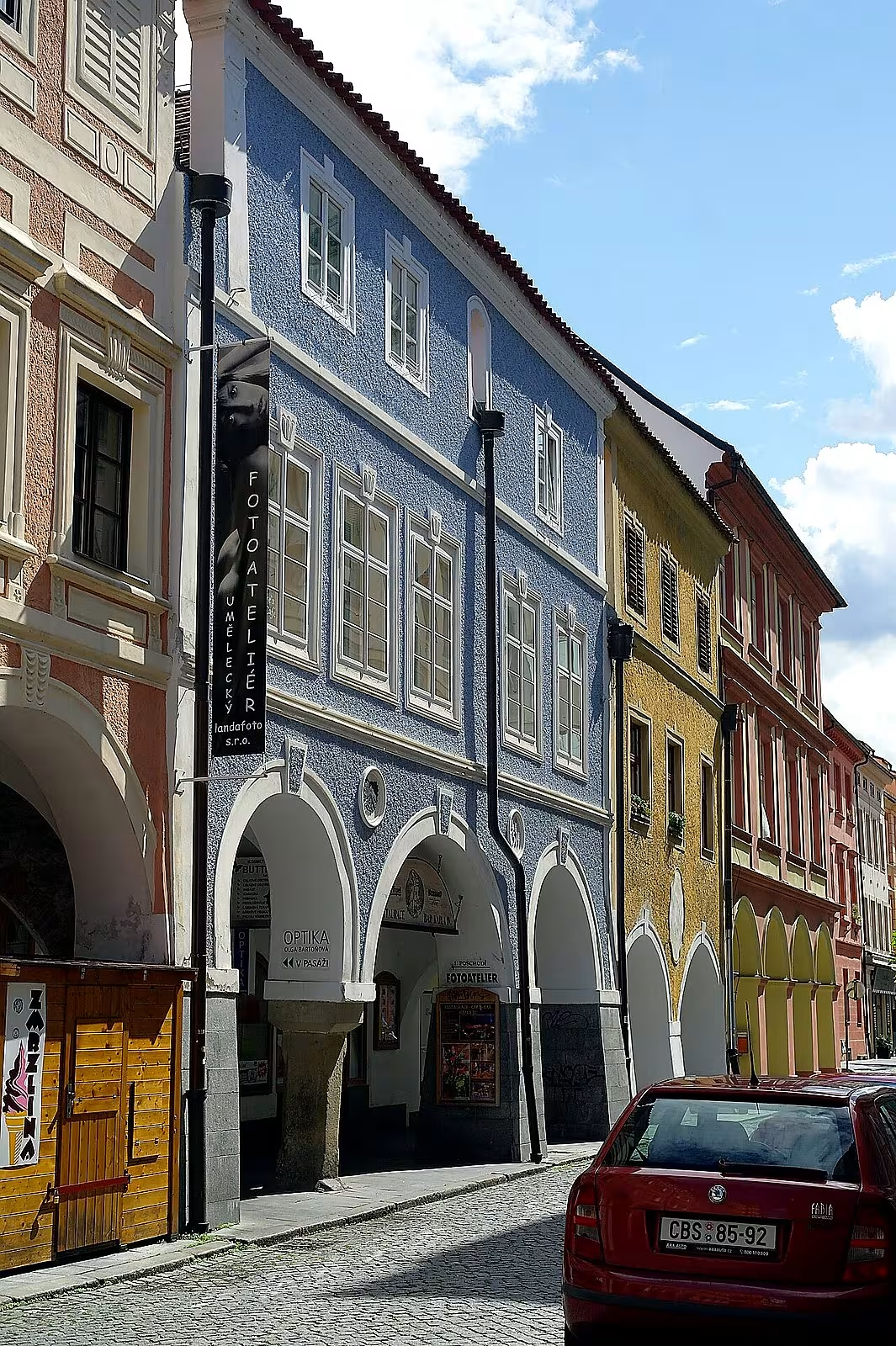
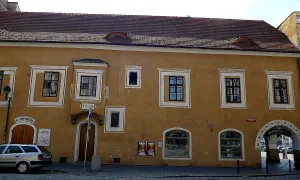
The house at the address of Dr. Stejskal 108 / 7 in České Budějovice is originally a Gothic building registered as a cultural monument of the Czech Republic. It is an anecdotal, four-winged storey object with a characteristic louba and an inner courtyard.
There are few reports of the oldest history and circumstances of the building. However, it is demonstrated that the basic structures go back to the period of goth. This makes the house an important element of historical development in the South Bohemia region.
From the point of view of architecture, it is a storey house with a residential attic and an attics floor. The facade shows five irregularly laid window axes on the floor, there are three in the attics. Three semi-circular arcades are a significant element on the ground floor, which ends with a cross arch.
The current state of the building defines the status of cultural monument, which ensures the protection of its historical substance. The construction represents an authentic example of an urban house with a closed courtyard and a specific solution to the atics.
Thanks to the original Gothic structure and preserved elements such as the arched meadow, this object is a valuable witness to urban development. Visiting this place offers the opportunity to observe the details of historical construction in the centre of South Bohemia.
Historical milestones
- around the 14th century
- The origin of the original Gothic building
- 20th century
- Registration of cultural monuments
Points of interest
- It is originally a Gothic building registered as a cultural monument of the Czech Republic. - The building is an anecdotal, quadruple storey object with an inner courtyard and a characteristic louba. - There are three semi-circular arcades on the ground floor that end with a cross arch. - The facade has five irregularly placed window axes on the floor and three in the attics. - The construction is an authentic example of a city house with a closed courtyard and a specific solution to the atics.
Guide
Show guide text
This text was created by artificial intelligence and has not been editorially reviewed. It may contain inaccuracies.
Welcome to the heart of South Bohemia, in beautiful Budejovice. Right now, you're standing in front of Dr. Stejskal's house under number seven. Stop for a moment, take a breath and let your sight slowly discover the building that is surrounding you right now with its silent history. The first impression of this place is a sense of stability and tradition. You see a towering house in front of you, which, with its structure, attaches itself to the rhythm of the surrounding building, but at the same time carries the mystery of centuries. It is a place where time has stopped and where every stone tells its own, albeit silent, story of the people who lived and worked here.
When we look at the origin of this building, we go deep into the past. Although the exact dates of origin are not known for certain today, the basis of this house is the Gothic era. So imagine the time of knights, old craftsmanship, and the beginning of the city's bloom. Gothic was the time when buildings began to wash up and space began to play a major role. It is this house that is living proof of how medieval architecture gradually adapted to the needs of its inhabitants and how the complex that you see today has evolved from the original core. Although we do not know the names of specific builders or architects, their craftsmanship is still present in the layout of the house itself.
I now call you to pay full attention to the architecture itself. Look carefully at the overall composition. It is a four-wing storey house, which means that the building surrounds the inner space and thus creates a closed, intimate world separated from the streets. Note that the house has a louba. The husk is a typical element of older houses, which served as an indoor space for movement between different parts of the building, protecting people from rain while allowing natural ventilation and lighting of the inner spaces. It's an element that gives the house some lightness and rhythm.
Now let's focus our attention above. If you raise your head, you'll see the atician floor. Attica is the decorative layer of the wall that ends the building above the roof level. In this case, we don't just find an ornamental element here, but above it is a residential attic. This combination shows how the house was treated over time and how each available meter of living space was used. Feel this layer of the house, from the deep foundation to the top of the roof. The whole building is registered as a cultural monument, which is a recognition of its historical and architectural value for the whole region.
When we think about the people who worked here, we have to admit that the history of this house is full of anonymous characters. We don't know the names of the great personalities that would leave their signature here in chronicles, and that's where the special charm of this place lies. This house was not the seat of kings or famous warlords, but it was home to ordinary people, craftsmen or merchants who formed the backbone of the Budějovice city. Each of them added his trail to the inner court, passed through the louba, and perhaps at this very moment, when you were standing outside the house, someone else once watched the street from the attic window. It is the history of everyday life, which is often far more true than the great political history.
The mystery remains precisely what happened in these walls over the centuries. The absence of detailed records of specific owners or precise dates of reconstruction creates space for our own imagination. Why was the house built in this very shape? What kind of business were there? Who visited the inner court that remains hidden from the eyes of the bystanders? This unsub makes the house of Dr. Stejskal the silent witness of a time that doesn't give away its secrets easily. It is like an open book in which some pages are missing, but the rest of the text still allows us to understand the spirit of the time in which it originated.
Also notice how the house fits into the context of the entire city. Budějovice is known for its careful approach to monuments and this terraced house is part of a wider picture of the historical centre. When you look at it, you see not only one building, but part of an organism that has evolved for centuries. The Gothic core, the subsequent modifications, the formation of the loua aetika are layers of time you can perceive if you look at the construction with sufficient patience.
Now that you've looked at the exterior and thought about the history of this place, I suggest you take a moment to quietly perceive the atmosphere. Try to imagine what this street looked like hundreds of years ago, what the steps on the pavement sounded like and what the rhythm of life was in the house with the inner court. This house teaches us that monuments that are not decorated with gold or monumental statues are of great value. Their strength lies in authenticity and that they are the real mirror of the history of the city.
Thank you for coming to accompany me on this short walk in time. I hope you have found something in this house that interests you and that you have felt a connection to the past of our ancestors. Budějovice still has many other gems waiting for your discovery. I invite you to continue to explore the surrounding streets and to look for other traces of history that these beautiful South Bohemia cities contain. I wish you a pleasant rest of the day and many other fascinating experiences while exploring our cultural monuments. Goodbye.
Tips for visitors
The best time to visit is spring or autumn when the city's colors are softer and the house with its Gothic elements excels in natural light. Transportation to the centre of Budejovice is possible by car and public connections; Check specific options in the current timetables.
We recommend that you wear shoes suitable for walking around the historical centre. As it is a residential building, we recommend that we be quiet and respect the privacy of the people when visiting.
For the best photos we recommend morning or late afternoon light, which highlights the details of the atic floor and the structure of the facade. The best angles for the pictures are from adjacent street, where the overall shape of the row house is visible.
Families with children can use a visit to a game in search of old architectural elements such as peeling or specific roof shape, which helps children to understand the difference between modern and historical houses.
Frequently asked questions
Can the monument be visited?
This is a residential or farm building, not a museum with opening hours. Please view it from public space and respect the owners' privacy. We have no information about access to the interior.
Where is the monument?
Location: Dr. Stejskala 108/7, České Budějovice 1, České Budějovice, Jihočeský kraj. The map on this page shows the exact spot.
Why is the monument protected?
It is listed in the Central List of Cultural Monuments of the Czech Republic as a cultural monument (register no. 21557/3-781).
Businesses nearby
Do you run a restaurant, accommodation, shop, museum, rental, wellness or other visitor service near this monument? Show yourself directly to the people heading to it — this is how they will see you in the app and on the web:
Events nearby
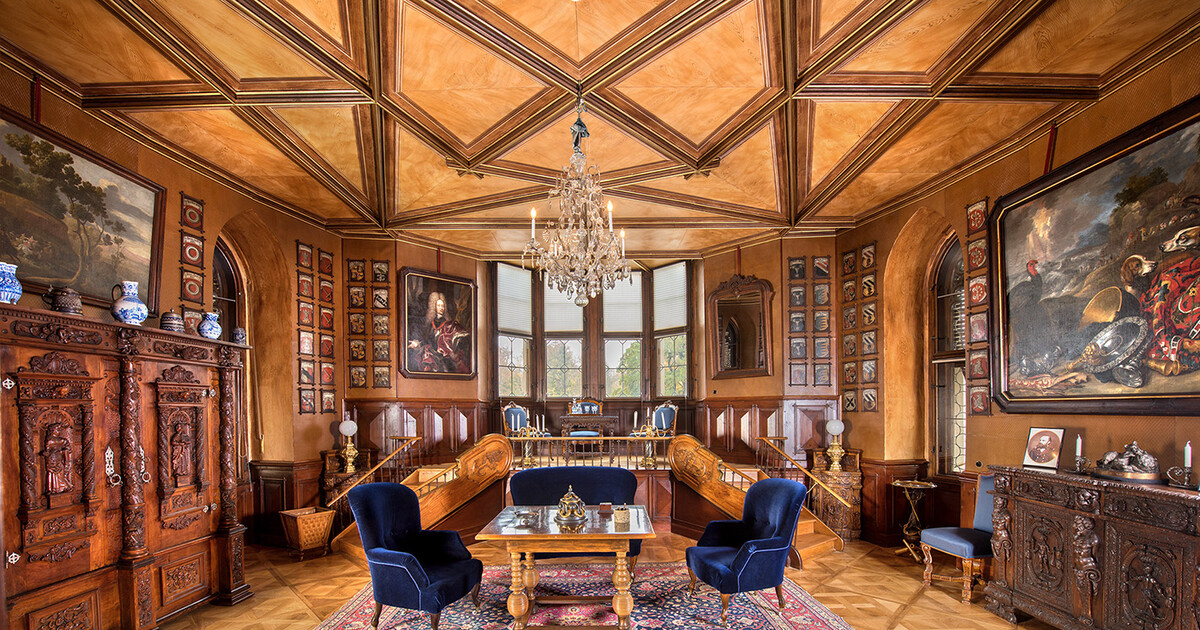
Zdroj akcí: otevřená data měst a obcí ČR (Národní katalog otevřených dat) a kalendář akcí Národního památkového ústavu.
Nearby
➜ Zobrazit interaktivní přehled okolí – restaurace, ubytování, půjčovny a další místa v okruhu 15 km.
Data: OpenStreetMap contributors, okruh 15 km.
🏰 Historické památky
- Základní kámen (0.2 km)
- Bývalá synagoga (0.4 km)
- Muzeum energetiky (0.8 km)
- Pomník Obětem 1. a 2. světové války (2.0 km)
- Machovice (7.7 km)
- Machovice (8.0 km)
- Záviš z Falknštejna (1290) (8.7 km)
- Kotek (9.0 km)
🍽️ Restaurace a stravování
- Singer Pub (0.2 km – Česká 7/55)
- Masné krámy (0.3 km – Krajinská 13)
- Minipivovar Krajinská 27 (0.4 km – Krajinská 235/27)
- Pomada bageterie (0.4 km – Krajinská 265/26)
- The Pub (0.5 km – Na Sadech 1850/30)
- Hadog (0.7 km – Husova tř. 1831/16)
- Franko's restaurant burgeria & pizzeria (0.8 km – B. Smetany 1464/27)
- U Nezmara (1.5 km – Studentská 556/2)
🏨 Ubytování
- Grandhotel Zvon (0.1 km – nám. Přemysla Otakara II. 28)
- U Solné brány (0.2 km – Radniční 138/11)
- Café Hostel (0.5 km – Panská 177/13)
- Ubytovna U Nádraží (0.9 km)
- Penzion Begonie (2.4 km – Jar. Ježka 772/24)
- Olympia (2.8 km)
- Fencl Jan (3.8 km)
- Kemp České Vrbné (4.9 km)
🚲 Půjčovny a sport
- DanielyK (1.2 km)
- Sport Bazar (1.3 km)
- Fitness Pouzar (2.3 km – Dlouhá 1371/35a)
- Cyklo Eliáš (2.3 km)
- Jóga na Zátiší (2.5 km)
- Zvonárna (3.0 km)
- Decathlon (3.9 km)
- DAJ SPORT (4.3 km)
🥾 Turistika a příroda
- Červený vrch (4.0 km)
- Rudolfov – Lesní ulice – okraj města (5.7 km)
- Bavorovice (6.1 km)
- Hluboká (Podskalská louka) (7.4 km)
- U Vondrova (8.6 km)
- Hluboká n. Vltavou - Zámostí (ŽST) (8.7 km)
- Hluboká nad Vltavou (rozc.) (8.8 km)
- výhled z věže (9.0 km)
Accommodation nearby
Trips and activities nearby
Guided tours, tickets and activities nearby from GetYourGuide
Affiliate link: if you buy from the partner, we may receive a commission. The price for you does not change.
Search tours and activities →Themed route
Walk through the premises
1. Dr. Stejskala 7 - Main building. A tour of the main building and its internal premises. 2. Tanks - Outdoor space. A place to relax and admire the architecture of the building up close. 3. Exposure - Exhibition section. Getting to know the topics and subjects presented.
Seasonal recommendations
In spring, the surroundings of the building awaken to new life and fresh greenery complement the appearance of the facade. Light is soft in this period, which is ideal for observing the details of the building from the street. We recommend light but laminated clothing and a visit in the morning when the air is the cleanest. Summer brings sharp sun and high temperatures that highlight the colours of surface materials. The atmosphere is playful and dynamic, typical of the high season travel. It is advisable to choose breathable substances, a sun hat and search for shade near the object during the most jealous hours of the afternoon. The autumn landscape in South Bohemia is painted in gold and brown tones, creating a melancholy background for an outside view of the house. Light is rich and low, which creates interesting shadows on the walls. It is practical to carry a waterproof coat and visit a place when the trees are already partially without leaves. Zimą works in contrast to cold air and possible snow layer which calms the surroundings. The atmosphere is calm and dreamy, especially during the Advent period, when the city lights up. Hot winter clothes, solid shoes and a visit in times when daylight is the longest, i.e. around noon.
Visualizations and artistic views


The visualisations are generated by artificial intelligence and serve as inspiration.
Photos from the area
Real photos taken near the monument


Zdroj a licence jsou uvedeny u každého snímku.
Tips from visitors
No tips yet. Be the first!
Log in and add your tip.
Sources and literature
Photos: Jklamo / CC BY-SA 4.0 — Wikimedia Commons. The author and licence also appear when you hover over the image.
Location on the map
More monuments – České Budějovice 1
Show all in the municipality
Příběhy a pověsti
Legendy, pověsti a příběhy spjaté s touto památkou
Fotografie návštěvníků
Zatím žádné fotografie. Buďte první, kdo přidá fotografii z návštěvy!
Log in a přidejte svou fotografii nebo hodnoťte.
Za ověřenou návštěvu v aplikaci získáte víc bodů — poznáme podle GPS, že jste na místě.
Reviews and comments