






Duchcovský viadukt Railway bridge
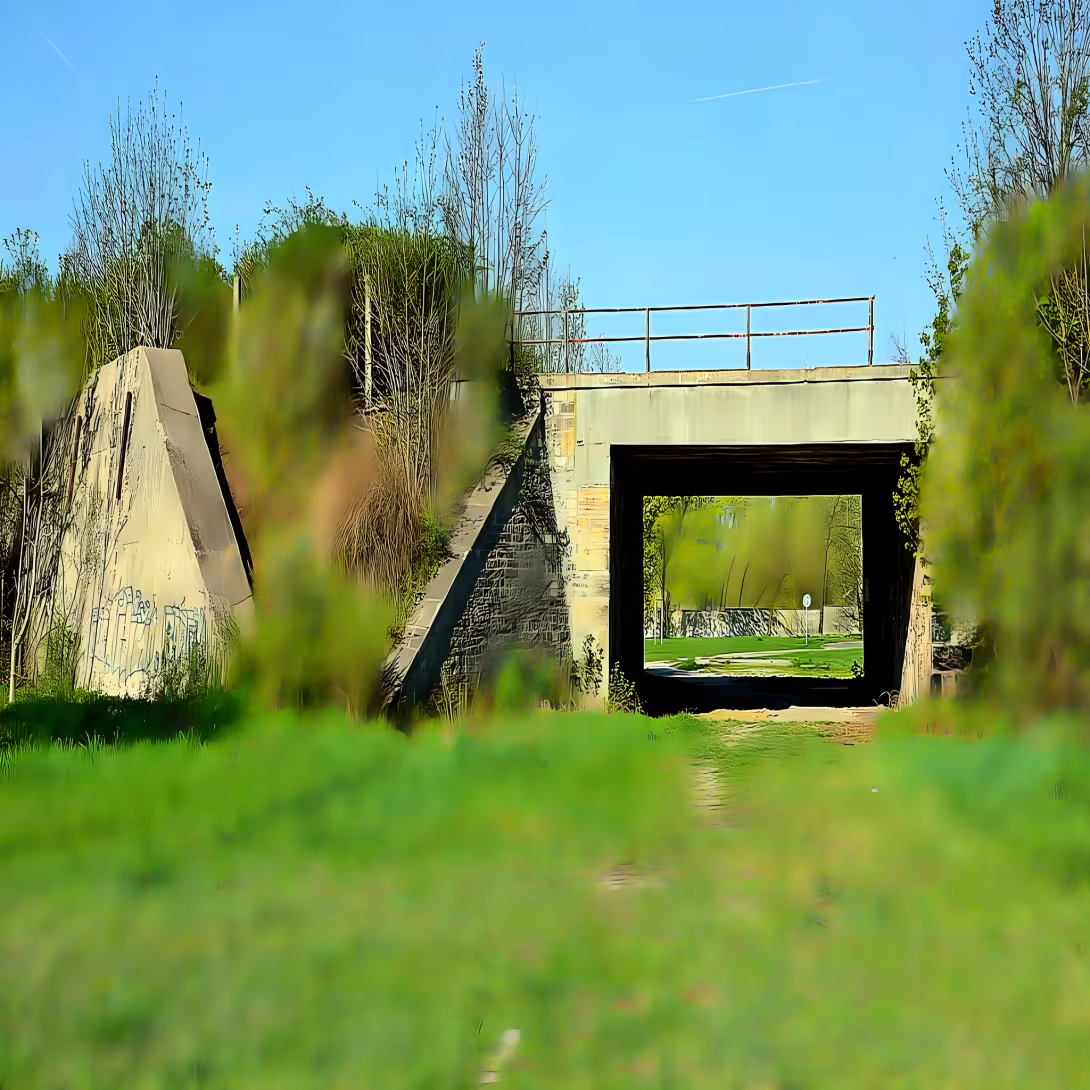
The Duchcovský viadukt is a railway bridge in the Ústecký region of the Czech Republic, near the town of Duchcov. It holds historical significance due to a tragic event during the Great Depression on February 4, 1931. A protest march by unemployed workers and miners was violently suppressed at this site, resulting in four deaths and several injuries. This incident marked one of the first violent confrontations in Czechoslovakia triggered by economic hardship.
The early 1930s were challenging for Czechoslovakia as it faced the Great Depression's effects. The country experienced an economic decline leading to rising unemployment and social unrest, especially among industrial workers and miners. These conditions heightened tensions between labor forces and authorities. The Duchcovský viadukt became a focal point when a protest march against wage cuts and joblessness was met with police violence.
On February 4, 1931, what began as a peaceful demonstration by unemployed workers and miners in Duchcov turned into a tragic confrontation at the viadukt. Protesters aimed to voice grievances over reduced wages and growing unemployment rates. However, when they reached the railway bridge, local police intervened forcefully. The situation escalated quickly, leading to police opening fire on the demonstrators. This violent suppression resulted in four fatalities and several injuries among the protestors.
The incident at the viadukt was part of a broader pattern of social unrest during this period. Across Czechoslovakia, particularly in regions severely affected by economic downturns like Duchcov, numerous strikes and hunger marches demanded better living conditions for workers. The Communist Party (KSČ) played a significant role in organizing these protests, advocating against the prevailing Gentský system that provided unemployment benefits only to unionized workers. This system created a divide among workers, leaving many without support during the crisis.
Today, the Duchcovský viadukt stands as a silent witness to this pivotal moment in Czechoslovak history. Located south of Staré nádraží (Old Station) and extending eastward along Bílinské Street, it is situated within the culturally rich town of Duchcov. The area around the viaduct remains accessible to visitors who wish to explore its historical significance.
Visiting the Duchcovský viadukt offers a unique opportunity to reflect on a critical period in Czechoslovak history marked by economic struggle and social upheaval. It serves as a poignant reminder of the sacrifices made during times of hardship and the enduring spirit of those who fought for workers' rights. The site invites visitors not only to appreciate its historical importance but also to consider the broader implications of such events on contemporary society.
Historical milestones
- 1931
- The violent suppression of a protest march by unemployed workers and miners at the viaduct, resulting in four deaths and several injuries.
Historical events
- 1931
- A protest march against wage cuts and rising unemployment was violently suppressed at the viaduct, resulting in four deaths and several injuries.
Points of interest
- The Duchcovský viadukt incident is often overshadowed by other historical events of the era, yet it remains one of the earliest recorded instances of violent labor unrest in Czechoslovakia during the Great Depression.
- Despite its tragic history, the viadukt has become a symbol of resilience and workers' rights, inspiring local art and literature that commemorate the struggles faced by miners and industrial workers in the early 20th century.
Guide
This guide is narrated by a synthetic voice generated by artificial intelligence.
Show guide text
This text was created by artificial intelligence and has not been editorially reviewed. It may contain inaccuracies.
Welcome to the Duchcovský viadukt, a remarkable railway bridge nestled in the Ústecký region of the Czech Republic, near the town of Duchcov. As you stand here today, imagine yourself transported back through time, where history whispers through these iron arches and stone foundations.
The Duchcovský viaduct was constructed as part of the expanding rail network during a period marked by industrial growth. However, it gained historical significance in 1931, not for its engineering marvels but due to a tragic event that unfolded on February 4th. On this day, a protest march by unemployed workers and miners seeking justice and employment opportunities was met with violent suppression at this very site. The confrontation led to the loss of four lives and left several others injured, marking one of the earliest recorded instances of labor unrest in Czechoslovakia during the Great Depression.
As you look up at the structure now, take a moment to appreciate its resilience. Though the exact architects remain unknown, their creation has stood the test of time, witnessing both progress and sorrow. The viaduct's robust arches and enduring stone speak volumes about its strength and the era it was born into—an era that saw rapid industrialization yet faced economic challenges.
While specific historical figures associated with this site may not be well-documented, the spirit of those who marched here for their rights continues to resonate through history. Their courage in standing up against adversity is a testament to the human spirit's resilience and desire for justice.
A fascinating aspect of the Duchcovský viadukt is how it serves as a poignant reminder of past struggles while symbolizing hope and endurance. Despite its tragic history, the viaduct has become an emblem of resilience—a bridge not just across physical landscapes but also through challenging times in history.
As you continue your exploration, let this site inspire reflection on both the progress we've made and the lessons learned from our shared past. The stories embedded within these structures encourage us to remember and honor those who came before us while looking forward with hope for a better future.
Thank you for joining me on this journey through history at the Duchcovský viadukt. I invite you to further explore its surroundings, where every corner holds a story waiting to be discovered. Safe travels as you continue your adventure in this remarkable region.
Tips for visitors
The best time to visit the Duchcovský viadukt is during late spring or early autumn when the weather is pleasant, allowing for comfortable exploration of the area without extreme temperatures. This period also offers beautiful natural lighting conditions ideal for photography, capturing the historic structure with vibrant surroundings.
Parking and transport options are convenient near the viaduct. There is parking available south of Staré nádraží (Old Station), making it easy to access the site by car. Alternatively, public transportation can be used; visitors should check current routes online for buses or trains that stop nearby. The town center of Duchcov is accessible and provides additional amenities.
When visiting, it's advisable to bring comfortable walking shoes as you may want to explore the surrounding area on foot. A camera is recommended for capturing the viaduct's architectural beauty, especially during golden hours in the morning or late afternoon when the light enhances its features. Additionally, carrying a water bottle and some snacks can make your visit more enjoyable.
For photography enthusiasts, the best spots to capture the Duchcovský viadukt are from either end of the bridge. Early morning or late afternoon provides soft lighting that highlights the structure's details. The eastward extension along Bílinské Street offers a unique perspective with the town as a backdrop.
Nearby attractions within 30 minutes include the historical sites in Duchcov, such as the Church of St. John of Nepomuk and the local museum showcasing regional history. These sites offer cultural insights and are perfect for extending your visit. For families with children, these areas provide educational opportunities and a chance to explore Czech heritage.
Businesses nearby
Do you run a restaurant, accommodation, shop, museum, rental, wellness or other visitor service near this monument? Show yourself directly to the people heading to it — this is how they will see you in the app and on the web:
Events nearby



Zdroj akcí: otevřená data měst a obcí ČR (Národní katalog otevřených dat) a kalendář akcí Národního památkového ústavu.
Nearby
The viaduct is located south of Staré nádraží (Old Station) with an extension eastward along Bílinské Street. The surrounding area includes the town of Duchcov, known for its cultural heritage and historical sites.
Accommodation nearby
Trips and activities nearby
Guided tours, tickets and activities nearby from GetYourGuide
Affiliate link: if you buy from the partner, we may receive a commission. The price for you does not change.
Search tours and activities →Themed route
Duchcov Viaduct Tourist Route
1. Duchcov Viaduct (Railway Bridge) - *Type:* Historic Monument - *Why Visit:* The Duchcov Viaduct is an impressive railway bridge built in 1873. Its architectural design and history make it a must-see for enthusiasts of history and engineering. The viaduct is part of the railway line connecting Prague with Cheb, adding to its historical significance.
2. Old Station (Staré nádraží) - *Type:* Historic Site - *Why Visit:* Old Station is a key part of the history of rail transport in Duchcov. It houses the main station and important connections for travelers. A visit to the old station offers a glimpse into historical architecture and evokes the era when trains were the most crucial mode of transportation.
3. Bílinské Street - *Type:* Cultural Walk - *Why Visit:* Bílinské Street is a living example of local architecture and culture. A stroll along this street offers views of houses with rich histories and the opportunity to explore local shops and restaurants that reflect Duchcov's cultural heritage.
4. Duchcov City Centre - *Type:* Cultural Hub - *Why Visit:* The city centre of Duchcov is full of historic buildings and architectural gems. It houses various cultural institutions and shops that attract both locals and visitors. Exploring the centre provides deeper insight into the history and contemporary life of Duchcov.
5. Nearby Gardens and Parks - *Type:* Natural Relaxation - *Why Visit:* The nearby gardens and parks offer a place to relax and enjoy nature. They are ideal spaces for short walks or relaxation after exploring historical sites, perfectly complementing the cultural experience of the tour.
This route offers a combination of history, culture, and nature, allowing visitors to fully explore Duchcov and its surroundings.
Seasonal recommendations
Spring: The arrival of spring at the Duchcov Viaduct brings a refreshing transformation as nature awakens around this historic railway bridge. Visitors can enjoy vibrant wildflowers and budding trees that frame the picturesque landscape, creating an idyllic setting for photography enthusiasts. As daylight hours lengthen, the gentle warmth of the season encourages leisurely walks along the surrounding trails. It's advisable to wear layers, as temperatures can vary throughout the day, and early mornings or late afternoons are ideal times to visit when crowds are minimal.
Summer: Summer at the Duchcov Viaduct offers a lively atmosphere with longer days perfect for exploring this architectural marvel in full daylight. The lush greenery surrounding the viaduct is at its peak, providing a stunning backdrop for visitors. This period sees an increase in tourists and families enjoying outdoor activities, so arriving early in the morning can help avoid larger crowds. Light clothing is recommended to stay comfortable in the warm weather, and carrying water and sunscreen is essential for a pleasant visit.
Autumn: Autumn transforms the Duchcov Viaduct into a stunning display of colors as the foliage shifts from green to vibrant hues of red, orange, and yellow. The cooler temperatures make it an ideal time for photography enthusiasts seeking dramatic landscapes. While the area remains popular, especially during weekends, weekdays offer quieter moments for reflection amidst nature's beauty. Wearing warm layers is advisable due to the chillier air, and bringing a jacket or sweater can enhance comfort as you explore.
Winter: The Duchcov Viaduct in winter presents a serene and picturesque scene with snow-dusted landscapes that create a magical atmosphere around this historic structure. Shorter days mean visitors should plan their trips during daylight hours for optimal viewing conditions. While the viaduct itself remains open, some surrounding trails may be less accessible due to weather conditions. Dressing warmly is crucial, including wearing thermal layers and waterproof outerwear, while sturdy boots are recommended for any snowy or icy paths.
Visualizations and artistic views


The visualisations are generated by artificial intelligence and serve as inspiration.
Photos from the area
Real photos taken near the monument


Zdroj a licence jsou uvedeny u každého snímku.
Tips from visitors
No tips yet. Be the first!
Log in and add your tip.
Sources and literature
Fotografie: Petr Kinšt / CC BY-SA 4.0, rozlišení zvýšeno umělou inteligencí — Wikimedia Commons. The author and licence also appear when you hover over the image.
Location on the map


Příběhy a pověsti
Legendy, pověsti a příběhy spjaté s touto památkou

Příběh: Duchcovský viadukt
Bylo to v pondělí ráno, kdy Martin zjistil, že jeho obvyklá cesta do dole byla náhle narušena tisícovkami hlav hledících na sebe skrz ranní mlhy. Duchcovský …
Číst příběh
Pověst: Duchcovský viadukt
Staří obyvatelé Duchcova vyprávějí, že za mrazivých únorových nocí, kdy vítr táhne od šachet a obloha leží nízko nad střechami, lze na viaduktu zaslechnout k…
Číst příběhFotografie návštěvníků
Zatím žádné fotografie. Buďte první, kdo přidá fotografii z návštěvy!
Přihlaste se a přidejte svou fotografii nebo hodnoťte.
Za ověřenou návštěvu v aplikaci získáte víc bodů — poznáme podle GPS, že jste na místě.
Reviews and comments