



Dům Daudlebských House
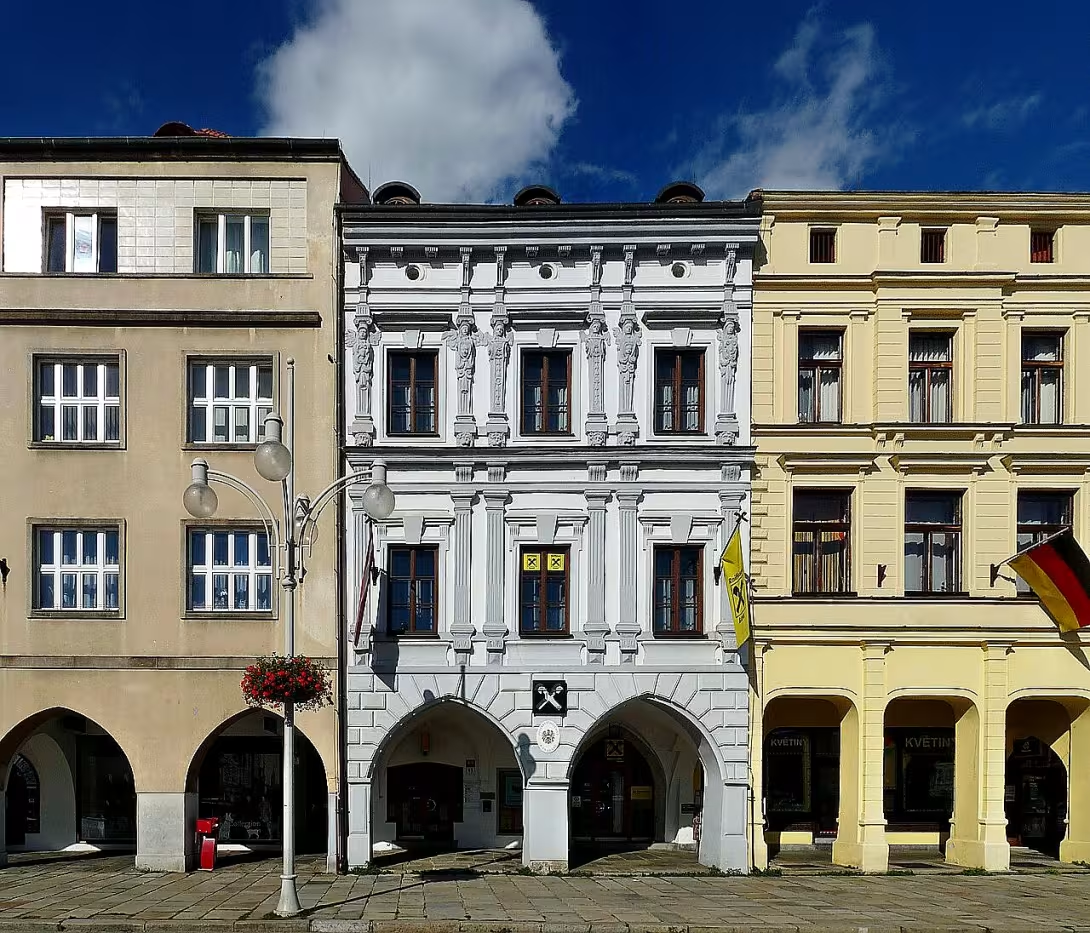
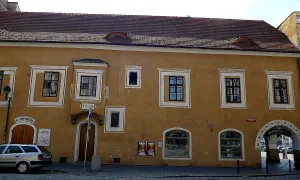
Dům Daudlebských on Přemysla Otakar II. in České Budějovice is one of the most prominent Renaissance buildings in the South Bohemian city. It is a two-storey terraced house with a richly fragmented facade and an arch, whose rolling vault with broken sections is protected as a cultural monument. The current form comes from a demanding reconstruction of the 16th century, when Italian Renaissance trends spread to Czech cities.
This object is a rare evidence of Renaissance urban and architectural creation in České Budějovice. The facade of the house is plastically divided, with broken arcades, which are a rare element in the region. The house is situated in the centre of the city on an important square and its architecture illustrates how European trends were reflected in Czech cities in the 16th century.
The original medieval house certainly had a different shape. But the Renaissance reconstruction from the 16th century created his present face, influenced by Italian aesthetics. The broken arcades and rolled arches with sections are typical of this style, which has also spread to Czech countries. The facade is plastically divided, which is typical of Renaissance houses in the region and gives the building a unique atmosphere.
There was little information about the history of the house and its owners. The name of the Daudlebski probably refers to the original owner or owner who owned or had the house rebuilt during the Renaissance period. But the exact fate of the house after the reconstruction remains unknown.
The arch of the house is encircled by a quilted vaults with sections, typical of Renaissance architecture. The broken arcades, which serve as the support of the vault, are plasticized and form a rhythmic pattern on the facade. The facade itself is richly decorated and represents a rare example of well preserved Renaissance architecture in České Budějovice.
Today, the house is open to the public at the heart of the historic heart of the city. His visit is interesting for lovers of architecture and history who appreciate Renaissance elements and location in the historical environment. There are other important monuments such as Budejovice Castle, the Church of the Assumption of the Virgin Mary or the Town Hall that complement the atmosphere of this place.
The house is worth visiting not only for its architectural value, but also because it represents a living document, as European trends translated into Czech cities in the 16th century. His visit allows himself to become acquainted with Renaissance architecture and understand its influence on the development of urban buildings. For tourists and locals it is an opportunity to admire the beauty of well preserved monuments in the heart of České Budějovice.
Historical milestones
- 16th century
- A difficult Renaissance rebuilding of the house, which created the present form of the facade and the arch.
Architectural development
The original house was probably medieval, but the current form came from a Renaissance reconstruction in the 16th century. The facade is plastically dismembered, with broken arcades, and a rolled vault with sections.
Points of interest
The house is an example of well preserved Renaissance architecture in České Budějovice. Its arch with broken arcades is a rare element in urban development. The facade is significantly plasticized, which is typical of Renaissance houses in the region.
Guide
Show guide text
This text was created by artificial intelligence and has not been editorially reviewed. It may contain inaccuracies.
Welcome to the heart of our city. You are standing in one of the most important places in the whole area, right on the square, which bears the name of the great Czech ruler. Can you feel the strange atmosphere that rules here? It's a combination of the calm of the historical center and the lively rhythm of the city that surrounds you. Before your eyes is a building that is a silent but very tangible witness of many centuries. It's the Daudleb house. Only its name must carry you to a time when the city was changing, blooming and searching for its new face. Look at him. Feel the weight of history that radiates from every stone and every detail. This house is not just an ordinary house, it is a monument to the times that have shaped today's form of our region.
Now let's move forward in time together and understand how this house came to be. To understand why it looks like this, we have to go back to the 16th century. That was when the old ways of construction began to change. People wanted something new, beauty, symmetry, and harmony, brought by a new era. It was in this century that the fundamental and very demanding reconstruction took place, which gave the house its present, beautiful form. Imagine the builders at the time, planning each line to match the house to the overall spirit of the city. This reconstruction created what you see right now - the rich face that has endured centuries and still fascinates us.
Now pay attention to what you see right in front of you. Pay attention to the architecture that is the real treasure in this city. Look at the facade. It's not just a flat, smooth wall that just rejects you. It's a wall that communicates with you. Because the facade is so richly and plastically divided, a fascinating game of light and shadow is constantly taking place on it. When the sun moves through the sky, the shadows extend and shrink, changing the whole look of the house. This depth and rhythm are exactly what makes this Renaissance house so alive. Feel the structure, the shapes that give the building its character.
Now look below, where the house flows directly into the square space. Notice the space under the house. These are the arches that make up such an important part of the entire object. Look at those arches, those arcades. These are broken arcades, which is an element that is not common at all in this urban development. It's something special that makes you stop and see it up close. And if you look directly at the ceiling of these arches, you'll see a masterpiece. It's a broken hollow arch. The geometry, the space work, it all shows how high level of architecture people controlled at the time. These shapes are not just for decoration, but create a unique sense of space that is also protected and yet open to the world around you.
When you look at these details, you might wonder who was behind all this. Who were the people who worked these stones? Who were the masters who designed these broken shapes in the 16th century? The fact is that the names of these architects and specific builders have not been abandoned by history. They remain a mystery to us. We don't even know the names of all the people who lived in this house, but the name of the Daudlebs gives us a breath of mystery. Even though we don't know their faces or their voices, we perceive their presence through this house. They were the ones who shaped this space, and their legacy is still alive here. It's a fascinating idea that even though names are forgotten, their work speaks for themselves.
But there is one other thing that you should be interested in. It's just the rare thing. There are many beautiful buildings in this town, but this house is different. His well-preserved Renaissance resemblance is now a unique one. In particular, it loops with the broken shapes is something that you won't find so easily in the surrounding urban development. It's like a precious jewel that hasn't been lost over time, but remains preserved in all its glory. This house is proof of how important it is to protect our heritage so that future generations can stand exactly where you are and feel the same amazement.
Now that you've looked at this house and understood its essence, let yourself continue to be guided by the atmosphere of this place. The square around you is full of other stories that are just waiting to be discovered. Every other house, every other alley can welcome you with something new. So keep walking, look up and down, see the details and let yourself be carried away by the beauty of this historic centre. Thank you for spending this moment with us and for stopping by the Daudlebski house. We wish you a beautiful and inspiring next part of your journey through the city. Goodbye.
Tips for visitors
The best time to visit the Daudlebski house is in the summer months when the weather is pleasant and you can see the facade and the arch without direct sun. It is also suitable for autumn days when there are fewer tourists and you can enjoy the quiet atmosphere of the historical centre. In winter the visit is interesting thanks to the holiday lighting and atmosphere, but some parts of the monument can be limited due to cold weather.
In the summer months, the visibility of the facade and details is the best, while autumn days offer pleasant temperatures and smaller crowds. Winter brings a magical atmosphere, but some parts can be closed.
Dům Daudlebských is available by car and public transport. Check the current connection and paths in the search engine or on the official city website.
Public transport is well developed in České Budějovice and stops are close to historical monuments.
When visiting the House of Daudlebsky, wear comfortable shoes and suitable clothes, as the tour includes a walk around the historical centre. In the summer bring sunglasses and sunscreen, in the winter warm clothes. If you are planning to take photos, bring a flashlight or mobile phone with you with sufficient charge because some parts of the arch can be shady. Also prepare enough water and possibly a map or navigation for centre orientation.
The historical centre is often filled with stone paving, which can be slippery, and facades are exposed to sun or wind. Photographs in the arch require good lighting.
Photography in the House of Daudlebski is permitted, but it is recommended to search places with favourable light. The best is the morning clock when the sun lights up the facade from one side and creates interesting shadows. The arches with a broken valen arch are beautiful in natural light, but avoid shooting in direct sunlight because it can cause strong shadows and distortion of colors. In winter it is possible to capture beautiful holiday lighting, which gives the photos a magical atmosphere.
Natural light highlights the details of facade and vaults, while direct sun can distort colors and create unpleasant shadows.
In the vicinity of the House of Daudlebski, other historical monuments are worth visiting, which are within 30 minutes walking distance. You can visit Budějovice Castle, which offers panoramic views of the whole city and its surroundings. The Church of the Assumption of the Virgin Mary is located nearby, which is one of the oldest churches in České Budějovice. The historical town hall, located in Peace Square, is also interesting for architecture lovers. For relaxation you can walk along the Vltava River where you can sit on the shore or visit some of the local cafes.
These places complement the atmosphere of the historic centre and allow you to see the other beauty of the city.
If you are visiting the Daudlebski house with children, prepare some activity that will entertain them during the walk. You can bring a small notebook and a pencil and let the children draw or describe what they care about in historical buildings. It is also possible to find a small playground or areas where children can have fun. When visiting the Church of the Assumption of the Virgin Mary, children can see some historical statues and decorations that often fascinate them. It is also important to explain the importance of historical monuments and their importance to the city.
Children are more focused and involved in visiting when they have any particular activity or game.
Frequently asked questions
Can the monument be visited?
This is a residential or farm building, not a museum with opening hours. Please view it from public space and respect the owners' privacy. We have no information about access to the interior.
Where is the monument?
Location: nám. Přemysla Otakara II. 49/13, České Budějovice 1, České Budějovice, Jihočeský kraj. The map on this page shows the exact spot.
Why is the monument protected?
It is listed in the Central List of Cultural Monuments of the Czech Republic as a cultural monument (register no. 38855/3-644).
Businesses nearby
Do you run a restaurant, accommodation, shop, museum, rental, wellness or other visitor service near this monument? Show yourself directly to the people heading to it — this is how they will see you in the app and on the web:
Events nearby
Zdroj akcí: otevřená data měst a obcí ČR (Národní katalog otevřených dat) a kalendář akcí Národního památkového ústavu.
Nearby
V okolí se nachází historické centrum České Budějovice s dalšími památkami, jako je Budějovický hrad, kostel Nanebevzetí Panny Marie nebo radnice. V blízkosti je také řeka Vltava a historické náměstí Míru.
Accommodation nearby
Trips and activities nearby
Guided tours, tickets and activities nearby from GetYourGuide
Affiliate link: if you buy from the partner, we may receive a commission. The price for you does not change.
Search tours and activities →Themed route
Thematic cruise route: Historical Centre of České Budějovice
1.Dům Daudlebských (house)
Why is it worth a visit: This historic house is one of the oldest houses in České Budějovice and represents the architectural value of the period of goth. It's an ideal place to learn local history and culture.
2. Budějovice Castle (Castle)
Why is worth a visit: The castle is not only a dominant view of the city but also has a rich history and beautiful architecture. Its position allows a view of the whole centre and river Vltava.
3. Church of the Assumption of the Virgin Mary (Church)
Why is worth a visit: This church is an important sacral monument with rich history and architecture. He is famous for his Gothic interior and beautiful frescoes.
4. Town Hall (Town Hall)
Why is worth a visit: Town Hall is one of the most famous historical buildings in the city with Renaissance architecture. It is a center of local administration and hosts various cultural events.
5. Square of Peace (Square)
Why is it worth a visit: This historic square is the heart of the city where there are various sights and is an ideal place for relaxation. It is known for its water element and its beautiful garden.
This route offers a view of the most important historical monuments of České Budějovice, allowing visitors to explore the rich history and culture of the city.
Seasonal recommendations
In spring the house is surrounded by awakening nature and fine morning light, which will highlight the details of the facade beautifully. The atmosphere is fresh and hopeful. We recommend wearing more layers of clothing because the weather is variable. The best time to visit is in the morning, when the rooms are quiet.
The summer season brings intense sun and a noisy, lively atmosphere of the city. In the interior of the house you will find a pleasant cold, which offers relief from heat. Due to the large number of tourists it is advisable to come right after opening. Choose light and airy clothes to make you comfortable walking through the centre.
Autumn in Budejovice excels with golden colours of leaves and foggy wounds, which give the memory a mysterious touch. The light at this time is softer and very pleasant to observe architecture. Don't forget to bring an umbrella or a raincoat. The ideal is a visit in the afternoon, when the city seems calmer.
In winter it dominates the freezing air and short days, creating a strong contrast between the cold outside and the cosy inner spaces. The atmosphere is very special and quiet in advent time. It's essential to wear a warm sweater and shoes. Follow the shortened opening times and plan your way forward.
Visualizations and artistic views


The visualisations are generated by artificial intelligence and serve as inspiration.
Photos from the area
Real photos taken near the monument

Zdroj a licence jsou uvedeny u každého snímku.
Tips from visitors
No tips yet. Be the first!
Log in and add your tip.
Sources and literature
Photos: Czeva / CC BY-SA 3.0 — Wikimedia Commons. The author and licence also appear when you hover over the image.
Location on the map
More monuments – České Budějovice 1
Show all in the municipality
Příběhy a pověsti
Legendy, pověsti a příběhy spjaté s touto památkou
Fotografie návštěvníků
Zatím žádné fotografie. Buďte první, kdo přidá fotografii z návštěvy!
Log in a přidejte svou fotografii nebo hodnoťte.
Za ověřenou návštěvu v aplikaci získáte víc bodů — poznáme podle GPS, že jste na místě.
Reviews and comments