



Dům Hejtmanský v Kroměříži House
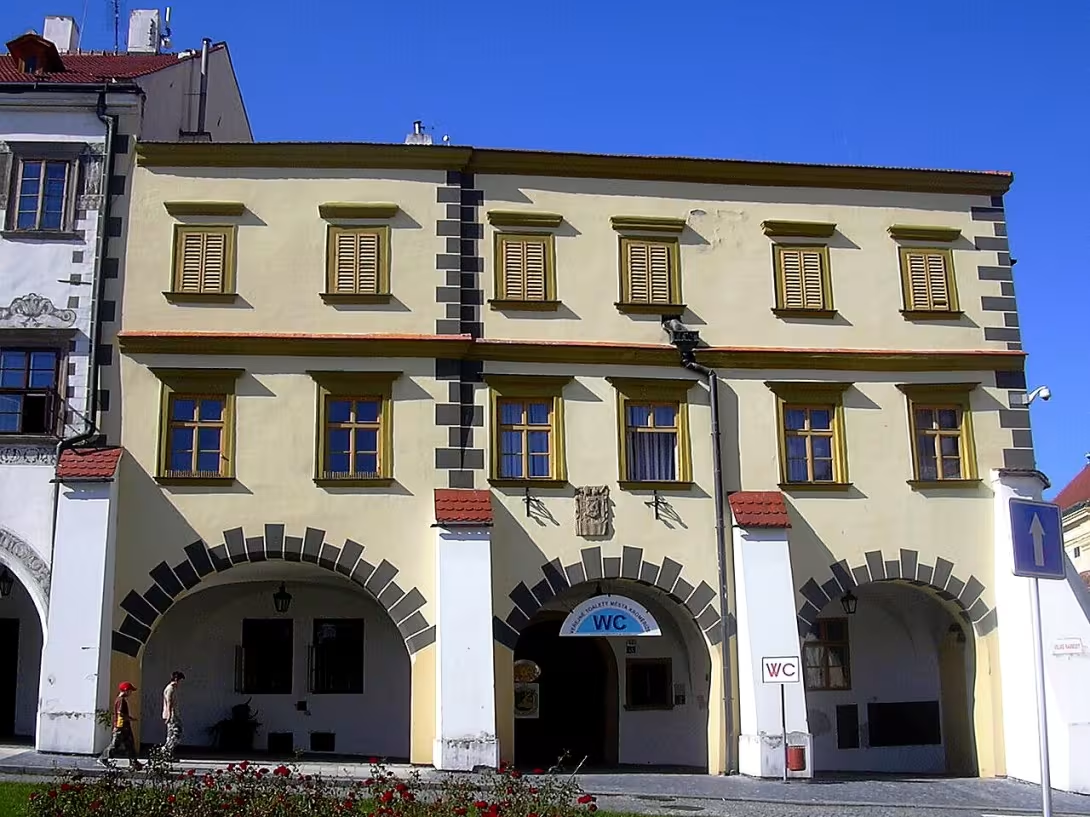
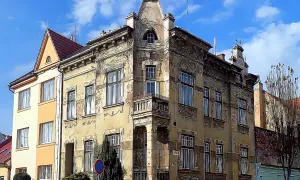
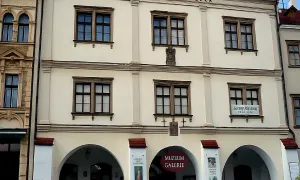
The House of Hejtman, also known as the Syrian House, is a Baroque building in the heart of Kroměříže on the corner of the Grand Square, House Square and Pilar Street. This historical monument has a rich history associated with important personalities and events. It is protected as a cultural monument under the number 41979 / 7-6009 and stands directly opposite the Archbishop Castle, which underlines its historical and architectural value.
The house was built by combining two old Renaissance buildings, which were rebuilt into Baroque style in the second half of the 17th century. This transformation reflects cultural and political changes in Moravia at that time. The house consisted of the rear tract of the front of the house parallel to the SZ side of the Grand Square and is known for its mázhaus as well as the Renaissance pavlac layout of the courtyard. Historically, he served as a residence for small nobles and captains in the service of bishops, stressing his important role in the regional administration system.
The first mention of the house dates back to 1593, when it served as a residence for the secretary of Bishop Stanislav Pavlovský Valentine Lauban. In 1618 the house was connected with Jan Syrakovsky of Syrakovice and Petřwald of Petřvald, who participated in the Czech uprising. This event highlights the political involvement of some of its people during turbulent times. In 1667 he sold the house to Bishop Charles II of Liechtenstein-Katelkorn, which brought a new chapter in his history.
The House of Hejtman is interesting by its mázhaus and courtyard with a wig layout. The Karla II Erbová plate from the Liechtenstein-Katelkorn, located above the central arch, is an important element highlighting the historical connection with the bishop's administration. The increased terrace strengthening the side side of the house towards the Mlýnská gate resembles an earlier level of terrain, which is another element of its historical architecture.
Today the House of Hejtman is not only a cultural monument, but also a part of the local cultural and tourist heritage. In 2016, Václav Havel's bench with a commemorative plate was unveiled in the front square, highlighting its importance as a place for meetings and memories. The House of Hejtman is worth visiting not only because of its historical value, but also because of its location in the centre of Kroměříže, where it is easily accessible and offers a view of other historical monuments such as the Archbishop Castle and Museum Kroměřížska.
The House of Hejtmanský is a witness to rich history and a reminder of the importance of culture and architecture in a regional context. His visit offers a valuable insight into the past and allows himself to enjoy the beauty of baroque construction, which is today protected as a cultural monument.
Historical milestones
- 2016
- Václav Havel's bench with commemorative plate was revealed in the front square.
Architectural development
Originally two Renaissance buildings connected and rebuilt in Baroque style in the second half of the 17th century. The house has an interesting mazhaus and a courtyard with a wig layout, which reflects its architectural history.
Historical events
- 1593
- The house served as a residence for the secretary of Bishop Stanislav Pavlovsky Valentine Lauban.
- 1618
- Jan Syrakovský ze Syrakovic and Petřívaldský of Petřvald were participants in the Czech uprising.
- 1667
- House sold to Bishop Charles II of Liechtenstein-Katelkorn.
Owners
- 1593
- 1618
- 1667
Points of interest
- The House of Hejtman is also known as the Syrakovsky House and stands on the corner of the Grand Square, House Square and Pilar Street in Kroměříži. - The house was created by joining two old Renaissance buildings, which were rebuilt into Baroque style in the second half of the 17th century. - The first mention of the house dates back to 1593, when it served as a residence for the secretary of Bishop Stanislav Pavlovský Valentine Lauban. - In 1618 the house was connected to Jan Syrakovsky of Syracovice and Petřwald of Petřvald, who participated in the Czech uprising. - The Karla II Erbová plate from the Liechtenstein-Katelkorn above the middle arch is an important element highlighting the historical connection with the bishop's administration.
Guide
Show guide text
This text was created by artificial intelligence and has not been editorially reviewed. It may contain inaccuracies.
Welcome to the heart of the historic Kroměříž. You're standing in one of the most important places in this city, in a place where there are three different directions and where every moment seems to be connected to the past. Look around you and perceive the atmosphere of this angle point. You are at the crossroads where the Grand Square, House Square and Pilar Street meet. It is here, in this strategic place, that there is a building that is not only an important point in urban architecture but, above all, a living witness of centuries. It's the House of Heitman.
Now pay attention to the very building right in front of you. Perhaps at first glance you will find her majestic attitude and the way she dominates this corner. Even though you're looking at one whole today, its history is much richer and more complex than it might seem. This house is not originally one house. It was created by combining two separate Renaissance buildings. Imagine those old, separate houses that were standing here when the city was just forming. Then came the second half of the seventeenth century, a period of great changes and new visions. At this time, these two old buildings were rebuilt and connected to one magnificent Baroque unit. This process of connecting two buildings into one new, harmonious form is a fascinating example of how architecture adapted to new needs and new tastes of time.
Now let's move further into the past together to understand where this house comes from. To really understand its weight, we need to look at its very old roots. The first mention of this place, of this particular space, dates back to the year 1595. That means this place has been part of history for over four centuries. It is an incredible idea that, right here, where you are standing, people have been dealing with their affairs since the world around them was changing at an incredible rate.
But why was this house so important? Why was it built in such a significant way? The answer lies in who lived here. This house was not intended for ordinary craftsmen or businessmen. It was a home for people who held true power and responsibility in their hands. There were nobles and captains in this house who served the bishops. At the time, the role of captain was extremely important. He was not just an official, but a man who represented the power of the bishops who were key figures in the region. The House of Hejtman was not only a building, it was a symbol of authority, a symbol of service and a symbol of the connection between the worldly power of nobility and the spiritual power of bishops. Now when you look at his facade, try to think in your mind of the important people who ruled here, who took guests here and who made decisions about things that had an impact on the whole city and its surroundings.
In the history of this place, there have been stories of many great personalities. Let's mention a few names that are inherent in this house. You may have heard of them in history. There's a name like Valentin Lauban, or Jan Syrakovský ze Syrakovic. It is thanks to him that this house has its second, very important name - the Syrian House. Imagine Jan Syrakovsky living in these areas and how his name became part of the identity of this place for many more years. His legacy is so strong that even today people say not only the House of Hejtman, but often the House of Syracuse.
Another important character associated with this place is Maxmilián Říkovský z Dobrčic. And we must not forget Karl the other from Liechtenstein-Katelkorn. These names aren't just a dry list in the textbook. These are the people who left their mark in this house, the people whose lives were deeply linked to this house and the power they represented. You are standing in the place where their fates intersect with the fates of Kroměříž.
Now you might think of one interesting thing that connects this historic building to the very modern history of our nation. You may have noticed that there is a bench dedicated to Václav Havel near the front square. This bench was revealed in the year two thousand and sixteen and is equipped with a commemorative plate. It's a fascinating contrast that makes you think. On the one hand, you have a baroque house, which is rooted in the 16th century and represents an old hierarchical power. On the other hand, you have a memory of a man who was a symbol of modern democracy and freedom. This contrast reminds us that history is not something that is closed behind walls, but that it is constantly intertwined with our present life. History and presence are here in constant dialogue.
Notice how this house works like a bridge. It's a bridge between two Renaissance houses that have merged into a baroque whole. It's a bridge between the noble past and modern history. It's a bridge between the different streets that meet here.
Now that you know the secrets and stories this house carries, I suggest you continue your walk around this beautiful city. Kroměříž has many more surprises for you, many more stories and many more beautiful views. Look at other parts of the square, feel the atmosphere of the surrounding streets and just let yourself be carried away by the beauty of this place. Thank you for spending this moment with us and for being interested in the history of this extraordinary Dom Hejtman. We wish you a beautiful journey and another pleasant discovery of all the treasures Kroměříž offers.
Tips for visitors
The best time to visit the House of Hejtmanský is early spring or autumn, when there is soft sunlight and fewer tourists, which allows comfortable viewing of historical details from the outside.
Take comfortable shoes, a bottle of water, or an umbrella and a map of the city; a camera or smart phone will help you capture the unique atmosphere of historical architecture.
The most suitable places for photography are in front of the corner of the Grand Square and the House Square, where the afternoon light highlights the Renaissance elements of the building; In the morning it provides fine light on Pilar Street.
In the vicinity of the House of Hejtmanský you will find the Archbishop's Castle, which is worth visiting during a short walk; both objects form the historical core of Kroměříže and can be easily combined into one trip, suitable also for families with children who appreciate the diverse architectural styles and space for free movement.
Frequently asked questions
Can the monument be visited?
Some buildings of this kind are open for guided tours, others serve another purpose or are privately owned. We have not verified whether and when this monument is open – please ask the operator.
What are the opening hours and admission?
We have not verified the opening hours or admission. Current information is published by the operator.
Where is the monument?
Location: Kroměříž. The map on this page shows the exact spot.
Why is the monument protected?
It is listed in the Central List of Cultural Monuments of the Czech Republic as a cultural monument (register no. 1000154115).
Businesses nearby
Do you run a restaurant, accommodation, shop, museum, rental, wellness or other visitor service near this monument? Show yourself directly to the people heading to it — this is how they will see you in the app and on the web:
Events nearby
Zdroj akcí: otevřená data měst a obcí ČR (Národní katalog otevřených dat) a kalendář akcí Národního památkového ústavu.
Nearby
Arcibiskupský zámek
Muzeum Kroměřížska
Accommodation nearby
Trips and activities nearby
Guided tours, tickets and activities nearby from GetYourGuide
Affiliate link: if you buy from the partner, we may receive a commission. The price for you does not change.
Search tours and activities →Themed route
Thematic cruise route Kroměříž
1. House of Hejtman (house) This historic house is one of the oldest buildings in Kroměříži and served as the seat of the town's capital. Its architecture reflects Baroque style, making it interesting for lovers of history and art.
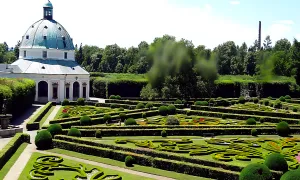
2. Area House of Hejtman (park) The surrounding park is an ideal place for relaxation and short walks after visiting the house. Its green spaces offer a quiet atmosphere where you can enjoy nature near historical monuments.
3. Archbishop's Castle (Castle) This famous Baroque castle is the largest and most famous building work in Kroměříži. His rich interiors, including the church of St. Nicholas and the chapel of Bethlehem, are considered to be one of the most important works of European Baroque architecture.
4. Interior of the Archbishop's Castle (exposition) The inner premises of the castle offer visitors the opportunity to familiarise themselves with the rich history and works of art that were exhibited here. It's the perfect place for those who like history and art.
5. Archbishop's Castle (courtyard) Visiting the castle splendor is necessary to understand the extent and importance of this historic place. It is an ideal room for shooting and enjoying panoramic views of the surrounding gardens and the castle itself.
This route offers a comprehensive view of the historical and cultural wealth of Kroměříže, mainly focused on the main monument and its immediate surroundings.
Seasonal recommendations
Spring: In the spring season Dům Hejtmanský v Kroměříži is turned into a new light, when the sun's rays illuminate architectural details and green surrounding nature. Flowers begin to bloom around the object, which creates an attractive atmosphere. When visiting, it is advisable to carry light clothes as the temperatures gradually rise and the sun can be strong. The best time for a tour is at noon, when the light is best suited for photography and exploring details.
Summer: In the summer months the House of Hejtman gains an intense life. The sun illuminates the entire object, making it an ideal place to photograph and relax on the outdoor platforms. When visiting, it is important to carry protective sunglasses and plenty of water, because temperatures can be very high. The best time to explore is in the morning or in the evening when the temperature is milder and the sun rays are less intense.
Autumn: In autumn the House of Hejtman melancholic character takes place when leaves of falling trees form a coloured carpet around the object. The sunlight is less intense and creates a breathtaking shading on the facades. When visiting, it is advisable to carry warmer clothes as temperatures fall. The best time for a tour is at noon when the sun's rays illuminate the object and its surroundings.
Winter: In the winter months the House of Hejtman gains a mysterious and peaceful character. The sun rises later and sets early, which affects the length of the tours. The first snow sheets that add landscape beauty can be seen around the building. When visiting, it is important to carry warm clothes and protective shoes for cold autumn or winter soil. The best time for a tour is at noon, when sunlight is sufficient to illuminate the object.
Visualizations and artistic views

The visualisations are generated by artificial intelligence and serve as inspiration.
Photos from the area
Real photos taken near the monument


Zdroj a licence jsou uvedeny u každého snímku.
Tips from visitors
No tips yet. Be the first!
Log in and add your tip.
Sources and literature
Photos: cs:User:Pernak / CC BY 2.5 — Wikimedia Commons. The author and licence also appear when you hover over the image.
Faktickým podkladem tohoto textu byl článek na Wikipedii, jehož autory jsou přispěvatelé Wikipedie. Článek je dostupný pod licencí CC BY-SA 4.0.
Location on the map
Příběhy a pověsti
Legendy, pověsti a příběhy spjaté s touto památkou
Fotografie návštěvníků
Zatím žádné fotografie. Buďte první, kdo přidá fotografii z návštěvy!
Log in a přidejte svou fotografii nebo hodnoťte.
Za ověřenou návštěvu v aplikaci získáte víc bodů — poznáme podle GPS, že jste na místě.
Reviews and comments