



Dům U černého vola, U zlatého vola, U sv. Lukáše House
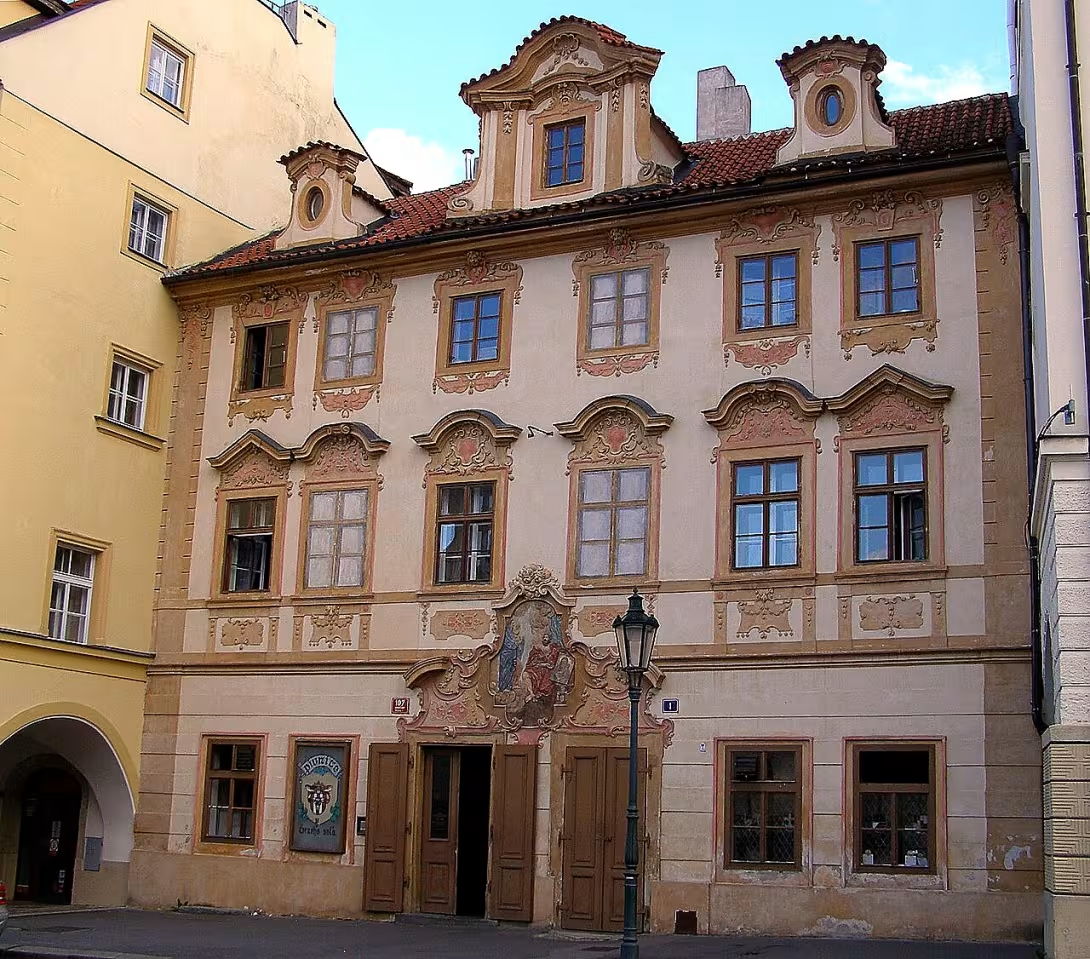
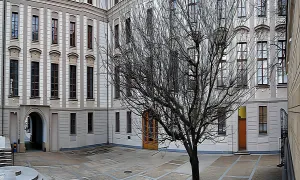
The Black Bull House is a protected city house with a restaurant on the Loretan Square in part Hradčany. The object is a remarkable long-standing hospitality tradition. He served as a centre of meeting of important Czech politicians, artists and intellectuals.
There are limited reports of the oldest history of construction. As early as 1726, however, there is a record room. The hospitality business has been returned here repeatedly over time. In the 1930s, the Women's Association was based in the building under the leadership of Princess Eleonora of Thurn and Taxis.
The current design of the building was imprinted by renovation from the early 1960s. The architect Rudolf Hadrava was the author of the reconstruction. After this reconstruction the inn was reopened in 1965.
Property history dates back to 1872, when the inn was led by a couple to Svobov. Since 1899, the business belonged to Josef Brind. After his death in 1930 his daughter Elizabeth led him. In the post-war years the inn disappeared briefly and the area was used by the Communist Agitation Centre of the National Front. After a velvet revolution, the company has been running Bohumil Landergot for years.
The building is known as the place of meetings of the Civil Club of the Hradčanský and the refuge of future political representation, including members of the Maffie Group. The guests included the future Prime Minister Karel Kramář, ministers Václav Klofáč, Alois Rašín and František Soukup or Vice-President of the Parliament František Buříval. The company was also visited by writers Ignát Herrmann and Jakub Arbes, architect Kamil Hilbert, painter Mikoláš Aleš and sculptor Jan Štursa. The students from the surrounding tracks were frequent visitors. Some of them, such as Alois Bučánek or Vojtěch Tittelbach, prepared a satirical magazine Trn.
In the late 1980s there was a secret editorial of the Samisdat People's newspaper. The then regulars included philosopher Karel Kosík, writer Karel Pecka, songwriter Pavel Vrba, sculptor Josef Adámek and photographers Stanislav Tůma and Jan Reich. The brewery also served as a movie set. There was a scene for comedy as a poison with Zdeněk Světák and a television picture of Malostransky humoresky.
The name of the house has often changed over time. Historically, the names at St. Luke's, the Virgin Mary's auxiliary, the Marian painting, the White Rose or the Ostermayer. The name U Black ox has appeared more often since the 18th century. It is assumed that it was created by mistake as a result of the spelling of the name of the neighboring house at the Black Vory. During the period of the management of the Svobová husband, the company was named U Zlatý ox.
There is a restaurant in the house today known for the quality of beer and its charity. The company financially supports the music school Jaroslav Ježek for blind children. It takes part of the money from each beer sold to that institution. For this activity, the local association received the prize of the Place Foundation in the heart in 1997.
The building represents a unique link between Prague's gastronomic tradition and intellectual history. Visit the restaurant offers the opportunity to taste the atmosphere of the place that has shaped the cultural and political life of Hradčán for generations.
Historical milestones
- 1726
- First record of the beanbag room in the house.
- 1872
- The establishment of an inn called The Golden Bull by the Svobova husband.
- 1899
- Taking over the inn by Josef Brinda.
- 1965
- Resetting the inn after the renovation of architect Rudolf Hadrava.
- 1997
- Getting the Prize Foundation Places in the Heart for charity towards the School for the Blind.
Architectural development
The building underwent renovation in the early 1960s, designed by architect Rudolf Hadrava. This reconstruction of the company has shaped the way the house has until today. The inn was reopened in 1965.
Historical events
In 1726, the house was first registered in the shellfish room. In the postwar years there was a communist agitation center of the National Front. In the late 1980s there was a secret editorial of the People's newspaper.
Owners
Since 1872 married to Svobov, since 1899 Josef Brinda, then his daughter Elizabeth.
Points of interest
- The house is a remarkable long-standing hospitality tradition and served as a meeting place for prominent politicians, artists and intellectuals. - The name U Black ox was probably created by a misrepresentation of the name of the neighboring house U Black vol. - In the late 1980s there was a secret editorial of the Samisdat People's newspaper. - The brewery served as a film stage for comedy as a poison and television picture of Malostransky humor. - The restaurant supports the music school Jaroslav Ježek for blind children from the sale of beer.
Guide
Show guide text
This text was created by artificial intelligence and has not been editorially reviewed. It may contain inaccuracies.
Welcome to the Loretian Square in the heart of Hradčan. You're standing in front of a building that looks like a cozy townhouse, but its walls hide the stories of many generations of people who made up the history of our city. Look at the facade of this house, which we know today mainly because of our hospitality tradition. It's where time stopped and where you still feel the spirit of old Prague. Feel the atmosphere of this place that served as a refuge for those who sought peace, society or space for deep thoughts. Now let's look at how people got to this place and how it evolved. The history of hospitality in this house goes very deep. The first records of the wheat room in this building dates back to the year seven hundred twenty-six. So imagine how many people here have drunk their sorrows or celebrated their achievements over the centuries. A significant break occurred in the year one thousand eight hundred seventy-two, when the Svoboda husbands set up a inn here under the name of the Golden Bull. Later, at the turn of the century in a thousand eight hundred ninety-nine, Josef Brinda took over. This house was not just an ordinary business, but it became the real center of social life in Hradčany. Now pay attention to the building itself. Although the house may seem stealth, it is protected by monuments and its form affected various repairs and modifications. One of the important renovations was the one from the year one thousand nine hundred sixty-five led by architect Rudolf Hadrava. Thanks to his work, the inn could reopen its doors in a form that respected his history. Look at the front of the house and perceive its harmony with the surrounding environment of the Loretanian Square. It is an architecture that does not force its size to be admired, but rather its humanity and its sense of home. But if we look deeper, we will find that this house was home to some of the most important personalities of the Czech nation. Imagine that politicians like Karel Kramář, Václav Klofáč or Alois Rašín sat in these rooms. Here came the people who formed a modern Czech state. But they weren't just politicians. The inn was a magnet for artists and writers. Remember names like Jakub Arbes, Kamil Hilbert or painter Mikoláš Aleš. They are joined by Jan Štursa, Karel Pecka or philosopher Karel Kosík. I names such as Pavel Vrba, Josef Adámek, Stanislav Tůma or Jan Reich are associated with this place. For these people, the Golden Bull's House was a place of freedom, where new ideas could be born, and where issues of art, philosophy and politics were addressed in an informal atmosphere. Let's now go to the part that may be most fascinating. This house has witnessed even darker and more tiring times. In the late 1980s, when there was a severe censorship in the country, there was a secret newspaper editorial. It was a paper issued in the form of a samizdate, i.e. illegally and in secret, because it was not allowed to be printed in official printers. In these walls there were therefore actual resists against the regime. For example, the Maffie political group worked in the house. Imagine the tension that must have existed here when people gathered to tell the truth in secret and spread it among the population. This house was not only a place for peace and a glass of beer, but it became a fortress of intellectual freedom. There's one interesting thing that might make you laugh. Note that the house is sometimes referred to as the Black Bull. Why is that? It's probably a simple mistake. There is a house next door at the Black Vors, and people have probably taken the name, creating this new alternative name. It is a beautiful example of how legends are created in Prague and how language changes over time. But the Golden Bull House is not only known for its history and secret meetings, but also for its goodness. In the year one thousand nine hundred ninety-seven he won the Foundation Place in the Heart. And for his charity towards the school for the blind. It is a beautiful ending to the story of this house, which shows that alongside politics and art there was a human heart and an effort to help those in need. There is still a restaurant in the building today that follows this long tradition. If you have the chance, I suggest you look inside and try to feel the energy of the place where the greatest thinkers of their time met. Whether you're here for a short visit, or if you stop for rest, remember that every corner of this house tells its own story of courage, friendship, and humanity. This concludes our short stop at the Golden Bull House. I hope you're interested in these stories and that you're now looking at this building with different eyes. Now I invite you to continue to explore the beautiful streets of Hradčan and discover other hidden treasures of our city. I wish you a pleasant walk and a beautiful day in Prague. Goodbye.
Tips for visitors
The best time to visit is morning or late afternoon time when light is softer and less intense, which will highlight the details of the facade of this historic house. Transport to the Hradčan area is possible by car and public connections; Check specific routes and connections in maps or search engines.
To visit we recommend taking comfortable shoes suitable for walking on the old streets. As it is a residential and economic building, the tour takes place only from the outside, so we recommend paying attention to the architectural elements of the house and its historical signings.
For the best photos we recommend looking for angles that capture the atmosphere of the old Hradčan. Ideal light for façade pictures depends on the laying of the house in different parts of the day, we recommend watching the shadow game in narrow alleys.
In the nearby area, within a half hour walk, you can visit the Loretanská Square or the music school Jaroslav Ježek. It is ideal for families with children to join a tour of the house with a walk around the surrounding squares where children can observe the historical architecture of the city.
Frequently asked questions
Can the monument be visited?
This is a residential or farm building, not a museum with opening hours. Please view it from public space and respect the owners' privacy. We have no information about access to the interior.
Where is the monument?
Location: Hradčany. The map on this page shows the exact spot.
Why is the monument protected?
It is listed in the Central List of Cultural Monuments of the Czech Republic as a cultural monument (register no. 1000151724).
Businesses nearby
Do you run a restaurant, accommodation, shop, museum, rental, wellness or other visitor service near this monument? Show yourself directly to the people heading to it — this is how they will see you in the app and on the web:
Events nearby

Zdroj akcí: otevřená data měst a obcí ČR (Národní katalog otevřených dat) a kalendář akcí Národního památkového ústavu.
Nearby
Loretánské náměstí, hudební škola Jaroslava Ježka.
Accommodation nearby
Trips and activities nearby
Guided tours, tickets and activities nearby from GetYourGuide
Affiliate link: if you buy from the partner, we may receive a commission. The price for you does not change.
Search tours and activities →Themed route
Here is the design of the thematic route:
1. Lorethanske Square (Square) - An ideal starting point for walks where you can feel the atmosphere of the historical centre. 2. Jaroslav Ježek Music School (School) - A place dedicated to music and art education. 3. Dům U černého vola, U zlatého vola, U sv. Lukáše (other) (buildings) - The main destination of the trip, where you can see the unique architecture and details of these houses.
Seasonal recommendations
In spring, the surroundings of houses and castle buildings awaken to life. The light is fine and fresh green in the surrounding gardens contrasts beautifully with the historical stone. We recommend visiting the place in the morning when the air is the cleanest, and wearing light layers of clothing because spring weather is usually unstable.
Summer brings intense sun that highlights the details of the facades and colors of old buildings. The atmosphere is playful and full of energy, but the streets are very crowded with people. The best time to walk is early morning time or late evening when the temperature is more pleasant. Don't forget the comfortable shoes and the sun hat.
In autumn, the surroundings are colored in gold and brown tones, which gives the whole place a melancholy and noble touch. The lighting is soft and the shadows are longer, which is ideal for viewing architecture from the outside. Hot clothes and waterproof shoes are suitable, as morning fog and dripping weather are common in this period.
In winter, historical buildings work more closely, but also mysterious, especially if the facade is covered with snow. In advent time in the surroundings, there is a cozy atmosphere with fine light street lamps. It is necessary to wear warm winter clothes, gloves and a hat to make the stay out in the cold pleasant.
Visualizations and artistic views

The visualisations are generated by artificial intelligence and serve as inspiration.
Photos from the area
Real photos taken near the monument


Zdroj a licence jsou uvedeny u každého snímku.
Tips from visitors
No tips yet. Be the first!
Log in and add your tip.
Sources and literature
Faktickým podkladem tohoto textu byl článek na Wikipedii, jehož autory jsou přispěvatelé Wikipedie. Článek je dostupný pod licencí CC BY-SA 4.0.
Location on the map

Příběhy a pověsti
Legendy, pověsti a příběhy spjaté s touto památkou
Fotografie návštěvníků
Zatím žádné fotografie. Buďte první, kdo přidá fotografii z návštěvy!
Log in a přidejte svou fotografii nebo hodnoťte.
Za ověřenou návštěvu v aplikaci získáte víc bodů — poznáme podle GPS, že jste na místě.
Reviews and comments