






Dům U Herzogů House
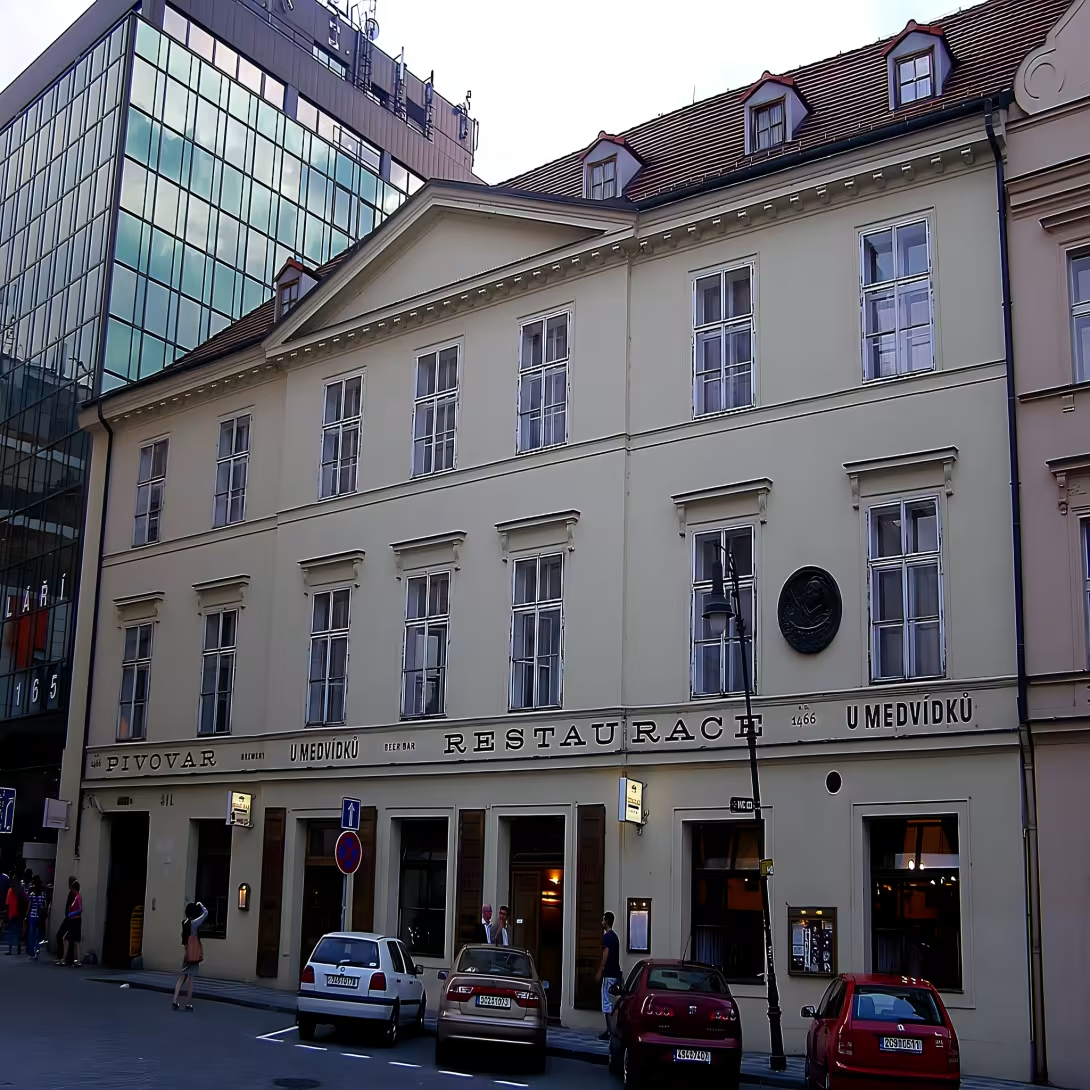
The House at Herzogů, also known as Pernštejnský or U brány Zderazské, is a historic Gothic townhouse located at Na Perštýně 5 in Prague 1. A protected cultural monument since 1964, it is widely recognized for its long-standing restaurant.
First documented in 1398, the property belonged to an Old Town citizen named Hank ze Suchodola. It sat within the parish of St. Martin in the Wall, near the Zderazská Gate, which led toward the Zderazský monastery and Vyšehrad. The structure evolved complexly alongside the Old Town fortification wall. In 1409, Hank ze Suchodola sold the estate to brewer Mikuláš Ryšlavý for 40 Czech groschen. During this transaction, the building stood between the city moat and the residence of Johánek Běhal.
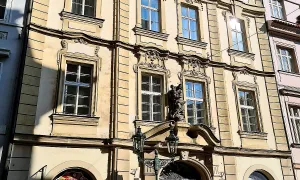
The building's origins are Gothic, evident in the vaulted cellars and northern walls extending to the ground floor. During the 16th century, it was expanded with a southern wing featuring Renaissance vaulted ceilings with niches, while other masonry elements are Baroque. The current street front is late Classicist, following a reconstruction between 1833 and 1836 by architect Jan Křtitel Vitek. This project added a second floor and a facade with a three-bay risalit and a triangular pediment.
During the first half of the 16th century, Jiří Kasík z Pernštejna owned the property; the street Na Perštýně is named after him. In 1628, patrician Baltazar Globic z Bučína purchased the estate from emigrant Anna Víšková z Vyškovic. Baltazar, a consul and primas of Malá Strana, was imprisoned during the 1621 Estates' Revolt but was later released after being acquitted. He left the house to his son, Samuel Globic, a councilor ennobled in 1653 for his bravery during the Swedish siege of Prague. Samuel, a surveyor, had two sons: painter Samuel Rafael and physician Jan Daniel. In 1725, owner and brewer Anna Veronika Herzogová married painter Václav Vavřinec Reiner. Reiner resided there until 1743, decorating the interior with a fresco of the Holy Trinity.
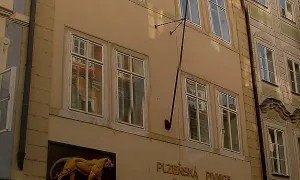
The building has been a local landmark for centuries, primarily due to its restaurant. Notably, the "U medvídků" sign on the facade refers to the house sign of a neighboring building, with which the business has been linked since the 19th century.
Today, the monument remains a significant element of the Old Town's historical landscape. Visitors can observe layers of architectural history, from Gothic foundations to the Classicist exterior. It is a site well worth visiting to experience a piece of the city's urban fabric spanning over six centuries.
Historical milestones
- 1398
- First documented mention of the house as belonging to Hank ze Suchodola.
- 1409
- Sold by Hank ze Suchodola to brewer Mikuláš Ryšlavý for 40 kopecks of Czech groschen.
- 1628
- Purchased by patrician Baltazar Globic z Bučína from emigrant Anna Víšková z Vyškovic.
- 1725
- Anna Veronika Herzogová married painter Václav Vavřinec Reiner, who decorated the house.
- 1833
- Start of the late Classicist reconstruction led by architect Jan Křtitel Vi
Architectural development
The house originated as a Gothic building with vaulted cellars and Gothic walls in the northern sections. In the 16th century, owner Jiří Kasík expanded the house by adding a southern depth tract with Renaissance vaulted ceilings. A late Classicist reconstruction took place between 1833 and 1836 under architect Jan Křtitel Vitek, which raised the building by a second floor and created the current street facade.
Historical events
In 1398, the house was first mentioned in written sources as belonging to Hank ze Suchodola. In 1621, owner Baltazar Globic was imprisoned during the Estates' Revolt but was later released. In 1653, Samuel Globic was ennobled for his bravery during the Swedish siege of Prague. In 1725, painter Václav Vavřinec Reiner moved in and decorated the house with a fresco of the Holy Trinity.
Owners
First documented owner was Hank ze Suchodola (1398–1409), who sold it to brewer Mikuláš Ryšlavý. In the first half of the 16th century, it was owned by Jiří Kasík z Pernštejna. In 1628, it was purchased by patrician Baltazar Globic z Bučína, who passed it to his son Samuel Globic. By 1725, the owner was Anna Veronika Herzogová, who married painter Václav Vavřinec Reiner.
Points of interest
– The street Na Perštýně is named after Jiří Kasík z Pernštejna, who owned the property during the first half of the 16th century. – In 1409, Hank ze Suchodola sold the estate to brewer Mikuláš Ryšlavý for 40 Czech groschen. – The building features a mix of architectural styles, including Gothic cellars, Renaissance vaulted ceilings, Baroque masonry, and a late Classicist facade. – Painter Václav Vavřinec Reiner decorated the interior of the house with a fresco of the Holy Trinity. – The "U medvídků" sign on the facade refers to the house sign of a neighboring building.
Guide
Show guide text
This text was created by artificial intelligence and has not been editorially reviewed. It may contain inaccuracies.
Welcome to this historic landmark, standing right in front of it and putting on your headphones. Let's take a journey through time and explore what makes this place so special.
As you gaze upon the façade before you, notice the mix of architectural styles that blend together seamlessly. The building has undergone many transformations over the centuries, but its Gothic roots are still evident in the vaulted cellars beneath your feet.
The history of this house dates back to 1398, when it was first documented as belonging to Hank ze Suchodola. Fast forward to 1409, and the property changed hands once again, sold to brewer Mikuláš Ryšlavý for a mere 40 kopecks of Czech groschen.
As we move through time, we find ourselves in the 17th century, when patrician Baltazar Globic z Bučína purchased the house from emigrant Anna Víšková z Vyškovic. And it was during this period that the building's late Classicist reconstruction took shape under the guidance of architect Jan Křtitel Vitek.
Now, let your eyes wander up to the façade and take in the intricate details. Notice the way the different architectural styles seem to blend together in harmony. This is a true testament to the skill of the craftsmen who worked on this building over the centuries.
As we delve deeper into the stories surrounding this house, you may be surprised to learn that the street Na Perštýně is actually named after Jiří Kasík z Pernštejna, who owned the property during the first half of the 16th century. And did you know that in 1409, Hank ze Suchodola sold the estate to brewer Mikuláš Ryšlavý for a mere 40 Czech groschen?
As we explore further, you'll discover that this building has been home to many fascinating individuals throughout its history. From painter Václav Vavřinec Reiner, who decorated the house with his artwork, to architect Jan Křtitel Vitek, who oversaw the late Classicist reconstruction.
And finally, let's take a moment to appreciate the mystery that surrounds this place. What secrets lie hidden beneath your feet? What stories do the walls whisper to those who listen closely?
As you stand before this historic landmark, I invite you to continue exploring and uncovering its many secrets. Take a step back in time and immerse yourself in the rich history of this enchanting building.
Tips for visitors
To experience the most tranquil atmosphere at Dům U Herzogů, plan your visit for the early morning or late afternoon. These times often provide a more serene environment to appreciate the historic bourgeois architecture and the unique character of the building.
The monument is located in Prague 1 and is easily accessible via public transport or by car. For the most reliable travel information, please check a transit navigation app for current connections. If you choose to drive, please note that parking in the Old Town can be difficult, so it is wise to check local parking availability and regulations in advance.
For those interested in photography, the Gothic elements and the historic facade offer wonderful subjects, especially during the soft light of the golden hour. We recommend bringing a camera and wearing comfortable walking shoes, as the surrounding streets are characterized by traditional cobblestones.
Visitors can also take the opportunity to see nearby landmarks such as the Zderazská Gate, the Old Town fortification wall, the Church of St. Martin in the Wall, and the Vyšehrad area. For families with children, exploring these historic sites can be an engaging experience, though be mindful of uneven surfaces when navigating with strollers.
Businesses nearby
Events nearby

Zdroj akcí: otevřená data měst a obcí ČR (Národní katalog otevřených dat) a kalendář akcí Národního památkového ústavu.
Nearby
Located in the heart of Prague's Old Town, near the Zderazská Gate and the Old Town fortification wall. It is in close proximity to the Church of St. Martin in the Wall and the Vyšehrad area.
Accommodation nearby
Trips and activities nearby
Guided tours, tickets and activities nearby from GetYourGuide
Affiliate link: if you buy from the partner, we may receive a commission. The price for you does not change.
Search tours and activities →Themed route
Herzog's House Tour
This thematic tour takes you on a journey through the heart of Prague's Old Town, exploring the fascinating history and architecture surrounding Dům U Herzogů.
1. Church of St. Martin in the Wall Type: Church Why visit: This beautiful Baroque church is one of the oldest in Prague, dating back to the 13th century. Its unique architecture and stunning interior make it a must-see. 2. Vyšehrad Area Type: Historical area Why visit: Vyšehrad is a historic fortress that offers breathtaking views of the city. Take a stroll through its picturesque streets and admire the beautiful architecture, including the iconic Vyšehrad Basilica. 3. Old Town Fortification Wall Type: Historical landmark Why visit: This ancient wall is one of the best-preserved medieval fortifications in Europe. Walk along its length and imagine life in Prague during the Middle Ages.
This tour provides a unique glimpse into Prague's rich history, architecture, and culture, all centered around Dům U Herzogů.
Seasonal recommendations
Spring
As you visit Dům U Herzogů in the spring, you'll be greeted by a gentle atmosphere of renewal and growth. The soft sunlight and blooming flowers create a serene ambiance that's perfect for a leisurely stroll. Be prepared for moderate crowds, especially on weekends, so plan your visit accordingly. Dress comfortably with layers, as the temperature can fluctuate between mild and warm. Consider arriving early to beat the rush and make the most of your springtime experience.
Summer
During the summer months, Dům U Herzogů transforms into a vibrant hub of activity. The warm sunshine casts a golden glow over the historic building, while the lush greenery surrounding it provides a picturesque backdrop. As you visit, be prepared for larger crowds and longer lines, especially during peak hours. Dress in comfortable clothing and shoes, as you'll likely want to explore the area on foot. Consider arriving early or later in the day to avoid the midday rush.
Autumn
As autumn sets in, Dům U Herzogů takes on a cozy charm. The crisp air is filled with the scent of ripe fruit and the rustling of leaves, creating an atmosphere that's both nostalgic and invigorating. Be prepared for moderate crowds, as visitors from around the world come to experience the region's famous fall foliage. Dress in layers, as the temperature can drop significantly in the evenings. Consider visiting during the week or early morning to avoid the weekend rush.
Winter
In the winter months, Dům U Herzogů is a haven of warmth and tranquility. The soft glow of twinkling lights and the snow-covered landscape create a magical ambiance that's perfect for a romantic getaway or a family outing. Be prepared for shorter opening hours and smaller crowds, as visitors tend to prioritize indoor activities during this time. Dress warmly, with layers and comfortable shoes, as you'll likely want to explore the area on foot. Consider visiting during the week or early morning to avoid the weekend rush.
Visualizations and artistic views

The visualisations are generated by artificial intelligence and serve as inspiration.
Photos from the area
Real photos taken near the monument

Zdroj a licence jsou uvedeny u každého snímku.
Tips from visitors
No tips yet. Be the first!
Log in and add your tip.
Sources and literature
Faktickým podkladem tohoto textu byl článek na Wikipedii, jehož autory jsou přispěvatelé Wikipedie. Článek je dostupný pod licencí CC BY-SA 4.0.
Location on the map
Příběhy a pověsti
Legendy, pověsti a příběhy spjaté s touto památkou
Fotografie návštěvníků
Zatím žádné fotografie. Buďte první, kdo přidá fotografii z návštěvy!
Přihlaste se a přidejte svou fotografii nebo hodnoťte.
Za ověřenou návštěvu v aplikaci získáte víc bodů — poznáme podle GPS, že jste na místě.
Reviews and comments