






Dům U Ježíška (Břetislavova) House
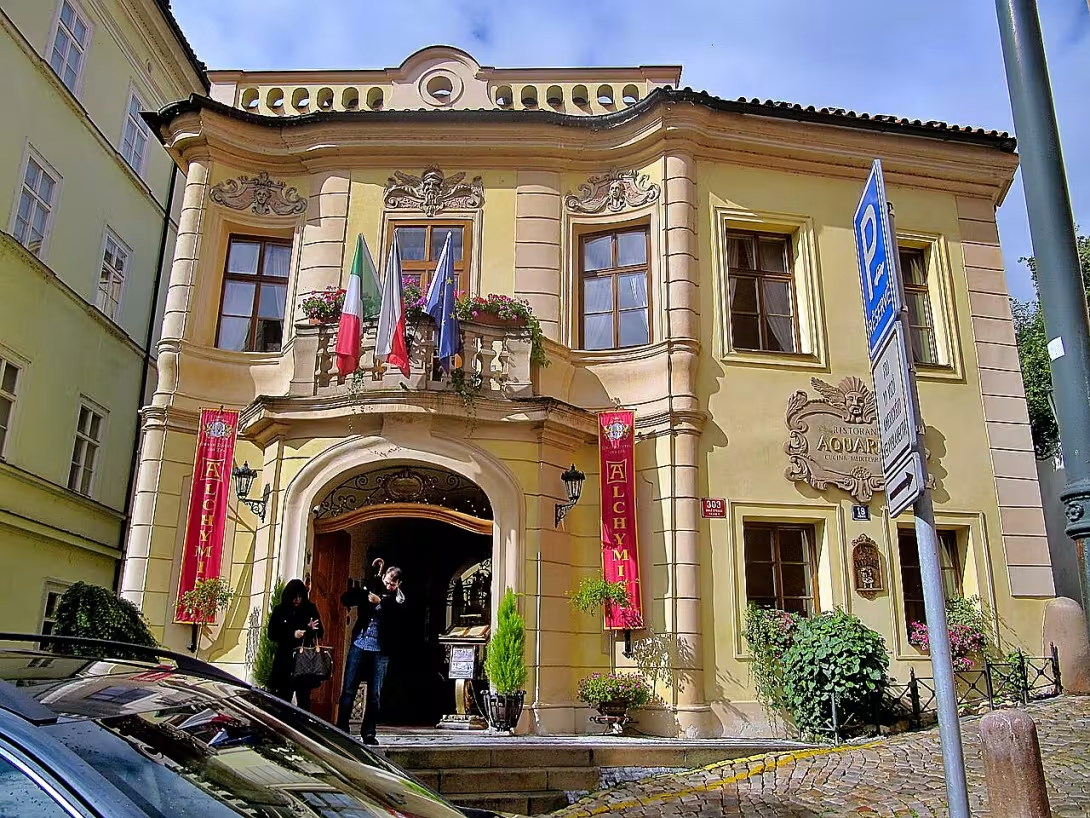
House of Jesus, also known as Jungwirth or Near the city of Paris, it is a historical monument located on the Malá Strana in Prague, specifically on the demanding corner of Břítislav and Market. This building boasts a rich history dating back to the 17th century and consists of two parts: a Renaissance core built around 1623 and a baroque modified track from 1704- 1705. The House U Jeszka is an important cultural monument, protected since 1964, which attracts visitors with its architecture and history. Today it serves as an Alchymist hotel and is the property of the capital of Prague.
The creation of today's building can be traced back to the 17th century, when a new Renaissance residential building was built in place of the older Gothic house. This house, belonging to the Obora settlement, was created around 1623 and its original main facade is now turned into a small courtyard. In 1704-1705, a Baroque reconstruction of the building took place, in which a single-storey tract with a five-axis facade was added on the eastern side, inverted to the then Vlašské street (today Market). This adjustment included a distinctive balcony above the entrance portal. The House of Jesus is an example of architectural changes that reflected the historical and cultural trends of their time.
The architecture of today's object reflects its long history. The original Renaissance part with the shield facade is decorated with the stucco plastic of the Virgin Mary of Lorotánska standing on a cloud with angels, which adds touching and historical value. The Baroque tract from 1704-1705 is characterized by a symmetrically designed facade with a balcony, which gives the building a distinctive origin of the Baroque. In interiors and exteriors, many valuable historical structures and artistic details have been preserved, which makes the house U Jeszka not only an architectural monument, but also a testament to the artistic taste of the past centuries.
The history of ownership and management of the house is as interesting as its architecture. After reconstruction after 1990, the building became the property of the capital Prague, which ensures its care and protection. Among the important people connected to the house was František Palacký, who stayed here at the Brožov family in the autumn of 1823 after his arrival in Prague. This historical connection makes the house U Jeszka not only a monument to architecture, but also a place with a rich cultural and historical tradition.
The house is full of interesting events and details. According to the old legend, there used to be a women's monastery in these places, which gives the house a romantic atmosphere. The unique stucco sculpture of the Virgin Mary Loretanská between the windows of the courtyard is another reason for visiting this building. The history and architecture of the house U Jeszka is a fascinating story that reflects the changes of the city of Prague and the wider cultural context.
Today the house U Jeszka is not only a monument but also an active place with hotel services under the brand Alchemist. Its historical significance and architectural beauty make it an ideal place for those who want to know the rich history of Prague. Visiting the House of Jesus offers a unique view of history and art that shaped the city over the centuries.
The House of Jesus is a reminder of how architecture and history can tell stories about the past together. Its rich history and artistic elements make it not only a monument, but also an inspiration for those interested in the heritage of Prague. Visiting this object is a call for knowledge and appreciation of historical values that are behind protection for future generations.
Historical milestones
- 1623
- Built by a renaissance residential house with a shield facade.
- 1704
- The Baroque reconstruction and extension of the new wing completed in 1705 started.
- 1823
- František Palacký lived here in autumn after his arrival in Prague.
- 1964
- The building was listed on the list of cultural monuments.
Architectural development
The plot originally contained a Gothic house belonging to the Obora settlement, which was later replaced by a Renaissance new building around 1623. Originally the main facade is now turned into a yard and decorated with stucco sculptures of the Virgin Mary of Loretánska. In 1704 and 1705 the house was expanded with a one-storey wing with a five-axis Baroque facade and a balcony facing the Market. Many valuable historical structures and artistic details have been preserved in interiors and exteriors.
Historical events
Around 1623, a Renaissance residential house was built on the plot. The Baroque design and extension of the new wing took place between 1704 and 1705. In the autumn of 1823, František Palacký stayed with the Brožov family. Since 1964 the building has been protected as a cultural monument and has undergone reconstruction after 1990.
Owners
capital city Prague
Points of interest
- The House U Jeszka is a historical monument located in Malá Strana in Prague. - This building boasts a rich history dating back to the 17th century and consists of two parts: a Renaissance core built around 1623 and a baroque modified track from 1704- 1705. - The House of Jesus is an important cultural monument, protected since 1964. - After reconstruction after 1990, the building became the property of the capital of Prague.
Guide
Show guide text
This text was created by artificial intelligence and has not been editorially reviewed. It may contain inaccuracies.
Welcome to the Malá Strana in Prague, where you are now in front of one of the most famous and historically rich objects in this part of the city - the house U Jeszka. Look up at the shield facade, which will already welcome you with its elegant Renaissance architecture. This object is an excellent example of the heritage that connects the various historical periods into one harmonious whole.
The House of Jesus has its roots in 1623 when its Renaissance core was built. This house was proud of the shield facade, which still reminds us of the time when architecture began to uncover new forms and stylization. The year 1704 was a major milestone for the house, when Baroque modifications were made and a new wing was added completed in 1825. This combination of Renaissance nucleus with baroque elements gives the house a unique atmosphere.
Note now the stucco sculpture of the Virgin Mary of Loretánska, who boasts her position between the windows of the courtyard. This detail is rare and brings the house timeless beauty. As you look at the facade, you can feel history breathing through these architectural elements.
The House of Jesus also has its distinguished inhabitants - František Palacký. This famous historian and politician, whose work had a major influence on the Czech national identity, lived here after his arrival in Prague in 1823.
One of the attractions of this place is the fact that the house was recognized as a cultural monument already in 1964. This status highlights its historical and architectural importance.
Now that you have seen this beautiful memory, keep in mind that Malá Strana offers many other great objects and stories. Explore further and be enchanted by the beauty of this historic place. When we meet again, you will have even more fairy tales and facts about these ancient streets. Thank you for visiting the house of Jesus!
Tips for visitors
Best time to visit the house It's early in the morning or early in the morning. In these hours, the narrow historic streets are quieter and you can enjoy the Renaissance architecture from the year sixteen hundred twenty-three on the corner of Břetslav and Market.
For transport to the place use public transport, whose current connection you can easily verify in the online connection search engine. Parking in the historical centre of Prague is very limited, so it is better to leave the car on the outskirts of the city and reach the area by tram or walk.
Bring comfortable fixed shoes because Malá Strana is full of historic tiles and hills. A camera or a loaded smartphone will also be useful to capture beautiful details of the Renaissance house and picturesque surroundings.
For photography we recommend morning light, which lights the corner of the house beautifully. Great pictures are taken directly from the opposite pavement, where the overall layout of the building with its historical core stands out.
Within 30 minutes' walk from this place you can visit the magnificent Prague Castle, picturesque Malostranská Square with the dominant church of St. Nicholas or nearby Vrtbovska Garden, which offers a stunning view of the entire historical centre.
Businesses nearby
Do you run a restaurant, accommodation, shop, museum, rental, wellness or other visitor service near this monument? Show yourself directly to the people heading to it — this is how they will see you in the app and on the web:
Events nearby

Zdroj akcí: otevřená data měst a obcí ČR (Národní katalog otevřených dat) a kalendář akcí Národního památkového ústavu.
Nearby
Pražský hrad, Malostranské náměstí, Kostel svatého Mikuláše, Vrtbovská zahrada
Accommodation nearby
Trips and activities nearby
Guided tours, tickets and activities nearby from GetYourGuide
Affiliate link: if you buy from the partner, we may receive a commission. The price for you does not change.
Search tours and activities →Themed route
I propose a thematic cruise route in the picturesque streets of Little Party, which connects historical places and shows the beauty of old Prague.
1.Dům U Ježíška (Břetislavova) - Type: Main destination - Why is it worth a visit: This historic house on Břetislav Street will be impressed by its picturesque atmosphere and interesting architecture. It represents a great starting point for discovering the mysterious corners of the old building.
2. Vrtbov Garden - Type: terraced garden - Why is it worth a visit: Located near the starting point and offers a wonderful view of terraced adjustments in the slope. It is an ideal quiet place to relax with a unique view of the city panorama.
3. Malostranská Square - Type: historical square - Why is it worth a visit: This busy heart district serves as a natural meeting center. It's surrounded by ancient houses, and it has a unique atmosphere.
4. Church of St. Nicholas - Type: sacral monument - Why is it worth a visit: The Domination of the entire square will impress everyone with its magnificent Baroque dome and rich interior decoration. He's one of the most important buildings of his kind in the city.
5. Prague Castle - Type: historical area - Why is it worth a visit: The vast complex on the rise above the district forms the historic crown of the entire seat of power. It offers monumental views and connects centuries of history in one place.
Seasonal recommendations
When spring wakes up in the picturesque corners of Little Party, the historic house in Břetislav Street shows its charm under the fine rays of the sun. The surrounding flowering trees in gardens and parks under the Prague Castle create a perfect setting for walks. Light is soft in this period, ideal for admiring ancient facades and architectural details without sharp shadows. In the streets, the largest crowds are not yet flowing, allowing a quiet perception of the genius loci. Put on a light jacket or coat with a layer because spring weather is usually variable and the afternoon heat can replace the cool wind from the river. The best time to visit is in the morning, when the morning herpes gives the place a mysterious atmosphere and tourists are still discovering the city.
During the warm summer months, the whole area comes alive with the pulsating energy of sunny days. The sun sets late, which extends the time when you can admire the exterior of the sights in warm evening lighting. Nature plays green with all shades of green in surrounding interlocks and doors and trees provide welcome shade. The atmosphere is alive, full of talking to passing visitors. Since this is the main tourist season, count on a greater concentration of people in the alleys. We recommend to choose the early morning hours for the tour, right after the dawn, when there is complete calm and colder. Put on airy, breathable clothes made of natural materials, don't forget the headgear and bottle of drinking water, because the summer paving can be very warm.
With autumn coming, Malá Strana is wrapped in melancholic robes and melancholic colours. Leaves on trees change colour to gold, rusty and brown, creating picturesque views of historic houses with vibrant plants. The light is muted, often permeated by fog, which gives place a dramatic and old-world character. The crowds of tourists have thinned through the main onslaught, so you can enjoy the tour in complete focus and silence. The practical board commands you to wear waterproof shoes and a warmer wool sweater, as dry days and damp from the paving blocks can make you suffer. The best time to visit is in the afternoon, when the low sun creates long shadows and magical reflections on old window tables.
The winter season brings to Břítislav Street silence, nobility and in the case of snowfall a fabulous atmosphere. The lights provide stylish street lamps that soon afternoon light up their yellow light and reflect on frozen tiles. The surrounding trees are without leaves, which opens up unexpected views of the indented buildings and slopes under the castle. The atmosphere is chamber, in advent time underlined by the scent of needles and distant excitement from the Christmas markets on the main squares. Visitors rarely encounter crowds here, which guarantees an intimate experience. The need is quality winter clothes, i.e. warm coat, hat, gloves and firm non-slip shoes due to frozen terrain. The best time to stop is around noon when daylight is the most pronounced and air temperature reaches its daily maximum.
Visualizations and artistic views


The visualisations are generated by artificial intelligence and serve as inspiration.
Photos from the area
Real photos taken near the monument


Zdroj a licence jsou uvedeny u každého snímku.
Tips from visitors
No tips yet. Be the first!
Log in and add your tip.
Sources and literature
Photos: Palickap / CC BY-SA 3.0 — Wikimedia Commons. The author and licence also appear when you hover over the image.
Faktickým podkladem tohoto textu byl článek na Wikipedii, jehož autory jsou přispěvatelé Wikipedie. Článek je dostupný pod licencí CC BY-SA 4.0.
Location on the map

Příběhy a pověsti
Legendy, pověsti a příběhy spjaté s touto památkou
Fotografie návštěvníků
Zatím žádné fotografie. Buďte první, kdo přidá fotografii z návštěvy!
Log in a přidejte svou fotografii nebo hodnoťte.
Za ověřenou návštěvu v aplikaci získáte víc bodů — poznáme podle GPS, že jste na místě.
Reviews and comments