






Klášter bosých karmelitánů na Malé Straně Monastery
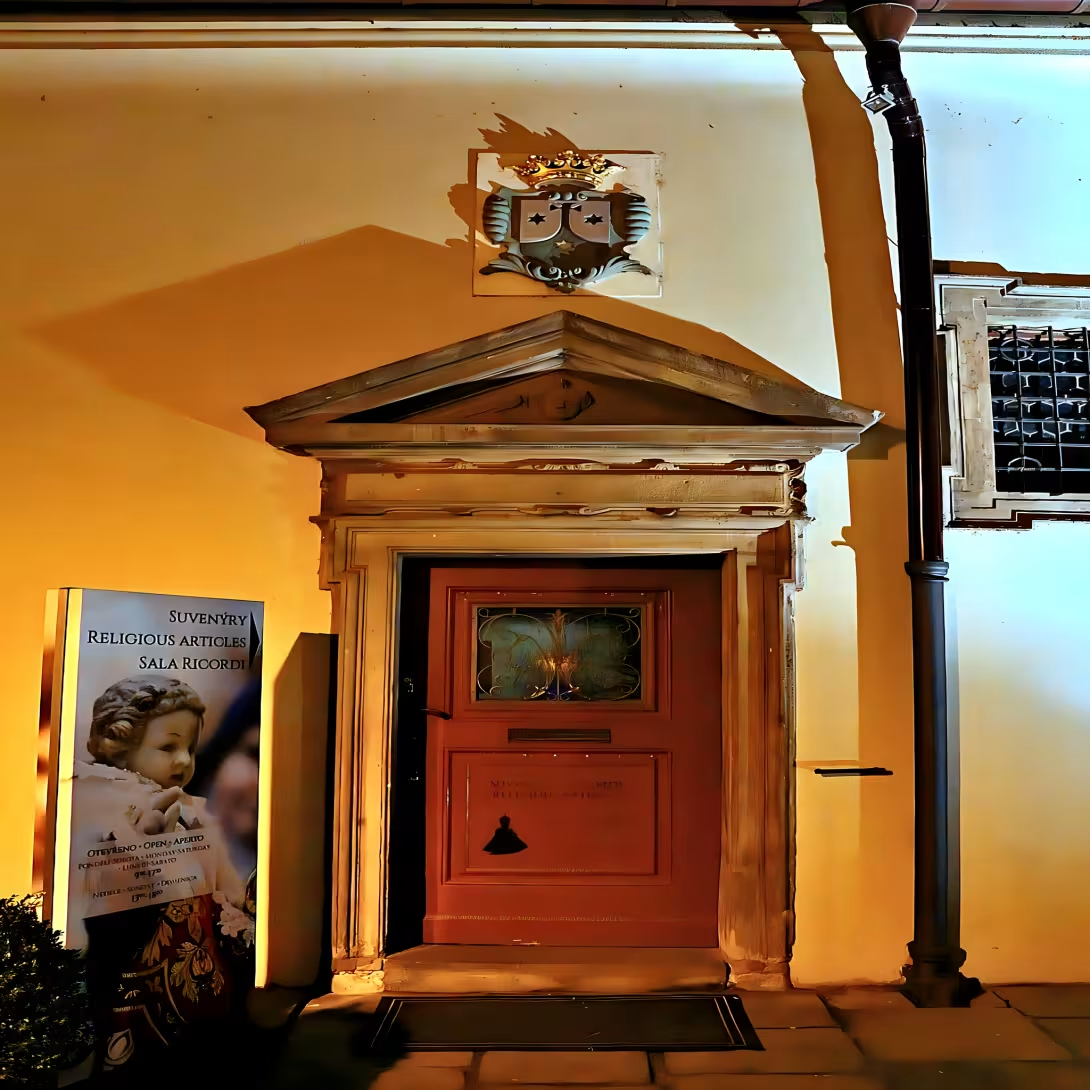
The monastery of barefoot carmelitans stands in Carmelite Street at the bottom of the Seminar Garden on the Malá Strana, at the Church of the Virgin Mary of the Victory and Saint Anthony of Padua. At first glance, the monument is modest, but its history and especially its connection with Prague's Jesulátek makes it one of the most interesting places in the Old Town district.
Bosnian carmelitans, a religious order characterized by ascessions and contextual life, came here in 1624 and built an extensive monastery complex on the south side of the church. Just after their arrival, in 1628, a statue was established here to transform the fate of the place. Polyxena z Lobkovic, born of Pernštejn, gave the monasteries a small figure of Jesus - a child. She got it as a wedding gift from her mother, Marie Manrique de Lara y Mendoza, and decided to hand it over to the Carmelitans. Among the monks, the Statue of Jesus became the subject of special respect. First, they put her in a monastery chapel, where she was supposed to teach the young goblins virtues. Over time, however, Jezulátko moved into the very interior of the church, where the faithful built him a separate altar in the Baroque style. Here, his worship grew in intensity.
But the fate of the monastery changed in the late 18th century. In 1784 the monastery was cancelled under Church reforms by Emperor Josef II. The Church of the Virgin Mary was threatened with destruction, as was the worship of Jesus. The altar and all the traditions associated with the statue almost disappeared. Despite the break-up, however, the believers did not forget - in 1879 the altar was restored. The greater perversion in the fate of the monastery came more than two centuries later. In 1993, the barefoot carmelitans returned to their former residence. Since then, monks have been living here again, who cherish and protect the statue of Prague Jesulka until today.
The monastery building is today based on the Ministry of Education, Youth and Sports, but in the heart of the church remains what made it special - Jesus is still watching over the believers and pilgrims who visit Carmelite Street. The visit to this locale offers a meeting with deep layers of Czech piety and a story that goes beyond time.
Then and now
Drag the slider to compare how the landmark may have looked when it was built with the view today.
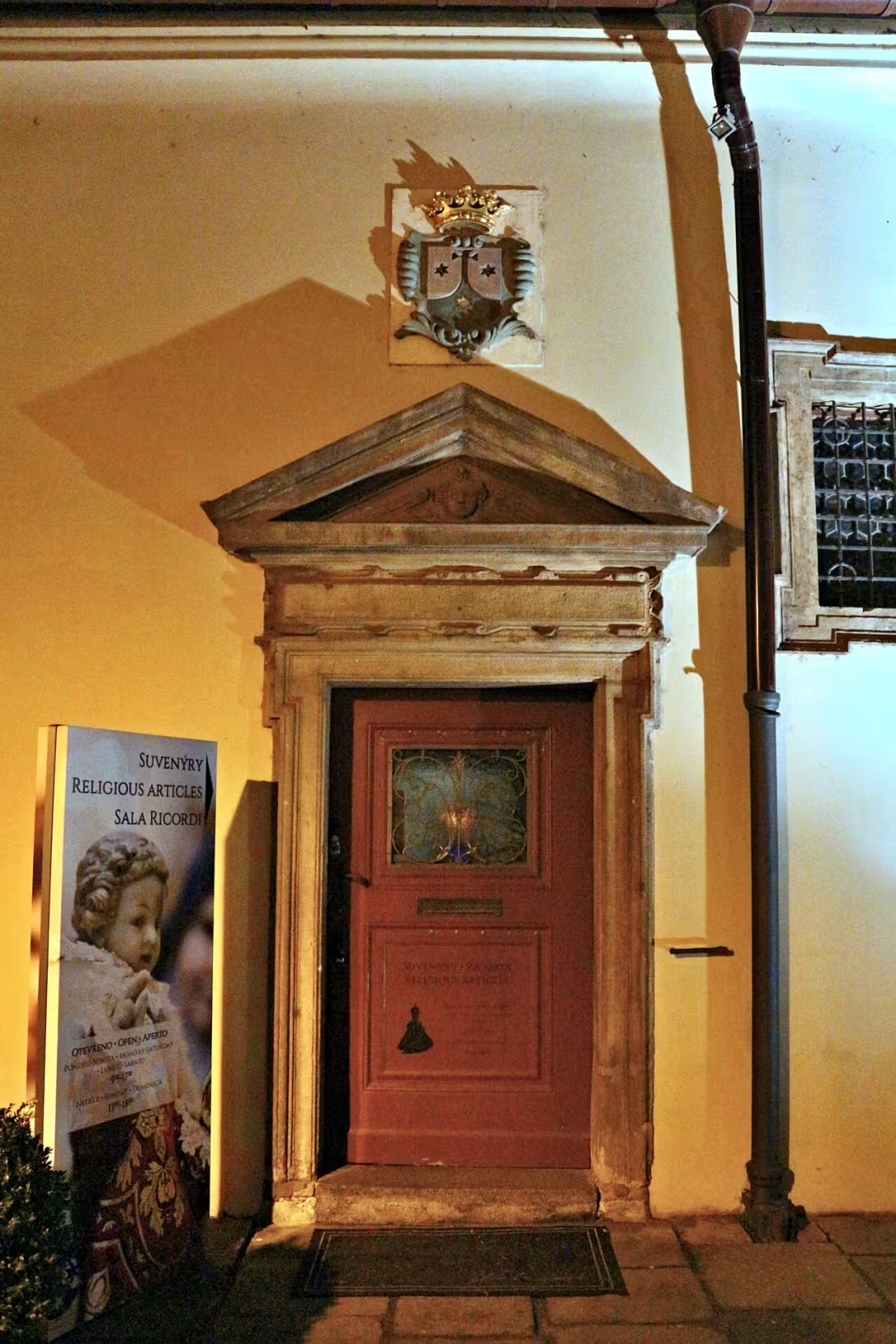
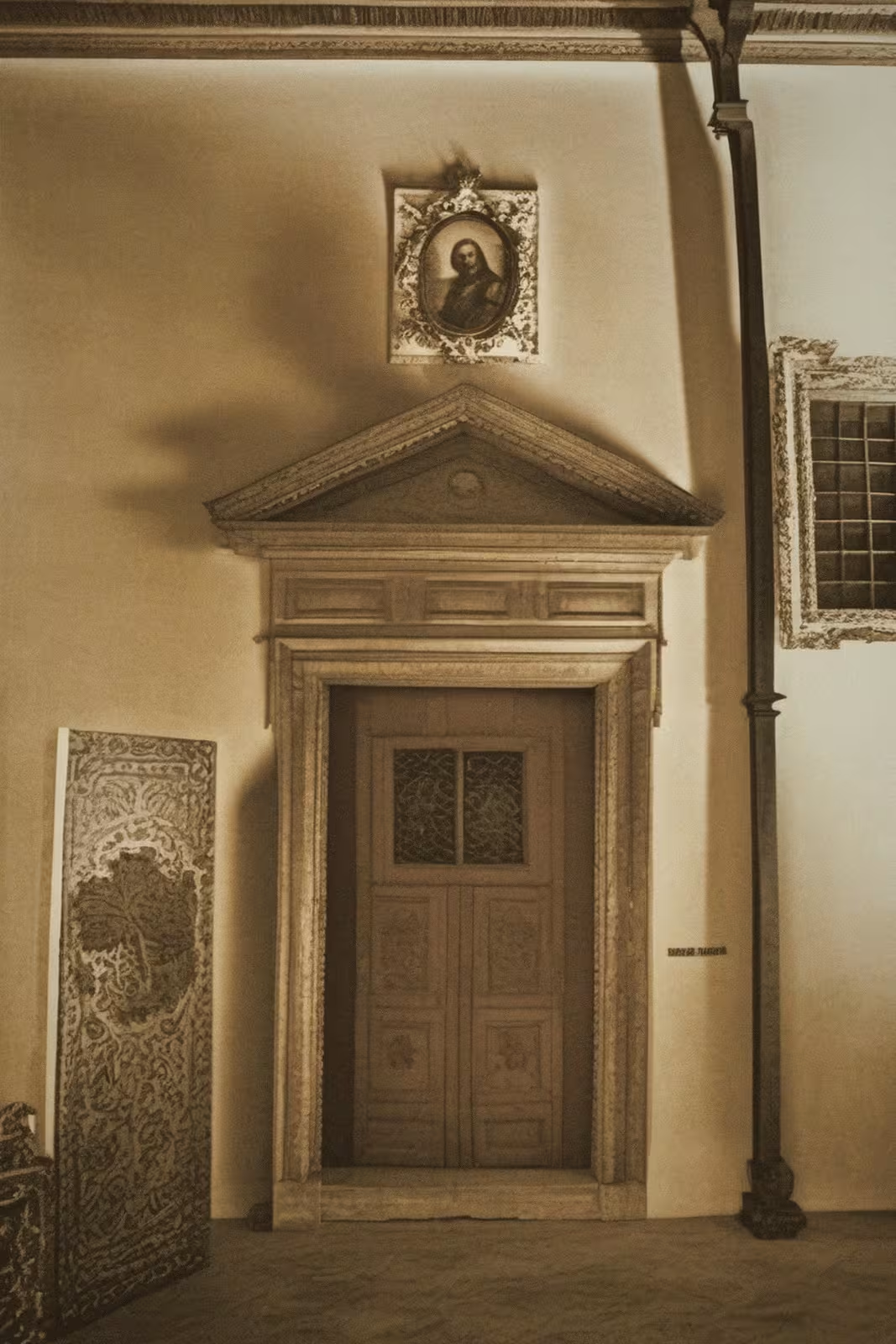
The historical appearance on the left is an AI-generated visualisation and serves as inspiration only.
Historical milestones
- 1624
- The establishment of the monastery by barefoot carmelitans at the initiative of P. Dominika and Ferdinand II.
- 1628
- Polyxena z Lobkovic dedicated the monastery to the statue of Prague Jesus.
- 1784
- The abrogation of the monastery within the church reforms of emperor Joseph II.
- 1993
- The return of barefoot carmelitans to a small-scale monastery.
Architectural development
The monastery was built as an extensive complex on the south side of the existing church. In the interior of the church, a separate altar was built for Prague's Jesulatko, which was repaired in 1879.
Historical events
1624: the establishment of a monastery by barefoot carmelitans; 1628: donation of the statue of the Prague Jesuit; 1784: abrogation of the monastery in the context of the Josephine reforms; 1993: the return of barefoot carmelitans.
Owners
Bosnian carmelitans (1624-1784), State (after the cancellation of 1784), Bosnian carmelitans (return in 1993)
Points of interest
The Bosnian Carmelitans came here in 1624 and built an extensive monastery complex. - Polyxena z Lobkovic dedicated a small figure to Jesus - a child. - In 1784 the monastery was cancelled by Emperor Josef II. In 1879, the altar was restored. In 1993, barefoot carmelitans returned to their former mansion.
Guide
This guide is narrated by a synthetic voice generated by artificial intelligence.
Show guide text
This text was created by artificial intelligence and has not been editorially reviewed. It may contain inaccuracies.
Welcome to the heart of the historic Little Party. You are standing in front of one of the most important and fascinating places in Prague. Before you go any further, stop for a moment and feel the atmosphere of this place. Do you feel the strange combination of calm and historical weight floating here? In front of your eyes is a vast monastery complex of barefoot carmelitans, which has been following everything that takes place in these narrow streets of Prague for centuries. This space is not just a collection of walls and corridors, it is a living book whose pages have been written since the beginning of the seventeenth century. Look at the buildings around you, perceive their presence, and realize that this is where the earthly was clashing with the celestial, the political, the spiritual.
Let's go back deep into the past together to understand why this monastery is even standing here. Imagine 1624. Praha was then found in the shock waves of Europe's great history. At this time, based on deep faith and political influence, this monastery was created. The main movers of his creation were Father Dominic and Emperor Ferdinand II. Their common intention was clear - to create a seat for the order of barefoot carmelitans who sought a path to deeper humility and prayer. This monastery was not only built as a building, but as a firm fortress of faith, which was to be closely linked to the nearby Church of the Virgin Mary of the Victory and Saint Anthony of Padua. This whole complex was designed from the beginning to provide space for strict monastic life, but also to act as a spiritual centre for the whole area.
Now pay attention to the architecture and the overall effect of this complex. Even though the seat of the Ministry of Education, Youth and Sports is located in his premises today, his original character is still felt in every detail you can see. When you look at the facade and the layout of the buildings, you will notice the monumental and large scale. This complex was not built simply, it was a project that required great effort and faith. See how these buildings connect to the adjacent sacral spaces, how they form a single integrated unit that dominates parts of the Little Party. Even though time was changing, even though the needs of society were changing, these walls remained to resemble their original function. Get closer to the buildings and try to perceive the structure of this place, how it consists of different parts that are harmonically related and how it creates a sense of closure and nobility.
However, in order to truly understand the soul of this place, we must focus on the people who have left their mark. And that brings us to one of the most amazing characters you can find in this history. Her name was Polyxena z Lobkovic. Her name is inherent in this monastery. In 1628 something happened that changed the meaning of this place forever. Polyxena dedicated a small but extremely rare statue to the monastery, which represents Prague Jesus. This gift was not just a simple donation of an object; It was a gift that gave the monastery world glory. Thanks to this statue, this space has become the center of world worship and pilgrimage. Imagine the faith, the hope that people have been looking for in this statue for centuries. In addition to Polyxena, we also need to remember figures like Marie Manrique de Lara y Mendoza, which was part of this spiritual world, or Emperor Ferdinand II himself, whose support was absolutely crucial for the creation of this place.
But the history of this monastery was not just a path of constant flourishment. It was a path full of trials that taught us how fragile human creation can be. In 1784 came a hard test. In the framework of the church reforms, which were managed by Emperor Josef II, the monastery was abolished. Imagine the emptiness, the silence that spilt in these spaces when those who have been praying here for centuries left. Monastic life was interrupted and buildings had to seek new meaning in other times. Yet the spirit of this place has not completely disappeared. Even in a period when the monastery did not exist as the proper seat of the Carmelitans, his legacy lived on. For example, in 1879 the altar was restored, which was a clear signal that the spiritual importance of this place remained alive despite political changes.
And right here is one of the most interesting chapters that brings us to the modern era. Perhaps you'd be surprised that after so long the absence of order the barefoot carmelitans returned to their former mansion. It happened in 1993. It's a fascinating story about returning to the roots, about restoring tradition after a period where it seemed long ago lost. This return has given the monastery new energy and confirmed that some things are stronger than time and political decrees. So today we see an interesting conflict between two worlds: on the one hand, we have an extensive complex which serves state institutions, namely the Ministry of Education, Youth and Sports, and on the other hand we have a lively tradition of order, which has resettled here.
Now that you're looking around, try to realize the constant transformation. The monastery, which came out of the ambitions of the emperor and faith of Father Dominik, survived the abolition by Emperor Joseph II, survived a period when it was only a building for state needs, and finally he had his native people returned. It's a place where history is constantly rewritten, but where the base stones remain the same.
I hope this brief insight into the past has helped you better understand what you are seeing in front of you. This monastery is not just a building, it is a symbol of endurance, faith and constant search for meaning. Now that you know his story, I suggest you continue your walk. Take a look at the surrounding alleys, see the facade details and let the atmosphere of the Little Party take hold, which is deeply rooted in every stone of this monastery. Thank you for your journey through time and I wish you a wonderful rest of your exploration of this wonderful city. Goodbye.
Tips for visitors
The best time to visit is early morning or late afternoon, where fewer people are around and the light hits the facades more pleasantly.
The monument is available by car and public transport; We recommend checking the current connection and parking options in the centre in the internet search engine.
We recommend to bring comfortable shoes for walking through historic alleys and, due to the nature of the site, choose a respectful outfit.
For the best photos look for the angles that link the monastery to the Church of Our Lady of Victory; The best light is just before sunset.
In the immediate vicinity, within 30 minutes walk, visit the Church of the Virgin Mary of the Victory, Seminar Gardens or explore the entire Little Party. For families with children, the surroundings are suitable for a quiet walk, but we recommend keeping quiet in the monastery.
Frequently asked questions
Is Klášter bosých karmelitánů na Malé Straně open to the public?
Yes, he's open to the public. You can visit him after previous arrangement with the monastery administrator.
How do I get to the place by car / public transport?
By car: The monastery is located in the centre of Prague and it is best to park in a nearby garage house. Public transport: The nearest metro stop is Malostranská, from here it is 10 minutes walk.
How much is the entrance fee and is it paid on the spot?
The entrance fee is free, but a prior arrangement with the monastery administrator is required.
Is the tour suitable for children and seniors?
Yes, the tour is also suitable for families with children. The monastery offers a quiet environment and interesting historical information.
How long does the tour take?
The tour takes approximately 30 minutes.
What are the opening times and booking is required?
Opening hours: Monday - Friday 9: 00 - 17: 00, Saturday - Sunday closed. Reservation is not necessary, but we recommend to contact the monastery administrator in advance.
What's interesting in the immediate vicinity?
In the immediate surroundings there are several other historical monuments such as the church of St. Thomas and Clementinum.
For kids
Imagine going back to the past to Prague, which was still a small town. The town was full of chateaux, churches and narrow streets. There was a beautiful monastery of barefoot carmelitans on the Lesser Side. It was like a hidden kingdom in the heart of the city.
How did it look here? Who lived here? What happened here? Imagine you're a little magician and you have the ability to see the past. If you approach the monastery, you'll see how it works. The builders display bricks and stones to create beautiful Baroque architecture.
Businesses nearby
Events nearby

Zdroj akcí: otevřená data měst a obcí ČR (Národní katalog otevřených dat) a kalendář akcí Národního památkového ústavu.
Nearby
Church of the Virgin Mary Victory, Seminar Gardens, Malá Strana
Accommodation nearby
Trips and activities nearby
Guided tours, tickets and activities nearby from GetYourGuide
Affiliate link: if you buy from the partner, we may receive a commission. The price for you does not change.
Search tours and activities →Themed route
1. Seminar Gardens, Garden: They offer a pleasant environment for starting a trip in a quiet green area. 2. Church of the Virgin Mary Victory, Church: This building represents an important religious point in the surroundings. 3. Klášter bosých karmelitánů na Malé Straně, monastery: The main destination of the journey, which consumes you with its history and spiritual peace. 4. Malá Strana, district: Ideal place for a final walk through historic streets.
Seasonal recommendations
In spring, the monastery surrounds the waking green and fine morning light, which gives the place a fresh breath. The atmosphere is calm and hopeful. We recommend wearing more layers of clothing because temperatures may fluctuate. The best time to visit is in the morning before the first major waves of visitors appear in the streets of the Little Party.
Summer months bring sharp sun and hot air that contrasts with the cold of thick monastery walls. The surrounding area is full of colors and urban hustle. Due to the high season, it is advisable to come right at the opening to avoid the biggest crowds. Choose light and airy clothes and don't forget enough fluids.
In autumn, the surroundings of the monument turn into golden tones and morning fog creates a mysterious, meditative mood. The light is softer and more saturated, which is ideal for observing architecture. It is practical to wear moisture-resistant shoes and visit in the afternoon when the sun touches the facades pleasantly.
In winter, the monastery is quiet and spiritual, especially if snow covers the surface. The atmosphere is cramped and intimate, typical of advent time. It is necessary to choose warm winter clothes and to check the opening hours which are shorter in this period.
Visualizations and artistic views


The visualisations are generated by artificial intelligence and serve as inspiration.
Photos from the area
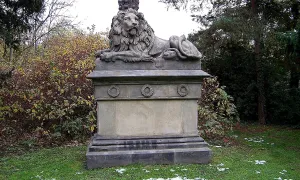
Real photos taken near the monument


Zdroj a licence jsou uvedeny u každého snímku.
Atmosphere of the place
This atmospheric visualisation of the place and period was generated by artificial intelligence. It is not real footage of the location.
Tips from visitors
No tips yet. Be the first!
Log in and add your tip.
Sources and literature
Fotografie: VitVit / CC BY-SA 4.0, rozlišení zvýšeno umělou inteligencí — Wikimedia Commons. The author and licence also appear when you hover over the image.
Faktickým podkladem tohoto textu byl článek na Wikipedii, jehož autory jsou přispěvatelé Wikipedie. Článek je dostupný pod licencí CC BY-SA 4.0.
Location on the map
More monuments – Malá Strana
Show all in the municipality
Příběhy a pověsti
Legendy, pověsti a příběhy spjaté s touto památkou
Fotografie návštěvníků
Zatím žádné fotografie. Buďte první, kdo přidá fotografii z návštěvy!
Přihlaste se a přidejte svou fotografii nebo hodnoťte.
Za ověřenou návštěvu v aplikaci získáte víc bodů — poznáme podle GPS, že jste na místě.
Reviews and comments