






Kolovratský palác ve Valdštejnské Palace
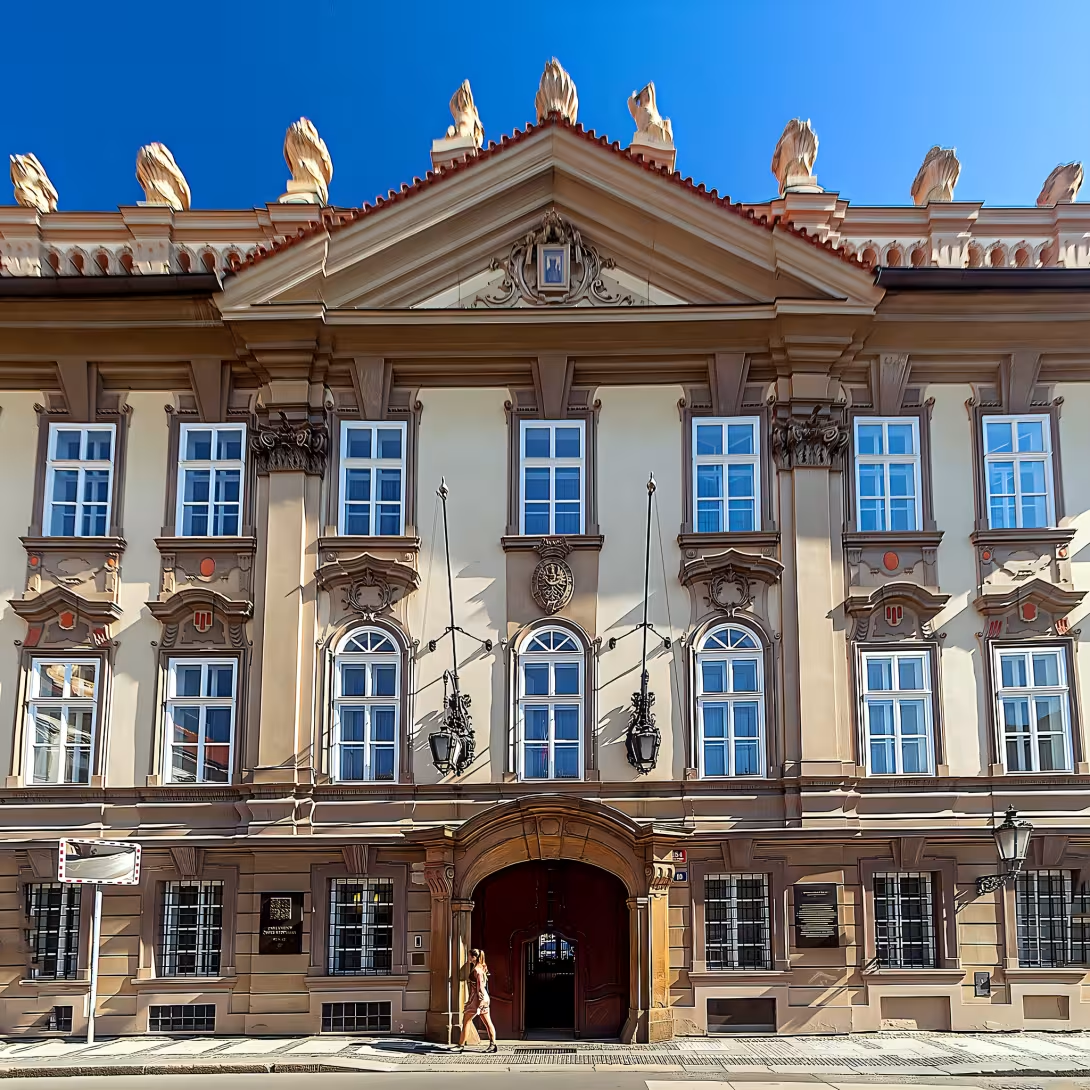
Kolovratský palác ve Valdštejnské Street stands in the heart of the Small Party and is one of the most valuable examples of the noble residence in Prague. It comes from architect Ignatius Jan Nepomuk Palliardi and since 1964 it bears the status of cultural monument. Today it serves as part of the representative seat of the Senate of the Parliament of the Czech Republic and it is joined by the Small Fürstenberg Palace and the historical Kolovrat Garden.
The building at the site of today's palace has surprisingly old roots. Already in 1603, two separate houses were connected in one whole. William's oldest Cinderella of Lobkovic expanded it at the beginning of the seventeenth century, and later owner converted it into a single-storey house. The decisive transformation came in the eighteenth century when Marie Barbora bought the estate. Schaffgotsch, wife of the nobleman, Heřman Jakub Černín of Chudenice. She had it completely rebuilt by the architect Palliardi. It created a magnificent Classicist palace, which had the brushing of its time - reminiscent of the high baroque. At the time, the Small Fürstenber Palace was also created and a unique terraced garden was founded with gazebo, staircase and balustrations, which gradually rises into a three-piece sala terrena.
At the end of the eighteenth century, Jan Arnešt Schaffgotsch, Marie Barbara's nephew, took over the property, which, however, separated both palaces again. During the nineteenth century the owners took turns, until in 1886 the palace was won by Count Zdeněk Kolovrat- Krakovský. He was the one who had a large reconstruction carried out - especially interiors were modified in the middle of the nineteenth century in a neo-Baroque style. In these rooms was placed his valuable gallery, library and coin collection. Seu's son Hanusha Kolovrat-Krakovský then added a horse-house to the palace. Part of the gallery later went to the National Gallery and the library is managed by the National Museum.
After the First World War, in December 1920, the palace was purchased by the Czechoslovak State and after the necessary adjustments it was used as the seat of the Bureau of the Ministerial Council. Dentro's walls also took place important moments of Czech history - the creation of a protectorate and Munich Agreement. In September 1941 it became the scene of the so-called Bread affair. After 1945, the Ministry of Information and Information was gradually established in the palace, later the Ministry of Culture until 2002, when it moved to the Nostic Palace.
On the facade, the plastic oval sign with the family motto of the Kolovrat "Faithfully and always," which is wrapped in a belt symbolizing the commitment. In the tympanon of the shield is placed a glazed image of the Black Madonna of St. Thomas. The palace is decorated with statues of putts and vase.
The interiors of the palace wurden in 2003 started major reconstruction, completed in 2006. The most valuable rooms - two representative lounges called Pink and Green and originally late Baroque pillar staircases - are accessible to the public during public holidays within open door days. Today, the palace serves primarily as a basis for Senate committees, commissions and clubs, which makes it among the active representative premises of Parliament.
Then and now
Drag the slider to compare how the landmark may have looked when it was built with the view today.
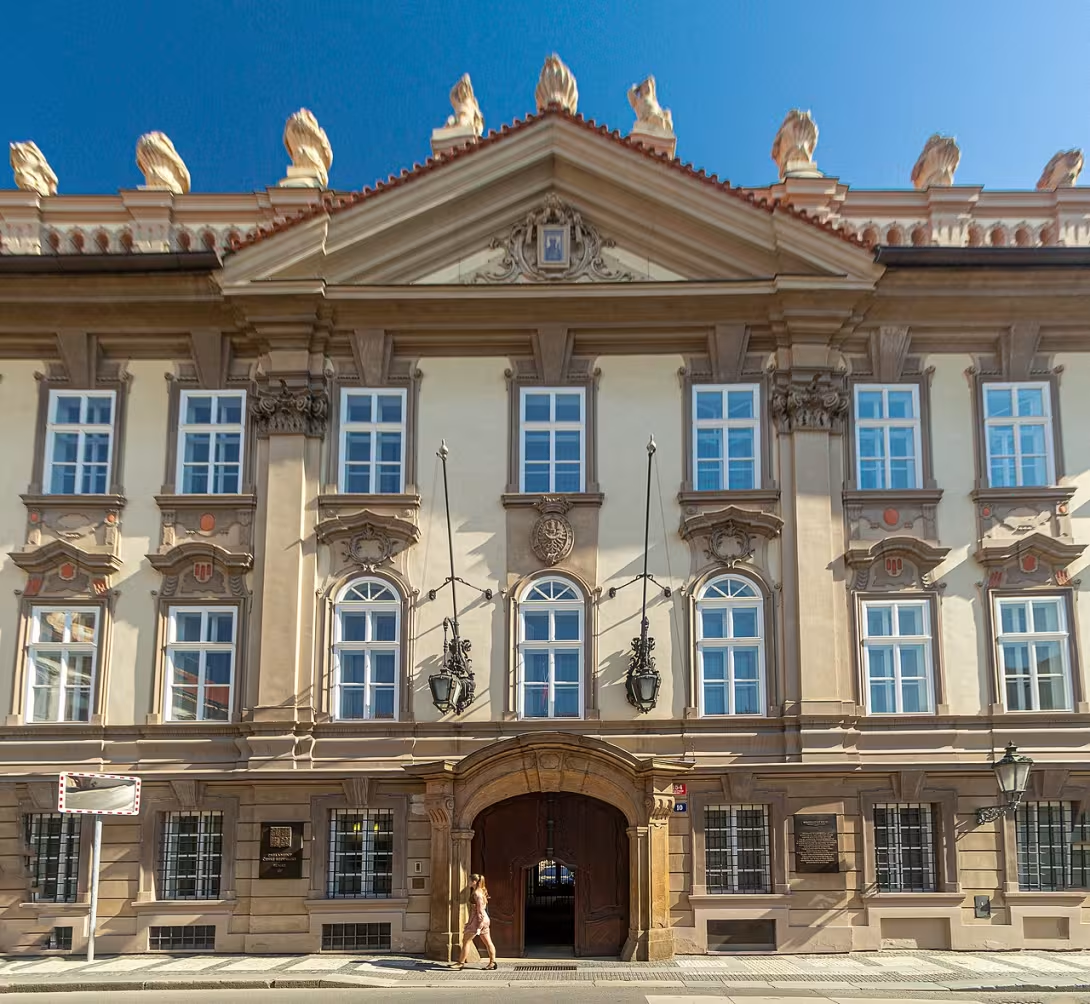

The historical appearance on the left is an AI-generated visualisation and serves as inspiration only.
Historical milestones
- 1603
- Connecting two houses into one object.
- 1776
- The beginning of the reconstruction at the late Baroque palace according to Ignác Palliardi.
- 1886
- Neo-Baroque reconstruction of interiors to order Count Zdeněk Kolovrat-Krakovsky.
- 1964
- Registered as a cultural monument.
- 2006
- Completion of reconstruction for the Senate of Parliament of the Czech Republic.
Architectural development
The original Renaissance houses were connected and expanded in the 17th century. In 1776-1789, Ignác Palliardi rebuilt them into a late Baroque palace with classical elements. In the 19th century there was a neo-Baroque reconstruction of interiors, including a gallery and library. The palace is built of stone and decorated with sculptures, statues of putts and a glazed picture of the Black Madonna of St. Tom. In the 21st century he underwent extensive reconstruction for the Senate.
Historical events
- 1776
- The beginning of the reconstruction at the late Baroque palace according to the project Ignác Palliardi.
- 1886
- Neo-Baroque reconstruction of interiors to order Count Zdeněk Kolovrat-Krakovsky.
- 1920
- Palace purchased by the Czechoslovak State and used as the seat of the Bureau of the Government.
- 1941
- The scene of the Bread affair in connection with the protectorate.
Owners
- 1920
- 2006
Points of interest
- The palace was built by architect Ignatius Jan Nepomuk Palliardi in the eighteenth century to order Marie Barbara Schaffgotsch, wife of Høman Jakub Černín of Chudenice.
- It was created as a lavish Classicist palace with elements of the high Baroque, supplemented by the Small Fürstenber Palace and a unique terrace garden with gazebo and staircase.
- On the facade of the palace there is a birth sign of Kolovrat with the motto * "Faithfully and still" * and a glazed image of the Black Madonna of Svatoma.
Guide
This guide is narrated by a synthetic voice generated by artificial intelligence.
Show guide text
This text was created by artificial intelligence and has not been editorially reviewed. It may contain inaccuracies.
Record for audio guide:
---
Welcome, dear visitors! You're standing in front of a beautiful and rich historic house that will charm you with its elegance and ancient character. The Kolovrat Palace on Valdštejnská Street on the Malá Strana in Prague is an excellent example of the late Baroque architecture, which will show you today how the noble residence in the 18th century could not only be luxurious but also full of life.
Let's move on to the past. This palace was established in the 16th century when two houses were connected into one whole. His further development, however, took place in the 18th century when he was converted into a beautiful Baroque palace according to the design of Ignac Palliardi to order Marie Barbara Schaffgotsch, the wife of Høman Jakub Černín of Chudenice. This architect, who was one of the most important creators of Prague at the time, added to the project not only rich decoration, but also symmetrical terraces and gardens, which still attract to walk.
Now pay attention to the front of the house. Look up - on the window lights and the ledge you can see how the ornaments and reliefs are alternating, which emphasize its noble origin. Note also how the palace walls seem to be full of life - every detail, from decorated portals to decorated balconies, speaks of how important this house was for its owners. The inner space of the palace was later modified in a neo-Baroque style, which means that you may find something else in the interior, but the outdoor form has been preserved until today.
The palace was not only the seat of the nobles, but also a place where important events took place. There were other historical buildings in its vicinity, such as the Small Fürstenber Palace, which shared a common garden with it. These gardens were not only an oasis of peace, but also a place for social meetings and cultural events. In the past, important guests were hosted here, who met Czech nobility and politics.
One of the attractions of this palace is its connection with the personality of Count Zdeněk Kolovrata-Krakovský, who in the 19th century added new elements of the novobarok to the interior. His name is linked to this house, even though his presence here was only temporary. This palace thus represents a combination of several epoks - from classical elements to modern adaptations that gave it a new life.
Today the Kolovrat Palace is a cultural monument and serves as the seat of the Senate of the Parliament of the Czech Republic. You can look around and see the atmosphere that reminds you of the past. If you feel like it, explore other parts of the Small Party where you can find other interesting monuments and historical houses. Let your visit to the palace bring you joy from exploring our rich history and beauty of Czech cultural heritage.
Thank you for your attention and we wish you pleasant tours. Let your walk on the Little Side become an unforgettable experience!
Frequently asked questions
Is Kolovratský palác ve Valdštejnské open to the public?
Yes, he's open to the public. The Palace is in good condition and offers an interesting example of Baroque architecture of the 17th century.
How do I get to the place by car / public transport?
The best way of transport is by foot from the centre of Prague or public transport to the metro station 'Staromestska' and from there by foot on Waldstein street.
How much is the entrance fee and is it paid on the spot?
Admission is paid on site, the current price list can be found on the official site of the sights.
Is the tour suitable for children and seniors?
Yes, the tour is suitable for families with children and seniors. The palace offers a simple and accessible tour.
How long does the tour take?
The tour takes approximately 30 minutes, but you can extend it according to your interests.
What are the opening times and booking is required?
The opening hours of the palace are from 10: 00 to 18: 00, no reservation is required, but we recommend it for larger groups.
What's interesting in the immediate vicinity?
In the immediate vicinity there is Prague Castle and Valdštejnská street with many other historical buildings. The distance from the palace to the castle is approximately 5 minutes walk.
For kids
Imagine going back to the past to Prague when she was still young and full of life. The city grew and people from all over the world came here to find happiness and wealth.
This is what it looked like in Prague at the beginning of the 17th century when Kolovratský palác ve Valdštejnské Street was built. The palace belonged to the family of the Kolowrat, who were powerful and influential people at the time. They lived here together with their children, servants and many other relatives.
Businesses nearby
Events nearby

Zdroj akcí: otevřená data měst a obcí ČR (Národní katalog otevřených dat) a kalendář akcí Národního památkového ústavu.
Nearby
{'sights': [{\ 'name': 'Small Fürstenberg Palace', 'type': 'palace', 'distance': 'adjacent to the Kolovrat Palace'}, 'name': 'Palace Gardens under the Prague Castle', 'type': 'garden', 'distance': 'adjacent to the Palace': 'name', 'Prague Castle', 'type': 'castle', 'castle', 'distance': 'around 1 km'}, 'road' description ':' road '
Accommodation nearby
Trips and activities nearby
Guided tours, tickets and activities nearby from GetYourGuide
Affiliate link: if you buy from the partner, we may receive a commission. The price for you does not change.
Search tours and activities →Themed route
Thematic cruise route: Kolovrat Palace and its surroundings
1. Kolovrat Palace - * Baroque Palace * A unique example of Prague Baroque architecture with rich interior decoration. His historical hall paintings and rare collections of works of art reveal the noble life of the 17th century.
2. Small Fürstenber Palace - * Palace adjacent to Kolovratsky * Small but elegant Baroque mansion with typical Prague facade. Its proximity to the main palace allows a comparison of two different noble residences in one area.
3. Waldstein Garden - * Garden adjacent to the Palace * A quiet Baroque garden with geometrical modifications and rare plants. An ideal place to relax and walk in a quiet environment in the middle of the city.
4. Palace Gardens under Prague Castle - * Gardens adjacent to the Palace * Large garden complex with terraces, fountain and historical gazebo. It offers panoramic views of Hradčany and is suitable for a romantic walk.
5. Prague Castle - * Castle in the distance of about 1 km * The largest castle area in the Czech Republic with rich history and architectural gems. His proximity allows you to join a visit to the palace with a tour of the royal residence.
Seasonal recommendations
Spring In the spring months, the Kolovrat Palace dresses up into a light that penetrates through high windows and creates a shadow game on historical walls. Nature is blooming around Valdštejn Street - trees in the park behind the palace will dress in green while the first flowers appear on the balconies. The atmosphere is calm, almost intimate, because the tourist crowds are not yet as abundant as in summer. The soft light of the morning clock is also specific, which highlights details of stucco decoration and painting work inside. It is recommended to visit the palace in the first half of the day, ideally between 10 and 12 o'clock, when the light is most favourable to photography. Clothes should be layered - spring weather in Prague is variable, and even when the sun welcomes, evenings can be cold. The inner spaces of the palace are usually heated, but cold wind may occur in the front garden or on the terrace.
Summer Summer sun lights Kolovrat Palace in a completely different way - its rays fall directly on the facade and create sharp contrasts between the shadow and light, which gives the building a dramatic look. There is a busier atmosphere in the area as Malá Strana is one of the most popular tourist destinations. Parks and alleys are full of visitors, but in the palace itself it is possible to find quiet corners, especially in the upper floors where there are fewer crowds. The best time to visit is early in the morning, before 9: 00 or late in the afternoon after 16: 00, when tourists start returning to their hotels. It is recommended light but decent clothes - the palace is a historical monument, and although it is pleasantly cold inside in summer, some rooms may be poorly air-conditioned. Remember the sunglasses and the hat, as the sun reflected from the stone can be unpleasant.
Autumn Autumn brings golden and red shades to the Kolovrat Palace that are reflected in the windows and create a magical atmosphere. Trees in the surrounding area turn into spring tones while first leaves appear on the pavement. The inner spaces of the palace are often lit by artificial light, which emphasizes the colors of wallpaper and furniture, and creates a warm, inviting mood. Autumn is also a period when smaller exhibitions or concerts are held in the palace, which add visitors to the culture. It is recommended to come at a time when there is still light out, but not too late - from October the days are shortening, and after 17 o'clock the inside of the palace can already be slightly lit. Clothes should be warm, but not too mass - autumn weather in Prague is variable, and even though the sun shines, evenings can be cold. Comfortable shoes are also suitable, as the sidewalks in the Little Side are often uneven.
Winter Winter Kolovrat Palace acts as a magnificent lit church - artificial light combined with freezing air outside creates a unique atmosphere. The snow on the roofs and trees in the surrounding area gives the monument a fabulous look, while the inner spaces are warm and cozy. In advent time, the palace may appear even more magical, as the surrounding streets are decorated with bright windows and Christmas decorations. The best time to visit is the afternoon when there is still light out, but the crowds are smaller than in the main tourist season. The opening hours of the palace are shorter in winter, often ending around 16 hours, so it is good to inform yourself in advance. It is recommended to warm but stylish clothes - the palace is a historical monument, and although it is pleasant inside, it can be very cold outside. Don't forget gloves and scarf, as in the winter there are often sudden freezers in Prague.
Visualizations and artistic views


The visualisations are generated by artificial intelligence and serve as inspiration.
Photos from the area
Real photos taken near the monument

Zdroj a licence jsou uvedeny u každého snímku.
View from the area
This animation was generated by artificial intelligence from a real photograph of the surroundings. The motion and details are not real footage of the location.
Tips from visitors
No tips yet. Be the first!
Log in and add your tip.
Sources and literature
Fotografie: VitVit / CC BY-SA 4.0, rozlišení zvýšeno umělou inteligencí — Wikimedia Commons. The author and licence also appear when you hover over the image.
Faktickým podkladem tohoto textu byl článek na Wikipedii, jehož autory jsou přispěvatelé Wikipedie. Článek je dostupný pod licencí CC BY-SA 4.0.
Location on the map

Příběhy a pověsti
Legendy, pověsti a příběhy spjaté s touto památkou
Fotografie návštěvníků
Zatím žádné fotografie. Buďte první, kdo přidá fotografii z návštěvy!
Přihlaste se a přidejte svou fotografii nebo hodnoťte.
Za ověřenou návštěvu v aplikaci získáte víc bodů — poznáme podle GPS, že jste na místě.
Reviews and comments