






Socha Réva Statue
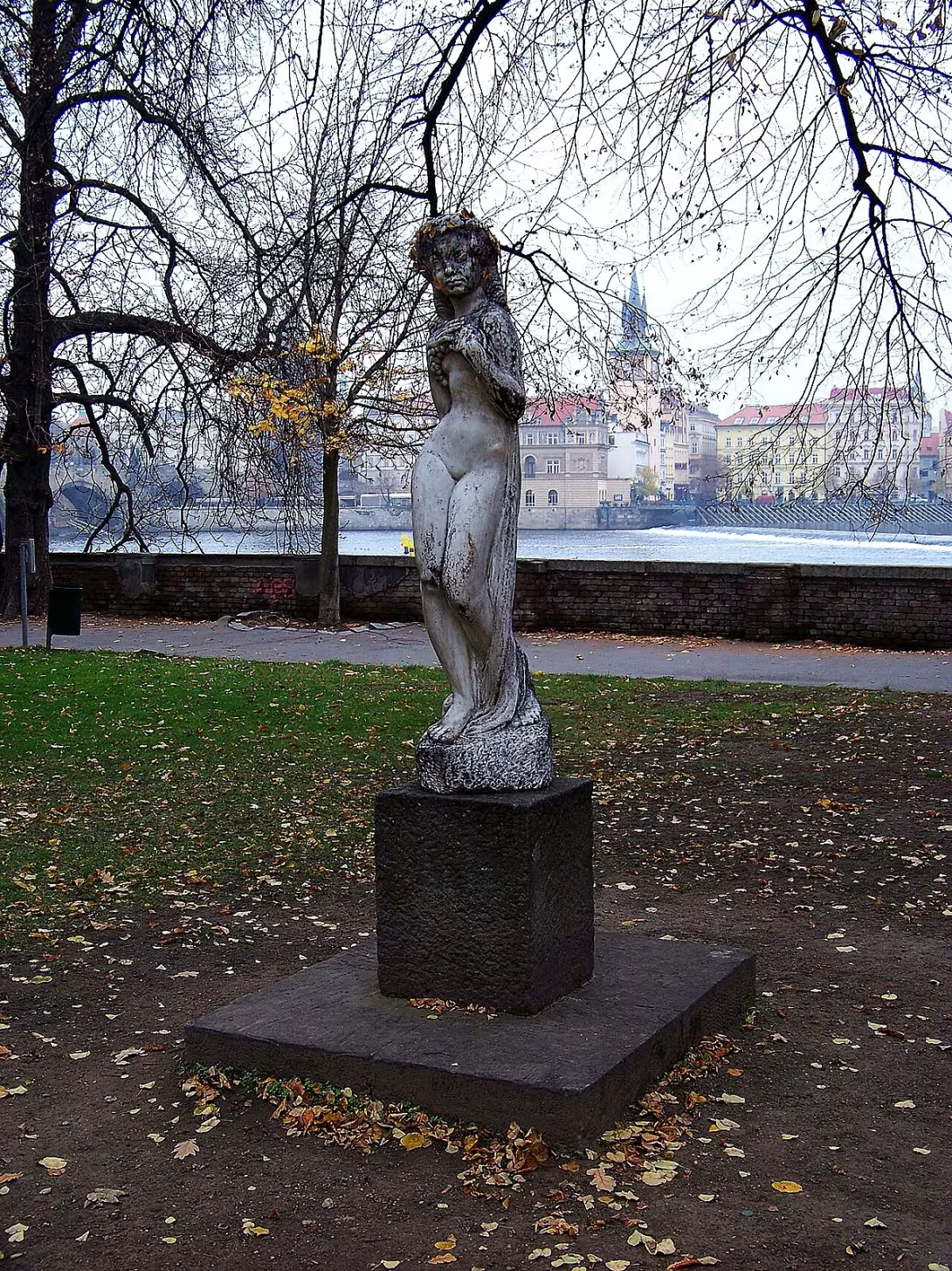
The statue known as Réva (meaning "Wine" in English) is a prominent outdoor sculpture in Kampa Park on Kampa Island, Malá Strana, Prague. Installed in 1960, this nearly life-size work is a significant creation by Karla Vobišová-Žáková, the first professional female sculptor in Czechoslovakia. Also referred to as *Dívka s hrozny* (Girl with Grapes), the piece is crafted from white Carrara marble and rests on a sandstone plinth. It has been a protected cultural monument since 1964 and remains an integral part of the Vltava riverbank's artistic landscape.
This monument is deeply tied to the legacy of Karla Vobišová-Žáková, a pivotal figure in the history of Czech sculpture. As the nation's first professional female sculptor, her career marked a milestone for women in the field. The statue was created in 1960 during the era of the Czechoslovak Socialist Republic, a period characterized by a complex tension between official socialist realism and more traditional or modernist expressions. Although specific commissioning details are scarce in available records, the work is a quintessential example of Vobišová-Žáková’s oeuvre, which focused primarily on figural and portrait sculpture. Its creation marks a distinct moment in post-war regional development, where individual expression coexisted with the prevailing political and cultural climate.
Artistically, the sculpture is defined by its material composition and technique. The main body is carved from high-quality white Carrara marble, a stone prized for its purity and suitability for detailed figural work. The artist employed a chipping technique to precisely shape the stone and reveal the form within. The nearly life-size figure is mounted on a rectangular sandstone plinth, providing a stable and contrasting base. The subject depicts a nude girl holding a bunch of grapes to her chest while standing on a stone. This iconography aligns with the artist’s focus on figural subjects, presenting a classical theme through a modern lens. Furthermore, the contrast between the smooth marble surface and the textured sandstone base creates a visual hierarchy that emphasizes the figure.
The monument's administrative history reflects its recognized cultural value. Managed by the Prague 1 municipal district, the sculpture is part of a broader effort to preserve local cultural assets. It was formally declared a cultural monument on December 22, 1964. This designation, granted only four years after its installation, underscores the immediate recognition of its significance by heritage authorities. To ensure its physical and historical integrity for future generations, the monument is separately registered. Its national catalogue registration number is 86714/1-477, which facilitates official tracking by the National Heritage Institute. The district's management demonstrates a local commitment to preserving the artistic heritage of Malá Strana.
Several notable aspects surround the sculpture's history. Beyond its aesthetic appeal, the work serves as a symbol of professional achievement for women, given Vobišová-Žáková's pioneering status. The piece is also known as *Dívka s hrozny*, a title that directly describes its subject matter. To maintain its condition, the sculpture has undergone restoration, most recently in 1997. This process likely involved cleaning and repairing the marble to address decades of weathering. Such interventions ensure the work continues to reflect its original artistic intent and remains well-preserved for public viewing.
Today, the Réva statue remains a visible and accessible feature of Kampa Park. Situated on Kampa Island in Prague's Malá Strana district, it is surrounded by the Vltava river and various other art installations. The park provides a natural setting where visitors can encounter this piece of public art. Its riverbank location makes it a notable landmark for those exploring the island. While protected by preservation regulations, the monument remains open to the public and continues to attract tourists and art enthusiasts. Its presence enriches the district's cultural atmosphere, offering a glimpse into mid-twentieth-century artistic heritage. Its historical significance, quality, and accessibility make it a worthwhile stop for any visitor.
The value of the Réva statue lies in its dual significance as a high-quality artwork and a historical milestone. It represents both the professional achievements of Vobišová-Žáková and the broader context of 1960s Czech sculpture. For visitors, the monument offers a chance to appreciate fine Carrara marble craftsmanship and the enduring appeal of classical themes. Its protected status ensures it will remain part of the city's cultural landscape for years to come. Experiencing the piece in Kampa Park, amidst the natural beauty of the river and the historical character of Malá Strana, serves as a testament to the lasting impact of individual artistic vision.
Then and now
Drag the slider to compare how the landmark may have looked when it was built with the view today.
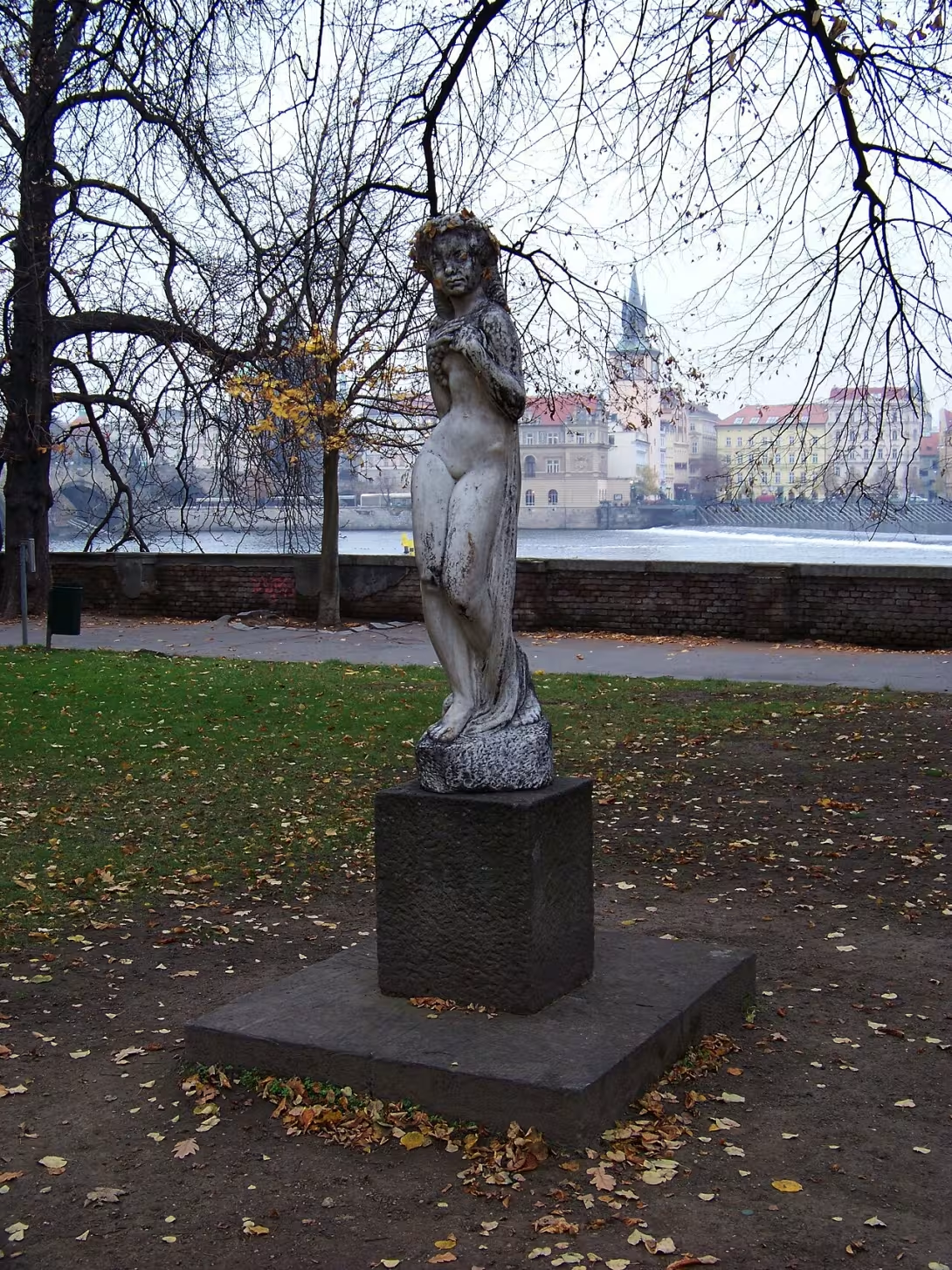
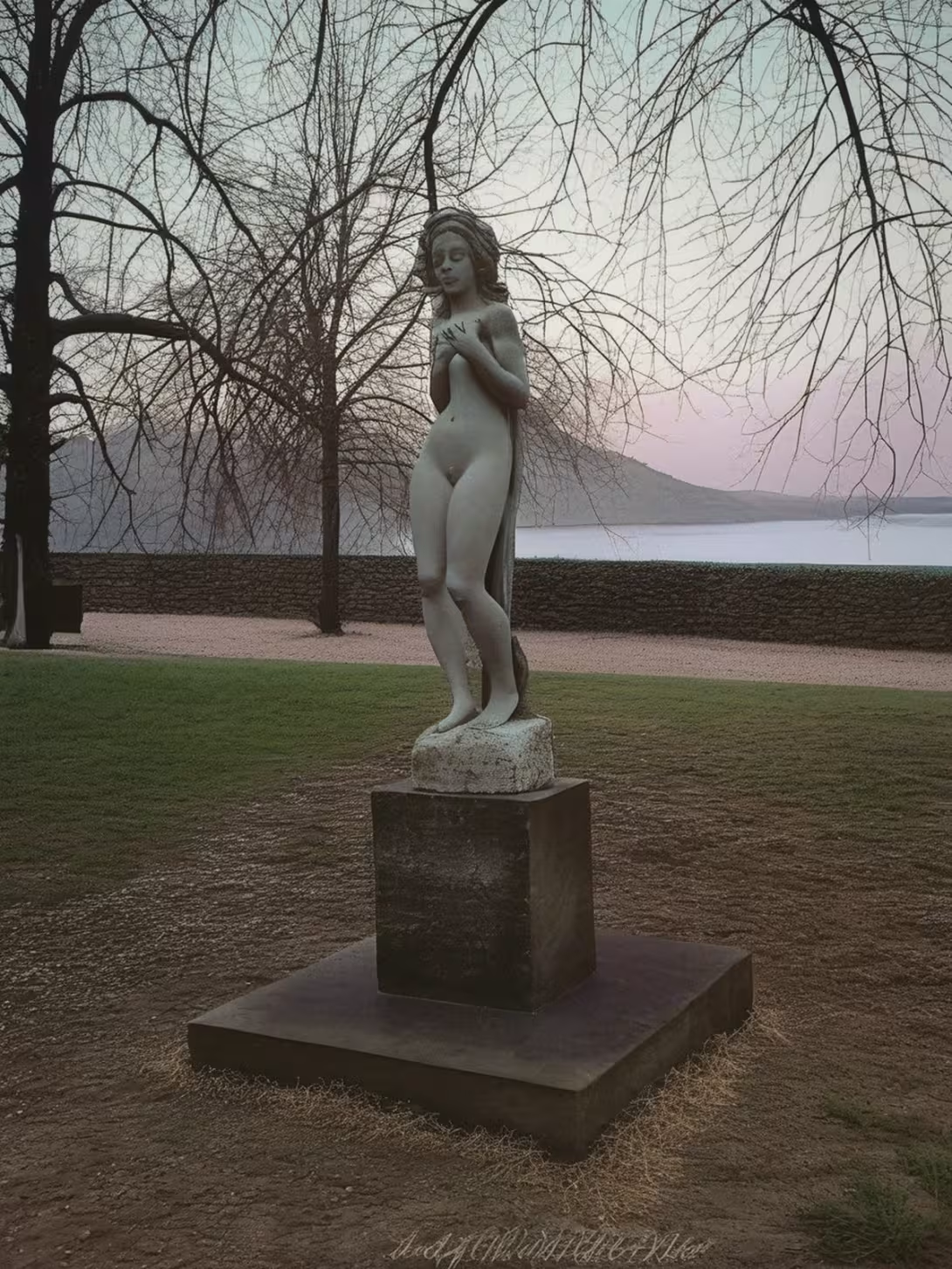
The historical appearance on the left is an AI-generated visualisation and serves as inspiration only.
Historical milestones
- 1960
- Creation of the sculpture by Karla Vobišová-Žáková.
- 1964
- The sculpture was designated as a cultural monument on December 22.
- 1997
- Renovation of the sculpture.
Architectural development
The sculpture was created in 1960 using the chipping technique. It is made of high-quality white Carrara marble and is mounted on a sandstone base.
Historical events
The sculpture was officially declared a cultural monument on December 22, 1964. A renovation of the artwork took place in 1997.
Owners
Managed by the Prague 1 municipal district.
Points of interest
– The sculpture was created by Karla Vobišová-Žáková, the first professional female sculptor in Czechoslovakia. – Also known as *Dívka s hrozny*, the piece is crafted from white Carrara marble and rests on a sandstone plinth. – It depicts a nearly life-size nude girl holding a bunch of grapes to her chest. – The artist used a chipping technique to precisely shape the stone. – It was formally declared a cultural monument on December 22, 1964, only four years after its installation.
Guide
Show guide text
This text was created by artificial intelligence and has not been editorially reviewed. It may contain inaccuracies.
Welcome to the tranquil and historic atmosphere of Kampa Park. As you stand here on the Kampa island, tucked away in the heart of Malá Strana, you might feel a sudden sense of calm, as if the bustling energy of Prague has momentarily drifted away, leaving only the gentle sounds of the surroundings. Right before you, resting in this peaceful setting, is a figure of remarkable grace and quiet strength. You are standing in front of the Socha Réva. Take a moment to simply look at her. Notice how she occupies the space around her, not with grandiosity, but with a soft, natural presence that seems to belong perfectly to this corner of the city.
As you observe the sculpture, your eyes are immediately drawn to the delicate form of the girl. She is depicted in a moment of stillness, a nearly life-size figure that possesses a striking sense of realism. Notice the way she holds a bunch of grapes close to her chest, a gesture that feels both intimate and timeless. She stands upon a simple stone, a detail that grounds her in the natural world. This is the Socha Réva, also known by the evocative name Dívka s hrozny. It is a work that invites you to slow down, to move closer, and to appreciate the subtle nuances of the human form captured in stone.
Now, let us turn our attention to the material that brings this vision to life. If you look closely at the surface of the sculpture, you will see the exquisite quality of the white Carrara marble. This specific type of marble is world-renowned for its purity and its ability to catch the light in ways that mimic the softness of skin. Watch how the sunlight, or even the soft light of a cloudy Prague day, dances across the curves of her body, highlighting the craftsmanship that went into every contour. The brightness of the white marble creates a beautiful contrast against the more rugged, earthy texture of the rectangular sandstone plinth upon which she rests. This interplay between the refined, luminous marble and the solid, textured sandstone creates a visual balance that enhances the entire presence of the work.
To understand the true significance of what you are seeing, we must look back to the year 1960, the year this masterpiece was created. This was a pivotal time for the arts in this region, and the Socha Réva stands as a testament to the talent and vision of its creator, Karla Vobišová-Žáková. As you contemplate the sculpture, consider the hands that shaped this marble. Karla Vobišová-Žáková was not just an artist; she was a pioneer. She holds a unique place in history as the first professional female sculptor in Czechoslovakia. In an era when the path for women in the fine arts was often difficult to navigate, her success and the enduring quality of her work spoke volumes. When you look at the poise and the confidence of the girl in the sculpture, you are seeing a reflection of the strength and the professional excellence of the woman who brought her into being.
The importance of this work was recognized very early on. Just a few years after its creation, on December 22, 1964, the sculpture was officially designated as a cultural monument. This designation ensured that the Socha Réva would be protected and preserved for future generations to admire, recognizing it not just as a beautiful object, but as a vital piece of the cultural fabric of the nation. Over the decades, the sculpture has weathered the passage of time, but its beauty has been carefully maintained. In 1997, the work underwent a significant renovation, a process that ensured the Carrara marble remained as pristine and expressive as it was when it first emerged from the studio in 1960.
As you stand here, take a moment to appreciate the silence and the history that surrounds you. The Socha Réva is more than just a piece of marble; it is a bridge to the past, a connection to the pioneering spirit of Karla Vobišová-Žáková, and a symbol of the enduring beauty found in the simplest of forms. Whether you find yourself drawn to the technical mastery of the carving or the emotional resonance of the girl holding her grapes, there is something deeply human about this work that stays with you long after you walk away.
As you prepare to continue your journey through Malá Strana, let the elegance of this sculpture stay with you. There is so much more to discover in the winding streets and hidden corners of this historic district. We invite you to keep exploring, to keep looking closely, and to continue uncovering the stories etched into the very stones of Prague. Thank you for spending this moment with the Socha Réva. Enjoy the rest of your walk through Kampa Park.
Tips for visitors
To see the Socha Réva in the most flattering light, aim to visit during the early morning or late afternoon when the sun highlights the marble texture. The location is accessible by both car and public transport; please check current schedules and connections via a local transit search engine or navigation app.
It is recommended to bring comfortable walking shoes for exploring the paths of Kampa Park. Since the sculpture is located near the Vltava river, the weather can be breezy, so bringing a light jacket is a good idea.
For the best photography, find a spot in Kampa Park that captures the sculpture alongside the natural beauty of Kampa island. The light reflecting off the Vltava river can create stunning shots of the marble work.
Visitors can also explore the other artistic installations found within the Malá Strana district. This makes for a culturally rich walk through the immediate area.
Families with children will find the open spaces of Kampa Park to be a pleasant and relaxed environment for a visit, allowing for a leisurely stroll through the park.
Businesses nearby
Events nearby

Zdroj akcí: otevřená data měst a obcí ČR (Národní katalog otevřených dat) a kalendář akcí Národního památkového ústavu.
Nearby
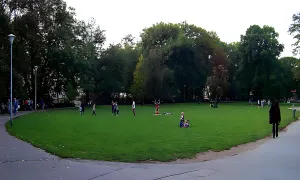
The sculpture is located in Kampa Park on the Kampa island, surrounded by the Vltava river and other artistic installations in the Malá Strana district of Prague.
Accommodation nearby
Trips and activities nearby
Guided tours, tickets and activities nearby from GetYourGuide
Affiliate link: if you buy from the partner, we may receive a commission. The price for you does not change.
Search tours and activities →Themed route
Stop 1: Kampa Park Type: Public park Why visit: This scenic park offers stunning views of the Vltava River and the city skyline, making it a perfect spot for relaxation and recreation.
Stop 2: Vltava River Type: Waterway Why visit: Take a leisurely stroll along the riverbank or enjoy a boat ride to appreciate the beauty of Prague's main waterway. The views of the surrounding landscape are breathtaking.
Stop 3: The Sculpture Réva (socha) Type: Public art installation Why visit: This unique sculpture is a must-see for art enthusiasts and those interested in contemporary culture. Its location in Kampa Park offers a serene atmosphere, perfect for contemplation and appreciation of the artwork.
Note: The route focuses on the surrounding area of the Socha Réva (Réva Sculpture) in Kampa Park, Malá Strana district, Prague.
Seasonal recommendations
Spring
The Socha Réva statue in Malá Strana comes alive during the spring season. The gentle sunlight casts a warm glow on the monument, and the surrounding nature awakens from its winter slumber. The atmosphere is filled with the sweet scent of blooming flowers and the chirping of birds.
Practical tips: Spring is a popular time to visit Socha Réva, so be prepared for moderate-sized crowds. Wear comfortable shoes and dress in layers as the weather can be unpredictable. The best time to visit is during the late morning or early afternoon when the sun is shining brightly.
Summer
During the summer season, the Socha Réva statue is surrounded by lush greenery and vibrant flowers. The warm sunlight casts a golden glow on the monument, creating a sense of relaxation and tranquility. The atmosphere is lively, with families and tourists enjoying the beautiful surroundings.
Practical tips: Summer is peak tourist season, so expect larger crowds. Arrive early to beat the heat and take advantage of the morning sun. Wear comfortable clothing and bring sunscreen for protection from the sun.
Autumn
As autumn arrives, the Socha Réva statue in Malá Strana takes on a warm, golden hue. The surrounding nature is ablaze with color as the leaves change, creating a picturesque atmosphere. The air is crisp and cool, carrying the scent of ripe fruit and woodsmoke.
Practical tips: Autumn is a great time to visit Socha Réva without the crowds of summer. Wear layers for cooler mornings and evenings, and comfortable shoes for exploring the surrounding area. The best time to visit is during the late morning or early afternoon when the sun is shining brightly.
Winter
During the winter season, the Socha Réva statue in Malá Strana takes on a serene quality, surrounded by snow-covered trees and frosty air. The cold sunlight casts a pale glow on the monument, creating a sense of quiet contemplation. The atmosphere is peaceful, with only the occasional sound of snowfall breaking the silence.
Practical tips: Winter is a great time to visit Socha Réva for a peaceful experience. Wear warm clothing and gloves for protection from the cold, and consider visiting during the early morning or late afternoon when the sun is lower in the sky. The statue's opening hours may be shorter due to the weather conditions.
Visualizations and artistic views


The visualisations are generated by artificial intelligence and serve as inspiration.
Photos from the area
Real photos taken near the monument

Zdroj a licence jsou uvedeny u každého snímku.
Tips from visitors
No tips yet. Be the first!
Log in and add your tip.
Sources and literature
Fotografie: Paddy / CC BY-SA 3.0 — Wikimedia Commons. The author and licence also appear when you hover over the image.
Faktickým podkladem tohoto textu byl článek na Wikipedii, jehož autory jsou přispěvatelé Wikipedie. Článek je dostupný pod licencí CC BY-SA 4.0.
Location on the map

Příběhy a pověsti
Legendy, pověsti a příběhy spjaté s touto památkou

Fotografie návštěvníků
Zatím žádné fotografie. Buďte první, kdo přidá fotografii z návštěvy!
Přihlaste se a přidejte svou fotografii nebo hodnoťte.
Za ověřenou návštěvu v aplikaci získáte víc bodů — poznáme podle GPS, že jste na místě.
Reviews and comments