






dům U Kočků House
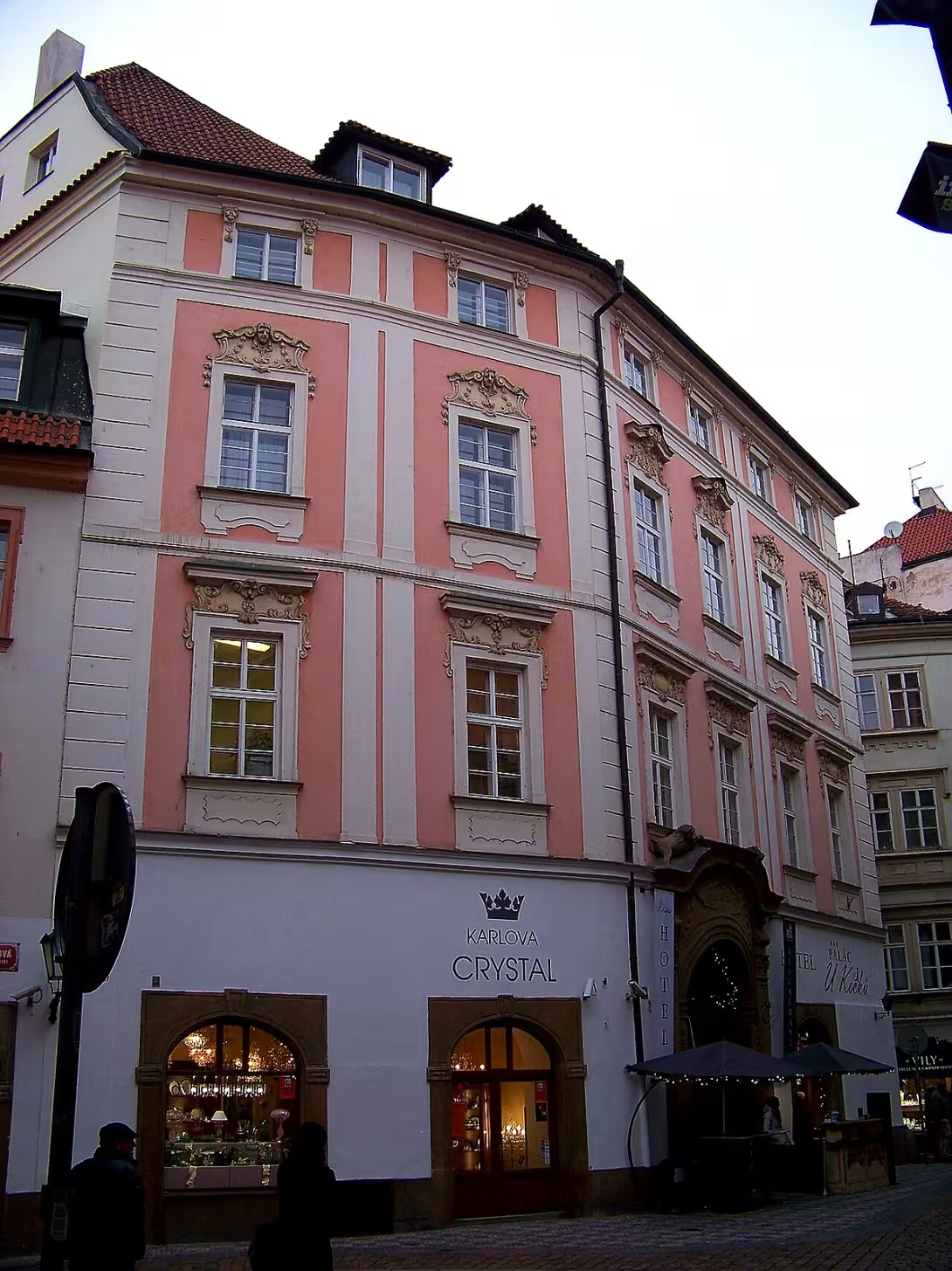
Dům U Kočků, also known as U Zlatého kříže or Červený dům, is a historically significant palace in Prague's Old Town. It stands at the intersection of Jalovcová, Jilská, and Karlova streets. This architectural gem has evolved through Romanesque, Gothic, Renaissance, and Baroque styles since its medieval origins. Recognized as one of the oldest and most valuable structures on Staré Město, it was designated a cultural monument in 1964.
The building's history traces back to at least the 14th century. Evidence suggests an even earlier Romanesque foundation based on preserved fragments found in its cellars. Its architectural journey began as a medieval urban house and underwent significant transformations over the centuries. Gothic elements are visible up to the second floor, while a notable Renaissance renovation in the late 16th century introduced features such as a double-flight staircase and loggias on the courtyard wings.
The Baroque period brought further changes under Bartolomeo Scotti's direction for Prince Mannsfeld in 1736. This phase saw the closure of arcades and the addition of stucco decorations, including an impressive domovní portál. The building's façade underwent significant modifications at the beginning of the 19th century, increasing to three stories with a redesigned street front.
Ownership of Dům U Kočků has seen several notable transitions. In 1927, the Kočková couple purchased the property and commissioned its reconstruction between 1927 and 1930, during which the name "U Kočků" was adopted. The building was nationalized in 1953 but returned to the descendants of the original owners in 1992 following restitution efforts. Today, it serves as a hotel.
Throughout its history, Dům U Kočků has hosted several distinguished figures. In 1799, notable guests included Prince Ferdinand Würtenberský, Prince Ludvík Jindřich de Bourbon-Condé, and Russian Prince Petr Bagration. These visits underscore the building's historical significance as a center of social and cultural activity.
Today, Dům U Kočků stands as a testament to Prague's rich architectural heritage. Its blend of Romanesque, Gothic, Renaissance, and Baroque elements offers visitors a unique glimpse into the city's past. The preserved vaults and relief decorations add to its allure, making it a must-visit for those interested in history and architecture. As you explore this historic site, you'll appreciate its enduring legacy and the stories embedded within its walls.
Historical milestones
- 14th century
- Dům U Kočků traces back to at least the 14th century.
- late 16th century
- Renaissance renovation introduced double-flight staircase and loggias.
- 1736
- Baroque modifications under Bartolomeo Scotti for Prince Mannsfeld.
- 1927
- Kočková couple purchased and began reconstruction of the building.
- 1964
- Dům U Kočků designated as a cultural monument.
- 1953
- Building was nationalized.
- 1992
- Restitution to descendants of original owners.
Architectural development
The building's architectural evolution began with its Romanesque foundations, followed by Gothic elements reaching up to the second floor. A significant Renaissance transformation in the late 16th century introduced a double-flight staircase and loggias on courtyard wings. The Baroque period saw further modifications, including the closure of arcades and addition of stucco decorations.
Historical events
- 1799
- Visit by notable figures including Prince Ferdinand Würtenberský, Prince Ludvík Jindřich de Bourbon-Condé, and Russian Prince Petr Bagration.
- 1736
- Baroque renovation led by Bartolomeo Scotti for Prince Mannsfeld.
Owners
- 1953
- zkonfiskován
- 1992
- restituce potomkům rodiny
Points of interest
- Dům U Kočků is also known as U Zlatého kříže or Červený dům and stands at the intersection of Jalovcová, Jilská, and Karlova streets in Prague's Old Town. - The building has evolved through Romanesque, Gothic, Renaissance, and Baroque styles since its medieval origins and was designated a cultural monument in 1964. - Evidence suggests an even earlier Romanesque foundation based on preserved fragments found in its cellars, with architectural history tracing back to at least the 14th century. - In 1736, under Bartolomeo Scotti's direction for Prince Mannsfeld, Baroque changes included closing arcades and adding stucco decorations such as an impressive domovní portál. - Notable guests in 1799 included Prince Ferdinand Würtenberský, Prince Ludvík Jindřich de Bourbon-Condé, and Russian Prince Petr Bagration.
Guide
Show guide text
This text was created by artificial intelligence and has not been editorially reviewed. It may contain inaccuracies.
Welcome to one of the most fascinating corners of Prague's Old Town. As you stand here, right at the bustling intersection where Jalovcová, Jilská, and Karlova streets meet, take a moment to simply absorb the presence of the building before you. You are looking at a structure that is much more than just a house; it is a living, breathing chronicle of the city itself. Depending on which historical record you consult, you might hear this palace referred to as Dům U Kočků, or perhaps you will encounter it known as U Zlatého kříže or even the Červený dům. Regardless of the name, its presence is unmistakable, commanding the space where these three streets converge.
As you observe the facade, try to imagine the centuries of change that have passed through this very spot. This building has not remained static; it has evolved, transformed, and reinvented itself through the ages. It is a magnificent example of how history does not simply replace the past, but rather builds upon it, layer by layer.
To understand what you are seeing, we must travel back in time, far beyond the modern streets surrounding you. The story of Dům U Kočků begins at least in the 14th century. In those medieval days, this was an urban house, a part of the growing fabric of Prague's Old Town. It began its life in an era of knights and narrow, winding alleys, serving as a fundamental piece of the city's early development. But as the centuries rolled by, so too did the tastes, the technologies, and the ambitions of the people who lived within these walls.
If you could peel back the layers of the exterior, you would find a complex architectural tapestry. The very foundation of this palace holds secrets from the Romanesque period, with preserved foundations that remind us of the building's earliest, most ancient roots. As the medieval era progressed, the structure took on Gothic characteristics, providing the skeletal strength that allowed it to endure.
Now, let your eyes wander across the architectural details that define its later transformations. In the late 16th century, the building underwent a significant Renaissance renovation. This was a period of elegance and mathematical harmony, which introduced elements such as the graceful loggias and a grand double-flight staircase. These features were designed to bring light, air, and a sense of sophisticated movement to the residence.
However, the building’s character shifted once more in the 18th century. In 1736, the palace underwent profound Baroque modifications. This transformation was led by the architect Bartolomeo Scotti, who was commissioned to work on the property for Prince Mannsfeld. This era brought a new sense of drama and grandeur to the site, shaping much of the imposing atmosphere you feel today. When you look at the building now, you are seeing the result of this long, continuous dialogue between different architectural eras—Romanesque, Gothic, Renaissance, and Baroque—all harmonizing into a single, monumental entity.
The history of Dům U Kočků is also a history of the powerful and influential figures who once called it home. This was not merely a residence for merchants, but a palace that hosted nobility and figures of international significance. Within these walls, one might have encountered the presence of Prince Ferdinand Würtenberský or the distinguished Prince Ludvík Jindřich de Bourbon-Condé. The building’s prestige was such that even the Russian Prince Petr Bagration is associated with its storied past. These were people of immense influence, and their presence helped elevate this site from a simple urban house to a true palace of importance.
As we move from the era of princes to more modern times, the building’s story takes another turn. In 1927, a couple known as the Kočková family purchased the building and initiated a significant reconstruction, a move that helped preserve its historical integrity for the coming generations. Though the building was nationalized in 1953, its cultural value was officially recognized in 1964, when Dům U Kočků was designated as a protected cultural monument. This ensures that the layers of history we have discussed—the work of Bartolomeo Scotti, the Renaissance loggias, and the medieval foundations—will continue to stand as a testament to Prague's enduring legacy.
There is a certain mystery in how a single location can hold so many different identities. Is it a medieval house? Is it a Renaissance residence? Is it a Baroque palace? The answer is that it is all of these things at once. It is a rare architectural survivor that has managed to keep pieces of its soul from every century it has inhabited. When you look at the relief decorations or contemplate the heavy, valuable vaults hidden within, you are touching the very essence of Prague's ability to reinvent itself without ever truly forgetting where it began.
As you continue your journey through the Old Town, I invite you to keep this sense of layered history in mind. Every stone and every corner of this city has a story to tell, much like the many faces of Dům U Kočků. Take your time, walk slowly, and let the echoes of the 14th century, the elegance of the Renaissance, and the drama of the Baroque guide your footsteps. Thank you for joining me on this brief exploration, and please, enjoy the rest of your walk through this magnificent city.
Tips for visitors
The best time to visit Dům U Kočků is during the late spring or early fall when the weather is pleasant, allowing for a comfortable exploration of its historical architecture without the crowds typical of peak tourist seasons. The soft natural light enhances the beauty of the building's details and provides excellent conditions for photography. Additionally, visiting in these months often means you'll experience local festivals or events that add to the cultural richness of Prague's Old Town.
Getting to Dům U Kočků is convenient both by car and public transport. If driving, there are parking facilities available within a short walking distance; however, due to its central location in Staré Město, it might be more practical to use public transportation or park further away and walk the rest of the way. Prague's efficient tram and bus network can easily take you close to this historic site. Make sure to check current routes and schedules online before your visit.
When visiting Dům U Kočků, it is advisable to bring comfortable walking shoes as exploring the Old Town involves a fair amount of walking on cobblestone streets. A camera or smartphone for capturing the stunning architecture and vibrant atmosphere is recommended. Additionally, carrying a map of Prague's Old Town can help you navigate easily around Dům U Kočků and discover other nearby attractions.
Photography enthusiasts will find several spots around Dům U Kočků where they can capture its architectural beauty. The morning light offers soft illumination that highlights the intricate details of the building, making it ideal for photography. Additionally, the corner location at Jalovcová, Jilská, and Karlova streets provides a unique vantage point to photograph the palace in relation to other historic buildings, creating a picturesque scene of Prague's rich architectural heritage.
Nearby attractions within a 30-minute walk include the iconic Old Town Square (Staroměstské náměstí) with its Astronomical Clock and Týn Church. Visitors can also explore the charming streets leading to the Jewish Quarter, which offers a glimpse into Prague's diverse cultural history through sites like the Old New Synagogue and the Jewish Museum. These nearby locations provide an enriching experience that complements your visit to Dům U Kočků.
For families with children, visiting Dům U Kočků can be both educational and entertaining. The historic site offers a glimpse into medieval urban life in Prague, sparking curiosity about history and architecture among young visitors. After exploring the palace, take a leisurely walk through Staré Město to enjoy its quaint shops and cafes. Engaging children with stories of the past or encouraging them to sketch what they see can make the visit more interactive and memorable.
Businesses nearby
Events nearby

Zdroj akcí: otevřená data měst a obcí ČR (Národní katalog otevřených dat) a kalendář akcí Národního památkového ústavu.
Nearby
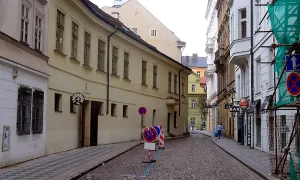
Located on the corner of Jalovcová, Jilská, and Karlova streets in Prague's Old Town, Dům U Kočků is surrounded by other historic buildings and landmarks. The area features rich architectural heritage and cultural significance.
Accommodation nearby
Trips and activities nearby
Guided tours, tickets and activities nearby from GetYourGuide
Affiliate link: if you buy from the partner, we may receive a commission. The price for you does not change.
Search tours and activities →Themed route
Thematic Walking Tour: The Dům U Kočků and Its Surroundings
1. Dům U Kočků (Palác) *Type:* Historic Building This elegant palace, located at the intersection of Jalovcová, Jilská, and Karlova streets in Prague's Old Town, is a stunning example of Baroque architecture. It stands out for its intricate façade and historical significance as one of the city's most beautiful palaces.
2. Karlova Street *Type:* Historic Street Just a short walk from Dům U Kočků, Karlova Street is renowned for its vibrant atmosphere and cultural importance. It hosts numerous shops, cafes, and historical landmarks, offering visitors an immersive experience of Prague's rich history and lively present.
3. Jalovcová Street *Type:* Historic Street Adjacent to Dům U Kočků, Jalovcová Street is lined with charming buildings that reflect the architectural diversity of Old Town Prague. This street provides a glimpse into the everyday life of historical Prague and leads directly back towards Karlova Street.
4. Jilská Street *Type:* Historic Street Connecting to both Jalovcová and Karlova streets, Jilská Street is another key thoroughfare in Old Town Prague. It offers a picturesque walk through the heart of the city's historical district, with its blend of old-world charm and modern vibrancy.
5. Old Town Square *Type:* Historic Square A short distance from Dům U Kočků, this iconic square is the cultural and historical epicenter of Prague. Known for its stunning architecture, including the famous Astronomical Clock, it provides a perfect conclusion to your exploration of the area's rich heritage.
This tour offers an intimate look at some of Prague’s most cherished historic sites, all within walking distance from each other in the Old Town district.
Seasonal recommendations
Spring: Visiting Dům U Kočků during spring is a delightful experience, as the historic building basks in the soft glow of the longer daylight hours. The surrounding area comes alive with blooming flowers and fresh greenery, creating an enchanting atmosphere that makes this season particularly inviting for exploring Staré Město's charm. Visitors should dress comfortably to enjoy the mild temperatures but be prepared for occasional rain showers by bringing a light waterproof jacket. Early mornings are ideal for avoiding larger crowds as tourists flock to witness Prague’s springtime beauty.
Summer: Summer at Dům U Kočků is characterized by vibrant energy and bustling activity, with warm sunshine illuminating the palatial architecture in brilliant hues. The lush greenery around Staré Město enhances the picturesque setting, making it a popular time for visitors to explore Prague’s cultural landmarks. To make the most of your visit during this peak season, arrive early in the day to avoid long lines and dress in light, breathable clothing to stay comfortable under the summer sun. Additionally, carrying water and wearing sunscreen are practical tips to ensure an enjoyable experience.
Autumn: Autumn offers a unique charm at Dům U Kočků, with the changing leaves providing a stunning backdrop of warm colors that beautifully complement the historic architecture. The cooler temperatures create a cozy atmosphere ideal for leisurely strolls through Staré Město. Visitors should dress in layers to accommodate fluctuating weather conditions and consider bringing an umbrella or raincoat as autumn rains can be unpredictable. This season is less crowded, making it perfect for those who prefer a more tranquil exploration of Prague’s historic sites.
Winter: Winter transforms Dům U Kočků into a magical setting with the historic building often adorned in festive lights that add to its allure against the snowy backdrop. The crisp air and shorter days create an intimate atmosphere, ideal for enjoying the beauty of Staré Město during this quieter season. Visitors should dress warmly in layers and wear comfortable shoes suitable for potentially icy conditions. Planning your visit early in the day ensures you have ample time to explore before many attractions close earlier due to reduced daylight hours.
Visualizations and artistic views


The visualisations are generated by artificial intelligence and serve as inspiration.
Photos from the area
Real photos taken near the monument


Zdroj a licence jsou uvedeny u každého snímku.
Tips from visitors
No tips yet. Be the first!
Log in and add your tip.
Sources and literature
Fotografie: ŠJů (cs:ŠJů) / CC BY-SA 3.0 — Wikimedia Commons. The author and licence also appear when you hover over the image.
Faktickým podkladem tohoto textu byl článek na Wikipedii, jehož autory jsou přispěvatelé Wikipedie. Článek je dostupný pod licencí CC BY-SA 4.0.
Location on the map

Příběhy a pověsti
Legendy, pověsti a příběhy spjaté s touto památkou
Fotografie návštěvníků
Zatím žádné fotografie. Buďte první, kdo přidá fotografii z návštěvy!
Přihlaste se a přidejte svou fotografii nebo hodnoťte.
Za ověřenou návštěvu v aplikaci získáte víc bodů — poznáme podle GPS, že jste na místě.
Reviews and comments