






dům U Machtů House
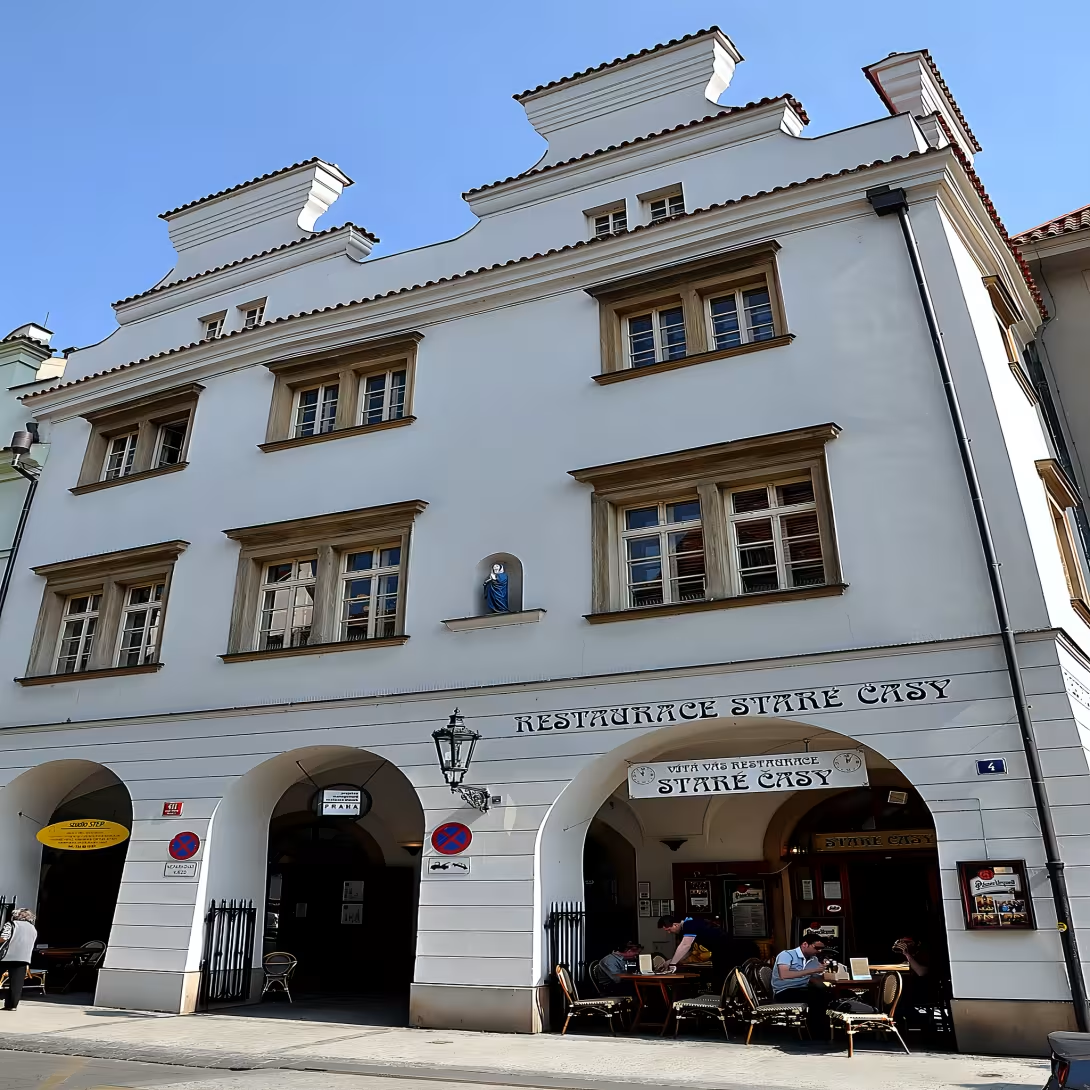
The House of Machts, also known as the House of the Virgin Mary, is the historical building No. 411 in Knights Street No. 4 on Prague's Old Town. This cultural monument of the Czech Republic will capture its development. It was created by the composition of two medieval plots and followed by a late Renaissance reconstruction in the early 17th century.
The history of the construction dates back to before 1400, when the two original plots were joined together in one whole. This process of merging smaller land was typical of the gradual development of old-town development. At the time of the foundation of the house, the Czech countries were in the period of flowering during the reign of Luxembourg.
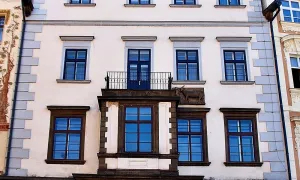
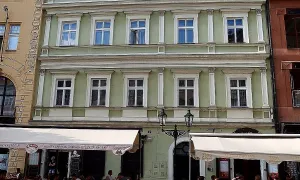
The architectural character of the building is determined primarily by the distinctive late Renaissance reconstruction from the beginning of the 17th century. It printed the building in its present form and placed it in the context of pre-white mountain Prague, which at that time represented a major cultural centre of Central Europe.
In the 16th century the house was owned by important noble families, namely Zárubové z Hustířan and Štampachové ze Štampachu. These property relationships illustrate the prestigious position of the property within the then urban development. The name U Virgin Mary appears in the historical sources next to the name U Machts.
Today dům U Machtů is protected as a cultural monument and represents a valuable proof of historical development in the centre of Prague. The building is located in the immediate vicinity of important sites such as the Old Town Square, the Stavovská Theatre and Karolinum.
This building is a valuable testament to changes in Prague architecture from the Middle Ages to the Renaissance. It is worth paying attention to the facade that bears the traces of centuries of urban housing.
Historical milestones
- around 1400
- The composition of two medieval plots in one whole
- 16th Century
- Owning a house with noble families of Záruba and Štampach
- Around 1600
- Late Renaissance reconstruction of the building
Architectural development
The original medieval house was created by connecting two plots. At the beginning of the 17th century, the object was significantly rebuilt in the late Renaissance style, which imprinted its present character.
Historical events
Two plots before 1400 and subsequent construction of a new house. Significant late Renaissance reconstruction in the early 17th century.
Owners
In the 16th century it belonged to the families of Záruba from Hustriján and Štampach from Štampach.
Points of interest
- The house was created by the building of two medieval plots before 1400. - The building underwent a late Renaissance reconstruction at the beginning of the 17th century, which gave it its present form. - In the 16th century the house was owned by the noble families Zárubové z Hustířan and Štampachové ze Štampachu. - In addition to the name U Macht, the name U Virgin Mary appears in historical sources.
Guide
Show guide text
This text was created by artificial intelligence and has not been editorially reviewed. It may contain inaccuracies.
Welcome to the heart of old Prague. You're standing in one of those streets where history doesn't just count from textbooks, but it smells in every stone piece of floor and every shadow that falls on the facades of buildings. You are in Knights Street, the first district in Prague, where time seems to be denser than anywhere else. In front of you is dům U Machtů, an object that is much more than just a private residence or ordinary building. He's a living witness to the transformation these metropolis has been going through for centuries. Feel this atmosphere, feel the calm that brings its historical weight to this place. You may think you're looking at one whole, but you're actually looking at a connection between two worlds that once met here.
Now let's go back deep into the past to understand how this whole thing came about. Imagine Prague around 1400. The city is still building its medieval face, the streets are narrow and the plots in the city buildings are small and fragmented. It was at this very time, which was only four hundred years ago, that a major step was taken. Two original medieval lands, two separate parts of urban tissue, were assembled into one larger whole. This process of consolidation was unusual at the time and meant that a building with new scope and new energy was created. So this house is not just one house, but it is the result of a combination of two historical stories that have come together here in one common destiny.
Now pay attention to the very form of the building you are currently observing. Even though time was constantly changing, the house kept its essence. If you look at its structure, you can see traces of different epoch. But the most important of them took place in the early seventeenth century. At that time, the building underwent a major reconstruction, which gave it its present, characteristic appearance. It was not just a simple repair, but a profound transformation in the spirit of the late Renaissance style. It is this reconstruction that has given the house the elegance and order that you perceive today. Although architecture does not change every ten years, this Renaissance layer is what gives the object its present face and what makes it a valuable cultural document of our history. So look at his facade and try to find in his lines the harmony that the builders at the time sought to create.
But to fully understand the importance of this place, we need to look at the people who lived here and who shaped this house. History tells us that in the sixteenth century, this object became the seat of important noble families. These were the families of the Hustrians and the Stampachs of Stampach. Imagine the powerful families that moved on these streets, that hosted here and that built their position here. The Zárubos and Štampachs were not only owners of the property, they were part of the political and social life of the then Prague. When you look at the walls of this house, remember that in these areas there were once steps of people who made decisions about the fate of many things. Their presence here has left an invisible but tangible mark of prestige.
Now, I want to invite you to think of one interesting thing that might seem like a little mystery. This house doesn't know just one name. In historical records, we meet with the name Machts, but it is also known as the House of the Virgin Mary. Why is that? Why is one object wearing two different names? It's a question that can make you think about what houses were called in the past. Sometimes the name was associated with the family that was based here, and sometimes with a religious motive or another symbol that was important to the people of the place. This double identity adds a house of mystery and reminds us that every building can have more faces, depending on who is looking at it and at what time.
Today this house is protected as a cultural monument of the Czech Republic. This means that it is not only part of the street, but it is a precious piece of our common heritage, which we have a duty to preserve for future generations. Every reconstruction, from the medieval formation of plots to the Renaissance transformation, is part of the great puzzle made up of the history of our city.
I hope this short journey over time has helped you see more than masonry and facade in this object. I hope you have seen in it the union of two plots, the rise of noble generations and the beauty of Renaissance thinking. Don't forget, even if you continue along Knight Street, occasionally stop and look at these old houses again. Each of them has a story of their own waiting to be heard. I wish you a beautiful continued walk in historical Prague and enjoy every moment you spend in this wonderful city. Goodbye.
Tips for visitors
{'cas _ vstevy': 'A tour of the exterior of the House of Machts is recommended in the morning, when there is less excitement in Knights Street and light better depicts the historical details of the facade.', 'transport': 'The sights are located in the historical centre where parking is very limited. I recommend you take advantage of public transport and get off at the nearest stop within walking distance; Find a specific connection in the timetables application.', 'photographers': 'The best images will be taken from the opposite side of the street, allowing you to capture the whole architecture of the house. I recommend using natural daylight to highlight the plastic elements on the facade.', 'of all _ and _ families': 'In the immediate vicinity you can visit the Old Town Square, the Stavov Theatre or the historical Karolinum area. For families with children the location is suitable thanks to the walking availability of these monuments, which offer sufficient space for walking without the need for long travel.'}
Businesses nearby
Events nearby

Zdroj akcí: otevřená data měst a obcí ČR (Národní katalog otevřených dat) a kalendář akcí Národního památkového ústavu.
Nearby
Old Town Square, Stavov Theatre, Karolinum.
Accommodation nearby
Trips and activities nearby
Guided tours, tickets and activities nearby from GetYourGuide
Affiliate link: if you buy from the partner, we may receive a commission. The price for you does not change.
Search tours and activities →Themed route
Thematic cruise route from Prague 1
1. House of Machts - * Type: * Historical building - * Why is it worth visiting: * The House of Macht is one of the oldest residential buildings in Old Town Square, which attracts attention with its Gothic elements and history. It is an ideal place to start a trip to Prague history.
2. Old Town Square - * Type: * Historical Square - * Why is it worth visiting: * Old Town Square is the heart of Prague's history and culture. With the monumental Týn, Marian statue and ancient houses, it offers a rich atmosphere for walking and exploring.
3. Building Theatre - * Type: * Theatre building - * Why is it worth visiting: * The Stavov Theatre is the oldest functionalist building in Europe and home to the National Theatre. His architecture and history of artistic performances are fascinating for culture lovers.
4. Carolinum - * Type: * Historical area - * Why is it worth visiting: * Karolinum, with its Gothic buildings and rich history as the headquarters of the Charles University, is an ideal place for learning the educational past of Prague. His courtyard and interiors are full of historical stories.
5. Church of St. Nicholas - * Type: * Historical church - * Why is it worth visiting: * Church of St. Nicholas, located in Old Town Square, is famous for its Gothic architecture and history. Its inner space with rich frescos and statues offers a view of the past.
This route allows you to explore not only dům U Machtů itself, but also other historical and cultural monuments around the Old Town Square.
Seasonal recommendations
Spring: In the spring period, dům U Machtů is transformed into a living flower formation when the surrounding gardens and parks begin to bloom. The sunny dawn illuminates the architectural elements of the house of fine sunlight, which contributes to the formation of a peaceful and wonderful atmosphere. At this time, it is recommended to visit the memory early in the morning or evening to avoid the maximum consequences of tourist currents. Good day is suitable for visiting when wearing clothes that allow you to adapt to mild temperatures and possible rain.
Summer: Summer is the perfect time to visit dům U Machtů when the atmosphere is full of life and energy. The sun illuminates the architectural details of the house in the best light, which increases its historical beauty. In the main summer season, crowds of visitors may be large, so it is good to visit the memory early in the morning or late in the afternoon when they are smaller. At this time we recommend light clothes and sun protection such as hat or parasol.
Autumn: Autumn season offers dům U Machtů in new light. The golden and red colour of leaves highlights historical roofs and windows, which contributes to a unique atmosphere. More rainy days may occur at this time, so it is advisable to visit a monument with durable clothes and perhaps even an umbrella. In addition, visitors at this time are less numerous than in the summer, which allows a more peaceful tour.
Winter: In winter months dům U Machtů becomes melancholic beauty. Cold dawn and snow sheets bring a calm and quiet atmosphere that is ideal for visiting on advent days or during Christmas. The monument can have limited opening times, so make sure you check the current information before visiting. At this time, it is important to dress up warm clothes and take an umbrella with you or I sill for snow toilets that may be common in Prague.
Visualizations and artistic views

The visualisations are generated by artificial intelligence and serve as inspiration.
Photos from the area
Real photos taken near the monument


Zdroj a licence jsou uvedeny u každého snímku.
Tips from visitors
No tips yet. Be the first!
Log in and add your tip.
Sources and literature
Fotografie: Ben Skála / CC BY-SA 3.0, rozlišení zvýšeno umělou inteligencí — Wikimedia Commons. The author and licence also appear when you hover over the image.
Faktickým podkladem tohoto textu byl článek na Wikipedii, jehož autory jsou přispěvatelé Wikipedie. Článek je dostupný pod licencí CC BY-SA 4.0.
Location on the map
Příběhy a pověsti
Legendy, pověsti a příběhy spjaté s touto památkou
Fotografie návštěvníků
Zatím žádné fotografie. Buďte první, kdo přidá fotografii z návštěvy!
Přihlaste se a přidejte svou fotografii nebo hodnoťte.
Za ověřenou návštěvu v aplikaci získáte víc bodů — poznáme podle GPS, že jste na místě.
Reviews and comments