



Dům V lázních House
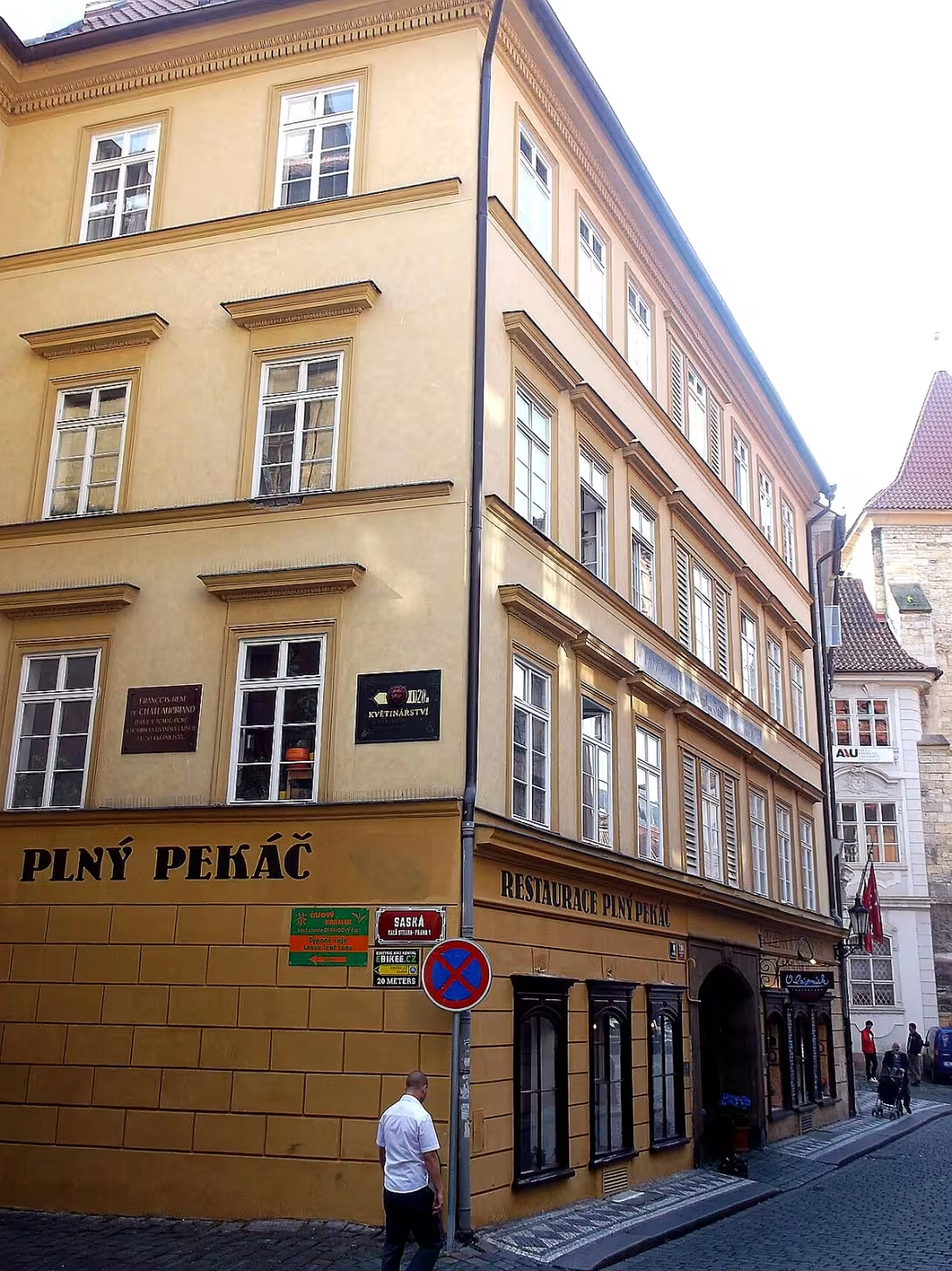
Dům V lázních is a classical corner building on the Malá Strana in Prague 1, situated at the crossroads of the streets of Spa and Saxony. The current form comes from the reconstruction of 1831- 1832. The building has been listed in the list of cultural monuments since 1964.
The name of the house refers to a spa whose existence is documented in this location in the 14th century; It was reflected in the street name. It is assumed that the house and its surroundings originally belonged to the Johanites, i.e. the Maltese Knights. The building was built at least two older houses.
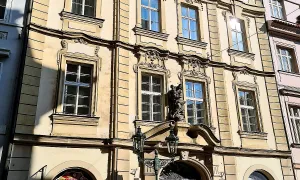
The contemporary look was designed by architect Karel Pollak. The three-story facade to Spa Street has a seven-axis facade with barefoot ground. The floor is separated by a continuous parapet ledge and the central portal is decorated with a shampoo made of artificial stone. The facade to Saxon Street is more complex. The first two axes correspond to the facade in the Spa, while the next part stands out significantly and is supplemented by blind arcades on the ground floor. The eastern part of the building closes a low wall with an entrance gate to the yard. On its pillars are located baroque putti, probably the work of Ignác Platzer. In the west court there are visible remains of the Romanesque wall with a window in the level of the first floor. Next to it is a brick window and another one with gothic profiling, but it belongs to the neighbouring Johanite Convention.
From the 17th century up to the first half of the 19th century the hotel worked here, considered to be one of the best in Prague. Later, the building was converted into a residential house and at a certain time the auditorium of the Czech University was located there. Currently, the building is privately owned and operates a restaurant on the ground floor.
There are several important personalities associated with the house. At the turn of 1799 and 1800 there was a Russian military leader Alexandr Suvorov, for whom Prince Petr Ivanovich Bagration held a ball. In 1833 a French diplomat and poet François René de Chateaubriand visited Prague. This visit is a commemorative plate of slivenecan marble on the facade to Saxony Street. In 1866 Otto von Bismarck stayed here. There is also a legend that the Tsar Petr Veliký was staying here in 1698. However, historical sources, namely the postal log issued by Nikolai Ustrjalov, suggest that the main Tsar Prague group only passed through and only had lunch at the Last Money Inn in the Spital Field.
The building is an important witness to the urban development of Malá Strana and an example of classical architecture. It offers visitors the opportunity to observe the unique layers of building epoch, from Romanesque remains to classical facade.
Historical milestones
- around 1350
- Existence of a spa in the location and likely ownership of johanites
- 1700
- Start of hotel operation in building
- 1831
- Conversion of the house to the classical form according to Karl Pollak's design
- 1833
- Visit of French diplomat and poet François René de Chateaubrianda
- 1866
- Stay Otto von Bismarcka
- 1964
- Entry of the object into the list of cultural monuments
Architectural development
The building was built on the site of older houses and was rebuilt in the Classicist style in 1831-1832. The facade to Spa Street has a barefoot ground floor and a seven-axis facade, while the facade to Saxony Street is divided by blind arcades. The remains of the Romanesque wall with a window are visible in the west courtyard.
Historical events
In 1698, according to legend, the Tsar Petr Veliký was staying here. At the turn of 1799 and 1800, there was a soldier Alexandr Suvorov. In 1833 he visited Prague François René de Chateaubriand.
Owners
Originally probably owned by the Johanites (Maltese Knights), currently privately owned.
Points of interest
- The name of the building refers to a spa that existed in this area in the 14th century. - From the seventeenth century to the first half of the nineteenth century one of Prague's best hotels worked here. - You can see the remains of the Romanesque wall in the west yard with a window. - On the facade to Saxon Street is a commemorative plaque commemorating the visit of a French diplomat and poet from 1833. - In a certain period of time, the auditorium of the Czech University was located in the building.
Guide
Show guide text
This text was created by artificial intelligence and has not been editorially reviewed. It may contain inaccuracies.
Welcome to the heart of Prague's Little Party. You're standing in front of a building called Dům V lázních. If you look at it now, you will see an elegant corner structure, which by its appearance brings a sense of peace and order to the surroundings. It's a place where the history of the medieval city meets with the strict beauty of a later period. Stop for a moment, take a breath and feel the atmosphere of this street that will take you far into the past.
Let's now look at how this form of the building came to be. Even if you see a home today in a form that is used to us, the roots of this place go much deeper. The name of the house is not random. It refers to a spa that worked here in the 14th century, about a thousand and three hundred fifty. At that time, this area was probably owned by the johanites, which was the order of the knights taking care of the sick. So imagine that under your feet and in the places where the walls stand today, water once flowed and people came here for relief and care.
But time passed and the building was changing. The present look that you now admire came from a large reconstruction in the years of a thousand eight hundred thirty-one to a thousand eight hundred thirty-two. The architect Karel Pollak was responsible for this project. He was the one who inhaled his classical form. Classicism is characterized by purity of lines and balance, which you can also perceive when looking at the front of the house. Notice how harmonically the building is written into the corners of the streets. It's an architecture that doesn't try to overthrow the surroundings with exclamation, but rather looks noble and moderate.
Now pay attention to how this space has been used over the centuries. Dům V lázních wasn't just an ordinary house. From the seventeenth century to the first half of the nineteenth century, one of the best hotels in Prague worked here. Imagine those times when important guests from all over Europe came here looking for rest and accommodation in the centre of the royal city. Later, the function of the house changed and the building served as a residential house in which the university auditorium was located. Today is the ground floor of the restaurant where you can enter and enjoy a moment of rest, like the passengers did centuries ago.
When we think about a place like this, we can't ignore the people who have been tracking their steps here. This house witnessed the presence of really important personalities in world history. Among them were famous rulers and military leaders from eastern regions, such as Petr Veliký or Alexandr Suvorov. Imagine the noise and rush that had to accompany their arrival at the Prague hotel.
In the year of a thousand eight hundred thirty-three, François René de Chateaubriand, a French diplomat and a respected poet, hosted here. It is fascinating to think that in these areas he may have thought about his verse or discussed the politics of Europe at that time. And it's not the end of the list of famous guests. In the year of the thousand eight hundred sixty-six here was Otto von Bismarck, a man who fundamentally influenced the fate of nations. All these people connect one place that served as a gateway to Prague for those who sought the highest level of comfort and luxury.
Now, I'd like to invite you to one interesting thing that requires a little more attention. If you get a look at the west courtyard, look for the remains of an old Romanesque wall with a small window. It is a fascinating detail because it reminds us that under layers of classical plaster and later modifications, traces of a time when the city was much smaller and much more simple have been preserved. It's a little time tunnel that reminds us of the beginning of this place.
Also note the facade of the house facing Saxon Street. Due to its value, the entire building has been listed in a list of cultural monuments since the year one thousand nine hundred sixty-four. This means that the state recognises its uniqueness and makes sure that this beauty is preserved for future generations.
Dům V lázních is therefore much more than just a beautiful building on the corner of the street. It's a layered story about medieval hygiene, the luxury of an old hotel, the education of university audiences and the diplomatic secrets of great statesmen. It is a place where the talent of architect Karl Pollak joined with the dynamics of Prague's life.
I hope you enjoyed this short trip in time. Now you can quietly explore the surroundings, maybe visit the restaurant on the ground floor or continue to discover the secrets of the Little Party. Let yourself be guided by the narrow streets and look for further traces of history waiting for you in this beautiful city. Thank you for your attention and I wish you a pleasant continued trip to Prague.
Tips for visitors
The best time to visit is in the morning or late afternoon, when the sun hits the classical facade of the house at a pleasant angle. The building is located in the historical centre, so we recommend using public transport or walking; Check the current connection in the search engine.
You don't need special equipment for the tour, you just need comfortable shoes to walk the streets of Little Side. As it is a residential or economic building, the tour takes place only from the outside, so we recommend monitoring details of architecture from the sidewalk.
For the best photos focus your lens on the corner view of the building, which emphasizes its classical character. The best light to capture the facade details is during the golden hour before sunset.
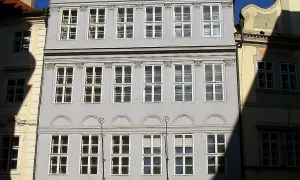
During a short walk around you can visit the neighboring house A spa or a former yohanite convention. For families with children it is appropriate to tell about the history of the spa, which was documented in this place already in the 14th century.
Frequently asked questions
Can the monument be visited?
This is a residential or farm building, not a museum with opening hours. Please view it from public space and respect the owners' privacy. We have no information about access to the interior.
Where is the monument?
Location: Praha 1. The map on this page shows the exact spot.
Why is the monument protected?
It is listed in the Central List of Cultural Monuments of the Czech Republic as a cultural monument (register no. 1000151329).
Businesses nearby
Do you run a restaurant, accommodation, shop, museum, rental, wellness or other visitor service near this monument? Show yourself directly to the people heading to it — this is how they will see you in the app and on the web:
Events nearby

Zdroj akcí: otevřená data měst a obcí ČR (Národní katalog otevřených dat) a kalendář akcí Národního památkového ústavu.
Nearby
Sousední dům V Lázni (čp. 520/3) a bývalý johanitský konvent.
Accommodation nearby
Trips and activities nearby
Guided tours, tickets and activities nearby from GetYourGuide
Affiliate link: if you buy from the partner, we may receive a commission. The price for you does not change.
Search tours and activities →Themed route
Here is the design of the thematic route:
1. Dům V lázních - Main monument. A place that forms the center of the whole trip and offers the main experience. 2. Neighborhood House in Lazne (no. 520 / 3) - Construction in close proximity. It is interesting by its architecture and proximity to the main goal. 3. Former Johanite Convention - Historical building nearby. It is worth visiting thanks to its ancient history and spiritual past.
Seasonal recommendations
In spring, the surroundings of the house are awakened into colours and fine light. It's an ideal time to observe the facade details when the air is clean and fresh. We recommend light but layered clothes and walking in the morning when the streets are quiet.
In the summer months it dominates areas of strong sun and hot air. The building in bright light is very strong, although the streets are full of visitors. The best is to come early in the morning or at dusk to avoid heat, and not forget the comfortable shoes and hat.
Autumn brings golden shades and melancholy atmosphere to Prague. Lighting is softer, which creates a pleasant contrast with the historical appearance of the building. Due to frequent precipitation and colder wind, it is advisable to carry a waterproof coat and a warm scarf.
Zimą makes a monument in a completely different spirit, often accompanied by freezing air and silence. In advent time, the surroundings are lit and cozy, which gives the house special charm. It is necessary to choose warm winter clothes, gloves and firm shoes with anti-slip soles.
Visualizations and artistic views

The visualisations are generated by artificial intelligence and serve as inspiration.
Photos from the area
Real photos taken near the monument


Zdroj a licence jsou uvedeny u každého snímku.
Tips from visitors
No tips yet. Be the first!
Log in and add your tip.
Sources and literature
Photos: JiriMatejicek / CC BY-SA 4.0 — Wikimedia Commons. The author and licence also appear when you hover over the image.
Faktickým podkladem tohoto textu byl článek na Wikipedii, jehož autory jsou přispěvatelé Wikipedie. Článek je dostupný pod licencí CC BY-SA 4.0.
Location on the map

Příběhy a pověsti
Legendy, pověsti a příběhy spjaté s touto památkou
Fotografie návštěvníků
Zatím žádné fotografie. Buďte první, kdo přidá fotografii z návštěvy!
Log in a přidejte svou fotografii nebo hodnoťte.
Za ověřenou návštěvu v aplikaci získáte víc bodů — poznáme podle GPS, že jste na místě.
Reviews and comments