






Dvůr Velký Depot Farmstead
The great Depot, Solitude No. 283, located east of Týn nad Vltavou, bears its name after the Cissar's chariot warehouses that existed here until 1866. However, the site is mainly known as the site of the extensive artillery training ground operated here in the middle of the 18th century. This military site represents an important fragment of Central European history, where new military technologies were tested and spectacular maneuvers took place with the personal participation of state leaders.
The creation of the training ground was directly linked to the reorganisation of the Austrian army, initiated by the Cisariana Marie Terezie. In the 1940s, the region of Týna nad Vltava was devastated by wars about Austrian heritage. In 1744 Marie Terezie entrusted the reform of obsolete artillery to Prince Josef Václav of Liechtenstein. The first records of the training site itself come from the spring of 1749, when an extensive training ground designed for field artillery was built on the top of Pochané nad Týn. The name of the place was justified: in 1742, there was a victory of the army of Karl Lorraine against the French, and two years later, the retreat of King Friedrich's troops took place.
The military camp had large dimensions - it took up approximately 40 hectares and spread out among the villages of Ancestor, Smilice and Jarošovice. It had the character of a separate city and its purpose was to test new types of artillery material and weapons, as well as to protect the strategic Vltava transition, as another bridge existed only in Prague. The strength structure was made up of a crown wall with one bastion in the middle and two half bastions on the sides, separated from the forefront by a watered moat with ravelin. The architect, who participated in the construction, was Jan Ferdinand Schor, also known for the implementation of the first two navigation chambers in Vltava. Officers lived in a castle with a garden and a watermark while soldiers lived in tents; The premises were supplemented by stables, forge, bakery and 17 taverns.
The tragic event of 1753 has forever hit the history of the place. On the 20th of June, during the preparation of the fireworks intended to celebrate the arrival of the Marie Terezie, flammable substances were raised and a massive explosion took place, requiring dozens of dead and wounded. This tragedy is still a reminder of the sculpture of Calvary. The training area remained intensively used until 1778, with important personalities including Marie Terezie itself with her husband Franz I. Stepan Lorraine in 1753 and Josef II., who arrived in 1766 as a new co-ruler and chief commander of the troops, and again at the beginning of July 1774.
Today, only remains of the grandiose grounds - two settlements, the most famous of which is the solitude of the Great Depot, originally the residence of military officers. Its magnificent architecture still shows the importance of this place in the history of the Austrian army of the 18th century.
Historical milestones
- 1744
- The appointment of Prince Josef Václav from Liechtenstein to reorganise the Austrian artillery after war failures.
- 1749
- The beginning of the construction of the artillery training ground on top of the Chop.
- 1753
- A tragic explosion of fireworks when visiting Empress Marie Terezie, which destroyed part of the complex.
- 1778
- Cancellation of the training grounds and conversion of the premises into military warehouses.
Architectural development
The training ground was built in 1749-1753 as a fortress complex with crown wall, bastion and moat. The original residence for officers was supplemented by military facilities such as stables, smiths and economic buildings. After the destruction of the training ground, most of the objects were demolished, only the fragments of solitude no. 283 and the sculpture of Calvary were preserved. The materials were mostly wooden and walled, typical of Baroque military structures.
Historical events
- 1742
- There was a victory attack by Karl Lorraine's army against the French during the Austrian heritage wars.
- 1744
- Damage to Týn nad Vltava during war operations and subsequent reorganization of the Austrian artillery at the command of Marie Terezie.
- 1753
- A tragic explosion of fireworks when visiting Marie Terezie and František Štěpán Lorraine, in which dozens of people died or were injured.
- 1778
- The official abolition of the artillery training ground and the conv
Owners
- 1744-1778
- 1866-present
Points of interest
- The site was originally known as the Cissar's Votai warehouses, which worked here until 1866.
- The training facility was founded in 1749 on the hill Chop over Tyn after the artillery reform ordered by the Marie Terezie.
- The area occupied approximately 40 hectares and had the character of a separate city with fortress structures such as a crown wall with bastion and a watered moat.
- A tragic explosion in the preparation of fireworks in 1753 has claimed dozens of victims and still reminds it of the sculpture of Calvary.
Guide
This guide is narrated by a synthetic voice generated by artificial intelligence.
Show guide text
This text was created by artificial intelligence and has not been editorially reviewed. It may contain inaccuracies.
Audio Guide - Great Depot in Týn nad Vltavou
---
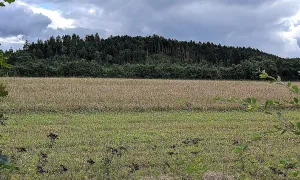
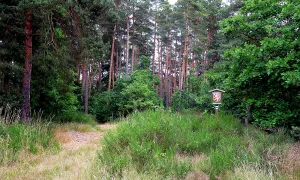
Welcome to this place, which seems to have emerged from scattered traces and remnants of history into today's world. You are standing before the solitude of No. 283, the last remnant of a former artillery training ground, which stood here in a vast area between the villages of Ancestor, Smilice and Jarošovice. In front of you is a plot of land on which once stood a mighty fortified wall with bastions, surrounding the space that served as a training and strategic centre of imperial artillery. Note how the trail of the past still feels here today - between greenery and scattered buildings, there is a secret waiting for your attention.
Let us return to 1749, when one of the most important military structures of his time began to emerge on top of the Chosen, just a few kilometres from Týn nad Vltavou. After Austria's war failures in the first Silesian war, Empress Marie Terezie ordered the reorganization of the Imperial artillery. To this end, she instructed Prince Josef Václav of Liechtenstein to set up a modern training area to prepare artillery for future battles. The construction of the Great Depot, as was later called this place, was an important step in strengthening the army and securing the borders of the monarchy.
The architect of this extensive complex was Jan Ferdinand Schor, which designed a space with the character of a crown wall with bastions - defensive shapes that were typical of the military fortification at the time. In front of you are the remains of this area, which originally occupied approximately 40 hectares. Take a look at the surroundings - even if there are only traces left today, you can imagine what this space was like in full glory. Bastions, which served as forward-looking points and defensive points, were strategically placed to cover the entire area. Note how the atmosphere of military space still feels here today - between greenery and scattered buildings, there is a trail of stables, smiths and other service buildings used to train and maintain artillery.
Now pay attention to some of the key stories associated with this place. One of them is the tragic explosion of fireworks, which took place here in 1753 during the visit of Empress Marie Terezie. During the ceremonial performance, there was an accident in which several people died and part of the area was destroyed. This incident has left traces in place that are still reflected in its history. Another important figure associated with the Great Depot was General Leopold Daun, who probably trained his troops here and prepared them for further military events. His name is associated with many major battles that have influenced Austria's history.
Other historical figures that appeared here include Emperor František I. Štěpán Lotrinský, who was husband of Marie Terezie, and also Josef II., who later cancelled the training area and transformed it into military warehouses. These warehouses worked here until 1866 when they were definitively cancelled. Note how the influence of various epoch is projected here - from the training area to the military warehouses used to store weapons and ammunition.
One of the most interesting information about this place is that originally the Imperial Votai warehouses worked here. These warehouses were an important centre for the maintenance and supply of vehicles which were necessary for the movement of the Imperial Army. Their existence adds another layer of historical importance to the site, as it shows the importance of logistics and preparation for combat operations.
Now let's look at what's left of this place. Even though there are only traces left today, you can imagine what this space was like in full glory. Notice how the atmosphere of military space still feels here today - between greenery and scattered buildings there is a trace of the past. Take a look around and try to imagine what this area looked like in full glory. Bastions, which served as forward-looking points and defensive points, were strategically placed to cover the entire area. Note how the atmosphere of military space still feels here today - there is a trail of stables, smiths and other service buildings between greenery and scattered buildings.
The Great Depot is a place that connects history and the present. Its existence is proof of the important role played by military training in the past and how this tradition has reflected into today's world. Although only traces remain today, this place is still a living testament to the past that is worth discovering.
If you like this location, I suggest you stay nearby and explore other historical monuments that are located here. Týn nad Vltavou and its surroundings offer many interesting places to visit. Thank you for your attention and we wish you a pleasant exploration of this fascinating place.
Tips for visitors
{'paragraph': 'The best time to visit the Great Depot ruins is in spring or autumn, when the weather is pleasant and the surroundings are less visited than summer months. During these periods you can see the rest of the training grounds in peace and without crowds of tourists. The sunny afternoon is ideal for photography because light falls favourably on the remains of buildings and surrounding landscape.'}
{'paragraph': 'The Great Depot ruins can be reached by car on local roads leading east of Týn nad Vltava. Parking is possible in free places in the surroundings, but it is recommended to find places outside protected zones. Public transport is a place available, but the current connection needs to be checked in the traffic search engine because regular services do not come directly.'}
{'paragraph': 'When visiting, wear a comfortable shoe, because the terrain around the ruins is uneven and part of the way leads along fields or forest paths. It is also convenient to take a map or GPS navigation with you to make it easier to navigate around. If you are planning a longer stay, it is recommended to bring plenty of water and a light snack.'}
{'paragraph': 'Photography is allowed at this point, but the best results are achieved in sunny weather on the west or east slope, where there is favourable lighting. Particularly interesting are pictures of the remains of artillery structures in the morning or evening light. The entrance gate and surroundings of Calvary are ideal places for compositions.'}
{'paragraph': 'In the vicinity of the Great Depot ruins, it is worth visiting the Calvary Statue, which resembles the tragic explosion of 1753. It is located in the former training grounds and is well accessible on foot. Another interesting thing is the battlefield, the historic district of Týna nad Vltavou, which resembles the battle of the 18th century. Both places are only minutes away from the ruins.'}
{'paragraph': 'For families with children, the visit to Great Depot is interesting thanks to the possibility of discovering historical remains and walking around the surrounding fields. Children can tell stories about artillery and battles from the past. The statue of Calvary offers space for a short relaxing sitting and a view of the statues. It is recommended to bring games or small worksheets so that children have something to do.'
Frequently asked questions
Is Dvůr Velký Depot open to the public?
Yes, Dvůr Velký Depot is open to the public. The tour is suitable for all people interested in history and monuments.
How do I get to the place by car / public transport?
The place can be reached by car on road 2 or use urban transport public transport from Týna nad Vltavou. Parking is available before the entrance to the yard.
How much is the entrance fee and is it paid on the spot?
Payment is made directly at the entrance to the yard.
Is the tour suitable for children and seniors?
Yes, the tour is suitable for all age groups. Children can enjoy the historical environment and seniors can enjoy the knowledge of history.
How long does the tour take?
The tour takes about 1 hour but can also be extended according to the interest of visitors.
What are the opening times and booking is required?
The Dvůr Velký Depot is open to the public from 9: 00 to 5: 00. Reservation is not required, but prior contact with staff is recommended when visiting larger groups.
What's interesting in the immediate vicinity?
In the immediate surroundings there are other historical monuments such as Týn nad Vltavou or Křivoklát Castle. The surrounding forests and meadows can also be visited.
For kids
Imagine going back to a time when the country was full of ideas and secrets. This is the story of one of the oldest and most famous places in our country - the Dvorce of the Great Depot.
It was like a game where life was played. The city of Týn nad Vltavou was full of people who lived on the Great Depot farm. They were farmers who grew crops and raised animals. To protect their crops from attacks by enemy armies, they built an artillery training ground. That was where soldiers trained in combat techniques.
Businesses nearby
Do you run a restaurant, accommodation, shop, museum, rental, wellness or other visitor service near this monument? Show yourself directly to the people heading to it — this is how they will see you in the app and on the web:
Nearby
{'memories': [{\ 'nazen': 'statue of Calvary', 'type': 'statue', 'outage': 'commemorates the explosion from 1753, located in the former training grounds.'}, {'nazen': 'battlefield': 'district of Tína nad Vltavou', 'type': 'historical location', 'outage': 'name of the quarter resembles battles from the 18th century which took place in the surrounding areas'. ',' nature ':' type ':' Vltvltava ':' river ',' detachment ':' strategically important river that flows around the area and was important for military operations. '},' natural 'elements': [['nazhen']
Accommodation nearby
Trips and activities nearby
Guided tours, tickets and activities nearby from GetYourGuide
Affiliate link: if you buy from the partner, we may receive a commission. The price for you does not change.
Search tours and activities →Themed route
Thematic cruise route: History and Nature at the Great Depot in Týn nad Vltavou * *
1. The sculpture of Calvary * Sculpture monument * reminiscent of a tragic explosion from 1753. It stands in a quiet area of the former training ground where you can walk among historical remains and observe detailed sculptures. Ideal for short meditation between other stops.
2. Great Depot * Industrial landmark * from the 19th century, the former railway depot, today used for cultural events. Historical buildings and their architecture associated with railway development are interesting. There are often exhibitions or concerts that add life to the site.
3. The battlefield (Týna nad Vltavou district) * Historical location * with rich 18th century history. Walk the streets of this neighborhood will bring you closer to the atmosphere of old battles and military events. Local houses and streets retain their original character, which gives the place an authentic feeling.
4. Vltava * Strategically significant river * flowing right at the village. You can take a short walk or sit by the shore where you enjoy nature and peace. The river is also an ideal place to observe the surrounding landscape frame.
The route is designed to combine historical and natural attractions around Great Depot and allow you to know the rich history and beauty of Týn nad Vltavou.
Seasonal recommendations
Spring Spring on the ruins of the Great Depot offers a magical transformation where stone walls awaken to life. Sun rays that reflect off wet stones and young leaves, create playful shadows and illuminate ruins as if they were trying to revive them. Nature blooms around - spring blossoms (mainly spring blossoms and rubbers) colour the surroundings with pastel shades, while heather vegetation on the sides begins to green. The atmosphere is light, almost mysterious, as if intertwined in the past and present. The air is colder than in the summer, but no more winter chattering, and the sun heats only slightly. The ideal time for a walk is in the morning when the light is soft and the crowds are not as numerous. Suitable is clothes in warm shades - light jackets, wind coats and comfortable shoes on uneven terrain. Avoid lunch at noon when the sun rises high and the ruins can be dangerously hot. Explore the area after the rain, when the stone walls appear to be even more humid.
Summer Summer brings intense light and long shadows to the ruin of the Great Depot, which changes during the day as a stage. The sun, which is reflected by white plaster remains and black stone blocks, creates contrasts that highlight the dramatic shapes of ruins. Warm summer days are ideal for visiting if you avoid the high season that lasts from July to early August. Nature around it is lush - high grass, wild roses and shawl surround the ruins, while field eels spread in the distance. The atmosphere is lively, almost festive, but without crowds if you arrive in the first half of June or after 15 August. Suitable is light but protective clothing - hats, sunglasses and sunscreen. Don't forget enough water because it can be dangerously hot in a ditch or on the sides. The best time is early in the morning or in the afternoon when the sun is not so intense. Avoid visits on Friday and Saturday, when ruins are often crowded.
Autumn Autumn at the Great Depot brings a unique atmosphere where green leaves turn into yellow, orange and red shades, which are reflected in stones and form as if the ruin had turned into a living image. The light is softer than in the summer, but no longer without the spring fog veil - the sun boils lower, and their rays illuminate the ruins with golden light, which emphasizes their antiquities. The air is cold, but pleasant, and at night clouds often appear that add secrets. Nature around it becomes a colour palette - chestnuts, oak trees and linden say goodbye to the flight while the first dry grass and leaves appear in the ditch. The best time to visit is in September when temperatures are still pleasant, but crowds are not as big as in the season. Suitable is warm clothes - sweaters, jackets and comfortable shoes on slippery leaves. Avoid visiting in October if you are afraid of cold because temperatures are falling and the wind can be rough. Explore the ruins at sunset when light creates magical shadows and the atmosphere is the most beautiful.
Winter Winter on the ruins of the Great Depot is a time of peace and mystery, when stone walls appear to be covered with snow as if they become part of the winter landscape. The light is lighter, the sun rises below, and its rays illuminate the ruins with a pale, almost freezing light. Snowflakes that settle on rocks create a unique atmosphere that resembles a fairy tale. Nature around it is covered with white carpet, while the trees stand bare and their branches stretch to heaven. The air is cold and clean, and every step of the ruin seems like a step into the past. The best time to visit is in December when ruins become part of the advent line. Hot clothes - sweatpants, hats and gloves are suitable to keep the temperature up. Avoid visiting in January when temperatures are lowest and ruins can be frozen. The best time is early in the morning, when the light is softest and the crowds are not as big. Explore the ruins at sunset when snowflakes reflect in light and create a magical atmosphere.
Visualizations and artistic views

The visualisations are generated by artificial intelligence and serve as inspiration.
Atmosphere of the place
This atmospheric visualisation of the place and period was generated by artificial intelligence. It is not real footage of the location.
Tips from visitors
No tips yet. Be the first!
Log in and add your tip.
Sources and literature
Faktickým podkladem tohoto textu byl článek na Wikipedii, jehož autory jsou přispěvatelé Wikipedie. Článek je dostupný pod licencí CC BY-SA 4.0.
Location on the map

Příběhy a pověsti
Legendy, pověsti a příběhy spjaté s touto památkou
Fotografie návštěvníků
Zatím žádné fotografie. Buďte první, kdo přidá fotografii z návštěvy!
Přihlaste se a přidejte svou fotografii nebo hodnoťte.
Za ověřenou návštěvu v aplikaci získáte víc bodů — poznáme podle GPS, že jste na místě.
Reviews and comments