






Halštatské a středověké hradiště Archaeological site
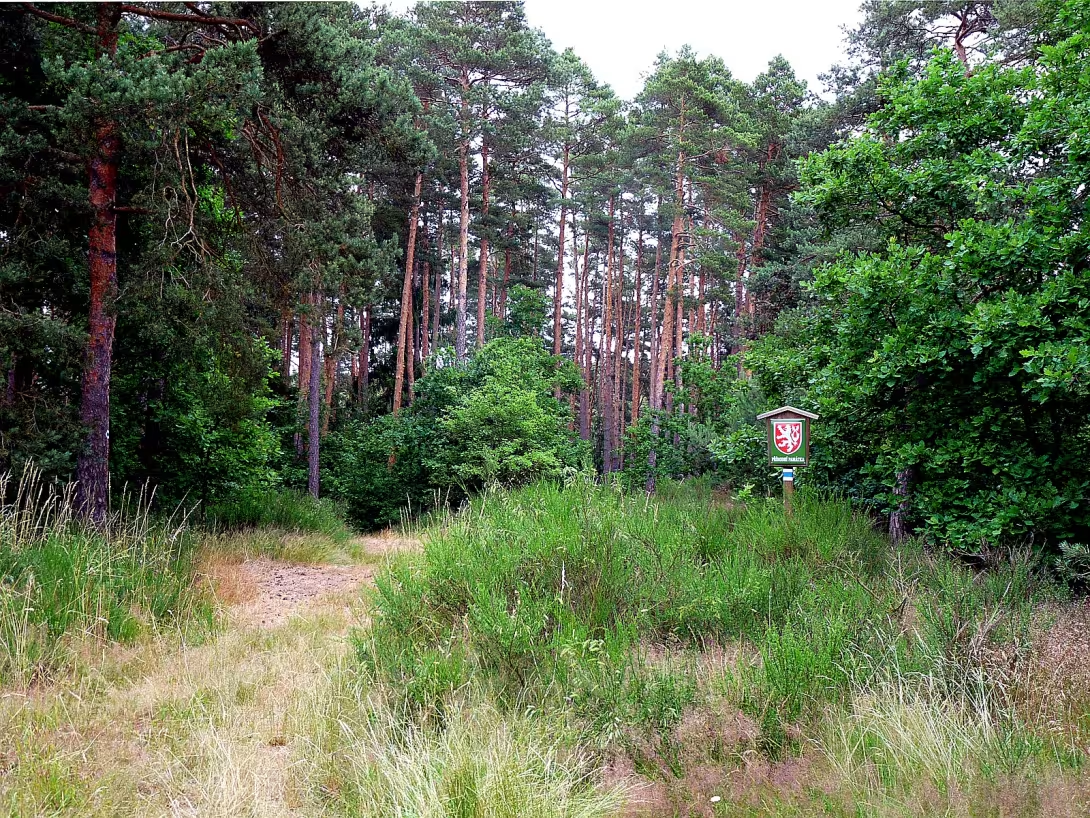
Halštatské and Medieval Hillfort in Týn nad Vltavou is an ancient archaeological site on a plateau overlooking where the Lužnice and Židovy streams meet. Dating back to the Bronze Age and early Middle Ages, it offers insights into prehistoric settlement patterns and medieval defensive structures. Despite partial destruction from stone quarrying, it remains protected as a cultural monument, featuring remnants of fortifications that highlight its historical significance.
The origins trace back to the Bronze Age when it was part of a settlement microregion around the confluence of the Vltava and Lužnice rivers. During this period, the site served as an integral component of regional habitation patterns. In the early Middle Ages, it became integrated into broader defensive networks in Bohemia, reflecting the era's focus on fortification and territorial control. Although specific details about its construction are sparse, historical sources suggest that the site was strategically positioned to leverage natural defenses provided by steep slopes.
Architecturally, the site is notable for its oval-shaped rampart on the southwest side, measuring approximately 130 meters in length and reaching up to 2.5 meters in height externally. Historical records indicate there may have been additional ramparts, though their existence requires further archaeological investigation. The natural defenses were enhanced by steep, rocky slopes surrounding the plateau, providing a formidable barrier against potential invaders.
Throughout its history, Halštatské and Medieval Hillfort has witnessed several key events and curiosities. In 1893, the first documented archaeological findings at the site marked the beginning of scholarly interest. Josef Ladislav Píč highlighted stone rampart removal in 1909, drawing attention to human impact on the site's preservation. A detailed survey conducted in 1970 further contributed to understanding its historical context and architectural features.
Today, Halštatské and Medieval Hillfort stands as a testament to the region's rich history. Although some areas have been damaged by modern activities such as construction, the site remains accessible for visitors interested in exploring its archaeological significance. Its location near other historical hillforts and the confluence of significant rivers adds to its allure.
Visiting Halštatské and Medieval Hillfort offers an opportunity to connect with the past and appreciate the strategic importance of this ancient site. It stands as a cultural monument that invites exploration, providing insights into the lives and defenses of those who once inhabited this region.
Then and now
Drag the slider to compare how the landmark may have looked when it was built with the view today.
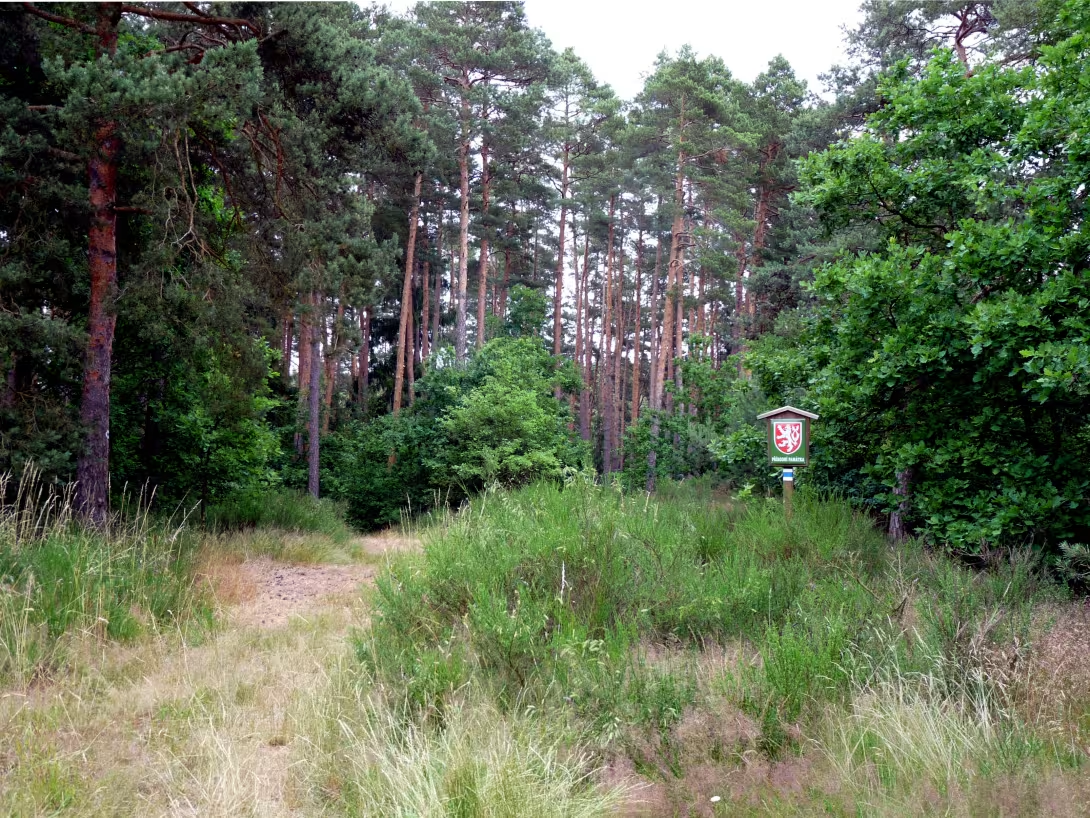
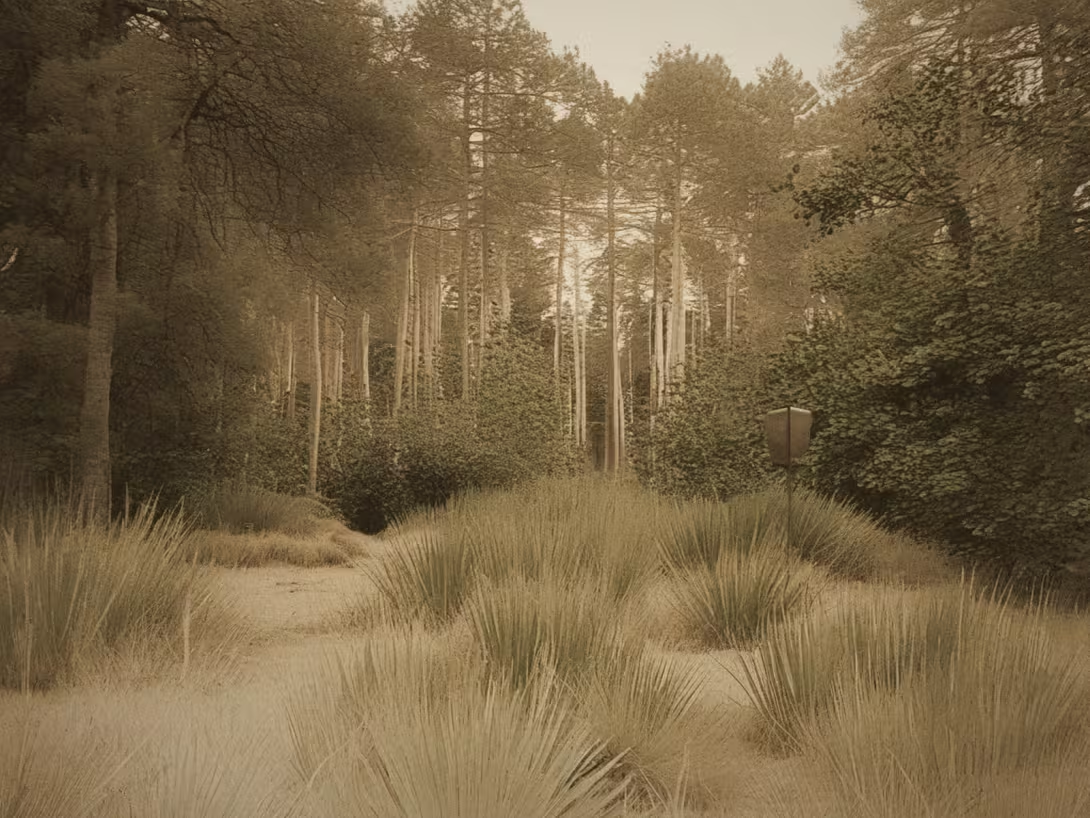
The historical appearance on the left is an AI-generated visualisation and serves as inspiration only.
Historical milestones
- 1893
- First documented archaeological findings.
- 1909
- Josef Ladislav Píč reported on stone rampart removal.
- 1970
- A detailed survey of the site was conducted.
Architectural development
The site's fortifications include a prominent oval-shaped rampart, which is about 130 meters long and up to 2.5 meters high on its outer side. Historical records suggest there may have been additional ramparts, though their existence requires further archaeological investigation. The natural defenses were enhanced by steep, rocky slopes surrounding the plateau.
Historical events
In 1893, the first archaeological findings were documented at the site.
Josef Ladislav Píč highlighted stone rampart removal in 1909.
A detailed survey of the site was conducted in 1970.
Points of interest
- The site's strategic location at the confluence of the Lužnice and Židovy streams not only provided natural defenses but also facilitated control over river-based trade routes during its time.
- Legend has it that hidden tunnels once connected the hillfort to nearby settlements, allowing for discreet movements and communications in times of conflict, though no concrete evidence has been found to confirm their existence.
- In 1909, Josef Ladislav Píč's discovery of stone rampart removal highlighted not only human impact but also sparked debates about historical preservation practices during that era, influencing future archaeological approaches in the region.
- Despite its partial destruction from stone quarrying, local folklore suggests that spirits of ancient warriors still roam the site, guarding it against further harm and drawing curious visitors to experience its mystical aura.
- The hillfort's oval-shaped rampart is believed by some historians to have been inspired by celestial alignments, a theory supported by the alignment of certain stones with lunar cycles, although this remains speculative without more extensive archaeological evidence.
Guide
This guide is narrated by a synthetic voice generated by artificial intelligence.
Show guide text
This text was created by artificial intelligence and has not been editorially reviewed. It may contain inaccuracies.
Welcome! You are standing before the Halstatt and medieval fortification in Týn nad Vltavou. Look up at this amazing site, which is located on an elevation above the confluence of the Lužnice and Židová rivers. Here you have a unique opportunity to explore the remains of one of the oldest archaeological sites in our country.
Let's move forward in time and return to the Bronze Age and early Middle Ages, when this site was home to an important fortification. The first archaeological finds were recorded here as early as 1893, but it wasn't until 1909 that Josef Ladislav Píč shared his discoveries and described the removal of a stone fortification. In 1970, a detailed survey of the site was conducted, which now allows us to better understand its historical context.
Notice before you the remains of the fortification, including the remarkable oval shape. This is just a small fragment of what once existed here. You could have seen mighty stone walls that protected inhabitants from enemies. Now only a small remnant remains, reminding us of how this place looked in ancient times.
Legends say that secret tunnels connected this fortification with nearby settlements. This would mean there may have been some level of communication and cooperation among the residents of different parts of the region.
One of the most intriguing aspects of this site is its strategic location. The confluence of the Lužnice and Židová rivers provided natural protection as well as control over trade routes that converged here. This was crucial for the economic and cultural development of the region.
The local fortification is also full of mysteries and will surely captivate you with its unique atmosphere. Explore the façade and feel the air filled with history and tradition. Here you are at one of the oldest sites in our country, where you can sense how history and modernity merge.
Allow yourself to be captivated by these places and inspired to explore further. You can return here to gain deeper insight into its mysteries. As you bid farewell to this fortification, take with you memories and inspiration from this unique site.
Frequently asked questions
Can the monument be visited?
This is an archaeological site. Often there is little to see on the ground and the land may be private. We have not verified access.
Where is the monument?
Location: Týn nad Vltavou, Jihočeský kraj. The map on this page shows the exact spot.
Why is the monument protected?
It is listed in the Central List of Cultural Monuments of the Czech Republic as a cultural monument (register no. 1000141353).
Businesses nearby
Do you run a restaurant, accommodation, shop, museum, rental, wellness or other visitor service near this monument? Show yourself directly to the people heading to it — this is how they will see you in the app and on the web:
Nearby
Located in Jihočeský kraj, the site is near other historical hillforts such as those in Bechyni and Koloděje nad Lužnicí. The surrounding landscape includes the confluence of the Vltava and Lužnice rivers.
Accommodation nearby
Themed route
Hallstatt and Medieval Fortresses (main attraction)
1. Bechyně (type: historic town, why it's worth visiting: Famous for its Gothic walls and towers that dominate the city. You can also visit the Bechyňské Museum located in a former monastery complex.) 2. Koloděje nad Lužnicí (type: historic town, why it's worth visiting: Known for its historical monuments, including a Gothic church and castle. You can also visit an exhibition at the castle palace.) 3. Vltava (type: river, why it's worth visiting: The Vltava is one of the longest rivers in the Czech Republic, and its valley offers beautiful natural scenery. You can also visit Týn nad Vltavou Island, which offers a stunning view of the river and surrounding landscape.) 4. Lužnice (type: river, why it's worth visiting: The Lužnice is another river that flows into the Vltava at Týn nad Vltavou. Its valley offers beautiful natural scenery and opportunities for walks along its banks.)
Seasonal recommendations
Jaro
In the spring season, the Hallstatt and medieval fortress is surrounded by blooming trees and flowers, creating a pleasant atmosphere. The lighting is also unique, being soft and warm as if the sun had descended upon the fortress.
We recommend visiting in the morning to avoid crowds of tourists. The best time is from April to May when the weather is still warm and sunny. Don't forget hiking boots and comfortable clothing, as you will likely be walking on paths and trails.
Léto
In the main summer season, the Hallstatt and medieval fortress is very popular, so we recommend visiting early in the morning or late afternoon to avoid crowds. The lighting is strong with sunny rays creating pleasant shadows.
For a visit in the summer, we suggest bringing plenty of water and hiking boots, as you will likely be walking on paths and trails. The best time is from June to August when the weather is warm and sunny.
Podzim
In the autumn season, the Hallstatt and medieval fortress is surrounded by colorful leaves, creating a beautiful atmosphere. The lighting is also unique, being soft and warm as if the sun had descended upon the fortress.
We recommend visiting early in the morning or late afternoon to avoid crowds. The best time is from September to October when the weather is still warm and sunny. Don't forget hiking boots and comfortable clothing, as you will likely be walking on paths and trails.
Zima
In the winter season, the Hallstatt and medieval fortress is surrounded by snow and tranquility, creating a peaceful atmosphere. The lighting is also unique, being soft and warm as if the sun had descended upon the fortress.
We recommend visiting early in the morning to avoid crowds. Don't forget hiking boots and warm clothing, as it will be cold.
Visualizations and artistic views


The visualisations are generated by artificial intelligence and serve as inspiration.
Photos from the area
Real photos taken near the monument


Zdroj a licence jsou uvedeny u každého snímku.
Atmosphere of the place
This atmospheric visualisation of the place and period was generated by artificial intelligence. It is not real footage of the location.
Tips from visitors
No tips yet. Be the first!
Log in and add your tip.
Sources and literature
Faktickým podkladem tohoto textu byl článek na Wikipedii, jehož autory jsou přispěvatelé Wikipedie. Článek je dostupný pod licencí CC BY-SA 4.0.
Location on the map

Příběhy a pověsti
Legendy, pověsti a příběhy spjaté s touto památkou

Příběh: Halštatské a středověké hradiště
Bylo to v pondělí ráno, kdy se Martin, potomkem starodávné rodiny původních obyvatel Lužnických hor, ocitl na vrcholu halštatského hradiště. Kupředu rozprost…
Číst příběh
Pověst: Halštatské a středověké hradiště
Podle místní pověsti, která se po staletí předává od úst k ústům podél břehů Lužnice, nebyl Hradec u Nuzic nikdy jen prostým opevněním z hlíny a kamene. Stař…
Číst příběhFotografie návštěvníků
Zatím žádné fotografie. Buďte první, kdo přidá fotografii z návštěvy!
Log in a přidejte svou fotografii nebo hodnoťte.
Za ověřenou návštěvu v aplikaci získáte víc bodů — poznáme podle GPS, že jste na místě.
Reviews and comments