






Vodní mlýn a jez Water mill
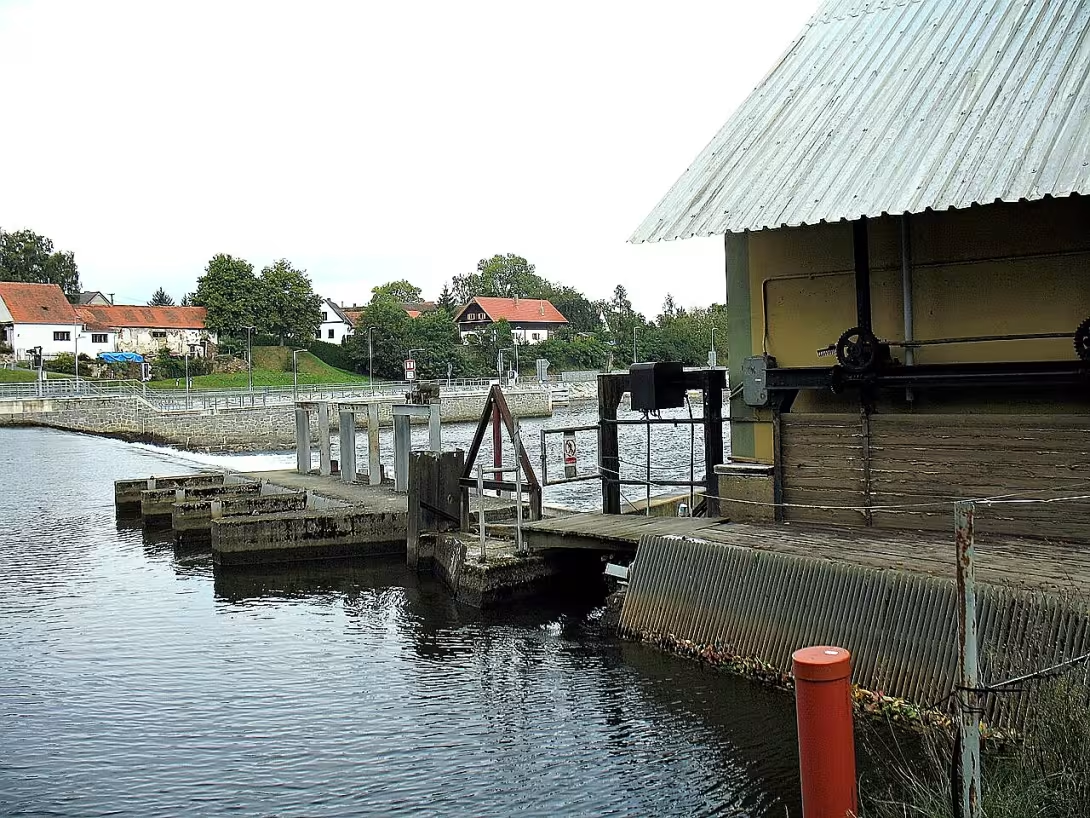
The Royal Mill is a historic water mill with a ride on the right bank of Vltava in Hnivkovice near Týna nad Vltavou in the district of České Budějovice. This technical complex, which dates back to the 15th century, has been a cultural monument of the Czech Republic since 2016. It represents a valuable whole, evidencing the historical interdependence of miller technology with surroundings.
The first written mention of the mill in Hnivkovic dates back to 1490, when the miller Třeshlavý is mentioned in the Deep Urban. At that time, Anniversary was part of Bechyn Manor. Over the centuries, the owners of the estate took turns; The owners were Sternberg, Schvamberk, Hozlauer and Častoral. Later on, Hnivkovice was connected to the Archbishop's estate Týn nad Vltavou. From the end of the 18th century the mill was rented, until in 1842 it transferred to the property of Karel Králové, whose descendants are still owned by the premises.
The current shape of the mill is the result of a neogotic reconstruction carried out for Karl Králové. The building is a four-storey wall construction on a rectangular floor plan with two wings. The south shield facade is decorated with corner lizens, pilasters and battlements with turrets. The interior preserved technical equipment from the beginning of the 20th century, including transmissions, cylindrical milling stools, elevators and storage tanks. Economic buildings such as a barn, a perpendicular or a pigsty come from around 1910.
The important part of the monument is to eat it built in 1919. This is a solid piece with a refraction of 91 meters. The right side is wooden with stone filling, left concrete. In 2017, the left was adjusted to the lock. Historically, the mill was powered by five wheels on the bottom water, but in the years 1922 to 1923 it was converted into a cylindrical mill driven by the Francis turbine.
In 1830 the mill damaged the ice on the river. After nationalization in 1949, the building became part of the national enterprise South Bohemian mills and later South Bohemian bakeries. After 1990 it was returned to the descendants of the original owners. However, the long-term use and flood in 2002 caused considerable damage. Since 2020, extensive reconstruction of the entire complex including interiors and equipment has taken place.
The King's Mill represents a valuable example of the technical monument. Thanks to the preserved technology and the original arrangement, it speaks about the history of milling in the area of Central Uvltáví. The visit to this place offers a unique insight into the development of water engineering and industrial architecture, which is now in this preserved form rare.
Historical milestones
- 1490
- First, I'm talking about a mill in Hvnekovich, Deep Urbari.
- 1842
- Karel Kralovec became owner of the mill.
- 1919
- Construction of a lake with a broken tidal edge.
- 1923
- Concentrations of the rebuilding to the mill, gagged by Francis' turbine.
- 2016
- The object was declared the cultural owner of Ceske Republic.
- 20
- Commencing extensive reconstruction of celé areal.
Architectural development
The mill went through the reconstruction to the neogotic form of Karl Králové, when changes were made in residential and economic buildings. In 1922-1923 it was converted into cylindrical driven by the Francis turbine.
Historical events
- 1490
- First written mention of the mill in the Deep Urban.
- 1830
- The mill was damaged by ice on the river.
- 2016
- The area of the mill and the eatery was declared a cultural monument of the Czech Republic.
Owners
The first mention of the mill in 1490 followed by Sternberg, Švamberk, Hozlauer and Častoral. Since the end of the 18th century it was rented, since 1842 it belonged to the Royal family. After nationalisation in 1949 he became part of a national enterprise and returned after 1990 to the descendants of the original owners.
Points of interest
- The Royal Mill has been a cultural monument of the Czech Republic since 2016 and its beginnings date back to the 15th century. - The current form of the mill was created during the neogotic reconstruction carried out by Karel Královec. - The interior preserved technical equipment from the beginning of the 20th century, such as transmission equipment, milling machines, lifts and storage tanks. - Jez by the mill was built in 1919 and has a length of 91 meters. - Between 1922 and 1923, the mill was converted from five wheels to bottom water for propulsion using Francis' turbine.
Guide
Show guide text
This text was created by artificial intelligence and has not been editorially reviewed. It may contain inaccuracies.
Welcome to the unique water mill, which boasts the name of the King's Mill on the right bank of the Vltava River in Týn nad Vltava. When you put on your headphones and put on this recording, a window will open up to the history that has been going on for centuries. In front of you is a massive stone structure, where the water stream of the river naturally flows, and next to it is the wooden construction of the lake that controls the flow of water to the mill wheel. The whole area is surrounded by a quiet atmosphere of the river, which is quiet and thus complements the historic feel of the place.
Let's look at the beginnings of this place. The first written mention of the mill dates back to 1490, when it appeared in historical records as "the mill in Hnivković in the Deep Office." It was already used for grinding grain and was an important economic center for the surrounding villages. Over the course of the next centuries he went through a number of changes, but the crucial moment occurred in the mid-19th century, namely in 1842 when the mill was owned by Karel Královec. He became not only its owner, but also the main initiator of its transformation and development. The king had a vision to modernize the facility and adapt it to the new technical possibilities that were then coming with the industrial revolution.
The architecture of the mill bears traces of these changes. After the reconstruction carried out by Karel Královec, the mill acquired significant neo-gothic elements. Note how narrow windows appear on the facade with pointed niche and stone hoops that resemble Gothic arches, although they are processed in a new, 19th century typical style. The whole volume of the construction works firmly and firmly, reflecting its original function as an industrial plant. The wooden construction of the lake, which can be seen along the shore, has a broken overcast edge - such detail was completed in 1919 and serves to regulate the water flow to ensure a stable water supply to the mill wheel.
Now pay attention to the technical equipment that has been preserved in the interior of the mill. Even though we're not inside, you can imagine what kind of device used to work here. First of all, it is a transmission system that transferred energy from the water wheel to the mill stones. You will also find a French turbine, which was installed in 1923 during the completion of the reconstruction. This turbine represents a transition from a traditional water wheel to a more modern way of using water energy. All these components are typical of the beginning of the 20th century and show how the mill adapted to new technologies without losing its historical character.
Key stories and personalities associated with this place focus mainly on Karl Králové. His commitment to modernising the mill and his investment in the construction of the eatery and neogotic reconstructions changed the face of the entire complex. The king not only extended the technical possibilities of the mill, but also created an aesthetic impression that still attracts visitors. Another important moment occurred in 2016 when the Royal Mill was declared a cultural monument of the Czech Republic. This recognition underlines not only the historical value of the site but also its importance for national memory and protection of cultural heritage.
The interesting thing that can impress any visitor is that although the mill was created in the 15th century, its current form is the result of the neogotic reconstruction of the late 19th and early 20th centuries. This means that there are two distinct historical epochs - medieval roots and modern industrial expansion. In addition, in 2020, a large reconstruction of the entire complex was launched, which aims to preserve and restore both technical and aesthetic elements in order to prepare the mill to welcome the next generation of visitors. This reconstruction includes not only the repair of the stone parts, but also the restoration of the wooden lake and its overcast edges, which ensures that the water current will continue to be controlled as originally intended.
Now that you have an idea of the history, architecture and technical aspects of this place, you can look around and perceive the atmosphere that exists here. Notice how the water of the Vltava river is reflected in the wood elements of the lake and how the rays of the sun fall on the stone wall of the mill, thus creating a game of light and shadow. This contrast between natural current and solid construction underlines the unique nature of a place where human creativity and the power of nature meet.
Finally, I invite you to go further along the Vltava bank and explore the surroundings where you can meet other historical monuments and natural scenery. The King's Mill is just one of the many gems this part of the Czech Republic offers. Get carried away by the stories that have taken place here, and be inspired by the determination of people like Karel Královec who have been able to combine tradition with innovation. Thank you for listening to this guide and we wish you a pleasant and rewarding stay in Týn nad Vltava. May the sound of the river and the whisper of history accompany you every step of your way.
Tips for visitors
The best time to visit is late afternoon, when the sun illuminates the wooden construction of the lake and creates beautiful reflections on the surface of the Vltava. In view of the ongoing reconstruction, it is appropriate to monitor the official communication on the accessibility of the premises.
The mill can be reached by car or on foot from the city centre. Parking is possible on public areas near the river; We recommend to verify the exact possibilities and current transport connections in map materials or search engines.
For a visit, wear fixed shoes suitable for the field by the river and the camera. If you plan to stay longer with the water, do not forget to protect against sun or insects as the area is open and exposed to the effects of weather.
The best pictures will be taken from the river bank, where the historical architecture of the mill will stand out in combination with the wooden course. Ideal lighting conditions occur at sunset, when soft light highlights the texture of wood and stone.
For families with children the place is an interesting example of the technical monument. Due to the ongoing construction work, take care and only move in designated areas to ensure the safety of all members of the expedition.
Businesses nearby
Do you run a restaurant, accommodation, shop, museum, rental, wellness or other visitor service near this monument? Show yourself directly to the people heading to it — this is how they will see you in the app and on the web:
Nearby
🏰 Historic sites (62)
- Mistr Jan Hus 2.6 km
- Památník obětem obou světových válek 3.5 km
- zámek Týn nad Vltavou 3.8 km
- Jiří Straka 3.9 km
- Irma Straková 3.9 km
- Karel Straka 3.9 km
- Muzeum historických vozidel 4.3 km
- Muzeum historických vozidel a staré zemědělské techniky 4.3 km +420 604 675 031 web
- zámek Vysoký Hrádek 4.4 km
- Pomník padlým ze Křtěnova 4.6 km
- Pomník padlým z Březí a Podhájí 4.6 km
- tvrz Býšov 4.9 km web
- Přírodovědné muzeum Semenec 5.3 km Semenec 846 +420 604 837 041 web
- Barokní sousoší Velký Depot 5.3 km
- hradiště U Svaté Anny 5.5 km
- Eleonora Gayerová 6.0 km
- 1914-1918 6.5 km
- sv. Jan Nepomucký 6.6 km
- Matěj Kopecký 6.8 km
- Pomník obětem světové války 6.8 km
🍽️ Restaurants and dining (64)
- Malostranská Restaurace 3.1 km +420 606 415 004
- Art Caffe Bar 3.4 km Nábřeží 5. května 199 +420 777 578 273
- Restaurace Podskalí 3.5 km Legií 154
- U Voraře 3.6 km
- Hospůdka Kácovská věž 3.7 km Žižkova 562 +420 774 530 005
- Pizzeria della Piazza 3.7 km náměstí Míru 92
- Restaurace Zlatá Loď 3.7 km náměstí Míru 251
- Pizzerie Kontakt 3.8 km Veselská 747 +420 728 194 085
- Queens Bar 3.9 km
- Zámecká restaurace 3.9 km
- Plzeňka 3.9 km web
- Kebab House 3.9 km Horní Brašov 18
- Bernard Bar 3.9 km
- Restaurace Sportovní hala 4.2 km Tyršova 780
- Hospoda Na návsi 4.2 km
- China Restaurant 4.5 km
- Eurest 4.7 km
- Restaurace Žimutice 4.9 km
- Hostinec u Hrdličků 6.2 km
- Neznašovská hospoda 6.4 km
🏨 Accommodation (25)
- Autokemp 0.4 km
- Pezion pod kostelem 3.7 km +420 602 138 153 web
- Blanice 3.8 km
- Zámecký penzion 3.9 km
- Plzeňka 3.9 km
- Prima 7.1 km Týn nad Vltavou 1
- Camping Koloděje 7.1 km
- Relax Hotel 7.2 km
- Statek Výštice 8.8 km +420 775 963 325; +420 774 297 220 web
- František Hovorka 9.1 km +420 777 099 294
- Penzion U Pštrosa 9.4 km +420 606514991 web
- Rekreační středisko Nová Louka 10.5 km
- U Pichlů 11.4 km
- Pštrossova vila 11.5 km Valtrova 33 +420728015561 web
- Hotel Panská 11.6 km
- Jupiter 11.9 km
- U Draka 12.0 km
- Fontana 12.7 km +42072405902
- Rekreační zařízení 12.9 km +420 777 222 101 web
- Říhovky 12.9 km
🚲 Rentals and sport (10)
- Kanoisticky Klub Jiskra KKJ Týn nad Vltavou 3.4 km Solní 422 web
- Cyklosport Otčenášek 3.6 km
- Na Palubu 4.2 km
- Sportovní hala 4.2 km
- Purkarec 7.2 km
- Karlův hrádek 9.3 km
- Mechová Stěna 9.8 km
- JOLA 11.7 km
- Koupaliště Bechyně 12.1 km
- SK Ševětín 13.5 km
🥾 Hiking and nature (74)
- Havlíčkova 3.2 km
- Přihájek 3.5 km
- Bedřichovy sady 3.6 km
- park Mládeže 3.8 km
- park U Hřbitova 4.0 km
- Červený vrch 4.4 km
- rozhledna Semenec 4.9 km
- Semenec 5.4 km
- Vyhlídka na soutok 6.3 km
- Kořenská skála 6.4 km
- U Kříže 6.6 km
- Bučí 6.6 km
- studánka 6.9 km
- Kořenský vrch 7.2 km
- Holý vrch 7.4 km
- Na černém 7.5 km
- V Námětku 8.1 km
- Zdoba 8.2 km
- Dobrá Voda 8.3 km
- Ve smrčí 8.5 km
Accommodation nearby
Trips and activities nearby
Guided tours, tickets and activities nearby from GetYourGuide
Affiliate link: if you buy from the partner, we may receive a commission. The price for you does not change.
Search tours and activities →Themed route
1. Water mill - historical building. Here you can explore inner spaces and old machines. 2. Eat - water element. Here you can see the flow of water that drives the mill wheel. 3. Tanks near the mill - outdoor area. It's the perfect place to observe the entire area up close.
Seasonal recommendations
Spring brings fresh green paint around the mill and the sound of flowing water, which increased thanks to the melting snow. The light is soft and pleasant in this period. Due to the ongoing repair of the building I recommend wearing shoes that can handle wet soil and mud. The best place to visit is early in the morning when the air is fresh and there are not so many people around.
During the summer season, the surrounding area of the pond is full of thick green and the sun shines strongly to the water level. It is the time of the greatest attendance, which is why it is advisable to arrive at the beginning of the day to avoid the greatest crowds. Dress lightly and don't forget to protect yourself from the sun and plenty of fluids. Watch out for dust that can arise during construction work.
Autumn changes the landscape into a mosaic of golden and brown shades, often hanging over water thick fog. The atmosphere is calm and a little melancholy. For frequent rains, prepare waterproof clothes and tight shoes. The afternoon time is ideal for viewing colors, but count on the day being much shorter.
Winter brings quiet and cold air where the pond level can be covered with ice. The landscape is raw and the tree branch is few. Since the mill is in repair, access to certain parts may be less easy. Dress very warm and well-dressed. The most suitable visit is around noon, when the light is the most.
Visualizations and artistic views


The visualisations are generated by artificial intelligence and serve as inspiration.
Photos from the area
Real photos taken near the monument

Zdroj a licence jsou uvedeny u každého snímku.
Tips from visitors
No tips yet. Be the first!
Log in and add your tip.
Sources and literature
Photos: Marie Čcheidzeová / CC BY-SA 4.0 — Wikimedia Commons. The author and licence also appear when you hover over the image.
Faktickým podkladem tohoto textu byl článek na Wikipedii, jehož autory jsou přispěvatelé Wikipedie. Článek je dostupný pod licencí CC BY-SA 4.0.
Location on the map

Příběhy a pověsti
Legendy, pověsti a příběhy spjaté s touto památkou

Fotografie návštěvníků
Zatím žádné fotografie. Buďte první, kdo přidá fotografii z návštěvy!
Log in a přidejte svou fotografii nebo hodnoťte.
Za ověřenou návštěvu v aplikaci získáte víc bodů — poznáme podle GPS, že jste na místě.
Reviews and comments