



Hradiště U Svaté Anny Archaeological site
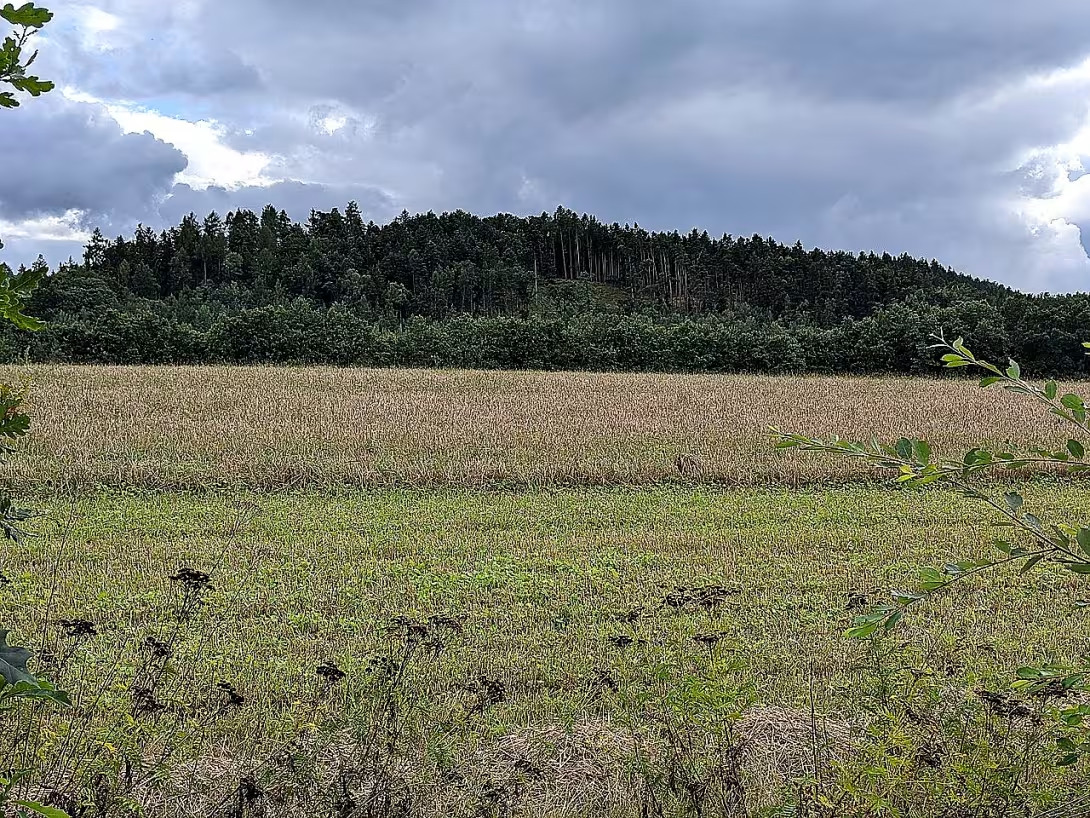
Hradiště u Svaté Anny is a prehistoric hill fort near Týn nad Vltavou in the Czech Republic. Situated on an elevation overlooking where the Vltava and Lužnice rivers meet, it served as a defensive site during the Bronze Age. The fortification included a rampart up to six meters high, constructed using natural terrain features. Recognized for its historical significance, Hradiště u Svaté Anny played a crucial role in controlling trade routes along the Vltava River.
The origin of Hradiště u Svaté Anny dates back to the Bronze Age, with evidence suggesting occupation during both the Early and Middle Bronze Ages. Its strategic location on an elevation overlooking key waterways made it ideal for monitoring and regulating movement along these vital trade routes. The fortification's construction utilized natural terrain features, enhancing its defensive capabilities. Historical sources suggest that overseeing and regulating commerce was a primary purpose of this site.
Architecturally, Hradiště u Svaté Anny is notable for using the surrounding landscape in its defense mechanisms. The site features a significant rampart and ditch system, with remnants indicating a height of up to six meters. This natural fortification was enhanced by an outer ditch and wall, securing the southern approach. The highest point reaches 407 meters above sea level, making it the most elevated part of the hill fort. The use of natural terrain in constructing these defenses highlights the builders' ingenuity.
Throughout its history, Hradiště u Svaté Anny has been examined by several notable figures. It was first described by Josef Ladislav Píč in 1890, marking the beginning of its recorded history. In 1952, František Prošek and Eva Jílková conducted a surface examination that revealed Bronze Age ceramics, providing further insights into its early occupation. Antonín Beneš later re-evaluated these findings, dating the site to the Early Middle Bronze Age. The discovery of early medieval pottery shards by Pavel Břicháček in 1985 extended the known period of habitation at the site.
Key events associated with Hradiště u Svaté Anny include its initial documentation and subsequent archaeological investigations that have revealed important artifacts from different periods. These findings underscore the fort's role as a significant historical site, offering insights into the trade networks and societal structures of Bronze Age Central Europe. The strategic location allowed it to control vital trade routes along the Vltava River, emphasizing its importance in regional security and commerce.
Today, Hradiště u Svaté Anny stands as a protected cultural monument, with its remnants offering valuable insights into prehistoric life and architecture. Visitors can explore this site to understand its historical significance and appreciate the strategic ingenuity of Bronze Age fortifications. The preserved ramparts and ditches provide a tangible connection to the past, making it a worthwhile destination for those interested in history and archaeology.
Hradiště u Svaté Anny is not only a testament to the architectural prowess of its ancient builders but also a window into the complex societies that thrived during the Bronze Age. Its preservation as a cultural monument ensures that future generations can continue to learn from this remarkable site. Visitors are invited to explore Hradiště u Svaté Anny and experience firsthand the historical legacy it represents, gaining a deeper appreciation for the region's rich past.
Then and now
Drag the slider to compare how the landmark may have looked when it was built with the view today.
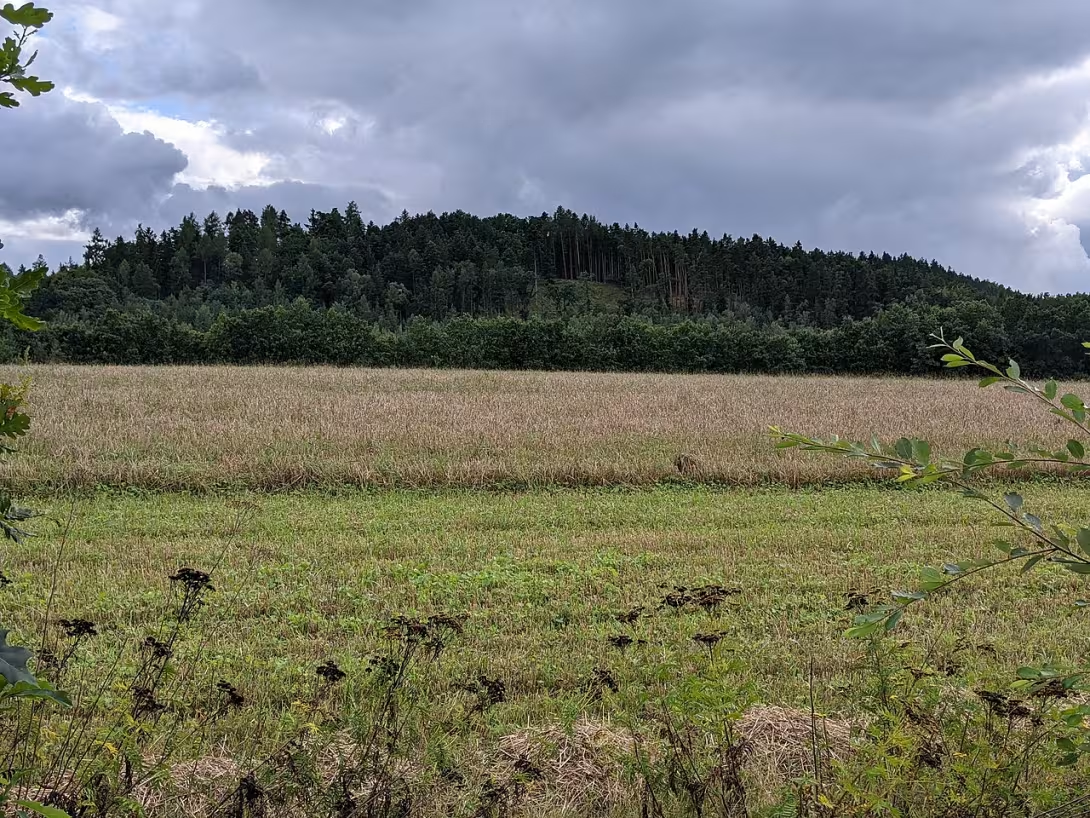
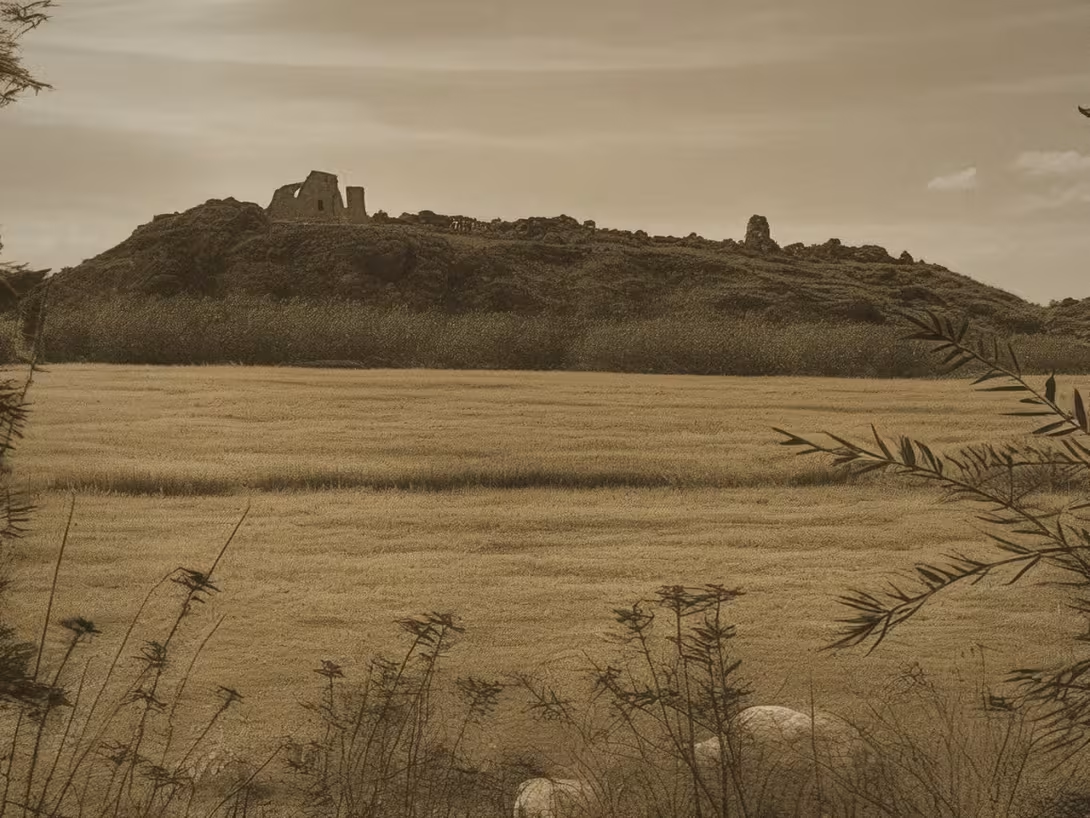
The historical appearance on the left is an AI-generated visualisation and serves as inspiration only.
Historical milestones
- 1890
- First described by Josef Ladislav Píč
- 1952
- Surface examination revealing Bronze Age ceramics
- 1985
- Discovery of early medieval pottery shards
Architectural development
The fortification at Hradiště u Svaté Anny was primarily constructed during the transition from the Early to Middle Bronze Age, utilizing natural terrain for defense. The site features a significant rampart and ditch system, with evidence of occupation extending into the early medieval period.
Historical events
- 1890
- First described by Josef Ladislav Píč
- 1952
- Surface examination revealing Bronze Age ceramics
- 1985
- Discovery of early medieval pottery shards
Points of interest
- Hradiště u Svaté Anny is a prehistoric hill fort near Týn nad Vltavou in the Czech Republic. - It served as a defensive site during the Bronze Age and was strategically located on an elevation overlooking where the Vltava and Lužnice rivers meet, ideal for monitoring trade routes along the Vltava River. - The fortification included a rampart up to six meters high, constructed using natural terrain features, with remnants indicating its height and strategic construction. - It was first described by Josef Ladislav Píč in 1890, marking the beginning of its recorded history, and has been examined by several notable figures over time. - The site is a protected cultural monument today, offering insights into prehistoric life and architecture through preserved ramparts and ditches.
Guide
This guide is narrated by a synthetic voice generated by artificial intelligence.
Show guide text
This text was created by artificial intelligence and has not been editorially reviewed. It may contain inaccuracies.
Hradiště u Svaté Anny is a prehistoric hilltop fortress on the edge of Týna nad Vltavou. It lies to the northwest of Malá Strana, on the eastern edge of Neznašov, about three hundred meters south of where the Lužnice flows into the Vltava. People lived here during the Bronze Age. The fortress was built in a strategic location on a promontory and most likely served to guard a trade route that ran along the Vltava. Its remains are today protected as a cultural monument.
The promontory rises above the confluence of the Vltava and the Bohunický potok and belongs to the Táborská pahorkatina. Its terrain slopes toward the north. The most vulnerable was the easily accessible southern side, and it was precisely this side that was protected by fortifications consisting of an outer ditch and rampart. From the rampart, a rampart up to six meters high and over fifty meters long has been preserved. At both ends, it curves to the north and gradually merges with the terrain edges on the sides of the promontory. The builders made use of the natural rocky ridge. The crest of the rampart lies at an elevation of four hundred and seven meters and is the highest point of the entire fortress. The protected area measures approximately zero point seven hectares.
Josef Ladislav Píč was the first to describe the fortress in the nineteen nineties of the nineteenth century. In nineteen fifty-two it was surveyed by František Prošek and Eva Jílková. They found only a small amount of ceramics and classified it as belonging to the early Hallstatt period. This dating was later changed by Antonín Beneš. On the basis of a small archaeological excavation, he attributed the fortress to the early Middle Bronze Age. In nineteen eighty-five, Pavel Břicháček discovered pottery fragments from the early Middle Ages there.
The most recent findings were brought by research from two thousand and fifteen. According to it, the site was most densely settled at the transition between the early and middle Bronze Age. People came here as well in the Late Bronze Age, although what they used the promontory for at that time remains unclear.
Tips for visitors
The best time to visit Hradiště u Svaté Anny is during the late spring or early autumn months, when the weather is pleasant for exploring outdoor sites. During these times, you can enjoy comfortable temperatures and typically clear skies that enhance the natural beauty of the rolling hills in Táborská pahorkatina. Additionally, visiting outside of peak summer months helps avoid larger crowds, allowing for a more serene experience at this historic site.
This flexibility allows visitors to choose their preferred mode of travel.
When planning your visit to Hradiště u Svaté Anny, it's recommended to bring comfortable walking shoes as the terrain can be uneven in places. Additionally, consider packing water and snacks for a day out exploring the site. Given its historical significance, bringing along a camera is advisable to capture the scenic views and archaeological features. The area offers picturesque spots with natural lighting that enhances photography, especially during sunrise or sunset when the light is softer.
For families visiting Hradiště u Svaté Anny, there are several activities that can make the experience enjoyable for children. Exploring the site's open spaces provides an opportunity for kids to learn about prehistoric life in a hands-on manner. Nearby Týn nad Vltavou offers additional attractions within a 30-minute drive, such as historical sites and natural landscapes, perfect for family outings. These nearby locations provide variety and educational content suitable for all ages.
Frequently asked questions
Can the monument be visited?
This is an archaeological site. Often there is little to see on the ground and the land may be private. We have not verified access.
Where is the monument?
Location: Týn nad Vltavou, Jihočeský kraj. The map on this page shows the exact spot.
Why is the monument protected?
It is listed in the Central List of Cultural Monuments of the Czech Republic as a cultural monument (register no. 1000158367).
Businesses nearby
Do you run a restaurant, accommodation, shop, museum, rental, wellness or other visitor service near this monument? Show yourself directly to the people heading to it — this is how they will see you in the app and on the web:
Nearby
Hradiště u Svaté Anny is situated near Týn nad Vltavou, with the confluence of the Vltava and Lužnice rivers nearby. The area features rolling hills typical of the Táborská pahorkatina region.
Accommodation nearby
Trips and activities nearby
Guided tours, tickets and activities nearby from GetYourGuide
Affiliate link: if you buy from the partner, we may receive a commission. The price for you does not change.
Search tours and activities →Themed route
Týn nad Vltavou Thematic Route
1. Hradiště u Svaté Anny (Archaeological Site)
Type: Archaeological Site
This site is a significant prehistoric settlement, offering insights into the lives of early inhabitants in the region. Visitors can explore remnants of ancient structures and learn about the cultural heritage of the Táborská pahorkatina area.
2. Confluence of the Vltava and Lužnice Rivers
Type: Natural Landmark
Located near Hradiště u Svaté Anny, this confluence is a picturesque spot where two rivers meet. It provides a serene setting for reflection on the natural beauty of the region and its historical significance as a meeting point.
3. Rolling Hills of Táborská Pahorkatina
Type: Natural Landscape
The rolling hills surrounding Hradiště u Svaté Anny offer stunning views and opportunities for leisurely walks. These landscapes are characteristic of the region, providing a perfect backdrop to appreciate the area's natural beauty and tranquility.
This route offers a blend of historical exploration and natural appreciation, ideal for those interested in both archaeology and scenic landscapes.
Visualizations and artistic views


The visualisations are generated by artificial intelligence and serve as inspiration.
Photos from the area
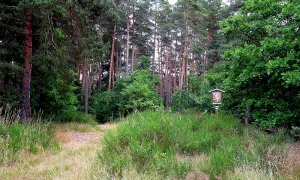
Real photos taken near the monument

Zdroj a licence jsou uvedeny u každého snímku.
Tips from visitors
No tips yet. Be the first!
Log in and add your tip.
Sources and literature
Photos: MartinVeselka / CC BY-SA 4.0 — Wikimedia Commons. The author and licence also appear when you hover over the image.
Faktickým podkladem tohoto textu byl článek na Wikipedii, jehož autory jsou přispěvatelé Wikipedie. Článek je dostupný pod licencí CC BY-SA 4.0.
Location on the map

Příběhy a pověsti
Legendy, pověsti a příběhy spjaté s touto památkou

Fotografie návštěvníků
Zatím žádné fotografie. Buďte první, kdo přidá fotografii z návštěvy!
Log in a přidejte svou fotografii nebo hodnoťte.
Za ověřenou návštěvu v aplikaci získáte víc bodů — poznáme podle GPS, že jste na místě.
Reviews and comments