






Evangelický kostel (Prostřední Suchá) Church
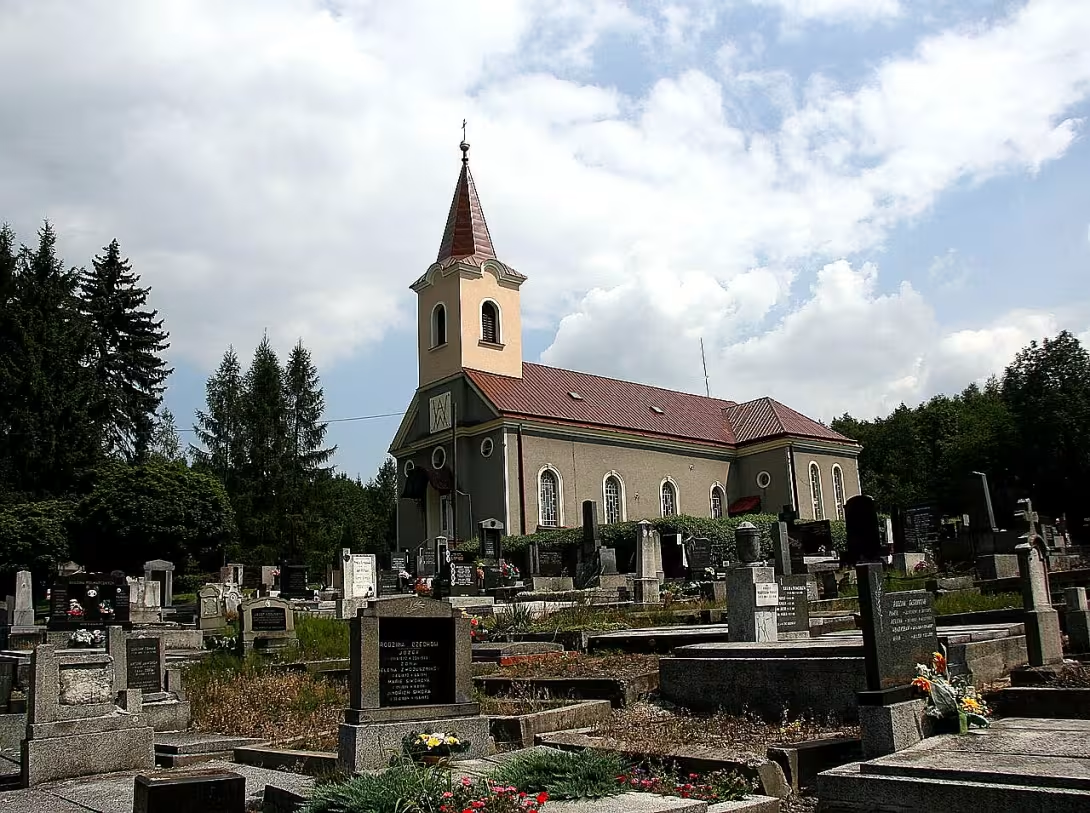
The Evangelical Church in the Middle Dry, part of the present-day Havel, is the temple of the Silesian Church of the Evangelical Augsburg religion. There is an evangelical cemetery of 7589 square meters. The parish choir of the Silesian Church of the Evangelical Augsburg religion in Havel-Dry manages both the temple and the cemetery.
The history of the Gospels in Suché dates back to the 16th century, when both the Sushi authorities and its subjects signed up to reform and gradually took over the local church. The long shift of evangelists culminated on 26 March 1654, when the religious commission closed the temple. Yet the chieftain continued to support the believers - between 1654 and 1664, the evangelical preacher Jan Pragenus was hiding in the chateau of Dolnosush, and among educators in the homes of Golkovsky and Harasovsky was taught by Lutheran priests Samuel Fiducius and Alexander Pragenus. After the Tolerance patent was issued, evangelical believers gathered around a new temple in Bludovic. In 1852 the first evangelical school was founded in Dry.
The creation of a separate cemetery was linked to 1860. The Evangelists of the Middle Dry purchased the land from Bernard Kocura and established an evangelical cemetery village. They fortified the cemetery with a wooden fence and built an entrance gate. The first funeral took place there on 12 November 1860. In 1872 a wooden chapel with a tower and three bells grew in the cemetery; Two bells were taken by a private benefactor. However, the Austrian Government seized it for war purposes on 31 July 1916.
Today's church was founded in two stages. From 1924 to 1925, the wooden chapel was replaced by a brick building, conceived as a chapel with 156 seats. The foundation stone was sanctified on 3rd August 1924, and the building was then sanctified on 2nd August 1925. Twelve years later, in 1937, the chapel was rebuilt into a church - the extension included two side streets with stalls, altar apsid and enlarged bark. Capacity has increased to 350 seats. The ceremonial consecration of the church took place on 28 November 1937. The act of sanctification was performed by Senior Oskar Mikhajda, victor Jozef Nierostek of Polish Teschen contributed by preaching. In the interwar years, the Union of Evangelical Youth, the Youth Choir and the Association of Evangelical Women were formed.
After World War II, the choir was taken over by the pastor Jerzy Czyż, who organized the first confirmatory teaching in 1946. The autonomy of the parish corps in Suché was officially confirmed on 14 January 1949. In the same year, the community acquired an organ which was produced by Kutnohorsky organář Jan Tučan (opus 504), partly based on parts of the older organ from the Slovak village Veľké Bierovce. In the 1950s, the congregation accounted for around 3,500 believers.
Since then, however, the position of the building has threatened the consequences of mining activity. The mine damage was gradually destroyed, and all surrounding buildings of the village Prostřední Suchá fell. The evangelical church remains the only preserved building - although it has fallen more than 17 metres with the cemetery and surrounding terrain due to undermining. The state office took over the church cemetery in its administration in early 1958. Since the 1980s, funerals have been banned. In 1991, the cemetery and the area of the church were reconstructed - part of the cemetery flooded the water, so it was necessary to dismantle the monuments and replace them. Around 1993, the cemetery opened up to the public and reached new pavements. .
Then and now
Drag the slider to compare how the landmark may have looked when it was built with the view today.
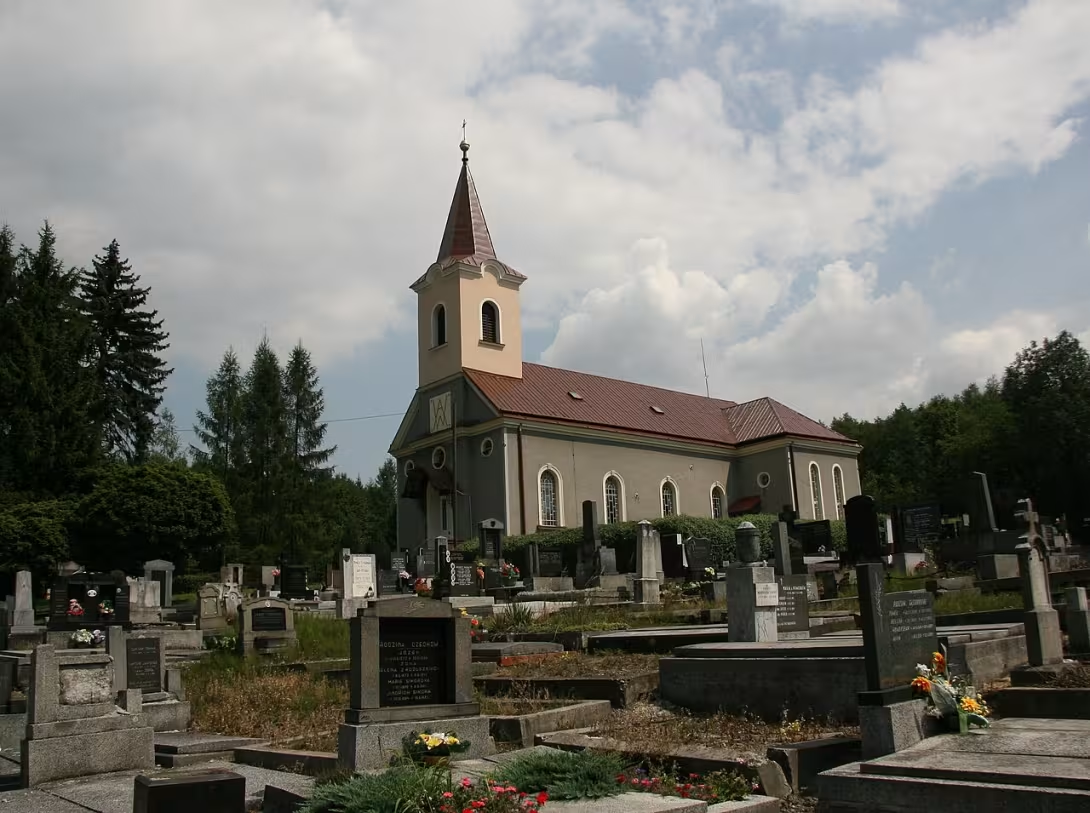

The historical appearance on the left is an AI-generated visualisation and serves as inspiration only.
Historical milestones
- 1654
- Closure of the church by the Catholic Commission, beginning of a long-term period without its own sacral building for evangelists in the Middle Dry.
- 1860
- Establishing an evangelical cemetery, the first burial in a new place.
- 1924
- The sacred foundation stone for the new brick chapel.
- 1937
- The reconstruction of the chapel into a church and the ceremonial consecration of a new space.
- 1949
- Installation of the organ and confirmation of the independence of the parish choir.
Architectural development
It was created as a walled chapel with 156 seats (1924-1925), in 1937 extended to a church with 350 seats including altar apsid, side streets and bark. Balconies were added in the 1950s. Materials: walled construction, wooden elements of the interior. Style influenced by functionalist tendencies of the time.
Historical events
- 1654
- Closure of the church by a Catholic religious commission, evangelists lose control of local religious life.
- 1860
- The foundation of the evangelical cemetery in the Middle Dry, the first funeral is held on November 12.
- 1925
- The consecration of the original masonry chapel which later became a church.
- 1949
- Confirmation of the independence of the parish choir in the Middle Dry and installation of the organ by Kutnohorsky organist Jan Tuček.
Owners
Silesian Church of the Evangelical Augsburg Religion (since the inception, parish choir in Havel-Dry)
Points of interest
- The evangelical church in the Middle Suché was originally taken over in the 16th century by the authorities and subjects who signed up for the reformation.
- From 1654 to 1664, the Evangelical preacher Jan Pragenus was hiding in the chateau of Lower Suše.
- The Evangelical cemetery was founded in 1860, the first funeral took place here on 12 November of the same year.
- In 1872 a wooden chapel with a tower and three bells was built in the cemetery, two of which came from private benefactors.
- Today's church was created in the years 1924-1925 as a brick building with a capacity of 156 seats, later in 1937 extended to a church with a capacity of 350 seats.
Guide
This guide is narrated by a synthetic voice generated by artificial intelligence.
Show guide text
This text was created by artificial intelligence and has not been editorially reviewed. It may contain inaccuracies.
Audio Guide - Evangelical Church in the Middle Dry
---
Welcome, dear visitors! You are standing in front of one of the most interesting monuments of our area - the evangelical church in the Middle Suché. We managed to save this building from extinction, and now you can see its beauty and history. Look at what he's offering you.
The earth beneath your feet has long been affected by mining activity, but it is this building that stands as a symbol of resistance and loyalty. It was originally built as a brick chapel between 1924 and 1925, for a new evangelical community that found a place here for its services. In 1937 the chapel was rebuilt into a full church, with an extension of the space and installation of the organ. Today, it offers you room for prayers and memories of the past.
Look at the facade of the church - its simple but trusted architecture will tell you a lot about the time it was built. Feel how solid and durable the walls appear, as if they protect not only the spiritual life, but also the history of this village. Now pay attention to the gutters and window openings - there are obvious signs of modification that the church received in the 1930's.
The history of this place is full of interesting stories. In the 16th century there was a church, which was originally owned by the authorities and subjects who signed up for the reformation. But in 1654, the church was closed by the Catholic Commission, so the evangelists had to sacrifice themselves without their own sacral building. This meant a long period without room for their religious ceremonies.
Between 1654 and 1664, the important Evangelical preacher Jan Pragenus was hiding in the chateau of Lower Sushi. His secrets and resistance to Catholic influence are part of the local legend. You can imagine what it was like for him and his associates to live here in danger, but also in the hope of freedom of faith.
Now we move on to the cemetery that was founded in 1860. The first funeral took place here in the same year, and so the people who lived and worked here were buried. The cemetery is proof of the endurance and respect for the monuments of our past.
The interesting thing is that the church also survived the extensive mining damage that destroyed most of the surrounding buildings. This shows how important not only religious traditions play a role here, but also human resilience and conservation efforts.
If you have time, I recommend you also look at the nearby cemetery - here you will find many sights to tell you about the life of the local people. You can look at the tombstones and commemorative records that remind you how important events took place here.
Thank you for your time here. Visiting this place has opened a window to your past, and may have helped you understand how important the memory of the history and culture of our ancestors is. Don't forget to bring some notes or write down some interesting information that they told you. May you be able to explore the other gems of our region - when you return, we will be glad to have you back.
Thank you for your attention and wish you a pleasant journey.
Frequently asked questions
Is Evangelický kostel (Prostřední Suchá) open to the public?
Yes, the church is open to the public. The tour is free, but it is advisable to check in with the local parish office when visiting.
How do I get to the place by car / public transport?
The church is located in the center of the Middle Dry. You can drive to the street where the church stands. The public transport is available from Havířov and stops directly in front of the church.
How much is the entrance fee and is it paid on the spot?
No entry fee. The church tour is free.
Is the tour suitable for children and seniors?
Yes, a church tour is suitable for all age groups. The church has an accessible staircase and wheelchair access.
How long does the tour take?
The church tour takes approximately 30 minutes, but can be extended according to the interest of visitors.
What are the opening times and booking is required?
The church is open all year round. The opening hours are 9: 00 to 5: 00. Reservation is not necessary, but it is advisable to check in with the local parish office when visiting.
What's interesting in the immediate vicinity?
In the immediate vicinity of the church there is a park and a cultural house. There is also a shopping centre with shops and restaurants nearby.
For kids
Imagine going back 101 years to a small village called Prostřední Suchá. It was like a fairy tale where everything worked the way it was supposed to. The village was full of life and energy. The evangelical church was the heart of the village, where weddings, funerals and prayer services were held.
Who lived here? Local people who have fed on agriculture and animal husbandry. They were friendly and warm people who helped each other. The church was their common home where they gathered for prayers and festivities.
Businesses nearby
Do you run a restaurant, accommodation, shop, museum, rental, wellness or other visitor service near this monument? Show yourself directly to the people heading to it — this is how they will see you in the app and on the web:
Events nearby
Zdroj akcí: otevřená data měst a obcí ČR (Národní katalog otevřených dat) a kalendář akcí Národního památkového ústavu.
Nearby
{'memories': [{'Nazen': 'Evangelical cemetery in the Middle Dry', 'description': 'A cemetery of 7589 m ² which underwent reclamation in the 1990s. Located in the immediate vicinity of the church.', 'outage': '50 meters'}, {'nazek': 'Mine works OKD (Havířov)', 'description': 'Mine areas and shafts which have affected the stability of the surrounding terrain and caused a fall of the church and cemetery.', 'outage': 'up to 3 km'}], 'priroda': {'description': 'The surrounding area is influenced by mining activity, the terrain is uneven and low. In the vicinity there are green areas and parks associated with the reclamation of mining areas.'}
Accommodation nearby
Themed route
Thematic cruise route in the Middle Dry
1. Evangelical Church in the Middle Dry Why? It is a historical church with a rich evangelical tradition, which stands in a historical place. Its architecture and decoration preserve valuable artistic values from the past.
2. Evangelical cemetery in the Middle Dry * Why? * Reclamed cemetery with an area of 7,5 hectares offers a quiet environment for walks and attention to memorial tombs. His proximity to the church combines the religious and historical identity of the village.
3. OKD mining works in Havířov (approximately 5 km) Why? By moving underground mining works, the terrain was deformed, which also affected the condition of the church and cemetery. It is interesting to know the past of coal mining and its effects on the surrounding landscape.
Recommended route: Start at the Evangelical Church, where you can see its interior and historical details. Go to the Evangelical Cemetery, where you can enjoy the quiet surroundings and the opportunity to get acquainted with memorable monuments. Continue here to the OKD Mine Works in Havířov, where you can see important historical remains and understand the impact of mining on the surrounding landscape. You're going back to the Middle Dry.
Seasonal recommendations
Spring Spring at the Evangelical Church in the Middle Dry offers a unique atmosphere where nature wakes up after winter peace. The church stands in the vicinity where spring flowers flourish and the forests grow green. The sun rays that penetrate the glass windows of the church create soft shadows and illuminate the interior with golden light. The outer space is surrounded by fields with primordial, which add a delicate scent to the surroundings. In this period the church is often visited by families looking for a quiet place for walks or small picnics. I recommend visiting the church early in the morning, when there is still silence and crowds missing. It is convenient to wear light but warmer clothes because spring weather can be variable. Don't forget the umbrella, because spring rains are common.
Summer Summer brings a lively atmosphere to the Evangelical Church in the Middle Dry where space becomes a popular destination for tourists and locals. The sun shines intensively and therefore the inside of the church is lit directly by sunlight, which penetrates high windows. The outside area is green and full of life, with flowers and trees that provide shade. In the main summer season the church is often visited by larger groups of people, so it is advisable to come before the crowds gather. I recommend wearing light, airy clothes and comfortable shoes because walking around the church can be longer. Don't forget the sunscreen and enough water to bring you only pleasant experiences.
Autumn Autumn visit to the Evangelical Church in the Middle Dry is magical, as surrounding nature turns into colorful shades of yellow, orange and red. The church stands in an environment where leaves on trees change and fall to the ground, creating a soft, brown litter. The sun no longer illuminates so intensely, but its rays create long shadows and golden reflections on the stone walls of the church. The atmosphere is calm and reflects the quiet beauty of autumn. During this period the church is less visited, which allows a quiet and private visit. I recommend wearing warmer clothes because autumn weather can be cold and rainy. The ideal time for visiting is the afternoon when light is pleasant and surrounding nature is the most beautiful.
Winter Winter visit to the Evangelical Church in the Middle Dry offers a calm and quiet atmosphere where the surrounding landscape is covered with white snow. The church stands in an environment where nature calms down and becomes almost a freezing beauty. The sun shines in short, but its rays reflect off the snow and create fine, silver reflections on the stone surfaces of the church. The interior of the church is warm and cozy, which is ideal for a short break during winter walks. In winter, the church is less visited, which allows a peaceful visit. I recommend wearing warm, laminated clothes and comfortable shoes because winter weather can be cold and wet. The best time to visit is the afternoon when the light is pleasant and the surrounding landscape is the most beautiful. Don't forget the warm drink that will add warmth and comfort to your winter visit.
Visualizations and artistic views


The visualisations are generated by artificial intelligence and serve as inspiration.
Photos from the area
Real photos taken near the monument


Zdroj a licence jsou uvedeny u každého snímku.
Atmosphere of the place
This atmospheric visualisation of the place and period was generated by artificial intelligence. It is not real footage of the location.
Tips from visitors
No tips yet. Be the first!
Log in and add your tip.
Sources and literature
Fotografie: Michal Klajban / CC BY-SA 3.0 — Wikimedia Commons. The author and licence also appear when you hover over the image.
Faktickým podkladem tohoto textu byl článek na Wikipedii, jehož autory jsou přispěvatelé Wikipedie. Článek je dostupný pod licencí CC BY-SA 4.0.
Location on the map
More monuments – Prostřední Suchá
Show all in the municipality
Příběhy a pověsti
Legendy, pověsti a příběhy spjaté s touto památkou

Fotografie návštěvníků
Zatím žádné fotografie. Buďte první, kdo přidá fotografii z návštěvy!
Přihlaste se a přidejte svou fotografii nebo hodnoťte.
Za ověřenou návštěvu v aplikaci získáte víc bodů — poznáme podle GPS, že jste na místě.
Reviews and comments