






evangelický kostel v Českých Budějovicích Church
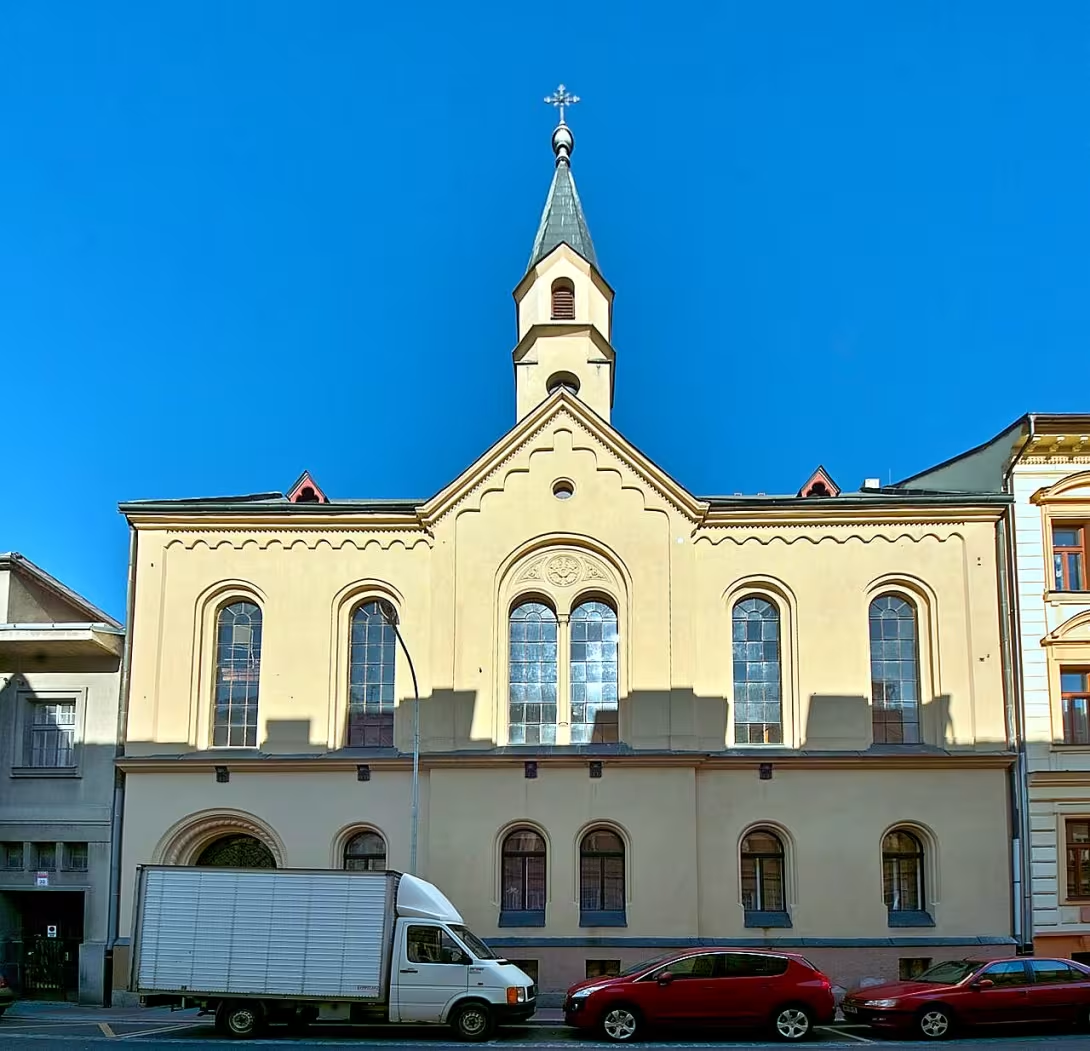
The Evangelical Church in České Budějovice stands as a significant cultural monument on 28. října Street within this historic city. Built in 1899, architect Viktor Schwerdtner designed it with construction overseen by local builder Josef Hauptvogl. The church is notable for its blend of Neo-Romanesque and traditional arcaded architectural styles. Its designation as a cultural monument since July 7, 2021, underscores its importance within the region's rich historical tapestry.
The origins of this Evangelical Church are deeply rooted in the religious developments following the Protestant Patent of 1861, which established religious equality across the Austro-Hungarian Empire. This decree facilitated the establishment of various Protestant communities, including one in České Budějovice. In 1868, a Protestant congregation was founded here as a branch of the Church of Martin Luther in Linz and later became an independent entity by 1910. Until 1945, it was part of the German Evangelical Church in Bohemia, Moravia, and Silesia. Since 1959, the church has been under the ownership of the Czechoslovak Brethren's Church congregation.
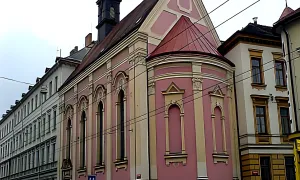
Architecturally, the church is a testament to the Neo-Romanesque style with traditional arcades that were prevalent at the time. The structure features a gable roof adorned with a biforium window and a small tower, enhancing its visual appeal. The entrance portal is particularly striking, designed as a stepped portal with embedded columns topped by cubic capitals, complemented by a frieze of twisted rope in the archivolt. Inside, the upper floor houses a prayer room accessible via stairs or an elevator from the courtyard, while the ground level accommodates a parish hall and pastor's apartment.
Ownership and administration of the church have seen significant changes over time. Initially part of the German Evangelical Church until 1945, it transitioned to the Czechoslovak Brethren's Church in 1959. This shift reflects broader historical currents within the region, particularly post-World War II realignments.
Key events in the church’s history include the laying of its foundation stone on July 9, 1899, and its consecration on December 8, 1899. These milestones mark important phases in its construction and establishment as a place of worship for the local Protestant community.
Today, the Evangelical Church remains an accessible site for visitors interested in exploring České Budějovice's cultural heritage. Its architectural beauty and historical significance make it a worthwhile destination for those keen to delve into the city’s rich past. The church not only serves as a place of worship but also stands as a testament to the religious diversity that has shaped the region over centuries.
Visiting this monument offers an opportunity to appreciate its architectural elegance and understand the historical context in which it was built. It is a valuable piece of České Budějovice's cultural landscape, inviting both locals and tourists alike to explore its storied past and serene presence.
Then and now
Drag the slider to compare how the landmark may have looked when it was built with the view today.
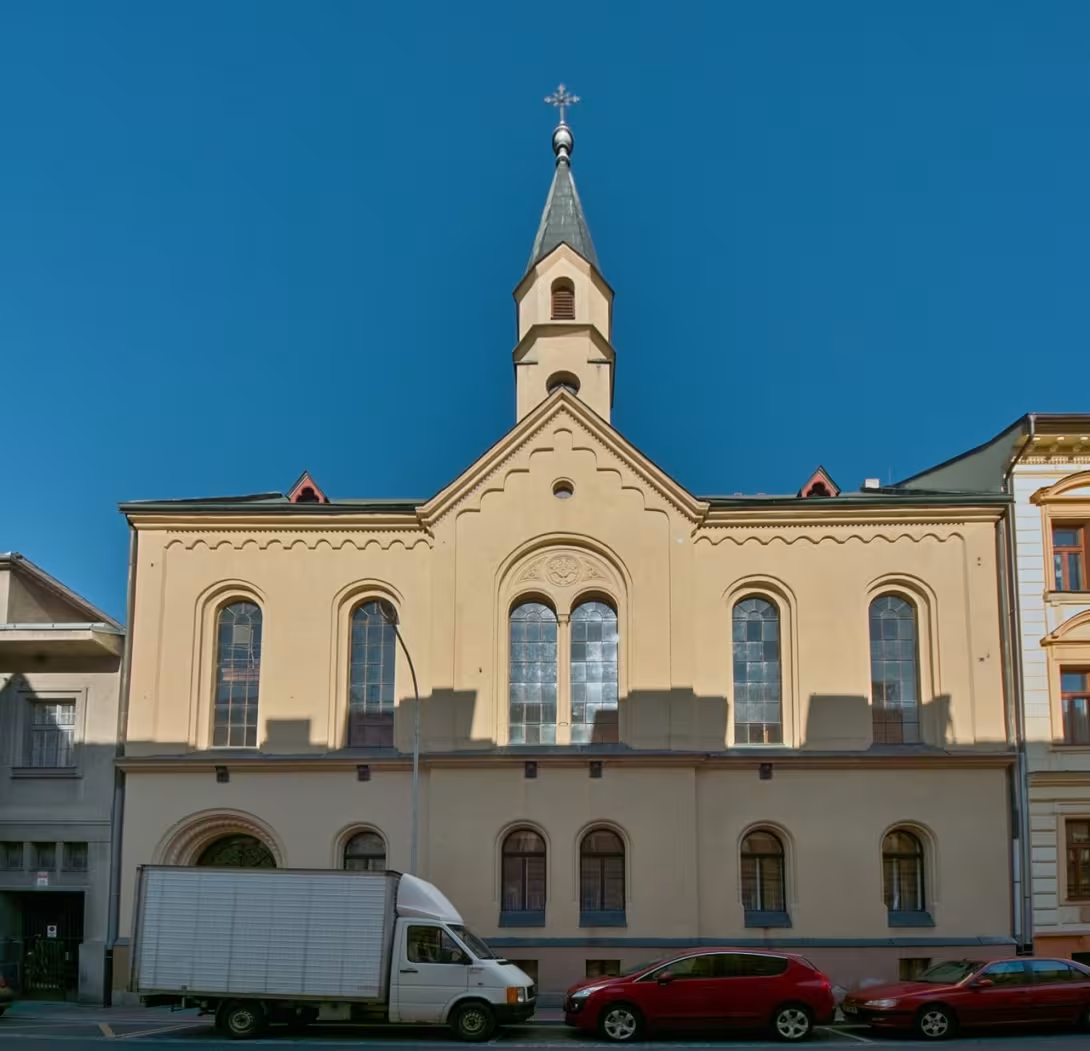

The historical appearance on the left is an AI-generated visualisation and serves as inspiration only.
Historical milestones
- 1861
- Prohlášení Protestant Patent, zajišťující náboženskou rovnoprávnost.
- 1868
- Založení protestantského sboru v Českých Budějovicích.
- 1899
- Výstavba evangelického kostela začala a byl zasvěcen.
- 1910
- Sbor se stal nezávislou entitou.
- 1945
- Konec náležení k Německé evangelické církvi v Čechách, Moravě a Slezsku.
- 1959
- Převzetí kostela Cseškoslovenskou bratrskou církví.
Architectural development
Constructed in a Neo-Romanesque style with traditional arcades, the church features a gable roof and a small tower. The entrance portal is designed as a stepped portal with embedded columns and a frieze of twisted rope. The upper floor houses a prayer room accessible by stairs and an elevator from the courtyard.
Historical events
The foundation stone was laid on July 9, 1899.
The church was consecrated on December 8, 1899.
Owners
Initially part of the German Evangelical Church in Bohemia, Moravia, and Silesia until 1945; from 1959, it is owned by the congregation of the Czechoslovak Brethren's Church.
Points of interest
- The Evangelical Church in České Budějovice was initially part of the German Evangelical Church until 1945, reflecting the complex ethnic and religious dynamics within the Austro-Hungarian Empire. After World War II, it became associated with the Czechoslovak Brethren's Church, illustrating post-war shifts in regional governance and cultural identity.
- Architect Viktor Schwerdtner designed the church with a unique blend of Neo-Romanesque and traditional arcaded styles, which was quite innovative for its time. This architectural fusion not only enhanced the aesthetic appeal but also symbolized the merging of different cultural influences prevalent during the late 19th century in České Budějovice.
- The church's foundation stone was laid on July 9, 1899, and it was consecrated just a few months later on December 8, 1899. This rapid construction period is notable, as it highlights both the urgency of establishing a Protestant place of worship in České Budějovice and the efficiency of architectural practices at that time.
- Despite being built in the late 19th century, the church was only designated as a cultural monument on July 7, 2021. This relatively recent recognition underscores the evolving appreciation for historical structures within modern Czech society and highlights ongoing efforts to preserve regional heritage.
- The entrance portal of the church is particularly striking with its stepped design, embedded columns topped by cubic capitals, and a frieze of twisted rope in the archivolt. These architectural details not only add to the visual splendor but also reflect the meticulous craftsmanship and artistic influences that were valued during the period of its construction.
Guide
This guide is narrated by a synthetic voice generated by artificial intelligence.
Show guide text
This text was created by artificial intelligence and has not been editorially reviewed. It may contain inaccuracies.
The Church of the Czech Brethren Evangelical Church stands on 28. října street in Českobratrské církve evangelické. It dates from 1899 and has been protected as a cultural monument since July 7, 2021. It is sometimes also called a chapel or prayer house, and in German it is known as Bethaus.
Its creation is connected to the Protestant patent of 1861, which guaranteed equality of religion in the Habsburg monarchy. Seven years later, in 1868, a Protestant congregation was established in Českobratrské církve evangelické. Initially it was only a subsidiary of the Martin Luther Church in Linz, and it became an independent congregation only in 1910. Until 1945, the Českobratrské církve evangelické congregation belonged to the German Evangelical Church in Bohemia, Moravia, and Silesia.
The church was designed by Plzeň architect Viktor Schwerdtner and the construction was carried out by local builder Josef Hauptvogl. Everything was completed in just one year. The foundation stone was laid on July 9, 1899, and the solemn consecration followed on December 8 of the same year.
The building is constructed in a Neo-Romanesque and traditional arched style. On the roof rises an oriel with a double, so-called biforial window, above which rises a ridge turret. The entrance portal deserves attention. It is stepped, with embedded columns bearing cubic capitals, and in its arch runs a band resembling twisted rope.
The arrangement of the building corresponds to the needs of the congregation. The prayer house is located on the upper floor and is accessed by stairs and an elevator from the courtyard. On the ground floor there is a parish hall and the pastor's apartment.
Since 1959, the church has been owned by the congregation of the Czech Brethren Evangelical Church.
Tips for visitors
The best time to visit the Evangelical Church in České Budějovice is during late spring or early autumn when the weather is pleasant, allowing for a comfortable exploration of both the church and its surroundings. These seasons offer vibrant natural scenery that enhances the historical ambiance of the area. Additionally, visiting outside peak tourist season can provide a more serene experience with fewer crowds.
Always verify current transport schedules as they can change.
When visiting the Evangelical Church, consider bringing comfortable walking shoes and weather-appropriate clothing, especially if you plan to explore other nearby sites like the Old Town Hall or the Church of St. Nicholas. A small backpack with water, snacks, and a camera is also recommended to enhance your visit. If you're interested in learning more about the church's history, consider bringing along a guidebook or downloading information from the official website.
For photography enthusiasts, the best spots for capturing the Evangelical Church are its exterior facades during the golden hours—shortly after sunrise or before sunset. The soft lighting at these times highlights the architectural details beautifully. Inside, look for angles that showcase the church's interior design and stained glass windows. Remember to respect any photography restrictions in place.
Nearby attractions within a 30-minute walk include the Old Town Hall, known for its Gothic architecture, and the Church of St. Nicholas, which offers stunning views over České Budějovice. These sites complement your visit by providing additional historical context and architectural beauty. Families with children might enjoy exploring these areas as they offer both educational insights and engaging visuals.
Frequently asked questions
Can the monument be visited?
Religious buildings are usually open mainly during services; at other times a visit is normally arranged with the parish or the operator. We have not verified specific times.
Where is the monument?
Location: tř. 28. října 1306/28, České Budějovice 3, České Budějovice, Jihočeský kraj. The map on this page shows the exact spot.
Why is the monument protected?
It is listed in the Central List of Cultural Monuments of the Czech Republic as a cultural monument (register no. 106703).
Businesses nearby
Do you run a restaurant, accommodation, shop, museum, rental, wellness or other visitor service near this monument? Show yourself directly to the people heading to it — this is how they will see you in the app and on the web:
Events nearby
Zdroj akcí: otevřená data měst a obcí ČR (Národní katalog otevřených dat) a kalendář akcí Národního památkového ústavu.
Nearby
The church is situated in České Budějovice, a city known for its rich cultural heritage and historical architecture. Within a 5 km radius, visitors can explore other notable sites such as the Old Town Hall and the Church of St. Nicholas.
Accommodation nearby
Trips and activities nearby
Guided tours, tickets and activities nearby from GetYourGuide
Affiliate link: if you buy from the partner, we may receive a commission. The price for you does not change.
Search tours and activities →Themed route
Thematic Walking Tour: České Budějovice
1. Evangelický kostel v Českých Budějovicích (Church) - Begin your tour at the Evangelical Church, a stunning example of Renaissance architecture in České Budějovice. This church is renowned for its intricate design and historical significance as a symbol of religious tolerance during the Reformation period. Its beautiful interior offers a glimpse into the rich cultural heritage of the city.
2. Old Town Hall (Town Hall) - Located approximately 0.5 km from the Evangelical Church, the Old Town Hall is an architectural gem that dates back to the late Gothic and Renaissance periods. This historic building served as the administrative center for České Budějovice and now houses a museum showcasing local history and culture. Its ornate façade and impressive tower make it a must-see landmark.
3. Church of St. Nicholas (Church) - Just 1 km from the Old Town Hall, the Church of St. Nicholas is another architectural highlight in České Budějovice. Known for its Baroque style, this church features stunning frescoes and a beautifully decorated interior. It stands as a testament to the city's religious and artistic history, making it an essential stop on your tour.
This thematic walking tour offers a deep dive into the historical and cultural heart of České Budějovice, focusing on its significant architectural landmarks within a short distance from each other.
Seasonal recommendations
Spring: Visiting the Evangelical Church in České Budějovice during spring offers a unique experience as nature awakens around this historic site. The church is bathed in soft, natural light filtering through its stained glass windows, creating an ethereal atmosphere inside while colorful blossoms and fresh greenery enhance the outdoor surroundings. Springtime can bring unpredictable weather, so it's advisable to dress in layers that accommodate both warmth and cool breezes. Visiting during weekdays or early mornings is recommended to avoid larger crowds as tourists begin their season of exploration.
Summer: The summer months are ideal for exploring the Evangelical Church when the long days provide ample sunlight to illuminate its architectural details, both inside and out. This period often coincides with peak tourist seasons in České Budějovice, making it a lively time around the church. To fully enjoy your visit without the hustle of large groups, consider arriving early in the morning or later in the afternoon when temperatures are more comfortable. Light, breathable clothing is recommended to stay cool during warmer days.
Autumn: Autumn transforms the Evangelical Church into a picturesque setting with its warm hues and crisp air. The falling leaves create a stunning backdrop for photography enthusiasts while adding an extra layer of charm to the church's historic facade. During this season, it’s wise to dress warmly in layers as temperatures can drop significantly by late afternoon. Visiting on weekdays is advisable to avoid crowds, especially during times when local events or festivals might attract more visitors.
Winter: Winter offers a serene and tranquil atmosphere for visiting the Evangelical Church, with snow often adding a magical touch to its surroundings. The shorter days mean that natural lighting inside the church can be limited, so plan your visit during daylight hours to fully appreciate its interior beauty. It’s essential to dress warmly in heavy coats, hats, gloves, and scarves to stay comfortable in the cold weather.
Visualizations and artistic views


The visualisations are generated by artificial intelligence and serve as inspiration.
Photos from the area
Real photos taken near the monument

Zdroj a licence jsou uvedeny u každého snímku.
Tips from visitors
No tips yet. Be the first!
Log in and add your tip.
Sources and literature
Photos: Xth-Floor / CC BY-SA 3.0 — Wikimedia Commons. The author and licence also appear when you hover over the image.
Faktickým podkladem tohoto textu byl článek na Wikipedii, jehož autory jsou přispěvatelé Wikipedie. Článek je dostupný pod licencí CC BY-SA 4.0.
Location on the map


Příběhy a pověsti
Legendy, pověsti a příběhy spjaté s touto památkou
Fotografie návštěvníků
Zatím žádné fotografie. Buďte první, kdo přidá fotografii z návštěvy!
Log in a přidejte svou fotografii nebo hodnoťte.
Za ověřenou návštěvu v aplikaci získáte víc bodů — poznáme podle GPS, že jste na místě.
Reviews and comments