






U Zelené ratolesti House
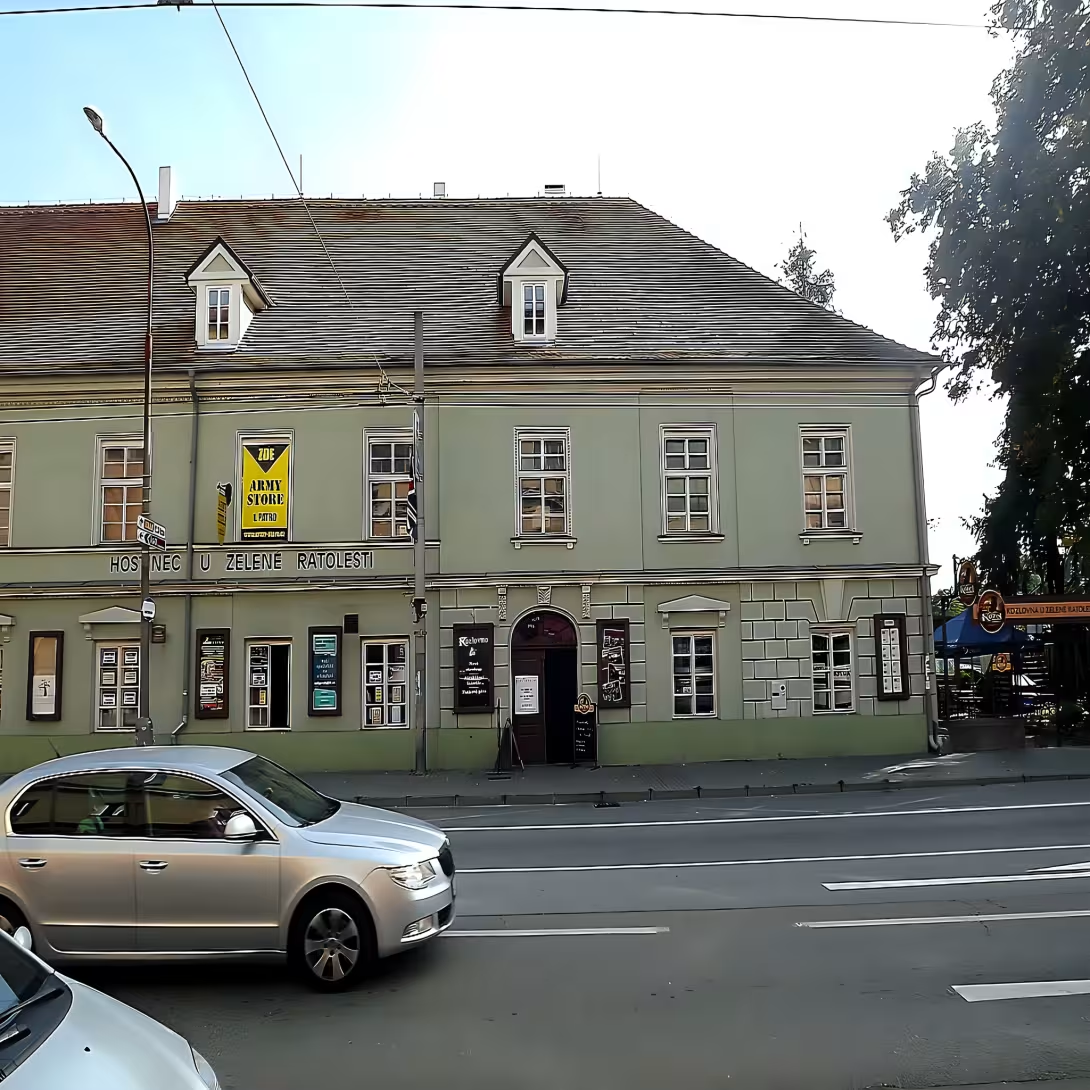
House U Zelené ratolesti stands on Hus's class in České Budějovice and links its history with the most famous names of the Czech Budějovice industry. From the beginning he served as a tourist inn, and this mission is accompanied by it today.
The oldest preserved mention of the inn at this place dates back to August 3, 1763, when the existing building burned down as a result of lightning. The present house was built only in 1821 by Tadeáš Lanna, a member of a major industrial dynasty. Ten years later, around 1831, his son Vojtěch Lanna starší had him significantly rebuilt according to the plan of architect Josef Sandner.
The architecture of the house reflects its practical destination. The construction was designed with three wings, which formed a courtyard open to the east side - guests and supply wagons could enter from the next street. In the north wing near the main street, there was an inn from the very beginning. The west wing was used for horse housing and there was originally a wool processing workshop in the south wing. The practical work of the building was also shown later: seven years after the reconstruction, a horse-drawn connection was attracted at the request of Vojtěch Lanna's older house, which had previously ended in České Street. This also made the house an important store of goods.
During the 19th century, some remarkable things happened here. In 1859 he set up a temporary studio Alexander Seik, whose name later became famous - this wandering photographer later settled in Tábor, where he earned well and became the mayor there. Finally, in 1895, the House of Vojtěch Lanna sold the younger company KŘÍK, creating a new stage.
The company Kør gradually sold off parts of the land: in 1906 it sold part of Ludmila, which wanted to build a women's industrial school, and another part of the industrial chamber. The house itself began to rent to the company Brothers Zatková, which used it to store grain. In 1909, Zátkové bought it with the remaining land near the Long Bridge and moved their company offices here. In the first half of the 20th century, the garden of the house also served the Sokol members for organizing events and concerts.
After World War II, the house of the South Bohemian bakery was taken over as the headquarters of its headquarters. The construction was gradually rebuilt - especially the soil floor in all wings and new skylights were created.
Today the house U Zelené ratolesti is a living place. Since April 2012 there is a guesthouse and two popular Budejovice pubs - Kozlovna and Plzenka - while various companies use offices in other areas. This house continues the tradition of meeting people, meeting stories, and its walls have been experiencing the pulsating of urban life for two centuries.
Then and now
Drag the slider to compare how the landmark may have looked when it was built with the view today.
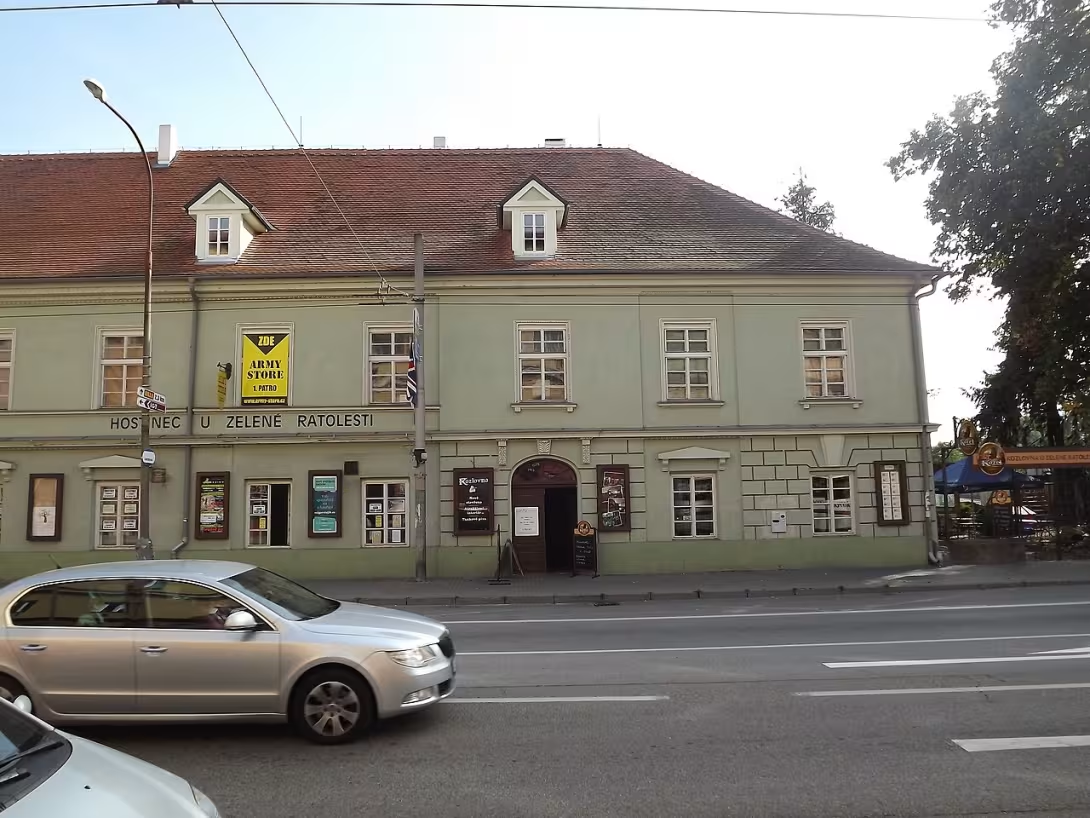

The historical appearance on the left is an AI-generated visualisation and serves as inspiration only.
Historical milestones
- 1763
- A flash-caused inn fire.
- 1821
- Contemporary building built house U Zelené ratolesti.
- 1831
- The classical reconstruction according to the Josef Sandner project is completed.
- 1895
- The house sold to Kobra, later bought the Brothers Zatková.
- 2012
- The operation of the guesthouse and pubs Kozlovna and Plzenka started.
Architectural development
The original ground inn was converted into a three-wing building with an open courtyard on the east side in 1831-1832. There was a inn in the north wing, the west wing was used for horse housing and the south wing was originally used as a wool processing workshop. In the 1920s, the attic floor was rebuilt and roof skylights were created.
Historical events
- 1763
- The inn burned down due to lightning, the first written mention of the object.
- 1831
- The classical reconstruction of the house according to the design of Josef Sandner and Josef Bednář.
- 1859
- Photographer Alexander Seik set up a temporary camera here.
- 1945
- After World War II, the house was used as a residence for South Bohemian Bakeries and Confectionery.
Owners
{'1821-1895': 'Tadeáš Lanna and Vojtěch Lanna starší', '1895-1906': 'KZP', '1906-1909': 'Ludmila Association (part of the land) and the Chamber of Commerce and Industry (part of the land)', 'from 1909': 'Brothers Zátková'}
Points of interest
- The house U Zelené ratolesti was originally a tourist inn that performed this function from its foundation until now.
- The oldest preserved mention of the inn is from 1763 when the house burned down after a lightning strike.
- The house was built in 1821 by Tadeáš Lanna, a member of an important industrial family, and his son Vojtěch Lanna starší had it rebuilt in 1831 according to the plans of architect Josef Sandner.
- The construction was designed with three wings, from which the western was used for housing horses and southern to the wool processing workshop.
Guide
This guide is narrated by a synthetic voice generated by artificial intelligence.
Show guide text
This text was created by artificial intelligence and has not been editorially reviewed. It may contain inaccuracies.
Welcome to České Budějovice, in the heart of South Bohemia. Stop for a second and take a deep breath. You're standing in front of a building called U Zelené ratolesti. Look at her face. You see before you a building that radiates peace, stability and a certain amount of grandeur. It's a place where history meets the present and where every stone tells its own story about the people who lived here, worked and rested.
Let us now look together at how this place was created and what its origin is. The current building you see before you dates back to 1821. But the story of this place began much before this wall was built. Imagine, in the eighteenth century, there was an inn that served passengers as a refuge. Unfortunately, history was cruel to him in 1763. Until then, an older inn was struck by lightning and caused a devastating fire that destroyed the building. This tragic event is the oldest preserved mention of the inn in this place. It's fascinating to think that the beauty that you admire today came from the ashes of the old house.
Then it was time for a fresh start. In 1821 he built a new house Tadeáš Lanna. If you haven't heard of the Lann family, they were very important people at the time, members of a powerful industrial family who left a deep mark in the region. Lanna's family wasn't just about money, it was about vision. They wanted to create a place here that will serve not only for accommodation but also for business.
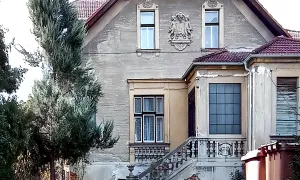
Now pay attention to the architecture itself. Check the front of the building. The house is built in a classical style. Notice the purity of lines, balance and harmony that is so typical of classicism. This style has returned to the principles of ancient, order and reason, which gives the building its timeless character. Ten years later, in 1831, the building was further modified and its classical reconstruction was completed. The architect Josef Sandner was behind this project. He, along with Joseph Bednar, has completed the appearance of the house to this day.
When you look at the building, imagine the house wasn't just a facade. Lanna's family later extended it to the inner courtyard. Why did they do that? The answer lies in the transport system at the time. This court was necessary for horsemen. Imagine the hoof rumbling about the cobblestone, the horse-picking and the loud calling of the cats. At that time the house U Zelené ratolesti was a key point for people on the move, a real touring inn where passengers could relax, change their horses and regain their strength for the next journey.
The house U Zelené ratolesti was not just an ordinary inn. His roles changed over time and evolved along with the city. At some point, it became an important commodity and grain warehouse. Imagine the atmosphere of the nineteenth century when the rooms were filled with the smell of grains and the noise of carrying heavy bags. At that time, the grain was the foundation of wealth and survival, so the house became the center of economic movement. In addition to the warehouse, there were also business offices. It was a place where contracts were made, profit counted, and planned the future of local business. Later the house opened up to culture and served for various cultural events, which gave it a new, social dimension.
In addition to Tadeas Lanna and Vojtěch Lanna starší and Alexander Seik, the key personalities associated with this place were Alexander Seik. Each one of them brought their own chapter to the history of the house. The owner of the building changed over the years. In 1895, the house was sold to Křež, a major company at the time. Later, the Beard Brothers bought the building, who took care of it and maintained its value for future generations.
What about today? If you look around you, you'll see that the house U Zelené ratolesti is still alive and breathing. In 2012 there started the operation of a guest house, which offers accommodation to modern travelers, just like the old horse-hanger. In addition, here you will find two pubs, Kozlovna and Pilsen. It's a beautiful combination of tradition and the present.
Now I want to interest you in one interesting thing that is almost unique these days. Notice the incredible persistence of this place. The house U Zelené ratolesti has performed as an inn since its very foundation until today. Although the regimes were changing, the architecture was changing, the horses disappeared and the cars came, one thing remained the same. This place was designed for hospitality. Whether it was a long journey in the carriage, or a glass of beer in the pub today, it will shelter people and offer them relief from the hustle and bustle of the outside world. This is the real secret of this house - its ability to remain faithful to its mission for over two hundred years.
If you look around now, feel the atmosphere of this place. You're standing in front of a building that survived lightning, fires, changes in owners and changes in the entire city. He's a silent witness to České Budějovice history.
Imagine all the people who went through it. The grain merchants, the ambitious industrialists of the Lann family, the architects who carefully drew his lines, and the thousands of passengers who found a place to stay. It's all encrypted in these walls.
We now invite you to further explore. You can enter, try the hospitality of the guesthouse or have a refreshment in one of the pubs and thus continue the tradition that has been there for centuries. Take a look around, see the details of the classical facade, and let yourself be carried away by the thoughts of a time when horses were rumbling in the yard.
Thank you for accompanying me on this short trip to the history of the U Zelené ratolesti House. I wish you the rest of the day in our beautiful city and enjoy every moment you spend discovering these hidden treasures. Goodbye.
Tips for visitors
{'text': 'Best time to visit the house U Zelené ratolesti is in the summer months, especially in June to September. The outdoor environment of the inn is full of life, there are often cultural events or outdoor seating. In winter it offers a cozy atmosphere with the possibility to taste traditional Czech specialities near the fireplace. It is recommended to avoid weekends in the main tourist season when it can be a busy place.'}
{'text': 'The house is accessible by car and public transport. Parking is possible in the vicinity, but parking can be limited in the city centre. It is recommended to use public transport, in particular trams or buses, which stop nearby. The current connection and availability of parking lots can be found in the map search engine or on the official city website. There are cycling trails nearby that are suitable for cyclists.'}
{'text': 'When visiting, wear comfortable clothes and shoes because the building and the surrounding area offer the possibility of walking around the historic centre. In the summer months it is advisable to carry sunglasses, hat or umbrella. If you are planning to photograph, do not forget enough memory or external disk because historical interiors and facades are very photogenic. For quality images we recommend using natural light, especially morning or afternoon.'}
{'text': 'Photography is allowed, but always follow the rules given on the spot. The best places for photos are the facade of the house, interiors with historical furniture and outdoor areas with stone tiles. For interesting pictures we recommend to photograph the building at sunset when light creates beautiful shadows and illuminates the facade details. In the interior avoid flashing of lightning to avoid damaging historical objects.'}
{'text': 'There are several interesting places around the house U Zelené ratolesti that are worth visiting. For the first stop you can choose the Hus class, where you can walk through the historical development and admire architecture. A little further away, about a kilometer from the location, is the České Budějovice Castle, which offers a rich museum and exposition. For a short walk it is also advisable to visit the Long Bridge, which is about half a kilometer away and offers beautiful views of the Vltava River.'}
{'text': For families with children a visit to the house U Zelené ratolesti is very suitable. Children can see historical spaces and there are often special programs or workshops focused on children. Other attractions, such as České Budějovice Castle, where children can visit interactive exhibitions can be visited in the surroundings. For a longer stay it is advisable to use the outdoor area near the house where children can play and explore the surroundings. It is also recommended to visit the Husova class where there are several small shops and cafés where children can relax. '}
For kids
Imagine going back 205 years to a time when the world wasn't as fast and sparkling as it is today. The place where the beautiful historical construction U Zelené ratolesti was located was still quite quiet.
It was like in a game when you were little and you had a whole town in front of you that you didn't know. And it was in this building that there was an inn where people would meet on Tuesdays and drink wine until morning. The house was full of life history because everyone who came here had their own story.
Businesses nearby
Do you run a restaurant, accommodation, shop, museum, rental, wellness or other visitor service near this monument? Show yourself directly to the people heading to it — this is how they will see you in the app and on the web:
Events nearby
Zdroj akcí: otevřená data měst a obcí ČR (Národní katalog otevřených dat) a kalendář akcí Národního památkového ústavu.
Nearby
{'sights': [{\ 'name': 'Hus', 'distance': 'around', 'description': 'Main street of the Czech Budejovice with historical buildings.'}, 'name': 'České Budějovice castle', 'distance': 'cca 1 km', 'description': 'Castle complex with museum and exhibitions'.}, 'name': 'Long bridge', 'distance': 'cca 0,5 km', 'description': 'Historic bridge through the 19th century'; 'natural elements': [{'name': 'Vltava', 'distance': 'cca 0,5 km', 'description': 'River flowing through the city']}}}}}}}}}
Accommodation nearby
Trips and activities nearby
Guided tours, tickets and activities nearby from GetYourGuide
Affiliate link: if you buy from the partner, we may receive a commission. The price for you does not change.
Search tours and activities →Themed route
U Zelené ratolesti Type: Historical building / Main destination Why is it worth a visit: This memorial plate or house resembles a specific chapter of local history and serves as a starting point for exploring the centre. It is an ideal place to meet the local context before starting the walk.
Hus class Type: Historical street Why is it worth a visit: It is the main artery of the city with a rich historical development that allows to admire architectural details directly from the sidewalk. Walking this street is a key element in understanding urban development.
Long bridge Type: Historical construction / Bridge Why is it worth a visit: This historic bridge over the 19th century Vltava offers amazing views of the river and surrounding region. It is only about 0.5 km from the main destination, which makes it an easy point for shooting and rest.
Czech-Budějovice Castle Type: Castle complex / Museum Why is worth a visit: The complex with museum and exposition represents the culmination point of the route where the history of the region can be explored further. It is located about 1 km from the main destination, which allows a balanced length of the whole trip without undue haste.
Vltava Type: Natural element / River Why is worth a visit: The river forms a natural axis of the landscape and complements the atmosphere of walking around the bridge. Its presence softens the impression of the historical development and provides space for relaxation during the journey.
Seasonal recommendations
In spring the house U Zelené ratolesti wakes up together with the surrounding nature. The soft sunlight highlights the details of the historical facade and the surrounding greenery starts to attract fresh colors, which perfectly matches the name of the sights. It's the perfect time for a quiet observation of architecture in the fresh air. We recommend you take layered clothes because the morning temperatures may still be low. The best place to visit is in the morning, where the air is the cleanest and the traffic is still mild.
The summer season brings intense sun to České Budějovice and a lively, hot atmosphere. Shadows playing on the walls of the house create interesting visual effects that are ideal for photography. In the main summer season there are more people around, so it is advisable to arrive either very early in the morning or in the late afternoon when the temperature falls. Dress lightly, choose comfortable shoes and don't forget to protect yourself from the sun.
Autumn moons give the monument a nostalgic and peaceful touch. The golden colours of leaves and morning fog in the streets create a magical scene that perfectly complements the historical character of the house. The light is low and very photogenic in this period. For a comfortable tour, prepare your coat and scarf as the temperatures decrease quickly in the afternoon. It's the best time for those who seek solitude and want to avoid crowds.
In winter the house is quiet and quiet, especially when the surrounding area is covered with snow. Short day and dim lighting highlight the historical depth of the building and its shady corners. In advent time, the atmosphere is strange and cozy. Because of the cold, it is necessary to wear a very warm jacket, gloves and a hat. Plan a visit on clear days, but count on the shorter opening times in winter.
Visualizations and artistic views


The visualisations are generated by artificial intelligence and serve as inspiration.
Photos from the area
Real photos taken near the monument


Zdroj a licence jsou uvedeny u každého snímku.
Atmosphere of the place
This atmospheric visualisation of the place and period was generated by artificial intelligence. It is not real footage of the location.
Tips from visitors
No tips yet. Be the first!
Log in and add your tip.
Sources and literature
Fotografie: JAn Dudík / CC BY-SA 3.0, rozlišení zvýšeno umělou inteligencí — Wikimedia Commons. The author and licence also appear when you hover over the image.
Faktickým podkladem tohoto textu byl článek na Wikipedii, jehož autory jsou přispěvatelé Wikipedie. Článek je dostupný pod licencí CC BY-SA 4.0.
Location on the map


Příběhy a pověsti
Legendy, pověsti a příběhy spjaté s touto památkou
Fotografie návštěvníků
Zatím žádné fotografie. Buďte první, kdo přidá fotografii z návštěvy!
Přihlaste se a přidejte svou fotografii nebo hodnoťte.
Za ověřenou návštěvu v aplikaci získáte víc bodů — poznáme podle GPS, že jste na místě.
Reviews and comments