






Hřbitov svaté Otýlie Cemetery
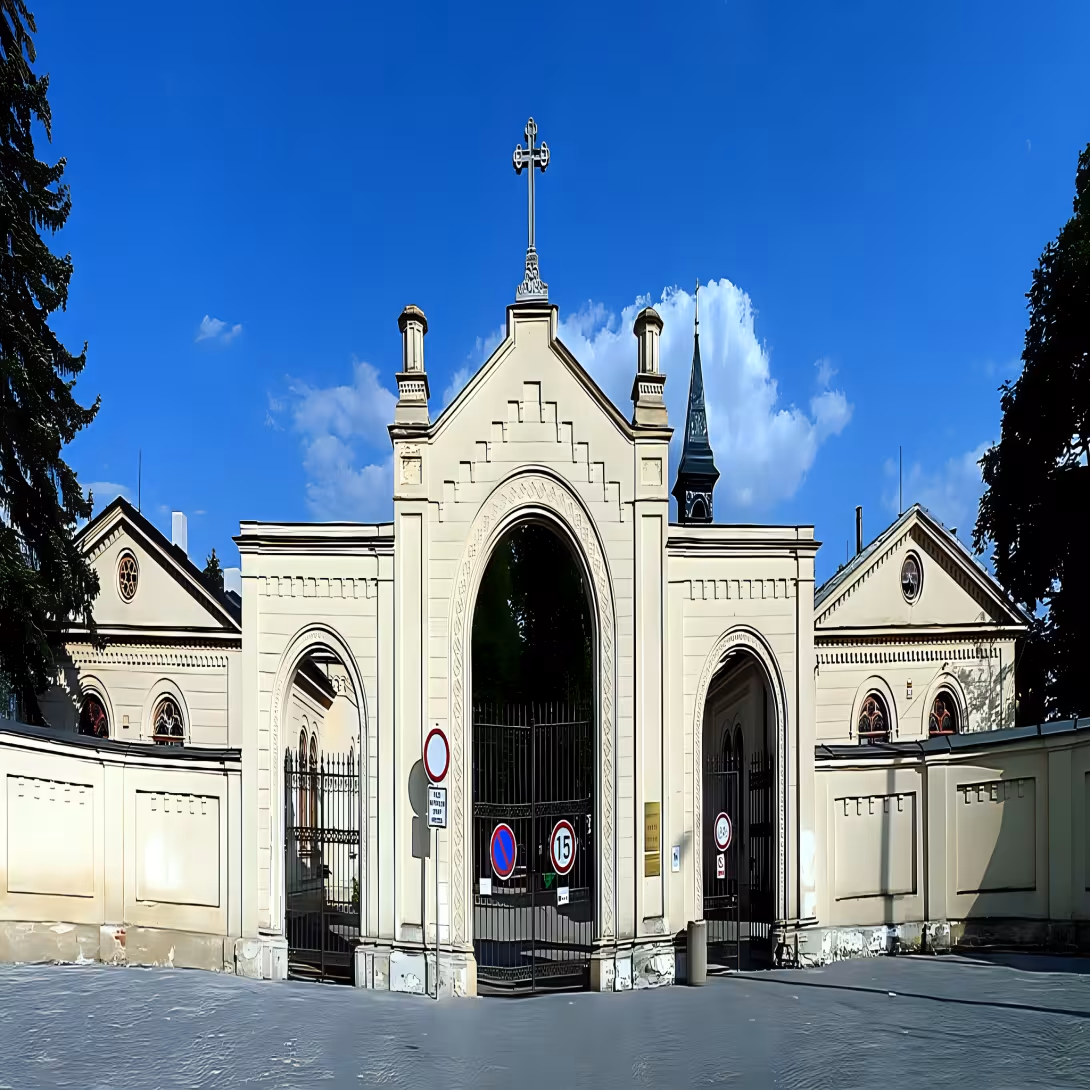
Hřbitov svaté Otýlie is the primary cemetery in České Budějovice, situated near Pražská třída at the edge of Pražské předměstí. Established in 1887 and consecrated in 1889, this historical landmark houses the graves of prominent cultural, political, and religious figures.
Jakob Stabernak directed the construction of the cemetery at a cost of 80,000 zl. It was officially consecrated on April 22, 1889, by Bishop Martin Josef Říha, with the first funeral taking place that same day. Initially, the cemetery symbolized the growing cultural and intellectual life in České Budějovice.
The site features several notable structures, including a crematorium and the kaple svaté Otýlie. In 1891, Mayor Josef Kneissl modified the existing ceremonial hall into the kaple svaté Otýlie to honor his deceased wife, Otýlie. The cemetery has undergone expansions and renovations over time, including the construction of an earlier crematorium between 1923 and 1925, and the current crematorium, built between 1975 and 1980. Both structures are protected as cultural monuments of the Czech Republic.
The cemetery spans 11.5 hectares and contains approximately 15,500 graves. It is the final resting place for a wide range of notable individuals, including composer Bohuslav Jeremiáš, painter Otto Matoušek, and factory owner and former mayor Johann Stegmann. Political figures interred here include August Zátka, Wendelin Rziha, Otakar Svoboda, Josef Taschek, and Albín Dlouhý. French philosopher and resistance member Pierre Kaan is also buried on the grounds.
The cemetery reflects the religious history of the area through specific burial sections. In section VIII lies the tomb of the České Budějovice bishops, including Martin Josef Říha, Josef Antonín Hůlka, Šimon Bárta, Josef Hlouch, and Jiří Paďour. Adjacent is a section for priestly graves, containing canons of the České Budějovice chapter, various priests such as writer Tomáš Koupal, and Cistercians Gerhard Nýdl and Vojtěch Ivo Kvapil. The site also features a tomb for the Redemptorist congregation, housing priests and lay brothers from the local Redemptorist college, including the 11th Bishop of České Budějovice, Antonín Liška. Additionally, there are sections for members of the Školských sester de Notre Dame.
In the 1960s, a scattering meadow was established on the grounds. Today, the cemetery remains a vital historical site that preserves the legacy of the region's most influential citizens. Visitors can explore the diverse history of České Budějovice through its many monuments and graves.
Then and now
Drag the slider to compare how the landmark may have looked when it was built with the view today.
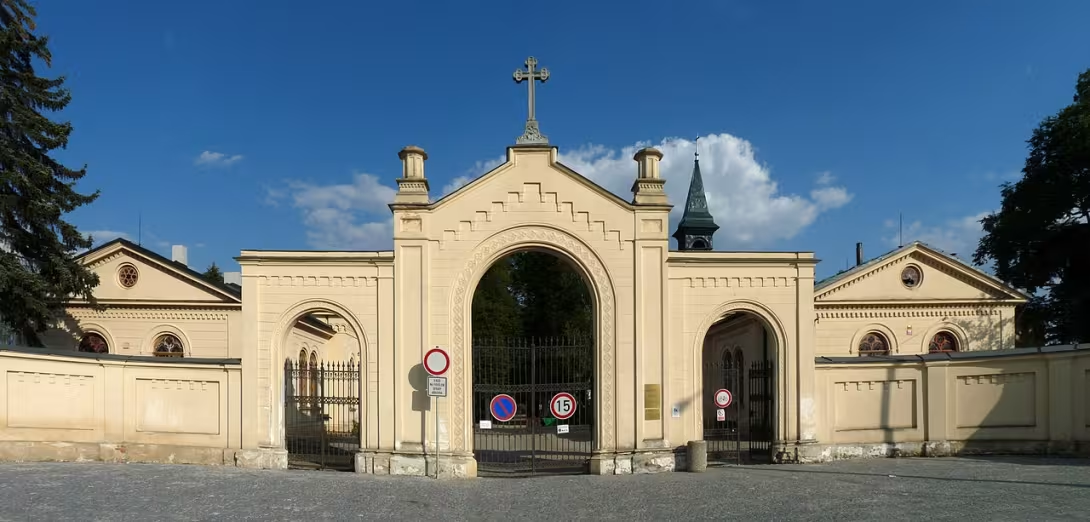
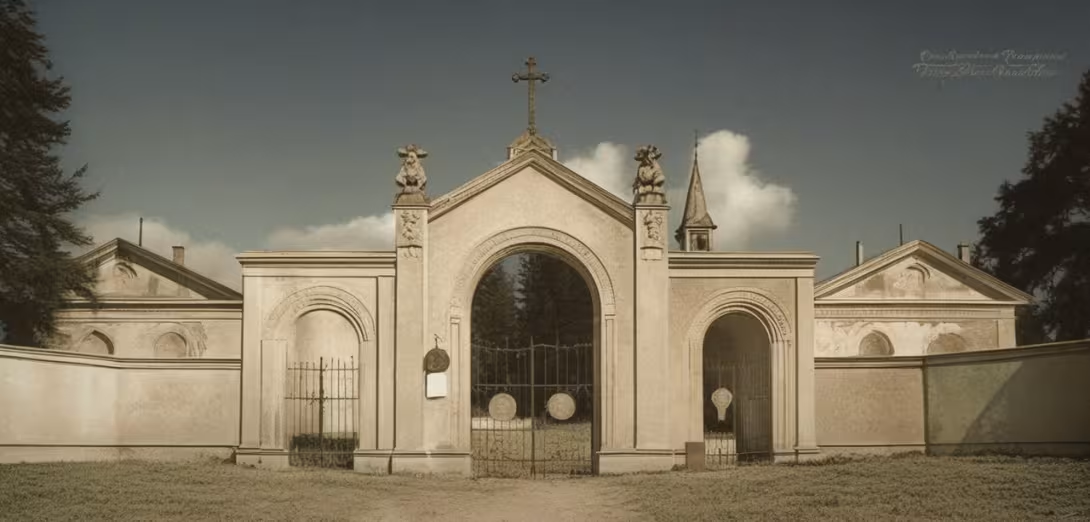
The historical appearance on the left is an AI-generated visualisation and serves as inspiration only.
Historical milestones
- 1887
- Establishment of Hřbitov svaté Otýlie
- 1889
- Official consecration of the cemetery by Bishop Martin Josef Říha
- 1891
- Ceremonial hall modified into kaple svaté Otýlie
- 1923
- Construction of the first crematorium begins
- 1960
- Establishment of a scattering meadow on the grounds
- 1975
- Construction of the current crematorium begins
Architectural development
The cemetery has undergone several expansions and renovations throughout its history, with notable additions including the krematorium and kaple svaté Otýlie.
Historical events
Founding in 1887
Consecration on April 22, 1889
Expansion and renovation over the years
Points of interest
– Established in 1887 and consecrated in 1889, this historical landmark houses the graves of prominent cultural, political, and religious figures.
– The cemetery was officially consecrated on April 22, 1889, by Bishop Martin Josef Říha, with the first funeral taking place that same day.
– Initially, the cemetery symbolized the growing cultural and intellectual life in České Budějovice.
– The site features several notable structures, including a crematorium and the kaple svaté Otýlie.
Guide
Show guide text
This text was created by artificial intelligence and has not been editorially reviewed. It may contain inaccuracies.
Welcome to Hřbitov svaté Otýlie. As you stand here at the entrance, take a moment to settle into the atmosphere of this place. You are standing before one of the most significant historical landmarks in České Budějovice, a site that serves as a profound bridge between the living and the many generations that have shaped this city. As you prepare to walk through these grounds, feel the weight of the history surrounding you. This is not merely a cemetery; it is a silent archive of the cultural, political, and religious life of the region.
To understand the significance of what you see, we must look back to the late nineteenth century. The story of Hřbitov svaté Otýlie began in 1887, a time when the city was evolving and required a dedicated, formal space for its citizens to honor their departed. This was a period of great transition, and the establishment of this cemetery was a major milestone for the community. The site was not officially consecrated until April 22, 1889, in a ceremony led by Bishop Martin Josef Říha. This official consecration marked the beginning of the cemetery's life as a sacred ground, a place where the spiritual and the communal would meet for over a century.
As you begin to move through the grounds, I invite you to pay close attention to how the architecture and the layout of the site have evolved over time to meet the changing needs of the people of České Budějovice. Notice how the structures around you reflect different eras of history. For instance, one of the most important architectural shifts occurred in 1891, when the original ceremonial hall was modified to become the kaple svaté Otýlie. This transformation changed the way people gathered for services, moving from a functional hall to a dedicated space for prayer and remembrance.
As you continue your walk, you will notice that the cemetery has also adapted to the modern era. The way we honor the dead has changed significantly over the last hundred years, and Hřbitov svaté Otýlie has been at the forefront of these changes. The history of the site is marked by the introduction of cremation, a practice that began to take root here in 1923 with the construction of the first crematorium. This was a major step in the modernization of funerary traditions. Later, in 1975, the construction of the current crematorium began, further solidifying the site's role as a central place for all forms of remembrance. Even the landscape itself has been thoughtfully adapted; in 1960, a scattering meadow was established on the grounds, providing a more natural and serene setting for reflection.
Now, as you wander deeper into the paths, I encourage you to look closely at the names that are etched into the stones around you. This cemetery is the final resting place for many of the most notable individuals who once walked the streets of České Budějovice. It is a pantheon of talent and leadership. You are walking among the graves of composers, artists, politicians, and members of the clergy—people who left an indelible mark on the culture of this land.
Among those who rest here, you might find the names of influential figures such as Bohuslav Jeremiáš, Otto Matoušek, and August Zátka. These are individuals whose lives contributed to the intellectual and artistic fabric of the community. You may also encounter the resting places of Wendelin Rziha, Otakar Svoboda, and Josef Taschek. The presence of figures like Albín Dlouhý, Johann Stegmann, and Pierre Kaan reminds us that this ground has hosted a diverse array of personalities, from religious leaders to prominent citizens, all brought together in this shared space of peace. Each grave tells a story of a life lived, a contribution made, and a legacy left behind for us to contemplate today.
As you walk, consider the fascinating evolution of this place. It is rare to find a single location that so clearly demonstrates the shift from the traditional, formal religious customs of the late 1800s to the more modern, diverse practices of the twentieth century. From the solemn consecration by Bishop Martin Josef Říha to the establishment of the peaceful scattering meadow in 1960, Hřbitov svaté Otýlie has remained a constant, even as the world around it changed. There is a certain mystery in how these different eras coexist—the old ceremonial structures standing alongside the modern facilities, all unified by the same sense of quiet dignity.
Please, take your time. There is no rush. As you move from one section to another, let the silence of the cemetery guide your thoughts. Whether you are drawn to the historical significance of the kaple svaté Otýlie or the quiet beauty of the scattering meadow, every corner of this landmark offers something to reflect upon.
As you conclude your visit to this part of České Budějovice, I invite you to continue your exploration of the city, carrying with you the sense of history and continuity you have experienced here. Thank you for joining me today at Hřbitov svaté Otýlie. May your walk through these grounds be a peaceful and thought-provoking one.
Tips for visitors
The best time to visit Hřbitov svaté Otýlie is during the spring or autumn, when the weather is mild and the scenery is particularly beautiful. Visitors can take a leisurely stroll through the cemetery's serene atmosphere.
Parking is available near the cemetery, with ample space for cars and buses. Alternatively, visitors can use public transportation, such as buses or taxis, to reach the site.
Visitors are encouraged to bring comfortable walking shoes, as well as a camera to capture the beautiful architecture and monuments. A map of the cemetery's layout is also recommended to help navigate the grounds.
Some of the best spots for photography include the main entrance, where visitors can capture the stunning architecture, as well as the various monuments and mausoleums throughout the cemetery. The golden hour, just before sunset, is particularly ideal for capturing beautiful light.
For families with children, there are several nearby attractions that offer a fun and educational experience. The South Bohemian Museum in České Budějovice is approximately 30 minutes away by car or public transportation.
Businesses nearby
Do you run a restaurant, accommodation, shop, museum, rental, wellness or other visitor service near this monument? Show yourself directly to the people heading to it — this is how they will see you in the app and on the web:
Events nearby
Zdroj akcí: otevřená data měst a obcí ČR (Národní katalog otevřených dat) a kalendář akcí Národního památkového ústavu.
Accommodation nearby
Trips and activities nearby
Guided tours, tickets and activities nearby from GetYourGuide
Affiliate link: if you buy from the partner, we may receive a commission. The price for you does not change.
Search tours and activities →Themed route
St. Otýlie Cemetery Tour
This tour takes you through the charming town of České Budějovice and its surrounding attractions, with the main highlight being the Hřbitov svaté Otýlie (St. Otýlie Cemetery).
Stop 1: St. Otýlie Cemetery The cemetery is a must-visit due to its unique blend of architectural styles and tranquil atmosphere. Take a moment to admire the beautiful chapels, mausoleums, and ornate headstones.
Stop 2: České Budějovice Town Square Walk off the cemetery grounds and into the heart of town at České Budějovice Town Square. Admire the stunning Renaissance-era architecture, including the iconic Town Hall building.
Stop 3: Vltava River Embankment Take a leisurely stroll along the picturesque Vltava River Embankment, offering breathtaking views of the river and surrounding cityscape. This is a great spot to relax and take in the sights.
This tour provides a unique glimpse into the history, architecture, and natural beauty of České Budějovice, with the St. Otýlie Cemetery serving as the main attraction.
Seasonal recommendations
Spring
As you visit the historic cemetery of St. Otýlie in České Budějovice, spring brings a serene atmosphere with blooming flowers and lush greenery. The mild weather makes it an ideal time to stroll through the grounds, taking in the beauty of the surroundings. Be prepared for moderate crowds, especially on weekends.
Practical tips: Wear comfortable shoes and clothing suitable for the season. Aim to visit early in the morning or later in the afternoon to avoid peak hours.
Summer
During the summer months, the cemetery takes on a lively atmosphere with warm sunshine and gentle breezes. The lush greenery is in full bloom, creating a picturesque setting. Be prepared for larger crowds, especially during weekends and holidays.
Practical tips: Arrive early to beat the heat and avoid peak hours. Wear sunscreen, a hat, and comfortable clothing. Consider visiting during the week or off-peak hours for a more peaceful experience.
Autumn
As autumn arrives, the cemetery takes on a warm, golden hue with the changing leaves. The cooler weather makes it an ideal time to visit, with fewer crowds compared to the summer months. Take in the beauty of the fall foliage and enjoy the tranquility of the surroundings.
Practical tips: Wear layers for comfortable temperatures. Aim to visit during weekdays or early mornings to avoid peak hours. Bring a camera to capture the stunning autumn colors.
Winter
During the winter months, the cemetery takes on a serene atmosphere with snow-covered gravestones and a peaceful silence. The cooler weather makes it an ideal time to visit, with fewer crowds compared to the summer months. Be prepared for shorter opening hours and potentially icy paths.
Practical tips: Wear warm clothing, including gloves and a hat, to stay comfortable. Arrive early or later in the day to avoid peak hours. Consider visiting during weekdays for a more peaceful experience.
Visualizations and artistic views


The visualisations are generated by artificial intelligence and serve as inspiration.
Photos from the area
Real photos taken near the monument


Zdroj a licence jsou uvedeny u každého snímku.
Tips from visitors
No tips yet. Be the first!
Log in and add your tip.
Sources and literature
Fotografie: Czeva / CC BY-SA 3.0, rozlišení zvýšeno umělou inteligencí — Wikimedia Commons. The author and licence also appear when you hover over the image.
Faktickým podkladem tohoto textu byl článek na Wikipedii, jehož autory jsou přispěvatelé Wikipedie. Článek je dostupný pod licencí CC BY-SA 4.0.
Location on the map


Příběhy a pověsti
Legendy, pověsti a příběhy spjaté s touto památkou
Fotografie návštěvníků
Zatím žádné fotografie. Buďte první, kdo přidá fotografii z návštěvy!
Přihlaste se a přidejte svou fotografii nebo hodnoťte.
Za ověřenou návštěvu v aplikaci získáte víc bodů — poznáme podle GPS, že jste na místě.
Reviews and comments