



Fara (Horní Pěna) Parish house
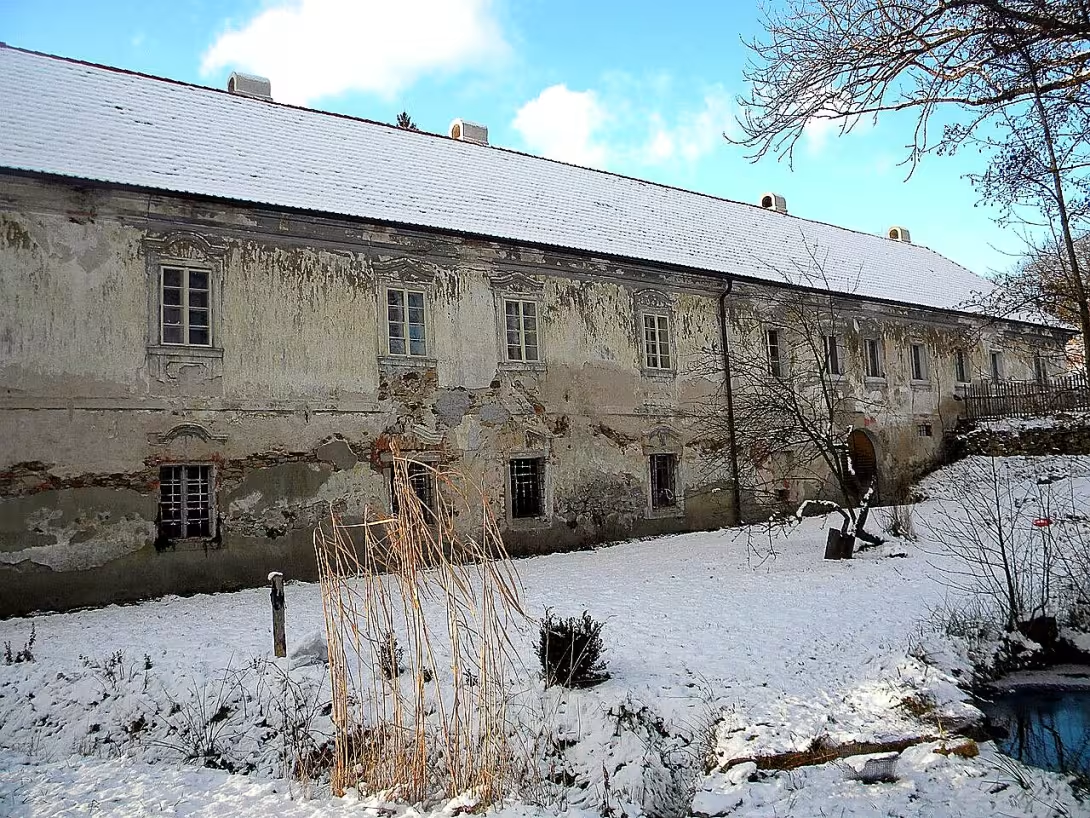
Farms in Upper The foam is a Baroque building built in the 16th century, located north of St. Michael's Church and is one of the cultural monuments of the Czech Republic since 1963. This parish is an important historical monument thanks to architectural value, rich history and location in the village Horní Pěna.
The formation of the parish dates back to the 16th century, when it was built as a seat of the Roman Catholic parish. This timeframe corresponds to cultural and religious changes in Europe, where construction was transformed into a baroque style. The first Baroque reconstruction of the rectory took place in 1732, which was the beginning of a series of modifications and extensions which continued in the following centuries. These changes reflected the architectural taste of time and the need to adapt buildings to new features.
The architecture of the rectory is characteristic of Baroque style with elements from later periods. The residential building is a storey two-wing structure with saddle roofs that were restored in 2010. The interior attracts the wealth of detail: rolled vaults with sections, monastic and cross vaults on the ground floor as well as flat ceilings on the first floor. The floors are proud of authentic carpentry products and stucco mirrors that provide space for elegance and historical depth. Classicist doors with original forging in the northeast room add another layer to the history of the building.
The history of the rectory is enriched by a number of key events and changes in ownership. After the first Baroque reconstruction in 1732, further modifications took place in the 18th and 19th centuries, which formed both external and internal elements of the building. In 2003, a subsidy was granted for the necessary repairs to the site, indicating a continuing interest in the conservation of cultural heritage. Since 2010, the rectory has been privately owned, which represents a new chapter in the administration and care of this historical object.
Today, the rectory boasts its rich heritage despite some problems such as draining and stale plaster. The area with a large economic court, barn, stables, and now collapsed stables attracts its historical value and aesthetics. The garden with a wooden gazebo and a fenced wall around it gives the area peace and authenticity, which are increasingly appreciated in the fast world.
Farms in Upper Foam is not only a monument to architecture, but also a witness of many generations and changes. Its history and status represent a challenge to preserve cultural heritage for future generations. Visiting this rectory offers a unique opportunity to dive into the past and appreciate the wealth of history that is preserved in its walls. It is a place where every detail talks about the importance of the monument not only for the village Horní Pěna, but also for the whole Czech history.
Historical milestones
- 1963
- The rectory was registered as a cultural monument.
Architectural development
Originally built in the 16th century, the rectory underwent Baroque reconstruction in 1732 and subsequent modifications in the 18th and 19th centuries. The interior contains carpentry products and stucco mirrors, while the external elements come from the same period.
Historical events
- 1732
- The first Baroque reconstruction of the rectory.
- 1963
- The rectory was registered as a cultural monument.
Points of interest
- The rectory of the Upper The foam is a baroque building built in the 16th century. - This parish is one of the cultural monuments of the Czech Republic since 1963. - The first Baroque reconstruction of the rectory took place in 1732, which was the beginning of a series of modifications and extensions. - The interior of the rectory attracts the wealth of detail: rolled arches with sections, monastic and cross arches on the ground floor. Since 2010, the rectory has been privately owned.
Guide
Show guide text
This text was created by artificial intelligence and has not been editorially reviewed. It may contain inaccuracies.
Welcome to Upper Foam. You are standing in front of one of the most important and oldest building units in this part of the landscape. Before you go any further, I suggest you stop for a moment, soak up the atmosphere of this place and let your eyes look at the building right in front of you. Feel the calm that exists here, and try to imagine how many generations of people have stood in this place just as you have now. This building is not just a cluster of walls and roofs, it is a living witness to history that carries a print of centuries.
The view of this building will immediately transfer you to other times. Her story is not short and its roots go deep into the past, until the sixteenth century. This was the era when the world around you moved much slower and when the role of the Church in the everyday life of the people was absolutely crucial. This building was originally built as a residence for the Roman Catholic parish. Imagine this place as the spiritual and administrative center of the village, where people came together, where the most important issues of the village were dealt with and where the life rhythm of the entire area was formed. Fara was the heart of the community, home to the people who served here and who were associated with faith and with every resident around.
If you look at the very form of the building now, you will see that its appearance is not uniform, but it is the result of a long process of transformation. Although its beginnings date back to the sixteenth century, what you see today as the main character of this building is associated with much later times. A very important break, which fundamentally changed the face of this place, was the year seventy-two eighteenth century. That's when the first great Baroque reconstruction took place. This moment was the beginning of a series of important modifications and extensions that gave the building its current, richer and more representative appearance. This reconstruction was a sort of new breath that came into the original, probably simpler building, new aesthetics, elegance and sense of grandeur, which is so typical of this style.
Now pay attention to the architecture of the residential building that is right in front of you. Notice the structure. It's not just a simple, unified block, but the building consists of two wings. This twofold structure gives the whole some balance and stability. The building has two floors, which gives it importance and dimensions. Above these wings is a classic saddle roof which is typical of this area and which gives the construction its traditional, solid appearance. The whole of this object is very impressive, and it is clear that it was designed to inspire respect and reflect the importance of the office that was based here.
But when you look away from the living building itself, you will see that the rectory was not just a home for the clergymen, but it was also an important economic unit. The whole area includes a large economic court, which in the past was an inseparable part of life in this place. There is a space around the house that used to provide the needs of the whole parish. You can see the barn and the stables here. Unfortunately, some parts of this area, such as the former stables, are now only in ruins. Even though these parts seem sad and lonely today, they still have the impression of earlier life and work. These ruins remind us of the timeliness of time and how people's needs changed and how the way in which they lived and worked in this place changed.
If you decide to enter the interior of the residential building later, prepare to be welcomed by a wealth of details that are not visible from the outside. The inside of the rectory is a real treasure. On the ground floor and on the first floor you can encounter various vaults, which are a very important architectural element. They are rolled arches with beautiful sections that create a sense of tonnage and nobility. These shapes that hover over your heads are evidence of the mastery of the builders at the time and the effort to ensure that the inner spaces reflect the importance of the place.
Although our records failed to retain the names of the particular architects who designed this building, nor the names of the famous figures who lived here, this confidentiality has its own weight. But instead of names, there is a history of people themselves. Every stone, every arch, and every wall here bears a trail of those who served here, worked and lived. They were people who shaped life in the Upper Foam, even though we don't know their names anymore. But this anonymity allows us to perceive the place as a whole as a link between the past and the present.
There is also one interesting thing that may interest you. It's just the constant transformation this building's been through. Imagine the contrast between the original, probably much simpler, 16th century construction and the subsequent flowering in the eighteenth century. The Baroque reconstruction in seventy-two was like a new breath revived the whole place and changed its character from a simple mansion to a representative building. It is a fascinating example of how architecture adapts to new times and how different centuries and different views of beauty and utility are mixed in one place.
This building is very valuable to all of us. It is because since the year one thousand nine hundred sixty-three this rectory has been officially registered as a cultural monument. This status reminds us that we are looking at something that is worth not only to this community, but to our entire country. It's part of our common heritage, which we have a duty to protect and preserve for those who come after us.
Now I'm just letting you enjoy this view in peace and feel the atmosphere of this place. Look at the yard, look at the details of the building and try to imagine what this place looked like hundreds of years ago when it was full of life, work and spiritual peace. Thank you for choosing to visit this memory and devote your time to its knowledge. We wish you a pleasant further walk through the history of the Upper Foam.
Tips for visitors
The best time to visit is early morning or shortly before sunset, when the Baroque elements of the building best excel in natural light.
Due to the emergency condition of the building, we recommend that you take with you fixed shoes and take care when moving on the premises.
The view of the farm yard and details of the Baroque facade are most suitable for photography, especially in the afternoon.
We recommend very careful movement on the premises to families with children due to the potential risk of falling apart.
Frequently asked questions
Can the monument be visited?
This is a residential or farm building, not a museum with opening hours. Please view it from public space and respect the owners' privacy. We have no information about access to the interior. According to the heritage register the structure is in poor condition – do not enter it and take care nearby.
Where is the monument?
Location: Horní Pěna, Jihočeský kraj. The map on this page shows the exact spot.
Why is the monument protected?
It is listed in the Central List of Cultural Monuments of the Czech Republic as a cultural monument (register no. 1000143596).
Businesses nearby
Do you run a restaurant, accommodation, shop, museum, rental, wellness or other visitor service near this monument? Show yourself directly to the people heading to it — this is how they will see you in the app and on the web:
Events nearby
Zdroj akcí: otevřená data měst a obcí ČR (Národní katalog otevřených dat) a kalendář akcí Národního památkového ústavu.
Nearby
🏰 Historic sites (96)
- Čmelák Z 37 3.7 km
- pomník dosídlení českým obyvetelstvem 4.0 km
- sv. Jan Nepomucký 4.8 km
- Muzeum Čs. armády 1938 4.9 km
- Adolf Kauder 4.9 km
- Marie Schulhofová 4.9 km
- Hermina Fantlová 4.9 km
- Rudolf Fantl 4.9 km
- Pavel Fantl 4.9 km
- Otto Fantl 4.9 km
- František Schulhof 4.9 km
- Jiří Schulhof 4.9 km
- Hrad a Zámek Jindřichův Hradec 4.9 km +420 384 321 279 web
- Sousoší Nejsvětější Trojice 5.0 km
- Dům gobelínů 5.0 km
- Muzeum Jindřichohradecka 5.0 km
- Muzeum Jindřichohradecka 5.0 km
- Jiří Winternitz 5.0 km
- Winternitzová 5.0 km
- Márcela Schonová 5.0 km
🍽️ Restaurants and dining (125)
- Kiosek 1.4 km
- Hospůdka U Bílků 1.4 km
- Hospoda Kačlehy 2.6 km +420 723 726 087 web
- Moto hospoda U Kadajče 3.3 km web
- Bistro startovací věž 3.4 km
- Hostinec U Kolísků 3.6 km
- KFC 3.7 km
- Hříbek 3.8 km
- Jazz bar Satchmo 3.9 km
- Dobré Časy 4.0 km web
- Herna bar Gladiátor 4.2 km
- Na cihelně 4.2 km
- Restaurace Hvězdárna 4.3 km
- Piketa 4.4 km Na Piketě 912
- McDonald's 4.4 km +420 720 937 847 web
- U Václava 4.4 km
- U Černého čápa 4.4 km web
- Netopýr 4.5 km
- Pivnice Kufr 4.5 km
- Výletní restaurace Rudolfov 4.6 km Nežárecká 121 +420 737 590 292 web
🏨 Accommodation (80)
- Malíkovský dvůr 2.4 km +420 777 298 506; +420 602 337 836 web
- U Hesů 4.3 km
- Hana 4.9 km
- U Tkadlen 4.9 km
- U Tkadlen 4.9 km
- hotel Vajgar 4.9 km
- Cyklopenzion Kasper 4.9 km
- Concertino 4.9 km
- Bílá paní 4.9 km
- Stará škola 4.9 km web
- Bílá paní 5.0 km
- U Muzea 5.0 km
- Autocamp Jindřiš 5.0 km
- Penzion Na 15. poledníku 5.1 km +420 775 222 223 web
- IGA 5.1 km
- Měšťan 5.1 km
- Wellness Penzion LIFE 5.1 km
- Penzion Měšťan 5.1 km
- Nežárka 59 5.1 km Nežárecká 59 web
- Pension Švejk 5.1 km
🚲 Rentals and sport (13)
- Cycle experts 3.2 km web
- Cyklo & Ski Galík 3.8 km sídliště Vajgar 920 web
- Sportisimo 4.0 km
- VK Vajgar 4.8 km
- Author 5.0 km
- SPORTRELAX JH s.r.o. - sportovní areál 5.0 km
- Sportovní vybavení - Ivan Šot 5.2 km
- Alfa Sport 5.3 km
- Fitko Eden 5.3 km
- TJ Slovan, Jindřichův Hradec 5.3 km
- sokolovna 9.4 km
- Kuželkárna 10.2 km
- Přírodní Koupaliště 11.1 km
🥾 Hiking and nature (140)
- Vodní želvy 0.6 km
- Kočka rybářská 0.6 km
- Suchozemské želvy 0.6 km
- Papoušci 0.6 km
- Vydra malá 0.6 km
- Skunk 0.6 km
- Surikaty 0.6 km
- Oslové 0.7 km
- Dikobrazi 0.7 km
- Velbloud dvouhrbý 0.7 km
- Pštrosi 0.7 km
- Hyeny 0.7 km
- Mývalové 0.7 km
- Lamy 0.7 km
- Sovy 0.7 km
- Pumy severoamerické 0.7 km
- Kozy, ovce, lamy 0.7 km
- Lvi 0.8 km
- Hrádeček 0.9 km
- Suchý vrch 1.1 km
Accommodation nearby
Themed route
Travel Route from Upper Peña
1. Main objective: Fara (Horní Pěna) Type: Historical building Why is worth a visit: This parish is a representative of Baroque architecture in the region, offering interesting interiors and the history of the local church. It is an ideal place for those who want to know more about the spiritual life of the village.
2. Municipal Office Horní Pěna Type: Administrative building Why is worth a visit: The Municipal Office is not only a centre of local administration, but it can also be an interesting place for those who want to know more about everyday life and the organisation of a small community. There are sometimes cultural events or exhibitions.
3. Municipal School Horní Pěna Type: Educational equipment Why is it worth visiting: Visiting a municipal school can be fun, especially if you have children. There are often events for the community or exhibitions of children's art and creativity. It's also a good opportunity to learn local school life.
4. Municipal sports grounds Horní Pěna Type: Sports equipment Why is it worth a visit: The municipal sports grounds are an ideal place for those who want to enter the life of the village. Here are held various sports events and competitions, offering an opportunity to observe or even participate in local sports activities.
5. Municipal Park Horní Pěna Type: Green Zone Why is worth a visit: The municipal park is a place of peace and relaxation where you can enjoy the nature and beauty of the surrounding region. It is ideal for a picnic or just for a moment of rest in green.
This route offers visitors the opportunity to get to know Upper Foam and its key rooms, which allows a deeper view of life in a small Czech village.
Seasonal recommendations
Spring: In the spring season, the rectory in Upper Peña will turn into a special place where the sun lights up the old shards and nature begins to bloom again. Green leaves and flowering shrubs give life to the memory, while the warm wind carries the fragrant breath of spring flowers. This time of year is ideal for long walks around historical walls and exploring the surrounding region. We recommend visiting the morning when the temperature is pleasant and the crowds are less. Don't forget light clothes with a handkerchief for cool spring winds.
Summer: In summer, the rectory in the Upper Peña gains an atmosphere full of life and light. Sun rays illuminate every layer of history, while warm noon attracts visitors seeking refuge in the shadows of old buildings. In the main summer season, it is advisable to visit the memory earlier to avoid long fronts before entering and internal spaces. Don't forget the sunglasses, the protective cream and enough drinking drink. Light clothing is essential for comfort during your tour.
Autumn: In autumn the rectory in the Upper Peña grows melancholic beauty. The colours of the leaves add intensity to the atmosphere and the sunny afternoon provide ideal light for photos of old walls and architecture. This time of year is suitable for a quiet visit when the crowd shrinks and you can enjoy a quiet moment in the historic environment. We recommend wearing more layers of clothing for quick change of temperature and bringing with you a handkerchief for cold evenings.
Winter: In winter, the rectory of the Upper Peña is a quiet place where the snow cover is decorated with old shards and the cold air gives the atmosphere magic. Short winter days require visiting in time so that you can fully explore the memory before closing. Warm clothes are necessary, including wide gloves and hat to prevent frozen breasts. Visiting the rectory during a less demanding period, such as advent days, can be an ideal choice for quiet and peaceful experiences in the historical environment.
Visualizations and artistic views

The visualisations are generated by artificial intelligence and serve as inspiration.
Photos from the area
Real photos taken near the monument

Zdroj a licence jsou uvedeny u každého snímku.
Tips from visitors
No tips yet. Be the first!
Log in and add your tip.
Sources and literature
Photos: Mamutrej / CC BY-SA 3.0 — Wikimedia Commons. The author and licence also appear when you hover over the image.
Faktickým podkladem tohoto textu byl článek na Wikipedii, jehož autory jsou přispěvatelé Wikipedie. Článek je dostupný pod licencí CC BY-SA 4.0.
Location on the map




Příběhy a pověsti
Legendy, pověsti a příběhy spjaté s touto památkou
Fotografie návštěvníků
Zatím žádné fotografie. Buďte první, kdo přidá fotografii z návštěvy!
Log in a přidejte svou fotografii nebo hodnoťte.
Za ověřenou návštěvu v aplikaci získáte víc bodů — poznáme podle GPS, že jste na místě.
Reviews and comments